





Plano 75023 Two-System Daikin FIT A/C and Furnace Replacement
On August 29, 2026, Greentech Engineering Heating & Air Conditioning — DFW HVAC replaced two separate HVAC systems in a two-level Plano 75023 home. The upstairs received a nominal 3-ton Daikin FIT R-32 straight-cool A/C match; the downstairs received a separate nominal 2-ton match. AHRI lists the combinations at 33,600 and 23,200 BTU/h, respectively. The billing record also shows a project-specific $1,525 Oncor incentive discount. This case documents equipment and scope—not measured savings or comfort outcomes.
Planning to replace separate upstairs and downstairs systems? Review A/C replacement options in Plano or request an HVAC evaluation.
Project at a glance
- Location: Plano, Texas 75023; street address withheld.
- Home: Two-level single-family residence.
- Completion date: August 29, 2026.
- Systems replaced: One floor-serving HVAC system upstairs and one downstairs.
- Upstairs match: Nominal 3-ton Daikin FIT R-32 variable-speed straight-cool A/C, cased evaporator coil and 60,000-BTU-input two-stage 80% AFUE gas furnace.
- Upstairs certification: AHRI 215488560; 33,600 BTU/h; 16.0 SEER2; 9.0 EER2.
- Downstairs match: Nominal 2-ton Daikin FIT R-32 variable-speed straight-cool A/C, cased evaporator coil and 60,000-BTU-input two-stage 80% AFUE gas furnace.
- Downstairs certification: AHRI 215488456; 23,200 BTU/h; 17.5 SEER2; 10.2 EER2.
- Supporting scope: Plenum connections, Clean Comfort MERV 11 media filtration, communicating controls and voltage/surge protection.
- Project incentive: The billing record shows a $1,525 Oncor incentive discount; eligibility and amounts vary by project.
- Labor coverage: Complimentary three-year/1,095-day labor warranty, non-transferable and subject to the written project terms.
Why this Plano home has two separate HVAC matches
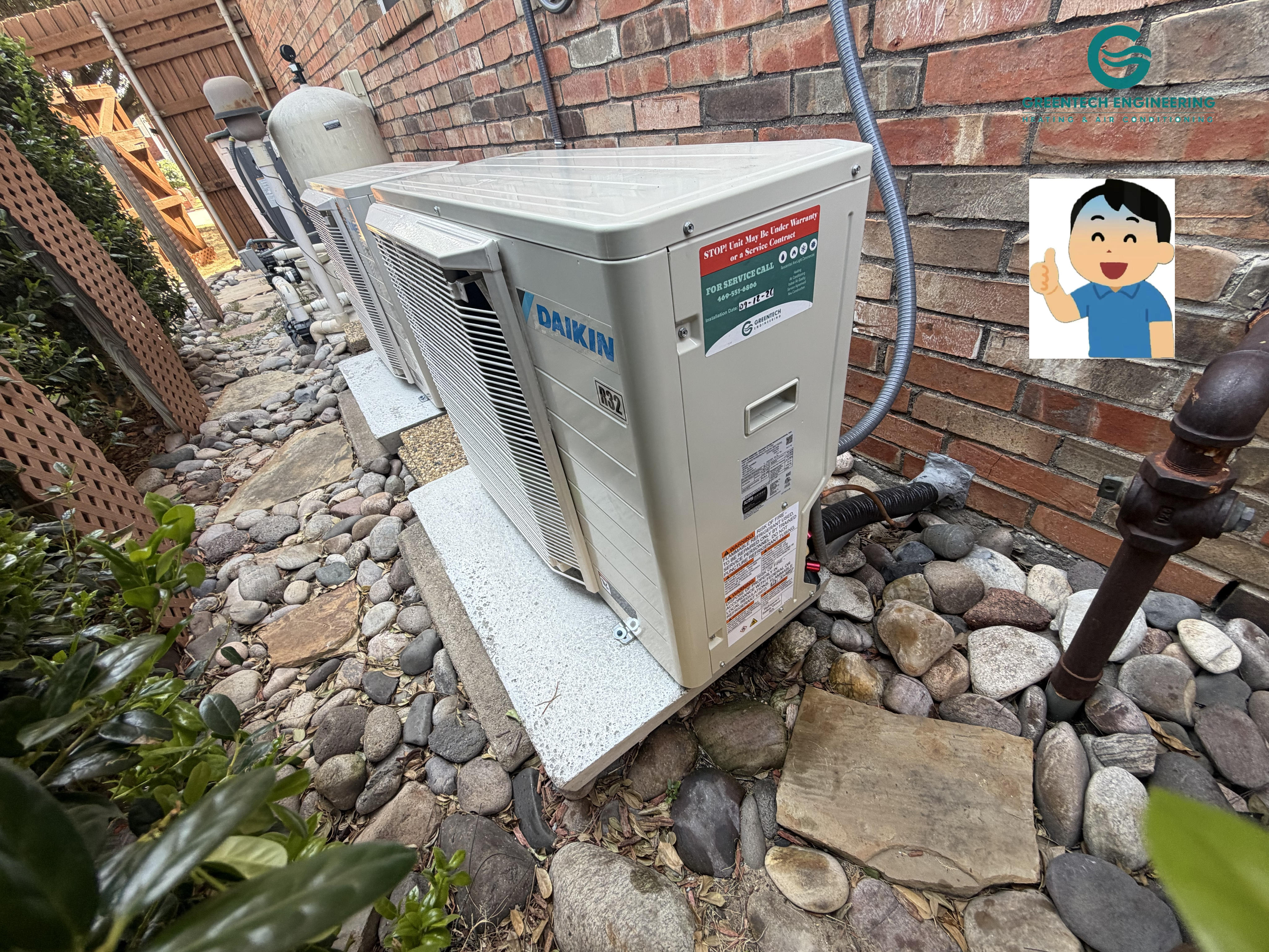
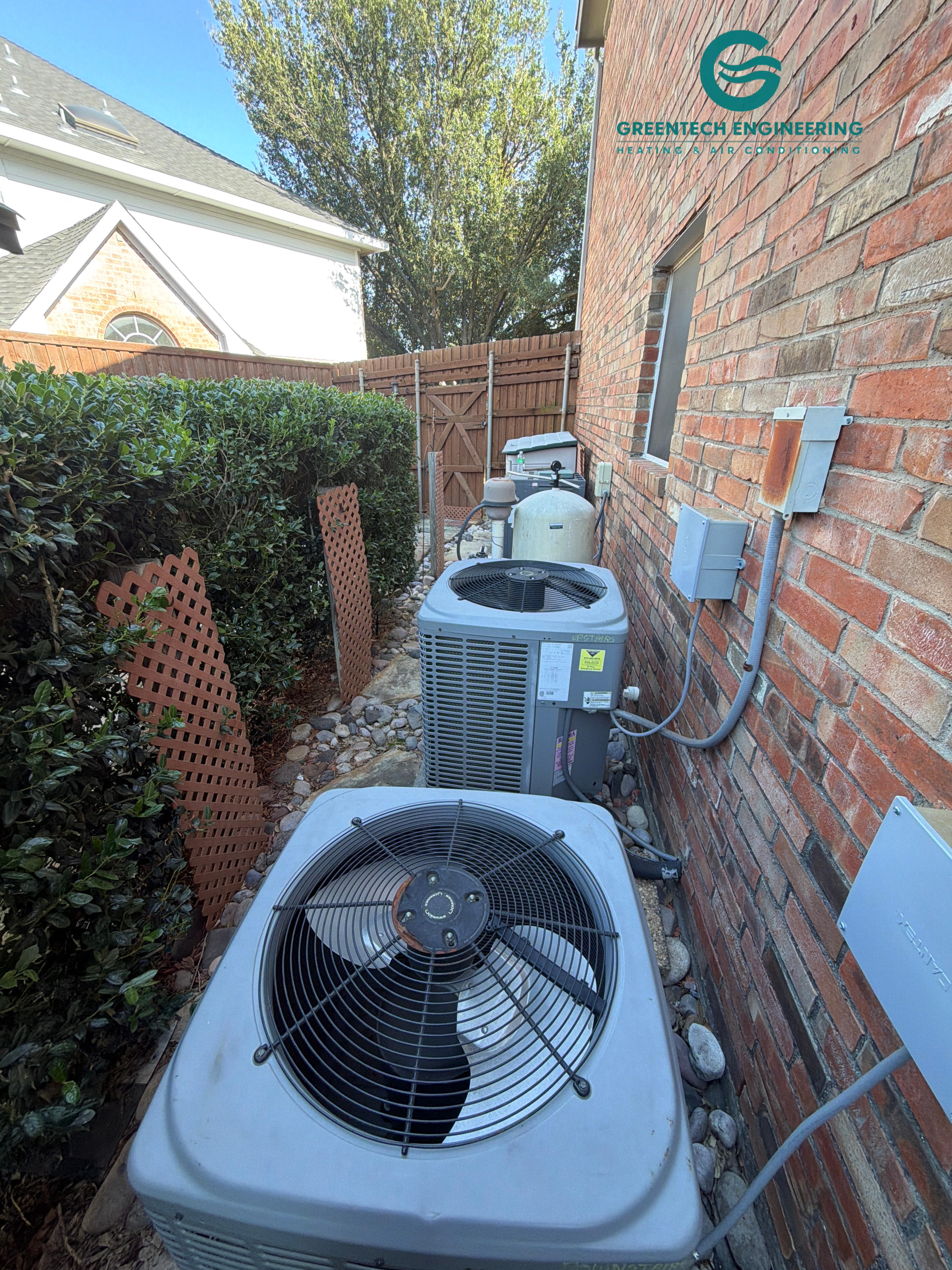
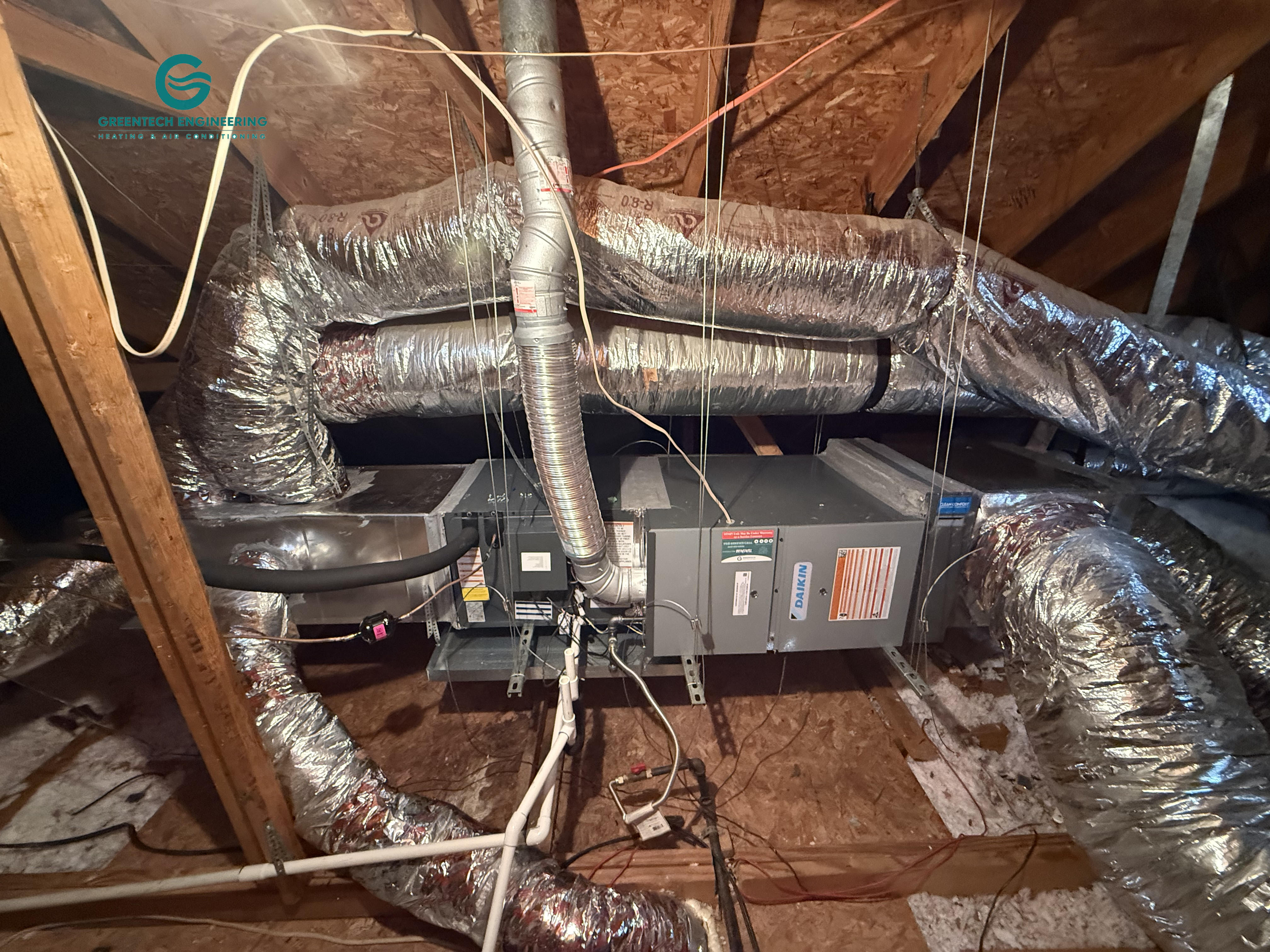
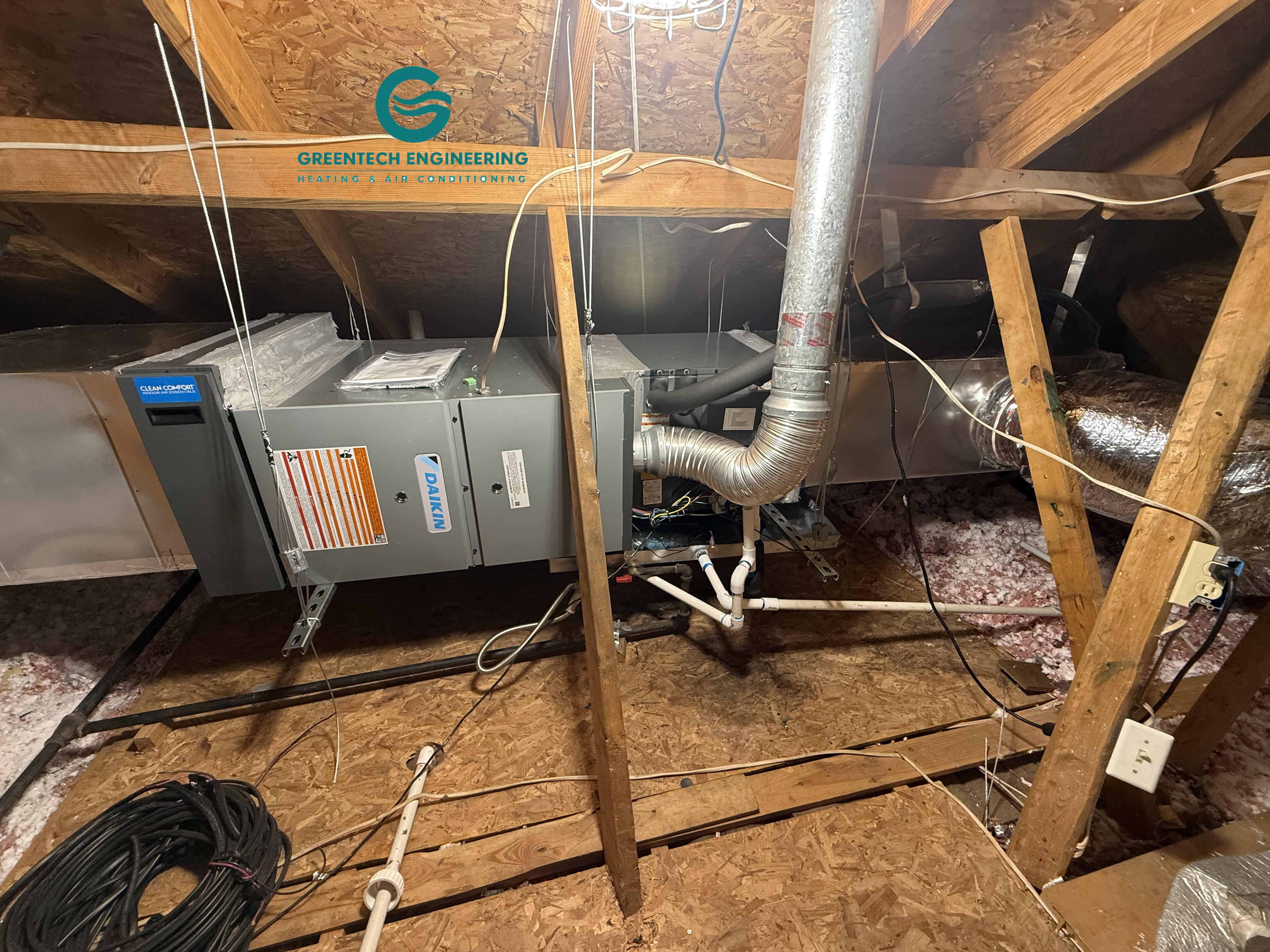
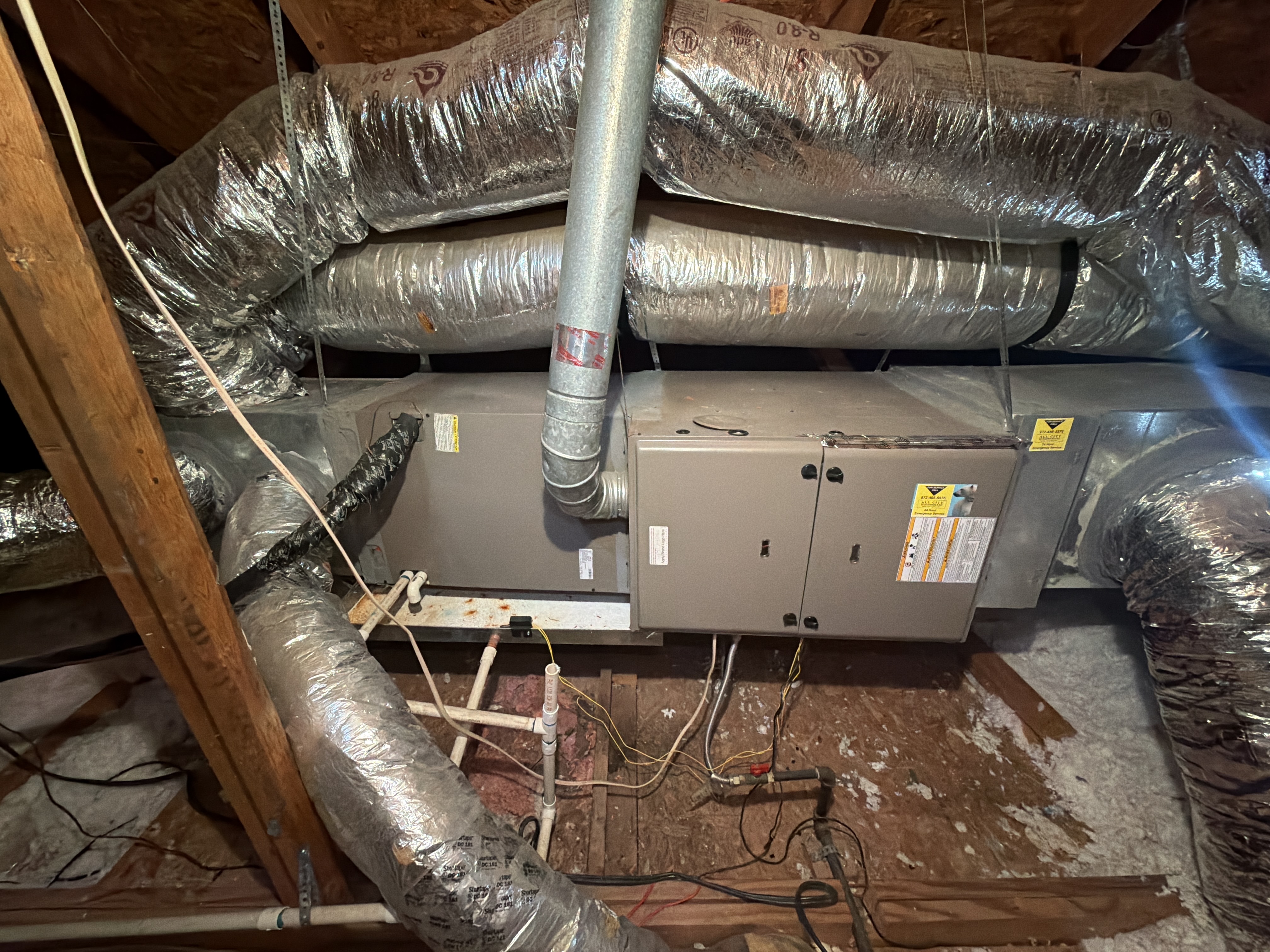
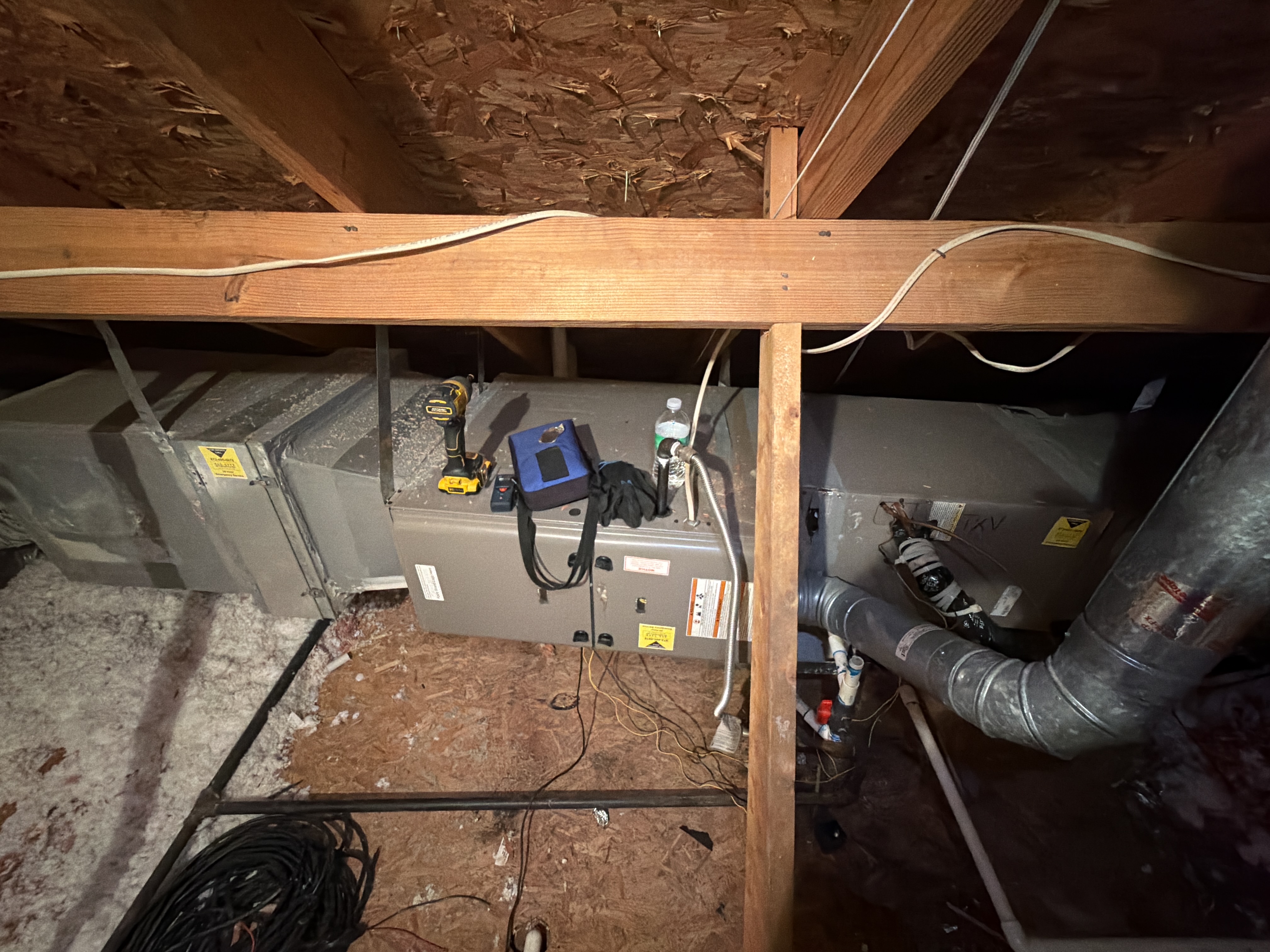
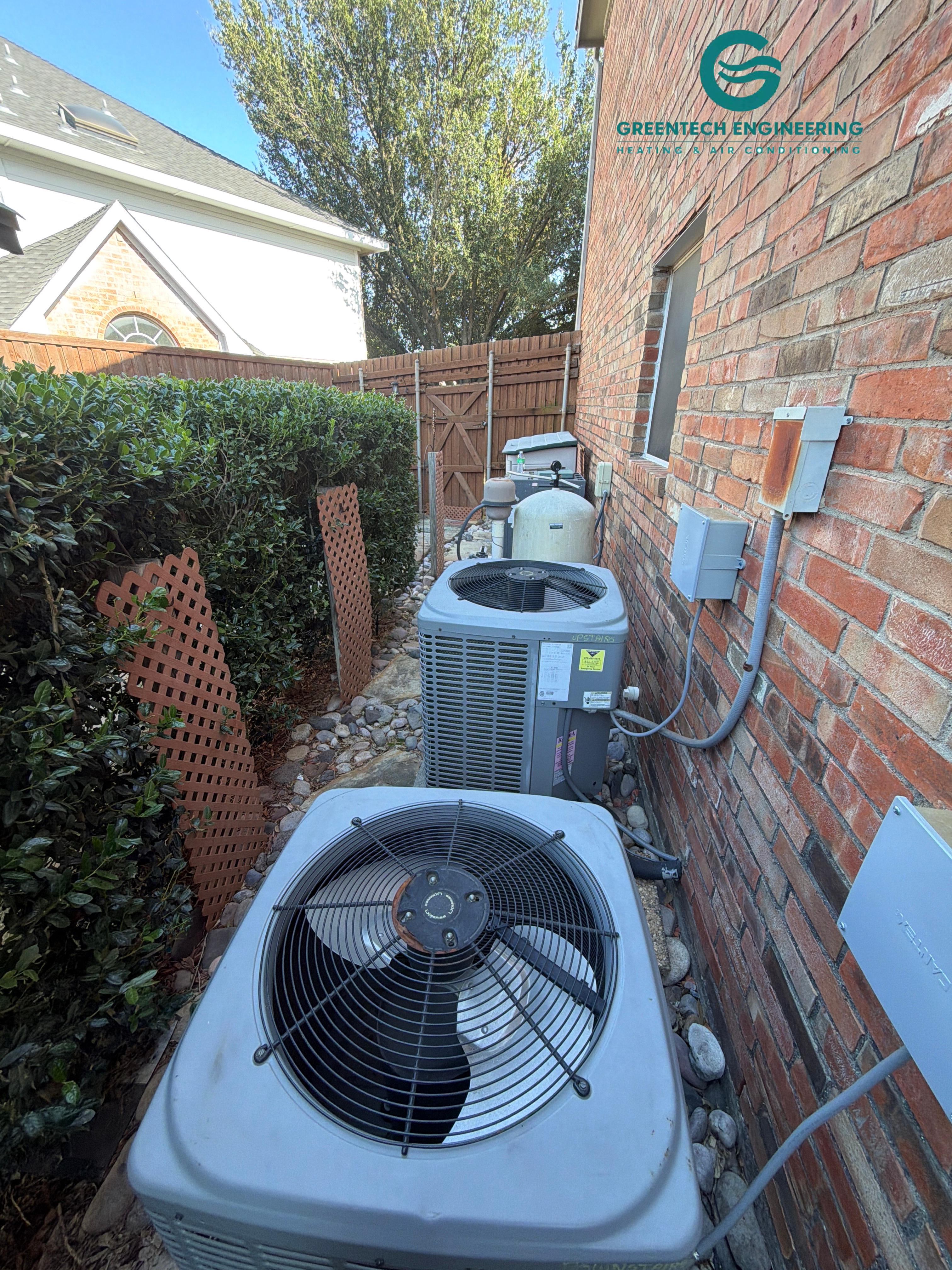
The before photos show two older top-discharge outdoor condensers and two horizontal attic indoor assemblies. Both floor-serving systems were replaced, but the available records do not establish the homeowner’s original complaint, a failure diagnosis, the exact age of both systems or the old downstairs system’s capacity.
The useful distinction is that this was not one large “5-ton system.” It was two independent equipment combinations, each with its own outdoor unit, evaporator coil, furnace-and-blower configuration and AHRI-certified ratings.
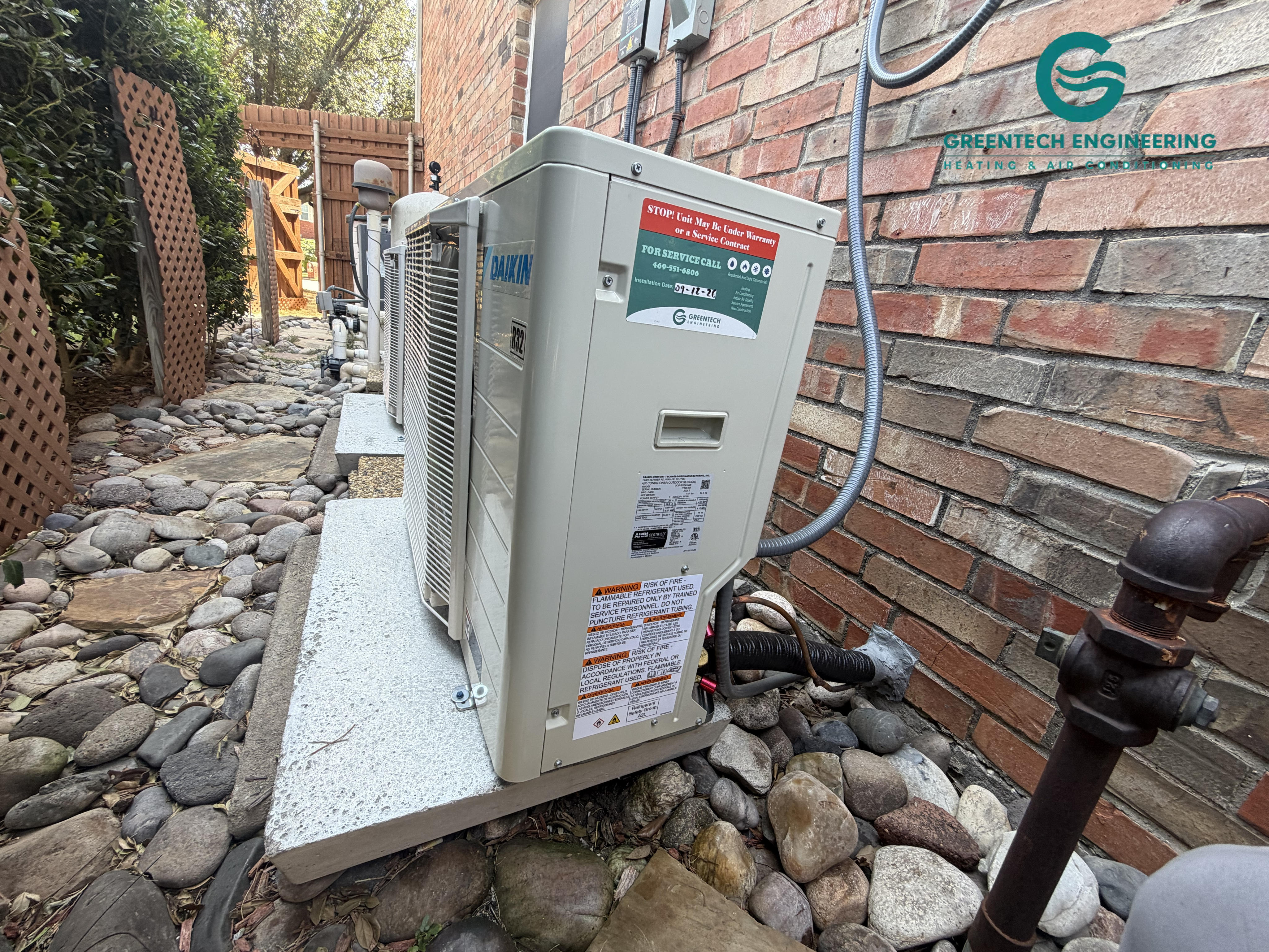
Upstairs system: nominal 3-ton Daikin FIT R-32 A/C
The upstairs combination uses:
- outdoor model
DC6VSS3610AA; - certified outdoor family
DC6VSS3610A*; - evaporator-coil family
CHPEA3626*3A*; - gas-furnace family
D*80TC0603B*A*; and - AHRI reference 215488560.
AHRI lists this combination at 33,600 BTU/h, 16.0 SEER2 and 9.0 EER2. The furnace is a 60,000-BTU-input, two-stage, 80% AFUE gas furnace with a variable-speed ECM blower.
Downstairs system: nominal 2-ton Daikin FIT R-32 A/C
The downstairs combination uses:
- outdoor model
DC6VSS2410AB; - certified outdoor family
DC6VSS2410A*; - evaporator-coil family
CHPEA2422*3A*; - gas-furnace family
D*80TC0603B*A*; and - AHRI reference 215488456.
AHRI lists this combination at 23,200 BTU/h, 17.5 SEER2 and 10.2 EER2. It uses the same furnace family as the upstairs system, but that does not make the cooling systems the same size or give them the same certified efficiency.
Why nominal tonnage and certified capacity differ
“Three ton” and “two ton” are nominal equipment classes. One nominal ton corresponds to 12,000 BTU/h, so the class labels broadly correspond to 36,000 and 24,000 BTU/h. They do not replace the certified output of an exact indoor/outdoor equipment match.
For this project, the certified cooling capacities are 33,600 BTU/h upstairs and 23,200 BTU/h downstairs. Those values belong to the respective combinations listed on the AHRI certificates.
The efficiency ratings also must remain separate. It would be inaccurate to average them into one “whole-house SEER2.” Readers can verify certified combinations through the AHRI Directory of Certified Product Performance.
Straight-cool A/C with gas heat—not heat pumps
Both outdoor units are straight-cool air conditioners. They provide cooling; the paired gas furnaces provide heat. The indoor equipment should therefore be described as a furnace-and-coil assembly, not an air handler.
“Two stage” describes furnace heating operation. “Variable speed” describes approved blower and outdoor A/C technology within the matched systems. Neither term proves a particular energy, sound, humidity or comfort result in this home.
Plenum, filtration, control and electrical work
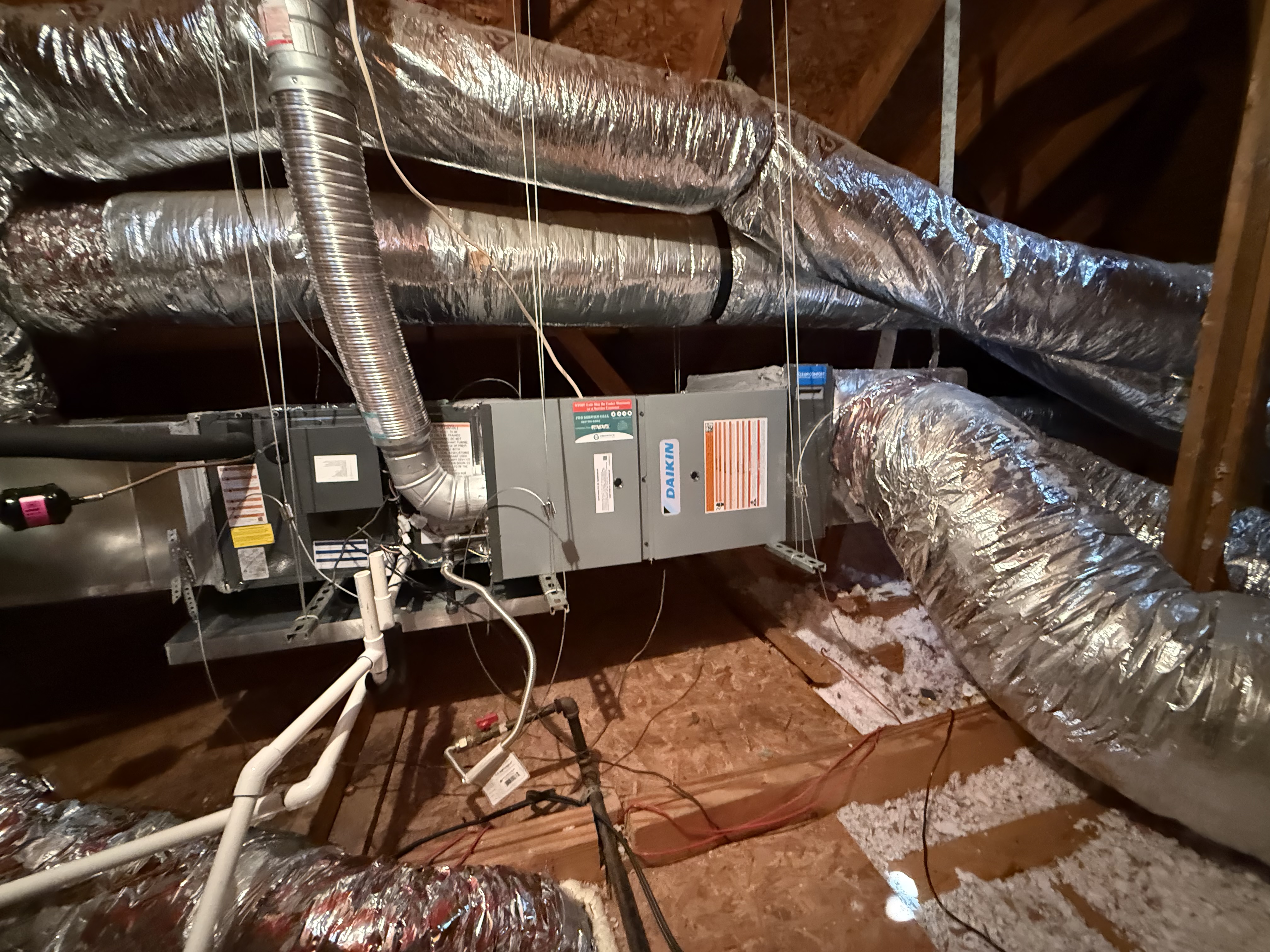
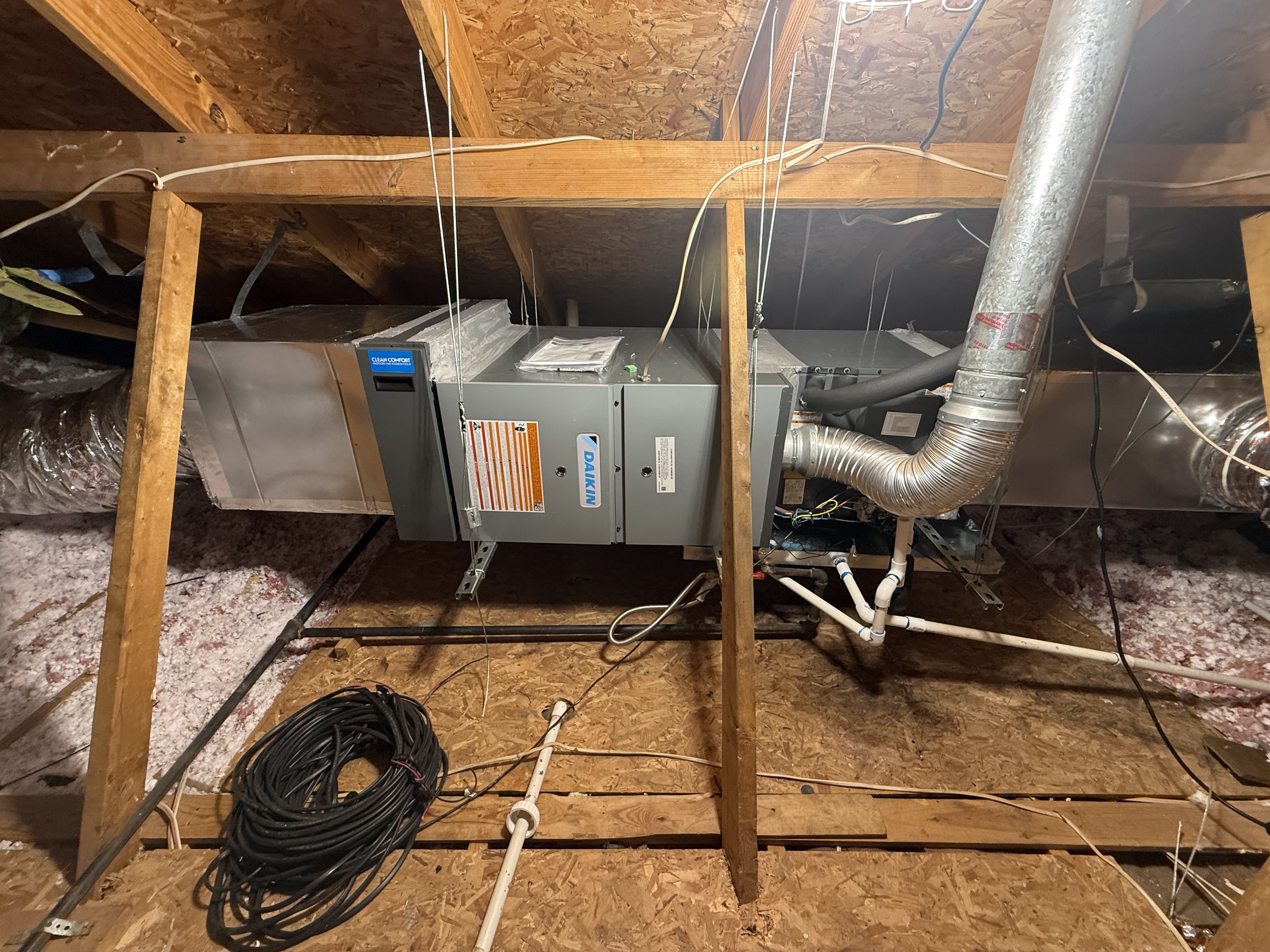
The documented indoor scope included:
- matching horizontal evaporator coils and gas furnaces;
- supply and return plenum transitions based on the final field configuration;
- accessible equipment and plenum connections sealed with HVAC-rated materials;
- Clean Comfort media filter cabinets with MERV 11 media;
- condensate-drain and safety-switch work;
- reconnection to the existing duct systems;
- Daikin communicating control equipment; and
- 220-volt voltage monitoring/surge protection.
A MERV rating is a filter-performance classification under defined test conditions. It does not prove a medical outcome or establish the indoor-air quality of a particular home. The project photos show visible equipment and connections, but photos alone do not verify airflow, static pressure, duct leakage, combustion safety or refrigerant charge.
R-32 refrigerant and documented installation procedure
The installed outdoor labels identify both new units as R-32 air conditioners. The work scope called for preparing the existing copper line sets, modifying them as required, brazing refrigerant connections with 15% silver brazing alloy, nitrogen pressure testing and evacuation below 500 microns before charging.
Those values describe the documented procedure. Signed final readings were not supplied for this article, so they are not presented as measured commissioning results for either system.
What the $1,525 Oncor discount means
The project billing record shows one $1,525 Oncor incentive discount. The evidence does not allocate that amount between the two systems and does not establish a standard amount for another home.
Program eligibility and incentive amounts can depend on the serving utility, existing equipment, selected replacement, current rules, funding and documentation. For broader context, read how Oncor HVAC incentives work in DFW, then confirm current project-specific requirements before purchase.
What this case proves—and what it does not
This case documents:
- two HVAC replacements completed in Plano 75023 on August 29, 2026;
- two installed Daikin FIT R-32 straight-cool A/C models;
- separate AHRI references, capacities and efficiency ratings;
- horizontal furnace-and-coil assemblies serving the two levels;
- supporting plenum, filtration, control and electrical-protection work; and
- a project-specific $1,525 Oncor incentive discount.
The available records do not document:
- the homeowner’s reason for replacement or a diagnostic finding;
- a project-specific Manual J load calculation or Manual S selection report;
- whether either system was downsized or “right-sized”;
- permit or inspection status;
- signed final airflow, static-pressure, temperature, humidity, sound, refrigerant or combustion readings; or
- measured energy-bill or comfort improvements.
That boundary matters: installed specifications are not field measurements, and product capabilities are not verified household outcomes.
Frequently asked questions
Did this Plano home receive one large HVAC system or two systems?
It received two separate systems: a nominal 3-ton Daikin FIT R-32 straight-cool A/C match upstairs and a nominal 2-ton match downstairs. Each has its own AHRI reference and certified ratings.
What are the certified ratings for the upstairs system?
AHRI 215488560 lists 33,600 BTU/h of cooling capacity, 16.0 SEER2 and 9.0 EER2 for the listed equipment combination.
What are the certified ratings for the downstairs system?
AHRI 215488456 lists 23,200 BTU/h of cooling capacity, 17.5 SEER2 and 10.2 EER2 for the listed equipment combination.
Why do the two systems have different SEER2 ratings?
SEER2 belongs to a specific certified indoor/outdoor combination. The outdoor units and coils differ, so the two combinations can have different ratings even though they use the same furnace family.
Are these Daikin FIT units heat pumps?
No. They are straight-cool air conditioners. The paired gas furnaces provide heat.
Does the same furnace family make both A/C systems the same size?
No. Furnace input and cooling-system capacity are different specifications. The outdoor unit, coil and complete certified combination establish each cooling match.
Was the $1,525 Oncor discount split evenly between both systems?
The billing record shows one project discount. The supplied evidence does not allocate the amount between the systems, and it should not be treated as a guaranteed amount for another project.
Did this project prove lower bills or better comfort?
No post-installation bill, airflow, static-pressure, temperature, humidity or sound data was supplied. This case reports certified equipment ratings and documented scope, not a measured household outcome.
Request a two-system HVAC replacement evaluation in Plano
If your Plano home has separate upstairs and downstairs HVAC systems, each system should be evaluated as its own equipment and airflow path. Greentech can review the existing equipment, replacement options, matched-system documentation and supporting indoor work before you decide.
Request a two-system HVAC replacement evaluation or explore HVAC service in Plano.
Greentech included a complimentary three-year/1,095-day labor warranty on this project. It is non-transferable and subject to the written project terms. Manufacturer limited-warranty coverage depends on the exact model, eligible registration and the manufacturer’s controlling terms.
About the author
Siwei (Lucas) Chen
Chief Technology Officer | Greentech Engineering Heating & Air Conditioning — DFW HVAC
Siwei (Lucas) Chen applies an engineering-based, data-first approach to residential HVAC system design, diagnostics, airflow measurement, equipment selection and duct-system optimization across Dallas–Fort Worth. He holds a B.S. in Mechanical Engineering from Virginia Tech.
Lucas completed ACCA’s Residential Design for Quality Installation Course, which covers residential design procedures associated with ACCA Manuals J, S, T and D. He is also an NCI Certified Residential Air Balancer and NCI Certified Duct System Optimization Specialist.

Flexible Financing Options
Explore our range of flexible financing options designed to suit your needs and budget.