


2026 Oncor HVAC Incentives in North Texas: What Homeowners Need to Know Before Replacing Their AC or Heat Pump
If you’re a homeowner in Dallas–Fort Worth, chances are you’ve already felt the pressure of rising energy bills and aging HVAC equipment. In 2026, many North Texas homeowners are looking for smarter ways to upgrade their air conditioning or heat pump systems while controlling upfront costs.
One opportunity that continues to draw attention is the Oncor Energy Efficiency incentive program—a utility-run initiative that can help offset the cost of installing qualifying high-efficiency HVAC systems when the project is completed through an approved contractor.
This guide explains how the 2026 Oncor HVAC incentives work, who may qualify, what homeowners often misunderstand, and how to plan your upgrade correctly—before you purchase equipment.
What Is the Oncor Energy Efficiency Program?
The Oncor Energy Efficiency Program is a utility-administered initiative designed to reduce peak electrical demand across Texas by encouraging the installation of energy-efficient systems.
Unlike manufacturer coupons or federal tax credits, Oncor incentives are utility rebates that:
- Are funded annually
- Have limited budgets
- Require participation by approved service providers
- Are tied to verified installation and efficiency standards
For homeowners, this means incentives are not automatic and not guaranteed, but can be significant when a project is properly designed and submitted.
2026 HVAC Incentives: How Much Can Homeowners Expect?
For qualifying residential HVAC projects completed in Oncor service territory, incentives may be available that range from several hundred dollars to amounts approaching the low-thousands, depending on:
- System tonnage
- Efficiency rating (SEER2 / EER2)
- Equipment type (AC vs. heat pump)
- Program year funding and rules
Some homeowners see incentive values approaching $2,000–$3,000 on larger, high-efficiency systems—but this is not a fixed amount, and not every home qualifies.
Key point:
Incentive amounts are determined after technical review and final approval. No contractor can guarantee a specific rebate value in advance.
Why Contractor Approval Matters More Than Most Homeowners Realize
One of the most common misconceptions is that homeowners can apply for Oncor incentives on their own. In reality:
- Oncor only processes incentive applications submitted by approved Participating Service Providers
- Installation documentation, system performance data, and compliance forms must meet program standards
- Incomplete or non-compliant submissions are frequently denied
Choosing a contractor who is already approved and experienced with Oncor program requirements dramatically improves the likelihood of a successful application.
Greentech Engineering: An Approved Oncor Participating Service Provider for 2026
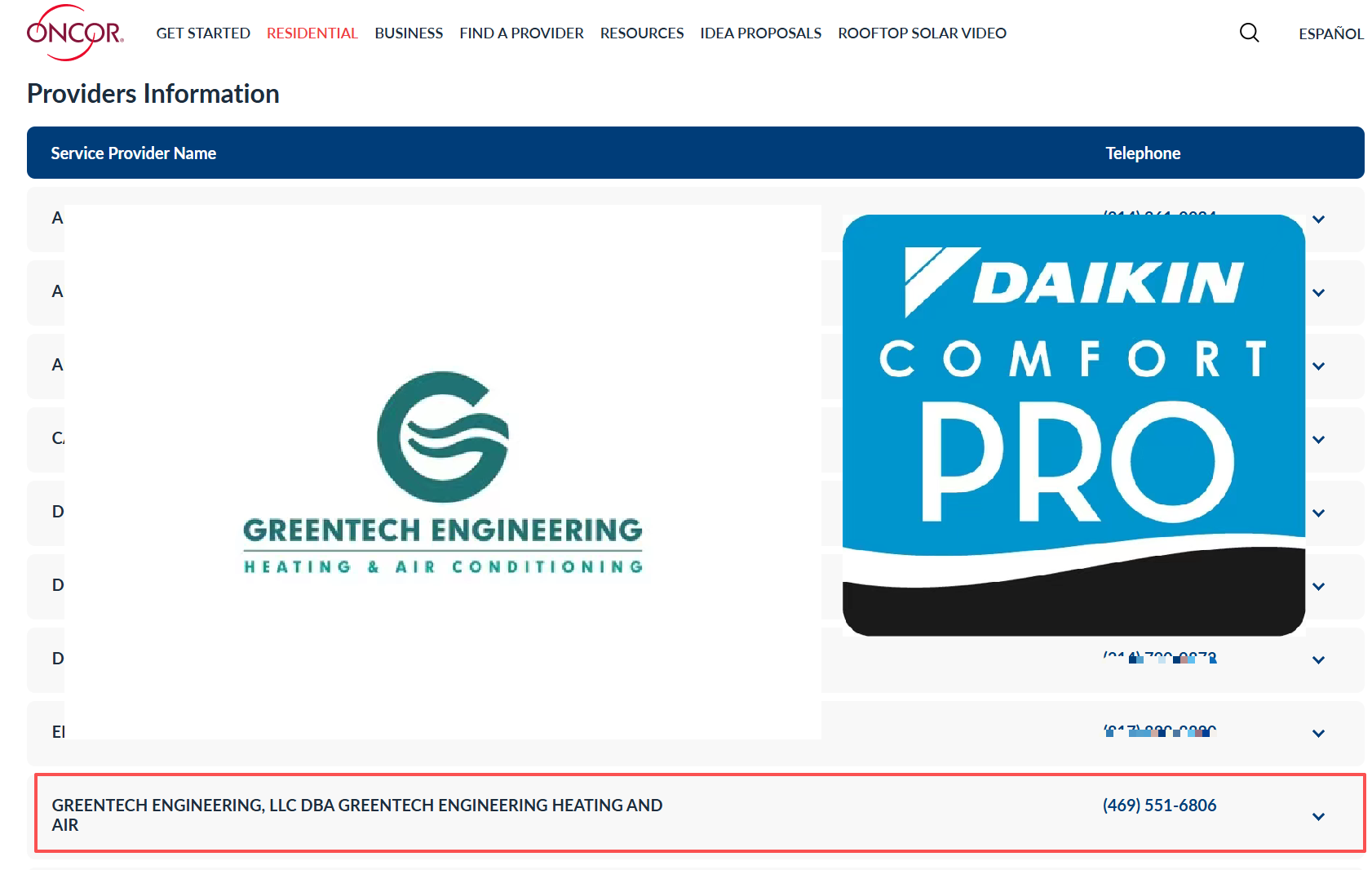
Greentech Engineering Heating & Air Conditioning is an Oncor-approved Participating Service Provider for the 2026 Residential Energy Efficiency program, serving homeowners across Dallas, Plano, Frisco, Carrollton, Irving, and surrounding North Texas communities.
Our role is not just to install HVAC equipment, but to:
- Evaluate whether a home and system are program-eligible before installation
- Design systems that meet efficiency and performance criteria
- Submit accurate technical documentation on the homeowner’s behalf
- Ensure installations align with long-term comfort and energy goals
Why High-Efficiency HVAC Matters in North Texas
Texas homes face unique challenges:
- Long cooling seasons
- High peak electrical demand
- Two-story airflow imbalance
- Builder-grade ductwork and oversized systems
Upgrading to SEER2-compliant air conditioners or modern heat pumps, when properly designed, can:
- Reduce annual energy consumption
- Lower monthly electric bills
- Improve comfort and humidity control
- Support grid-level efficiency goals across Texas
Oncor incentives exist to encourage these outcomes—but only when systems are installed correctly.
The Correct Way to Plan an Oncor-Eligible HVAC Upgrade
Homeowners who successfully receive incentives almost always follow this sequence:
1. Start With an Eligibility Review
Before selecting equipment, confirm:
- Your home is in Oncor service territory
- Your existing system qualifies for replacement
- The proposed upgrade aligns with program rules
2. Select Equipment Based on Performance, Not Marketing
Higher price does not equal higher incentive.
Efficiency metrics and system design matter more than brand hype.
3. Submit Documentation Through an Approved Provider
This includes:
- Equipment specifications
- Installation details
- Efficiency verification
Skipping or reversing these steps is the most common reason incentives are lost.
Timing Matters: Why Early Planning in 2026 Is Important
Oncor incentives operate on an annual budget. Once allocated funds are exhausted, additional projects may no longer qualify—regardless of system efficiency.
Homeowners who:
- Plan early
- Verify eligibility before installation
- Work with approved providers
are far more likely to benefit from available incentives.
Frequently Asked Questions (Q&A)
Q1: Is the Oncor HVAC incentive guaranteed?
No. Incentives are subject to eligibility, documentation, funding availability, and final approval by Oncor.
Q2: Is this the same as the federal $2,000 tax credit?
No. Oncor incentives are utility rebates, separate from federal IRA tax credits. Some homeowners may qualify for both, but they are different programs.
Q3: Can I apply for the Oncor rebate myself?
No. Applications must be submitted by an Oncor-approved Participating Service Provider.
Q4: Do heat pumps qualify?
In many cases, yes—particularly high-efficiency heat pumps designed for Texas climates. Eligibility depends on system specifications and program rules.
Q5: What areas does Greentech serve?
We serve Dallas–Fort Worth and surrounding Oncor service territories, including Plano, Frisco, Carrollton, Irving, and nearby cities.
Final Thoughts: Incentives Are a Tool—Not the Goal
Oncor HVAC incentives can meaningfully reduce the cost of upgrading to an efficient, well-designed comfort system. But the real value comes from:
- Correct load calculations
- Proper airflow and duct design
- Equipment matched to the home—not oversized
- Installations built for long-term performance
Incentives should support good engineering decisions—not replace them.
If you’re planning an HVAC upgrade in 2026, the best next step is a professional eligibility and system review before purchasing equipment.
Author
Siwei (Lucas) Chen
CTO | Greentech Engineering Heating & Air Conditioning
B.S. Mechanical Engineering – Virginia Tech
ACCA Certified (Manual J, S, D)
NCI Certified – Air Balancing & Duct Optimization
Oncor Approved Participating Service Provider
Daikin Comfort Pro Contractor
Lucas Chen specializes in engineering-driven HVAC system design for North Texas homes, with a focus on comfort, airflow performance, and energy efficiency. This article was reviewed for technical accuracy and compliance with current HVAC and utility program standards.
Learn more about ACCA

Flexible Financing Options
Explore our range of flexible financing options designed to suit your needs and budget.