






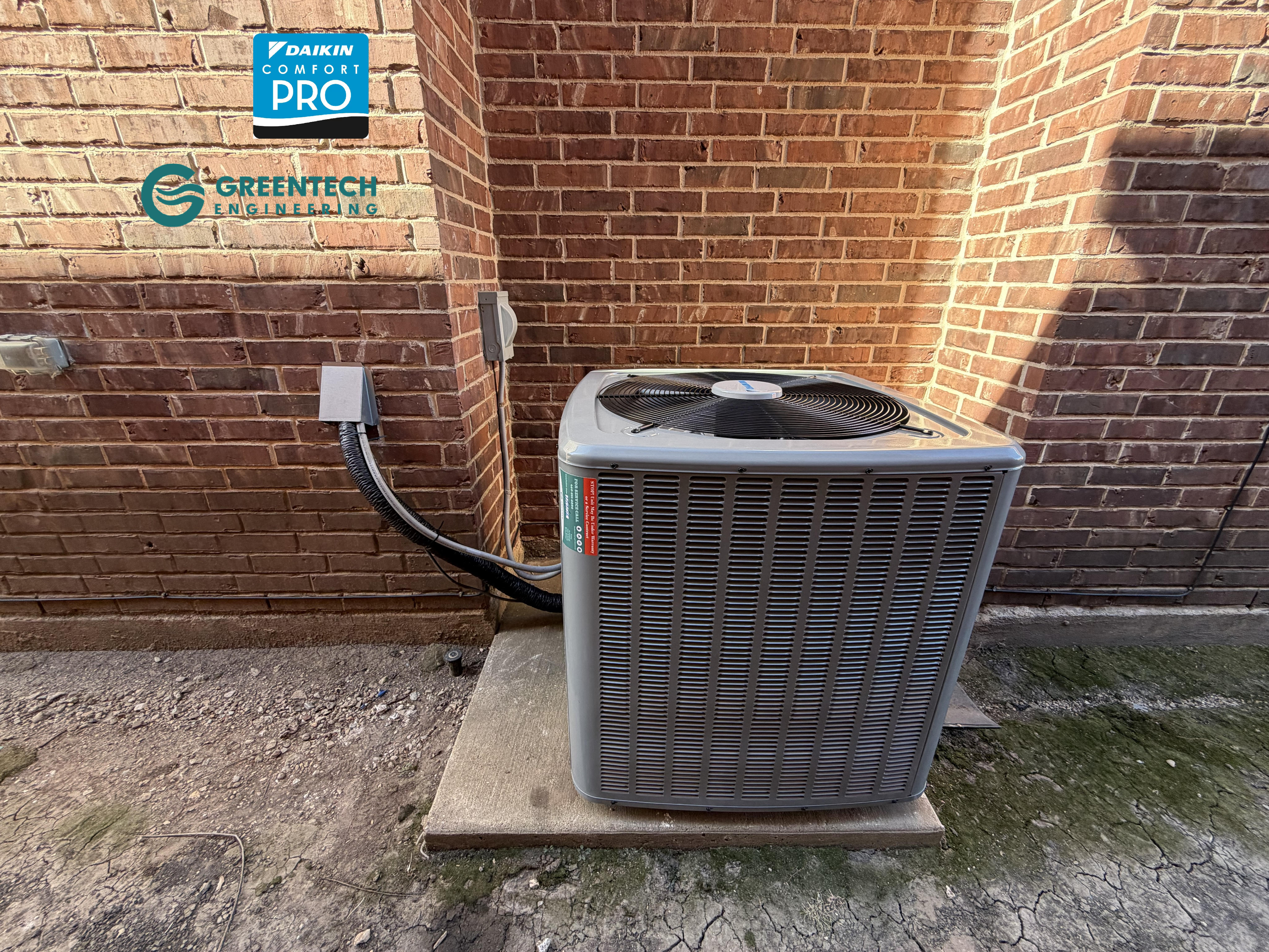

Heat Pumps Are the Future of HVAC in DFW (2026 Guide for Homeowners)
Across the Dallas–Fort Worth metroplex, the HVAC conversation is shifting. With updated energy codes, electrification trends, rising gas volatility, and Oncor efficiency incentives, high-efficiency heat pumps are no longer a niche option — they are becoming the new standard for single-family homes in North Texas.
For homeowners in Plano, Frisco, McKinney, Little Elm, Carrollton, Grand Prairie, and Denton County, the question is no longer “Do heat pumps work in Texas?” — it’s “Is my home ready for one?”
This guide explains why heat pumps are trending across DFW, how they perform in our climate, and what engineering factors determine whether they deliver comfort or disappointment.
What Is a Heat Pump — and Why Is It Trending?
A heat pump is an all-electric HVAC system that provides both cooling and heating by moving heat rather than generating it through combustion.
In cooling mode, it works like a traditional air conditioner.
In heating mode, it reverses refrigerant flow and extracts heat from outdoor air — even in cold weather.
The rapid adoption of inverter-driven systems from manufacturers like:
- Daikin
- Mitsubishi Electric
- Trane
has dramatically improved cold-weather performance and energy efficiency.
Why Heat Pumps Make Sense in Dallas–Fort Worth
1. DFW Is a Cooling-Dominant Climate
North Texas experiences:
- Long, hot summers (100°F+ common)
- Short, moderate winters
- Limited extended sub-freezing periods
This is ideal for variable-speed heat pumps.
Unlike northern states, DFW does not experience prolonged extreme cold. Modern inverter systems can maintain efficient heating performance down to ~5°F, far below typical Dallas winter lows.
2. New Energy Codes & Electrification Push
Many municipalities in DFW have adopted stricter interpretations of the 2021 IECC energy code, increasing emphasis on:
- Duct leakage testing
- Blower door verification
- Equipment efficiency documentation
Electrification trends are accelerating as cities prioritize carbon reduction and grid modernization.
Heat pumps align directly with this direction.
3. Rising Gas Costs & Infrastructure Uncertainty
Natural gas pricing volatility and long-term infrastructure risk have made homeowners rethink 80% AFUE furnaces.
An inverter heat pump:
- Eliminates combustion
- Reduces gas dependency
- Simplifies mechanical design
- Offers dual-fuel flexibility if desired
Performance in Texas: Myth vs. Reality
Myth: “Heat pumps don’t work when it’s cold.”
Reality: That was true for 1990s single-stage systems. It is not true for modern inverter systems.
Systems like the Daikin Fit:
- Use variable-speed compressors
- Modulate capacity continuously
- Maintain indoor temperature stability
- Reduce short cycling
- Improve humidity control in summer
In fact, in Dallas humidity conditions, inverter heat pumps often provide better comfort than single-stage gas furnace + straight cool AC combinations.
Engineering Matters: Why Many Heat Pumps Fail
Heat pumps are not “swap-the-box” equipment.
In DFW, common installation errors include:
- Oversizing (rule-of-thumb 500 sq ft per ton)
- Ignoring Manual J load calculations
- No static pressure measurement
- Poor duct sealing
- Incorrect airflow setup
Because heat pumps operate longer at lower speeds, duct design and airflow balance become critical.
Without proper Manual J / S / D engineering:
- Comfort suffers
- Utility bills increase
- Equipment life shortens
- Backup heat strips run excessively
Why Heat Pumps Are a 2026 DFW Trend
✔ Energy Efficiency
SEER2 ratings now exceed 18–20+ on premium inverter systems.
✔ Oncor Incentives
Oncor’s High Efficiency Electric (HEE) program supports qualifying heat pump installations.
✔ IRA Federal Tax Credits
Homeowners may qualify for federal tax credits for high-efficiency heat pumps.
✔ All-in-One Comfort
One system handles cooling + heating.
✔ Future-Ready
As Texas grid evolves, electrification positions homes for long-term adaptability.
Where Heat Pumps Work Best in DFW
They are ideal for:
- Single-family homes under 4,000 sq ft
- Homes with decent duct systems
- Houses built after 1995
- Electrification remodels
- Replacing aging 80% AFUE furnaces
Heat Pump vs Gas Furnace in Dallas
FactorHeat PumpGas Furnace + ACSummer EfficiencyExcellentGoodWinter EfficiencyVery GoodModerateHumidity ControlExcellent (inverter)AverageCarbon EmissionsLowerHigherLong-Term TrendIncreasingDeclining
Real Question for DFW Homeowners
The real question is not “Should I get a heat pump?”
It is:
“Is my home properly engineered to support a high-efficiency heat pump?”
That requires:
- ACCA Manual J load calculation
- Static pressure testing
- Duct leakage verification
- Airflow balancing
Without those, even the best equipment underperforms.
Frequently Asked Questions
Q1: Do heat pumps work in Dallas winters?
A:Yes. Modern inverter heat pumps perform efficiently in DFW winters. Extended sub-zero conditions are rare in North Texas.
Q2: Are heat pumps more expensive than gas systems?
A: Upfront cost may be slightly higher, but energy savings, incentives, and dual functionality often offset long-term expenses.
Q3: Will my electric bill increase?
A: In cooling season, often lower. In winter, depends on system design. Proper Manual J sizing is critical.
Q4: Can I keep gas backup?
A: Yes. Dual-fuel systems combine heat pump efficiency with gas furnace backup for extreme cold.
Q5: Is a heat pump good for older homes in Plano or Grand Prairie?
A: It depends on duct condition and insulation. Engineering evaluation is required.
Conclusion: The Direction Is Clear
In Dallas–Fort Worth, heat pumps are not a trend — they are the next phase of residential HVAC.
With:
- Electrification policies
- Improved inverter technology
- Oncor incentives
- Rising gas volatility
The shift is already underway.
The only variable is installation quality. Contact us.
Author
Siwei (Lucas) Chen
CTO | Greentech Engineering Heating & Air Conditioning
B.S. Mechanical Engineering
ACCA Certified (Manual J, S, D)
NCI Certified – Air Balancing & Duct Optimization
Daikin Comfort Pro Contractor
Oncor Participating Service Provider
Serving Dallas–Fort Worth homeowners with engineering-driven HVAC solutions focused on comfort, efficiency, and long-term performance.

Flexible Financing Options
Explore our range of flexible financing options designed to suit your needs and budget.