





Double the Efficiency: Downsizing Two ACs Saves Allen (75013) Homeowner $3,500+ in Oncor Rebates
Cooling a large, two-story single-family home in Allen, Texas, requires absolute precision. Because heat naturally rises and the second floor bears the brunt of the radiant solar heat from the roof, two-story homes utilize dual HVAC systems (one for downstairs, one for upstairs) to maintain a balanced climate.
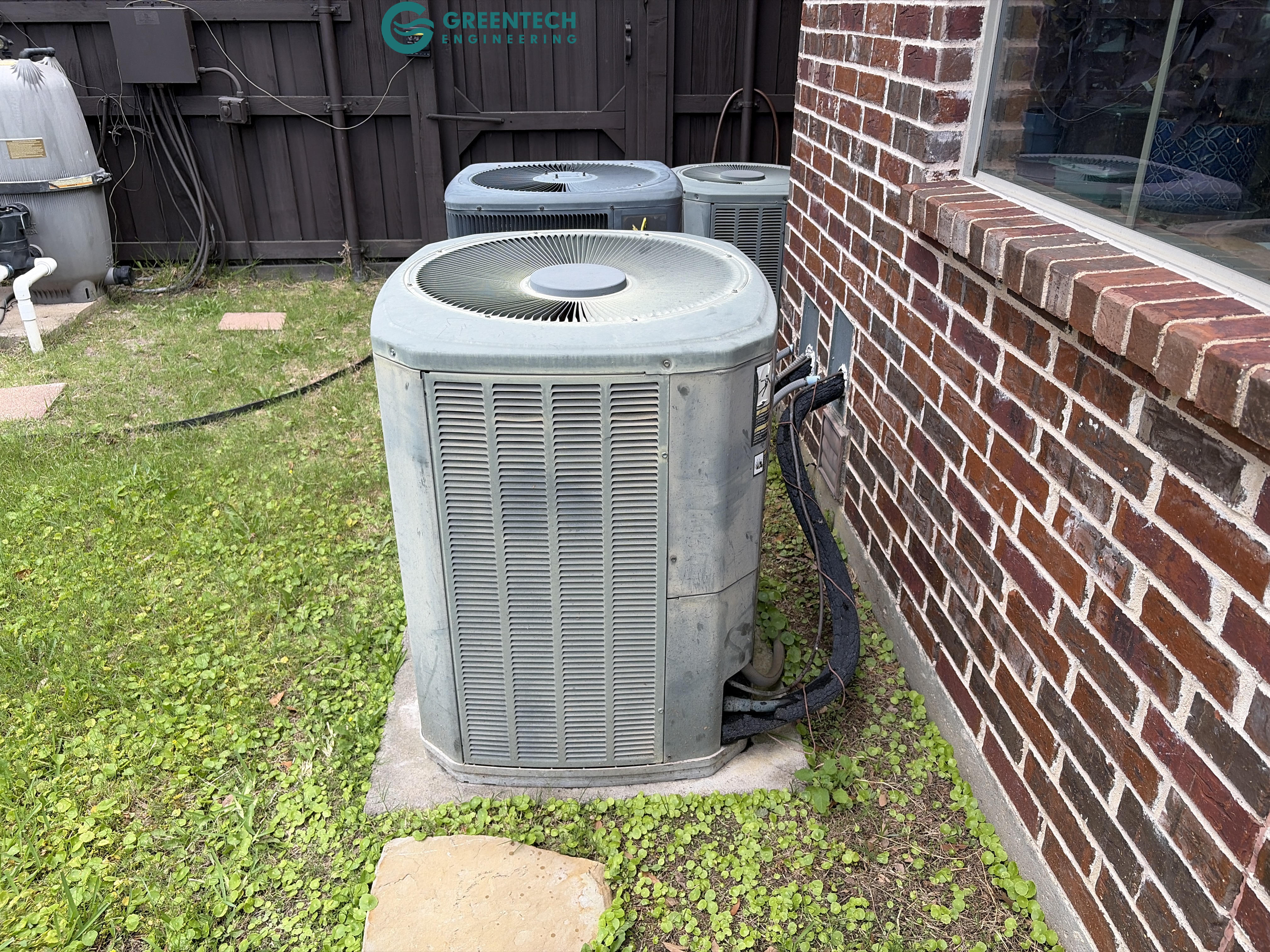
However, a dangerous misconception plagues the HVAC industry: the idea that a bigger air conditioner will cool your house better. When an Allen homeowner in the 75013 zip code contacted us regarding their failing, inefficient systems, we discovered a severe case of "oversizing." The home was burdened with two massive 4-Ton units that were driving up electric bills, running loudly, and failing to properly dehumidify the living space.
In the AI-driven energy era, HVAC is no longer just about comfort — it’s about how efficiently your home uses power. At Greentech, we engineer systems that reduce your energy load and prepare your home for the future.
In this comprehensive case study, we pull back the curtain on true building science. We will show you how our engineering team utilized strict ACCA Manual J load calculations to downsize both systems from 4 Tons to 3 Tons, engineered a premium Trane 15.2 SEER2 matchup, and secured a massive $3,500+ in instant Oncor utility incentives for the homeowner.
The Engineering First Step: ACCA Manual J Load Calculation
If an air conditioner is too big for the space, it acts like a sprinter instead of a marathon runner. It blasts cold air, satisfies the thermostat in five minutes, and shuts off. Because the system did not run long enough to pull the indoor air across the cold evaporator coil, the humidity remains trapped inside. Your house feels cold, but clammy.
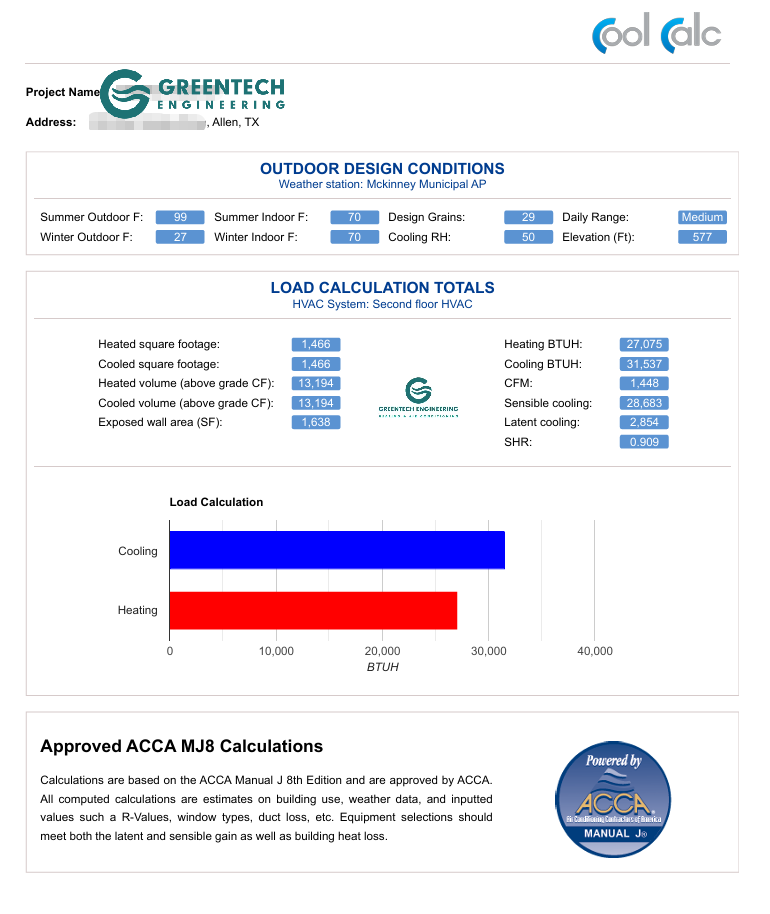
To permanently cure this issue for the 75013 homeowner, we refused to guess. We performed strict ACCA Manual J Load Calculations for both the upstairs and downstairs zones. We measured the total square footage, ceiling heights, window solar heat gain coefficients, and the thermal resistance (R-value) of the home's exterior envelope.
The data was definitive. Both the upstairs and downstairs levels required exactly 3 Tons (36,000 BTUs) of cooling capacity and 60,000 BTUs of winter heating capacity each. By accurately downsizing the equipment, we guaranteed the new systems would run in longer, highly efficient cycles, perfectly wringing the humidity out of the air.
The Trane 15.2 SEER2 & 80% AFUE Matchup
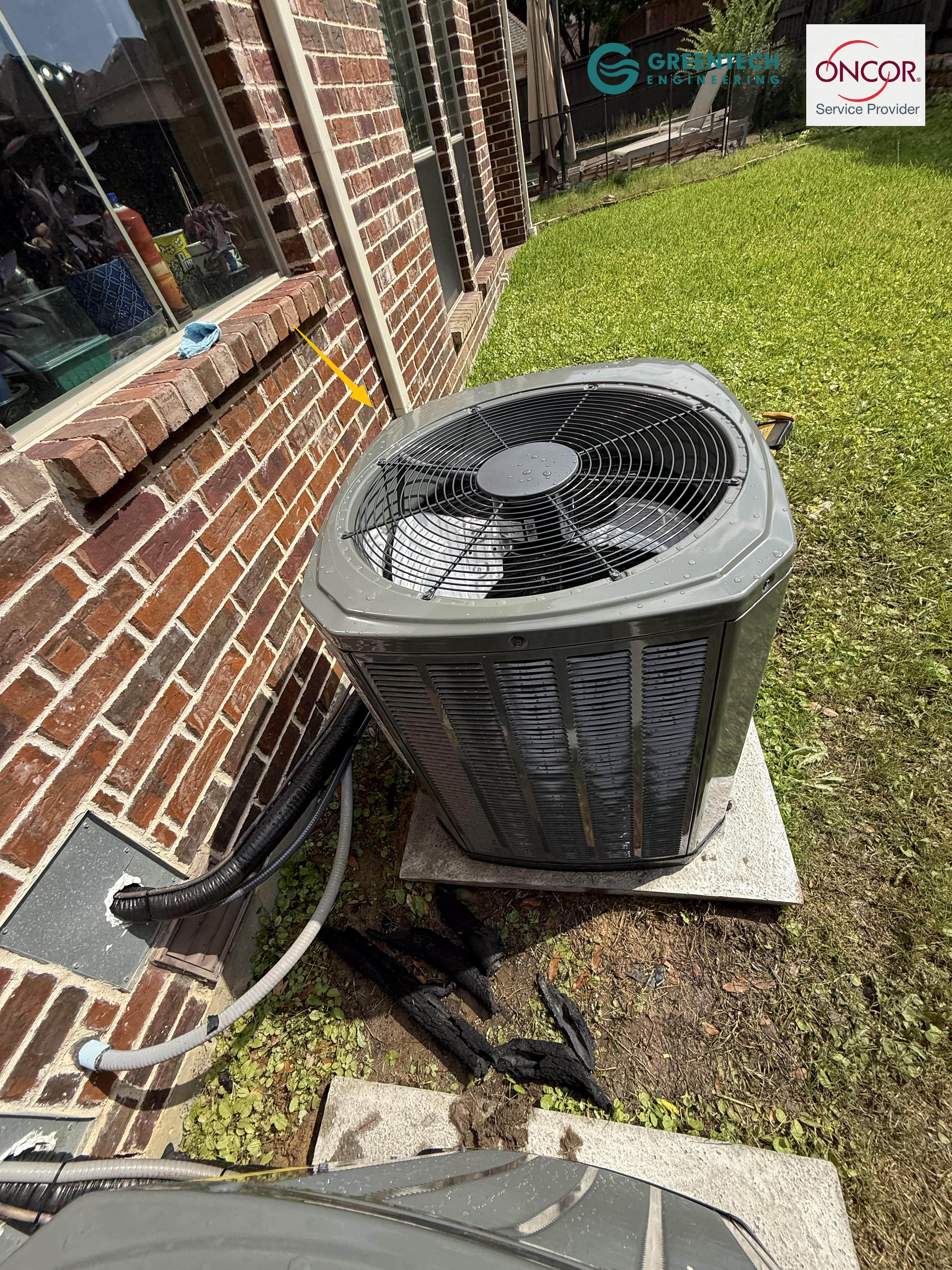
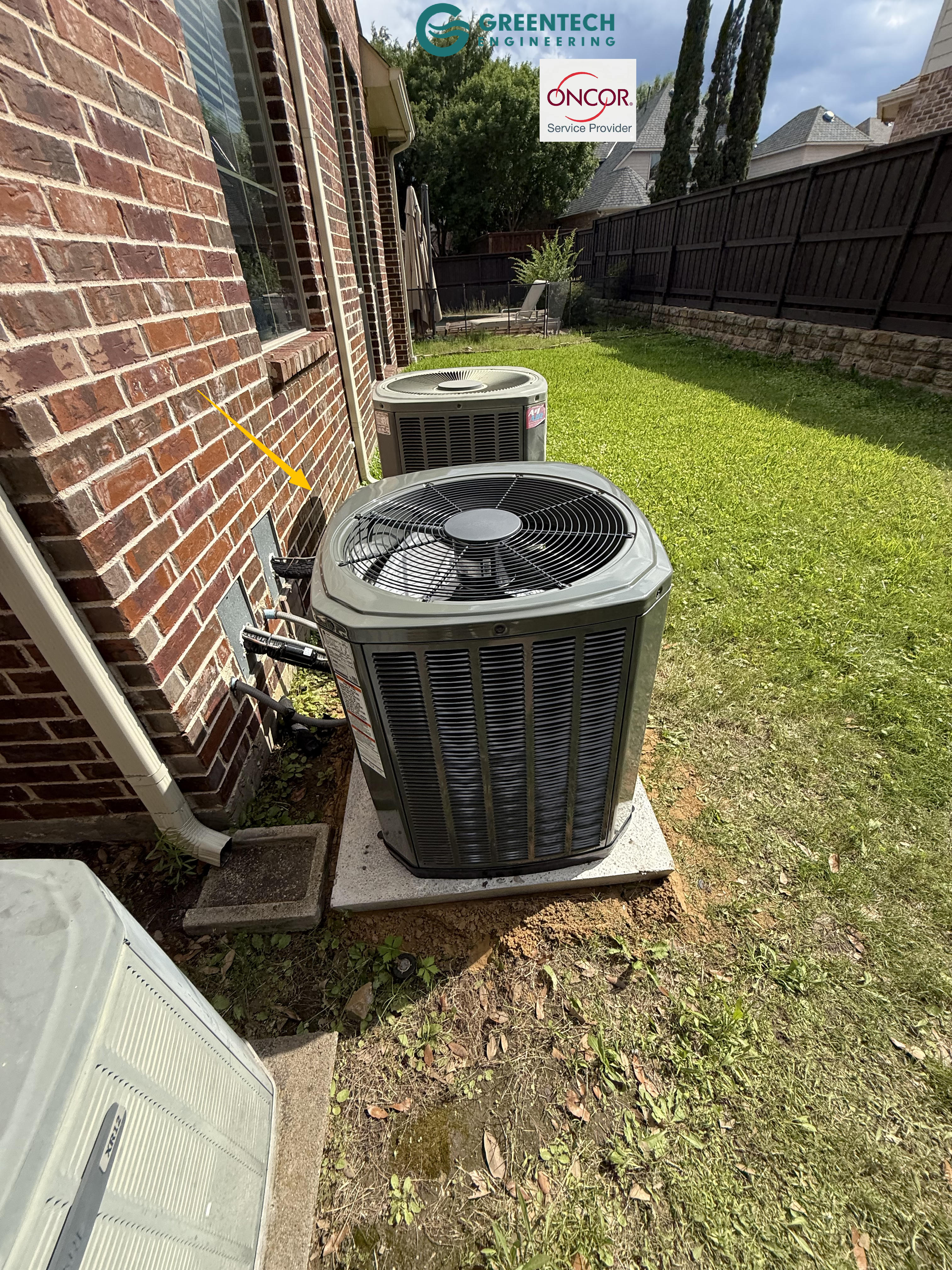
With the precise 3-Ton sizing established for both levels, we engineered an AHRI-certified matchup from Trane. Known for their legendary durability ("It's Hard to Stop a Trane"), this specific combination achieves a highly efficient 15.2 SEER2 and 12.0 EER performance, perfectly supporting the 2023 DOE Energy Conservation Standards.
The 3-Ton Trane Split System Air Conditioners
To combat the brutal North Texas heat quietly and efficiently, the new outdoor units feature:
- High-Efficiency Copeland® Scroll Compressor: The gold standard in compressor technology, utilizing fewer moving parts for a longer, quieter lifespan.
- High- and Low-Pressure Switches: Factory-installed safety limits that protect the compressor from damage if the system ever loses refrigerant or airflow.
- 10-Year Factory Limited Parts Warranty (upon homeowner registration).
The 36,000 BTU Horizontal Cased Coils
- Internal Factory-Installed TXV: A Thermal Expansion Valve dynamically regulates refrigerant flow based on the exact heat load inside the house, maximizing latent cooling (dehumidification).
- All-Aluminum Construction: Rifled aluminum tubing and corrugated aluminum fins prevent the formicary corrosion and leaks common in older copper coils.
The 60,000 BTU Gas Furnaces (80% AFUE)
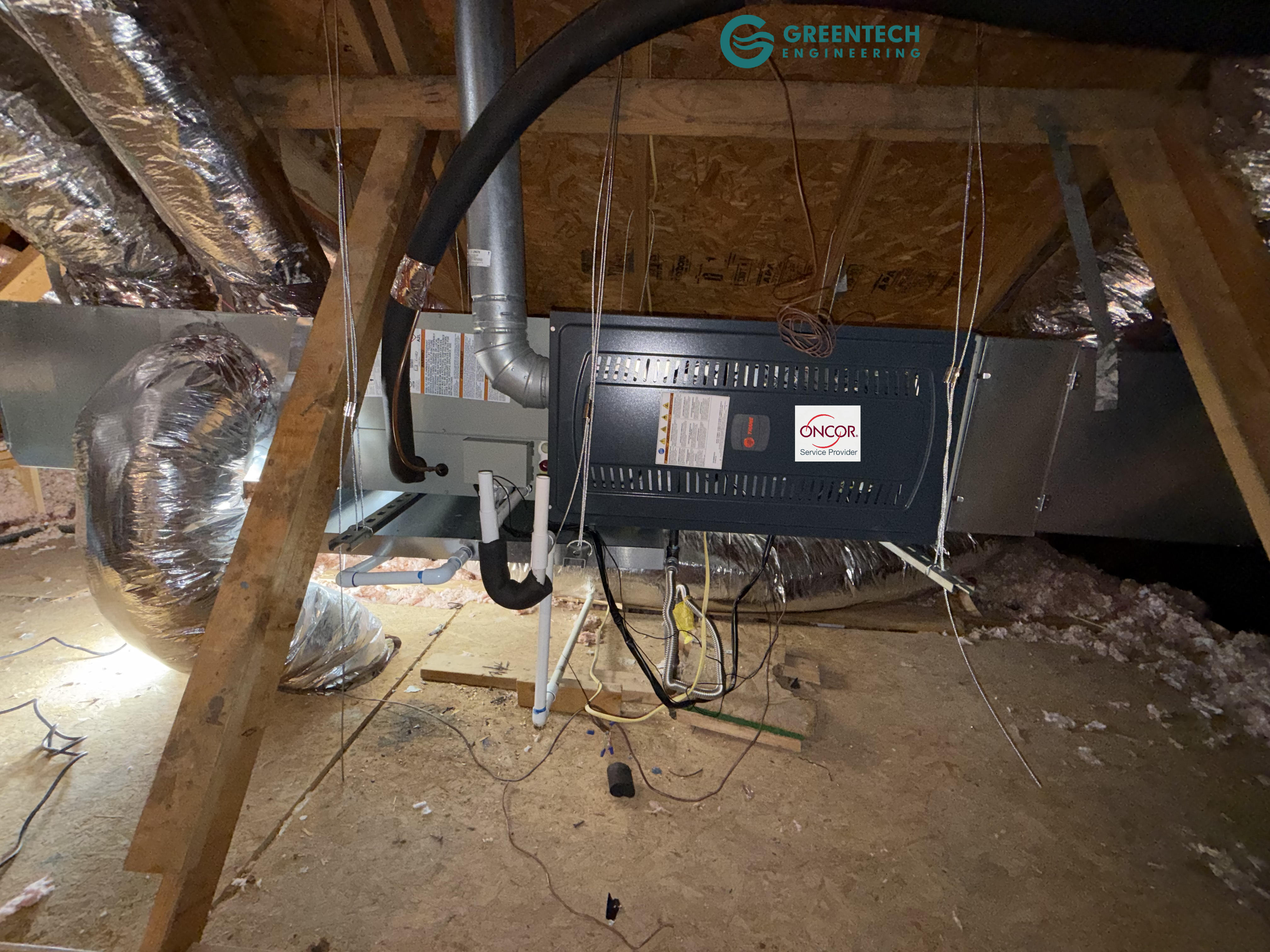
Because this home utilizes a horizontal attic installation for its ductwork, we installed heavy-duty Trane gas furnaces to handle the winter heating loads.
- 9-Speed ECM Blower Motor: This electronically commutated motor adjusts airflow precisely across 9 different speed taps, drastically reducing electricity usage and offering whisper-quiet continuous fan circulation.
- Stainless-Steel Dual-Diameter Tubular Heat Exchanger: A heavy-duty, fully insulated heat exchanger designed to withstand decades of expansion and contraction without cracking.
- Silicon Nitride Igniter: A highly durable ignition system that ensures reliable winter heating.
The Greentech Standard: 11-Step Clinical Installation Protocols
Installing two full systems in one project requires immaculate attention to detail. At Greentech Engineering, we executed the following clinical protocols to ensure these Trane systems last for decades:
- Safe Recovery: The old, oversized systems were removed and all refrigerant was pumped down and legally recovered.
- Infrastructure Upgrades: We installed new gas sediment traps, new drain pans, Safe-T drain switches (to prevent attic floods), drain line insulation, and new concrete condenser equipment pads.
- Nitrogen Drain Clearing: The condensation drain lines were cleared with pressurized dry nitrogen. New drain traps and vents were installed.
- Precision Sealing: The new coils and furnaces were mechanically secured to the plenums using hex washer head HVAC screws. All connection areas were sealed with specialized HVAC metal tape and duct sealant to guarantee zero air leakage.
- Code Compliance: All necessary gas line and furnace exhaust flue pipe modifications were completed to municipal codes.
- RX-11 Copper Flushing: The existing copper line sets were chemically flushed with RX-11 and chased with dry nitrogen to remove old, acidic mineral oil.
- Nitrogen Purging & 15% Silver Brazing: All copper joints were soldered by certified technicians using premium 15% silver brazing rods while flowing dry nitrogen to prevent internal oxidation (black soot) from forming inside the pipes.
- 250 PSI Nitrogen Pressure Test: We pressurized both closed systems with dry nitrogen to 250 psi and held it for 15 minutes to guarantee absolutely zero micro-leaks.
- 500-Micron Deep Vacuum: We utilized specialized vacuum pumps to pull the system pressures below 500 microns, physically extracting any microscopic atmospheric moisture from the lines.
- Commissioning: The systems were fully charged, run, and tested for precise superheat, subcooling, and airflow metrics.
Why You Need an Authorized Oncor Service Provider
Because we correctly downsized both systems and utilized highly efficient ECM motors and TXVs, this Allen homeowner drastically reduced their home's total energy draw. The utility company took notice. By upgrading both zones simultaneously, this homeowner unlocked over $3,500 in direct utility incentives.
You cannot claim the Oncor rebate by buying an AC online or hiring an uncertified handyman. The utility company strictly regulates the disbursement of these funds to protect the integrity of the power grid.
To access the Home Energy Efficiency Program, you must hire an official Oncor Participating Service Provider.
When you partner with Greentech Engineering, we handle the entire bureaucratic process. We gather the AHRI (Air-Conditioning, Heating, and Refrigeration Institute) performance certificates, document the baseline load of your old system, submit the engineering data to the Oncor portal, and secure the approval.
Best of all, you do not have to wait months for a check to arrive in the mail. We apply the approved Oncor incentive as an instant, upfront discount directly on your installation invoice.
2026 Oncor Incentive Snapshot: Dallas-Fort Worth
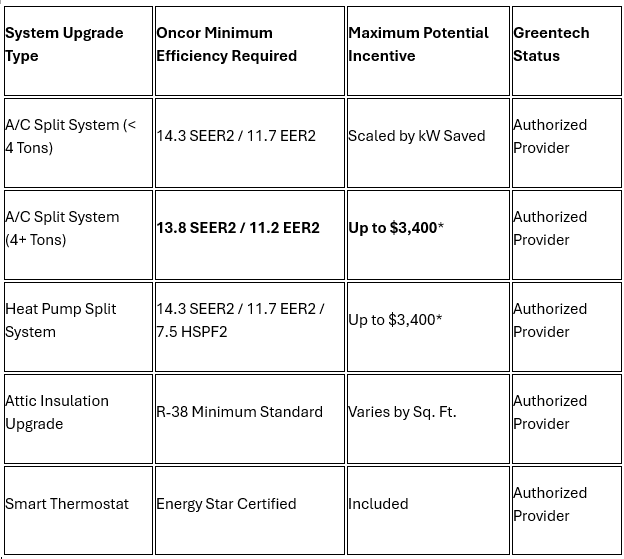
*Incentive Disclaimer: The $3,400 figure represents the absolute maximum potential incentive. Actual instant discount amounts are strictly determined by Oncor's customized kW/kWh reduction formula based on your specific home’s thermodynamic load reduction. Proactive replacement and proper Manual J sizing are the keys to maximizing your payout.
Frequently Asked Questions
Q: Do I have to replace both my upstairs and downstairs AC units at the same time?
A: While it is not strictly mandatory to replace both at the same time if only one is broken, doing so offers massive benefits. Replacing both systems simultaneously ensures your entire home operates on the same high-efficiency platform, significantly lowers your overall labor costs for the project, and allows you to maximize your Oncor utility rebates (as seen in this $3,500+ case study).
Q: Why did Greentech downsize the AC units from 4-Ton to 3-Ton?
A: Bigger is not better. If an AC is too large for the house, it cools the rooms too fast and shuts off before it can remove the humidity (short-cycling). By using an ACCA Manual J Load Calculation, we proved the home only needed 3 Tons per floor. The downsized systems run quieter, remove humidity perfectly, and use significantly less electricity.
Q: What is a 9-Speed ECM blower motor?
A: ECM stands for Electronically Commutated Motor. Older AC systems use single-speed motors that blast air at one loud, inefficient speed. A 9-speed ECM motor in a Trane furnace can precisely adjust its airflow. It ramps up smoothly, pushes the exact amount of air needed, operates whisper-quiet, and drastically lowers your monthly electric bills.
Q: Does a Trane 15.2 SEER2 AC qualify for the Oncor rebate in Allen, TX?
A: Yes! When properly matched with an AHRI-certified coil and furnace, and installed by an Authorized Oncor Participating Service Provider like Greentech Engineering, a 15.2 SEER2 Trane system comfortably exceeds the utility's minimum requirement of 14.3 SEER2 / 11.7 EER2
Learn more about our free estimate and service, contact us today.
About the Author: Siwei (Lucas) Chen
CTO | Greentech Engineering Heating & Air Conditioning
Siwei (Lucas) Chen specializes in engineering-driven HVAC diagnostics, thermodynamic performance optimization, and custom ductwork design for Dallas homeowners. Holding a B.S. in Mechanical Engineering from Virginia Tech, he brings a strict, data-first approach to residential heating and cooling. Under his technical leadership, Greentech Engineering ensures every system is perfectly calibrated for the Texas climate, focusing relentlessly on ACCA Manual J load calculations, meticulous clinical installation standards, and securing maximum utility rebates for his clients.
Professional Certifications:
- ACCA Certified (Manual J, S, D)
- Daikin Comfort Pro Contractor
- NCI Certified – Air Balancing & Duct Optimization
- Oncor Participating Service Provider
Industry Affiliations:

Flexible Financing Options
Explore our range of flexible financing options designed to suit your needs and budget.