






Frisco Downstairs HVAC Replacement: 5-Ton Daikin AC and Gas Furnace
By Siwei (Lucas) Chen
Project completed August 20, 2026 | Frisco, Texas 75034
A two-story Frisco home with separate upstairs and downstairs HVAC systems had no cooling downstairs. Greentech replaced only the affected system with a matched nominal 5-ton Daikin R-32 air conditioner, evaporator coil and 100,000-BTU-input gas furnace, then added a 14-inch R-8 insulated flex return-air duct. The exact AHRI-certified combination is rated at 55,500 BTUH, 13.8 SEER2 and 11.2 EER2.
When one floor stops cooling in a two-system home, the first question is scope: does the problem involve one HVAC system or the entire house?
In this Frisco 75034 case, the home had two independent HVAC systems. The reported no-cooling condition affected the downstairs system, so Greentech Engineering Heating & Air Conditioning — DFW HVAC replaced the downstairs outdoor air conditioner, indoor evaporator coil and gas furnace. The separate system serving the other level was not part of this project.
This distinction matters. Calling the work a “whole-home HVAC replacement” would be inaccurate, while calling it only an “AC replacement” would leave out the new furnace, indoor coil and return-air work.
Project at a glance
- Property: Two-story, single-family home with two HVAC systems
- Location: Frisco, Texas 75034
- Completion date: August 20, 2026
- Reported problem: No cooling downstairs
- Replacement scope: Downstairs straight-cool air conditioner, evaporator coil and natural-gas furnace
- Outdoor equipment: Daikin
DC4SEA6010AA, R-32, nominal 5-ton - Indoor coil: Daikin/AlumaCoil
CHPTA6030D3AA, R-32 compatible - Gas furnace: Daikin
DR80SN1005CXAA, horizontal, 100,000 BTUH input and 80,000 BTUH output - Certified system rating: 55,500 BTUH, 13.8 SEER2 and 11.2 EER2
- Return-air work: One new 14-inch R-8 insulated flex return-air duct
- Labor coverage: Complimentary three-year labor warranty, subject to the written terms
Why did this Frisco project replace only the downstairs system?
A two-story home can use one HVAC system with zoning, or it can use separate systems for different floors or areas. This home had two HVAC systems. The downstairs equipment was the system associated with the reported no-cooling condition.
Replacing only the affected system kept the public project description precise:
- The downstairs outdoor unit was replaced.
- The downstairs evaporator coil was replaced.
- The downstairs gas furnace was replaced.
- A 14-inch R-8 insulated flex return-air duct was added to the downstairs system’s scope.
- The home’s second HVAC system was not included in this replacement.
The available project record does not identify the technical cause of the no-cooling condition. This case study therefore does not speculate about compressor failure, refrigerant loss, electrical failure or another diagnosis.
Homeowners experiencing a similar floor-specific problem can begin with Greentech’s Frisco HVAC service page or review local AC replacement options in Frisco.
What Daikin equipment was installed?
The completed downstairs replacement used three matched components:
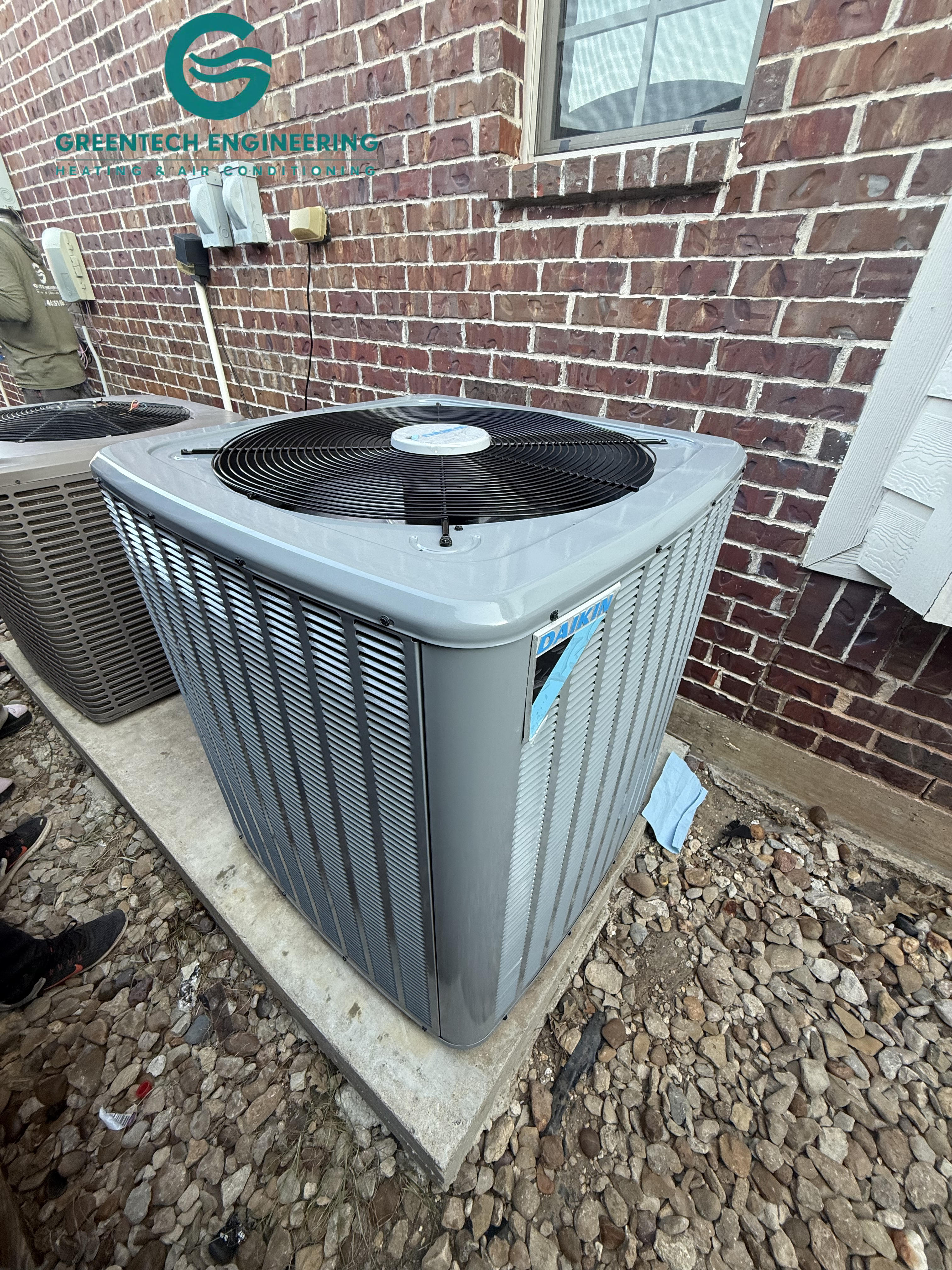
Daikin DC4SEA6010AA outdoor air conditioner
The outdoor unit is a nominal 5-ton Daikin DC4SE-series straight-cool air conditioner designed for R-32 refrigerant. It provides cooling; it is not a heat pump. Daikin identifies the DC4SE product family as an R-32 split-system air conditioner.
Daikin CHPTA6030D3AA evaporator coil
The indoor evaporator coil is a Daikin/AlumaCoil CHPTA horizontal cased coil. Daikin describes the CHPTA product family as an A2L-compliant, all-aluminum R-32 horizontal cased coil for split systems.
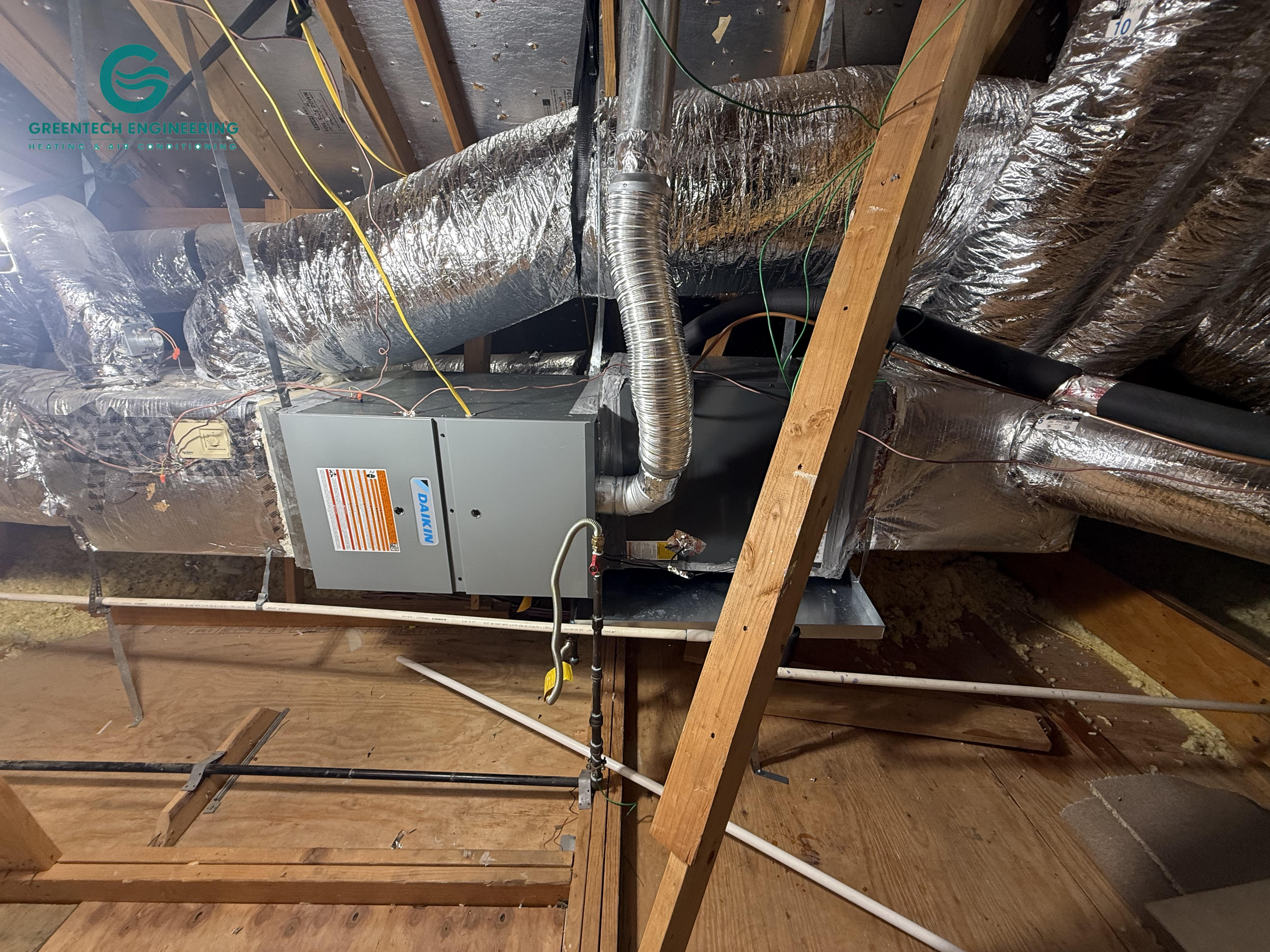
Daikin DR80SN1005CXAA gas furnace
The natural-gas furnace is installed horizontally in the attic. Its label lists 100,000 BTUH input and 80,000 BTUH output. Daikin identifies the DR80SN series as a multi-position gas furnace with an ECM blower and up to 80% AFUE.
Together, these components make a conventional split system: electric air conditioning for cooling and a gas furnace for heating.
Is a nominal 5-ton system always rated at 60,000 BTU?
No. “Five ton” is a nominal equipment class, not a promise that every certified equipment combination will deliver exactly 60,000 BTUH under the applicable test conditions.
For this project, AHRI certificate 214856345 identifies the exact matched combination as:
- Outdoor unit family:
DC4SEA6010A* - Evaporator-coil family:
CHPTA6030*3A* - Furnace family:
DR80SN1005C*A* - Certified cooling capacity: 55,500 BTUH
- Certified efficiency: 13.8 SEER2
- Certified full-load efficiency: 11.2 EER2
The installed model suffixes fit the model families listed on the certificate. These exact-combination ratings are more useful than applying a product-family “up to” rating to the project.
Broader estimate and product-family figures are not used here because the exact AHRI certificate controls the project-specific capacity and efficiency claims.
This is also why the article uses nominal 5-ton. No Manual J load calculation was supplied for publication, so the case study does not claim that five tons was proven to be the home’s required design load.
What do 100,000-BTU input and 80,000-BTU output mean for the furnace?
The furnace label provides two different heating figures:
- 100,000 BTUH input describes the fuel energy entering the furnace.
- 80,000 BTUH output describes its listed heating output.
Those figures align with an 80% AFUE furnace category. They should not be confused with the air conditioner’s 55,500-BTU certified cooling capacity. Heating input, heating output and certified cooling capacity describe different functions of the same split HVAC system.
The furnace cabinet also contains the blower that moves air across the evaporator coil during cooling. That is one reason the furnace remains relevant to cooling-system operation even when the thermostat is not calling for heat.
Why was a 14-inch R-8 return-air duct included?
The project included one new 14-inch R-8 insulated flex return-air duct. Return ductwork carries air from the living space back to the furnace blower and evaporator coil.
Return air belongs in the system conversation because the outdoor condenser cannot distribute conditioned air through the house by itself. The blower, evaporator coil, return path and supply ductwork all participate in moving and conditioning air.
However, the available public record does not include before-and-after airflow or total external static-pressure measurements. This article therefore does not assign a specific CFM increase, pressure reduction, comfort improvement or efficiency gain to the added duct.
The verified public description is one new 14-inch R-8 insulated flex return-air duct.
Homeowners who need a broader airflow evaluation can learn more about Greentech’s ductwork services.
What installation work was addressed beyond the equipment boxes?
Replacing a split air conditioner, coil and gas furnace involves more than placing three new cabinets. The documented project scope called for work involving:
- Recovery and removal of the previous refrigerant-containing equipment
- Positioning and securing the horizontal furnace-and-coil assembly
- Equipment and duct-connection sealing
- Condensate drainage and safety components
- Gas-line and furnace-venting modifications as required
- Preparation and modification of the existing refrigerant line set
- Dry-nitrogen pressure testing
- System evacuation before startup
- Operational checks after installation
This public case study does not convert required procedures into unsupported final measurements. Exact pressure-hold, vacuum, airflow, refrigerant-charge and temperature results should come from the complete technician closeout or commissioning record.
What do the project photos document?
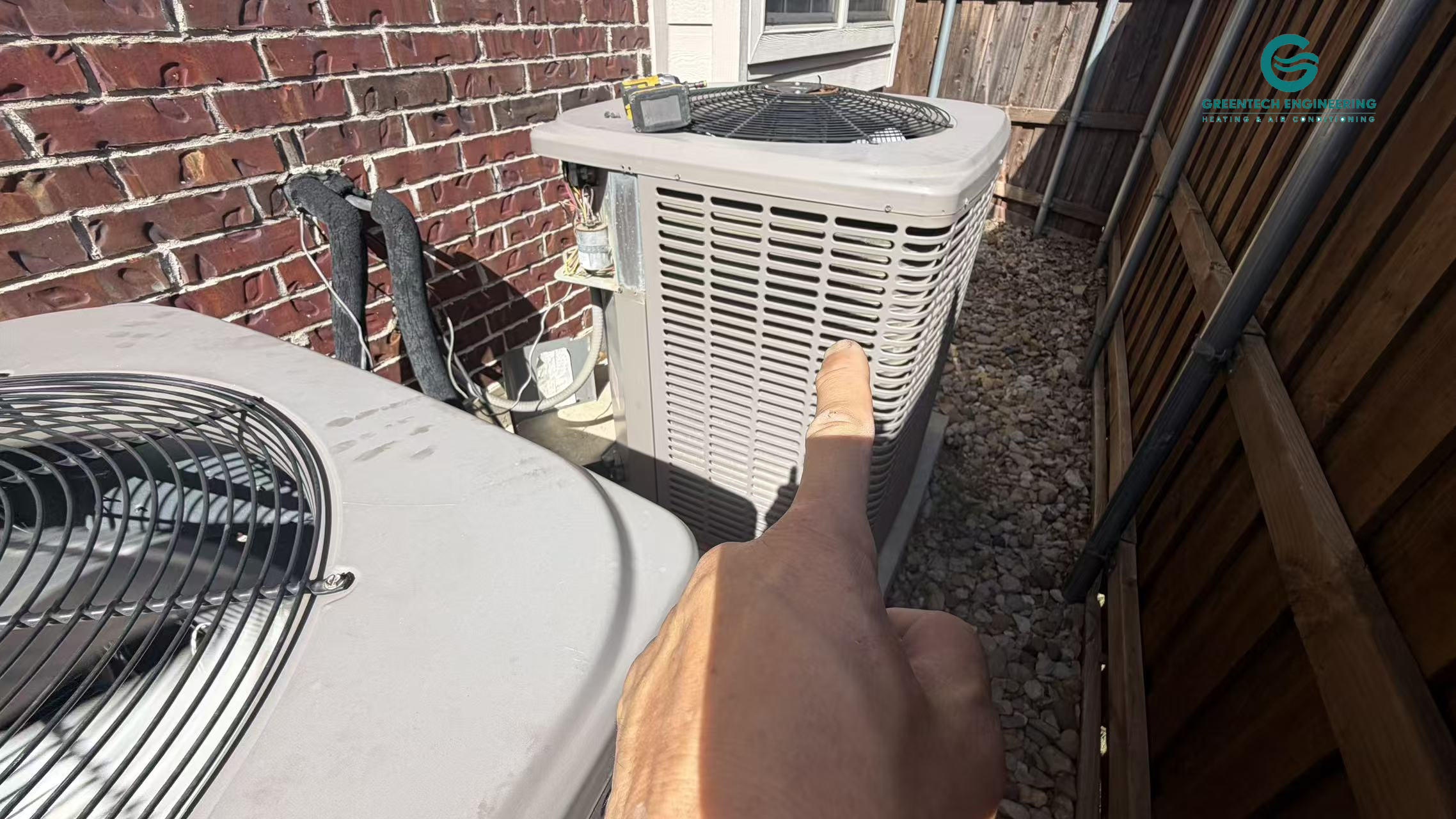
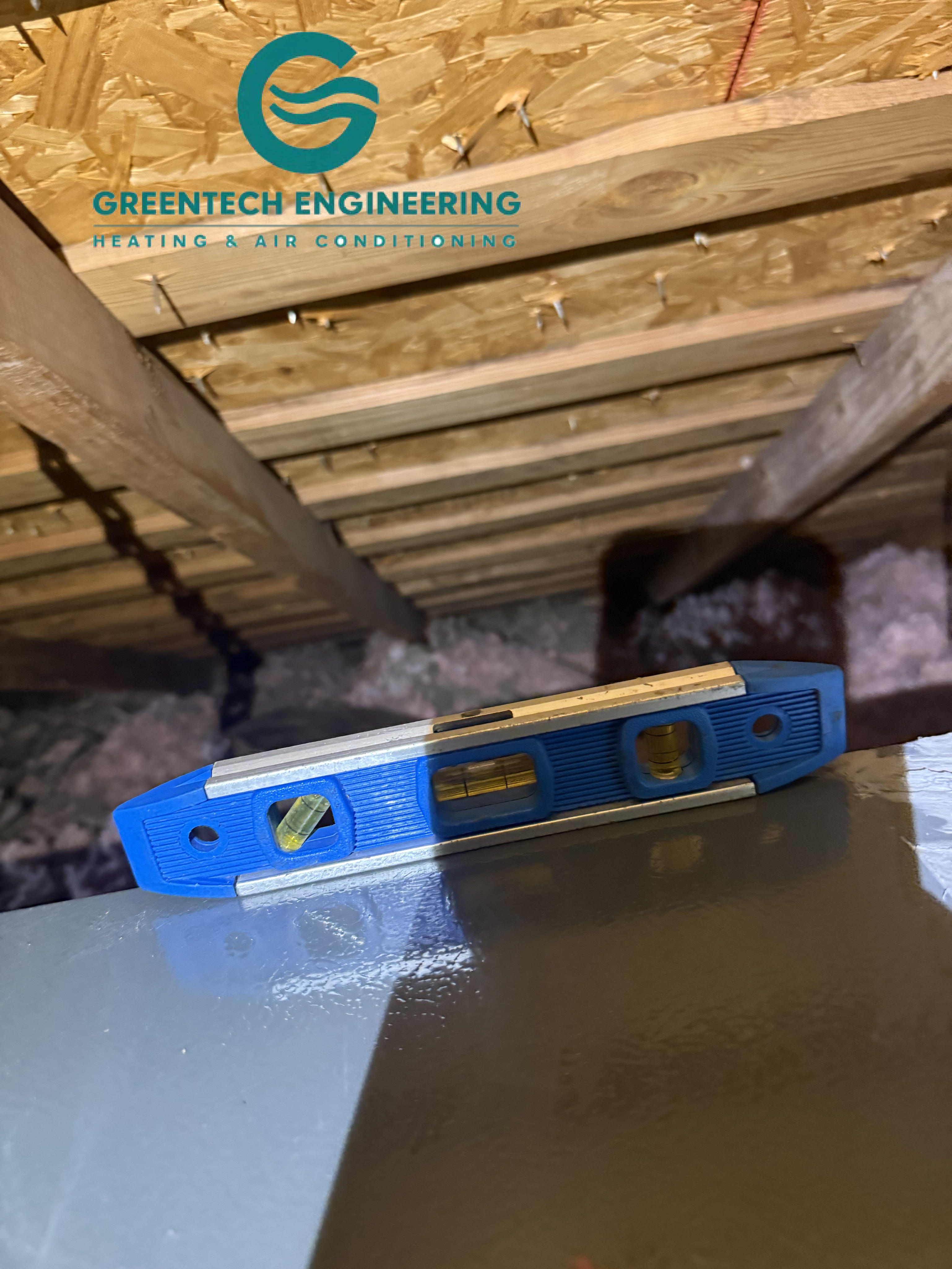
The approved project photos provide first-party visual evidence of the previous indoor assembly, the installed Daikin outdoor unit, the new horizontal furnace-and-coil assembly and equipment-position work during installation.
They do not independently prove total system airflow, delivered capacity, refrigerant charge or long-term performance. For that reason, isolated service-gauge and infrared surface-temperature photos are not included in the public article.
Before publication, every selected photo should have EXIF and GPS metadata removed. Serial numbers, barcodes, QR or Data Matrix codes, customer information, license plates and unnecessary identifying property details must also be cropped or redacted.
What should Frisco homeowners ask before replacing one system in a two-system home?
If one floor is not cooling and a contractor recommends replacement, ask for clear answers to these questions:
- Which HVAC system serves the affected floor or area?
- Which components are being replaced, and which will remain?
- What are the complete model numbers of the proposed outdoor unit, coil and furnace or air handler?
- What AHRI-certified combination applies to the installed equipment?
- Are the quoted efficiency and capacity values for the exact match or only a product-family maximum?
- What evidence supports the proposed nominal equipment size?
- Does the return or supply duct system require modification?
- Which pressure-test, evacuation, airflow and startup results will appear in the final record?
- What labor coverage applies, and how is it different from manufacturer coverage?
- Are permitting and inspection included, and what documentation will be provided?
These questions help separate a documented system proposal from a collection of equipment-brand and maximum-rating claims.
What labor warranty was included?
The project documents include a complimentary three-year, or 1,095-day, labor warranty. Coverage remains subject to the complete written terms, including exclusions and non-transferability.
Manufacturer coverage is separate from Greentech’s labor warranty. Exact manufacturer-warranty duration should be confirmed through the applicable product certificates, registration status and written terms rather than assumed from a general product page.
Schedule an HVAC replacement evaluation in Frisco
If one floor of your Frisco home is not cooling, the first step is to identify which system and components are involved. Greentech Engineering Heating & Air Conditioning — DFW HVAC can evaluate the affected equipment, the proposed system match and relevant ductwork before recommending repair or replacement.
CTA button: Schedule an HVAC Evaluation
Frequently asked questions
Was the entire two-system HVAC setup replaced?
No. This case study covers the downstairs system associated with the reported no-cooling condition. The home has a separate HVAC system serving the other level, and that system was not part of this replacement.
What equipment was installed?
The replacement included a nominal 5-ton Daikin R-32 straight-cool air conditioner, a matched horizontal evaporator coil and a 100,000-BTU-input, 80% AFUE gas furnace.
Is a nominal 5-ton air conditioner always certified at 60,000 BTU?
No. Nominal tonnage identifies an equipment class. The exact AHRI-certified combination installed in this project is rated at 55,500 BTUH under the certificate’s test conditions.
What efficiency rating applies to this exact system?
AHRI certificate 214856345 lists the matched equipment combination at 13.8 SEER2 and 11.2 EER2. Those project-specific values should be used instead of a product-family “up to” rating.
Does this case prove that five tons was the correct load for the home?
No. The installed outdoor unit is in the nominal 5-ton class, but no Manual J load calculation was supplied for publication. The article therefore does not make a right-sizing claim.
Why are the furnace input and output ratings different?
The furnace label lists 100,000 BTUH input and 80,000 BTUH output. Input describes fuel energy entering the furnace; output describes the listed heating output. Neither figure is the air conditioner’s cooling capacity.
Why was a return-air duct added?
A 14-inch R-8 insulated flex return-air duct was included in the completed project scope. No quantified airflow or static-pressure improvement is claimed because project-specific before-and-after measurements were not supplied for publication.
What labor warranty applies?
The project includes a complimentary three-year labor warranty, subject to the complete written coverage, exclusions and non-transferability terms.
Photo disclosure: Project photos used with permission. Identifying information has been removed.
Content disclosure: Equipment ratings shown are for the exact AHRI-certified combination installed in this project. Results and project requirements vary by home.
About the author
Siwei (Lucas) Chen
Chief Technology Officer | Greentech Engineering Heating & Air Conditioning — DFW HVAC
Siwei (Lucas) Chen applies an engineering-based, data-first approach to residential HVAC system design, diagnostics, airflow measurement, equipment selection and duct-system optimization across Dallas–Fort Worth. He holds a B.S. in Mechanical Engineering from Virginia Tech.
Lucas completed ACCA’s Residential Design for Quality Installation Course, which covers residential design procedures associated with ACCA Manuals J, S, T and D. He is also an NCI Certified Residential Air Balancer and NCI Certified Duct System Optimization Specialist.

Flexible Financing Options
Explore our range of flexible financing options designed to suit your needs and budget.