






Little Elm Clinic HVAC Replacement: Two 5-Ton A/C Systems
By Siwei (Lucas) Chen | Greentech Engineering Heating & Air Conditioning — DFW HVAC
Project completed November 7, 2026 | Little Elm, Texas 75068
Quick answer: Greentech replaced two Carrier HVAC systems at a light-commercial clinic in Little Elm with two separate nominal 5-ton Daikin straight-cool A/C systems. Each new system has its own outdoor air conditioner, horizontal indoor air handler, electric resistance heat and thermostat. The documented scope also included two return plenums, two metal duct connection segments, drain protection and startup-related work.
This was not one 10-ton system, a heat-pump conversion or a gas-furnace project. It was a two-system commercial replacement planned around the complete indoor-and-outdoor assemblies—not only the outdoor cabinets.
Businesses comparing replacement options can review Greentech’s HVAC services in Little Elm, TX. This case study shows why a commercial proposal should clearly separate equipment, connections, controls and installation work.
Project facts
- Location: Little Elm, TX 75068
- Property type: Unnamed light-commercial clinic
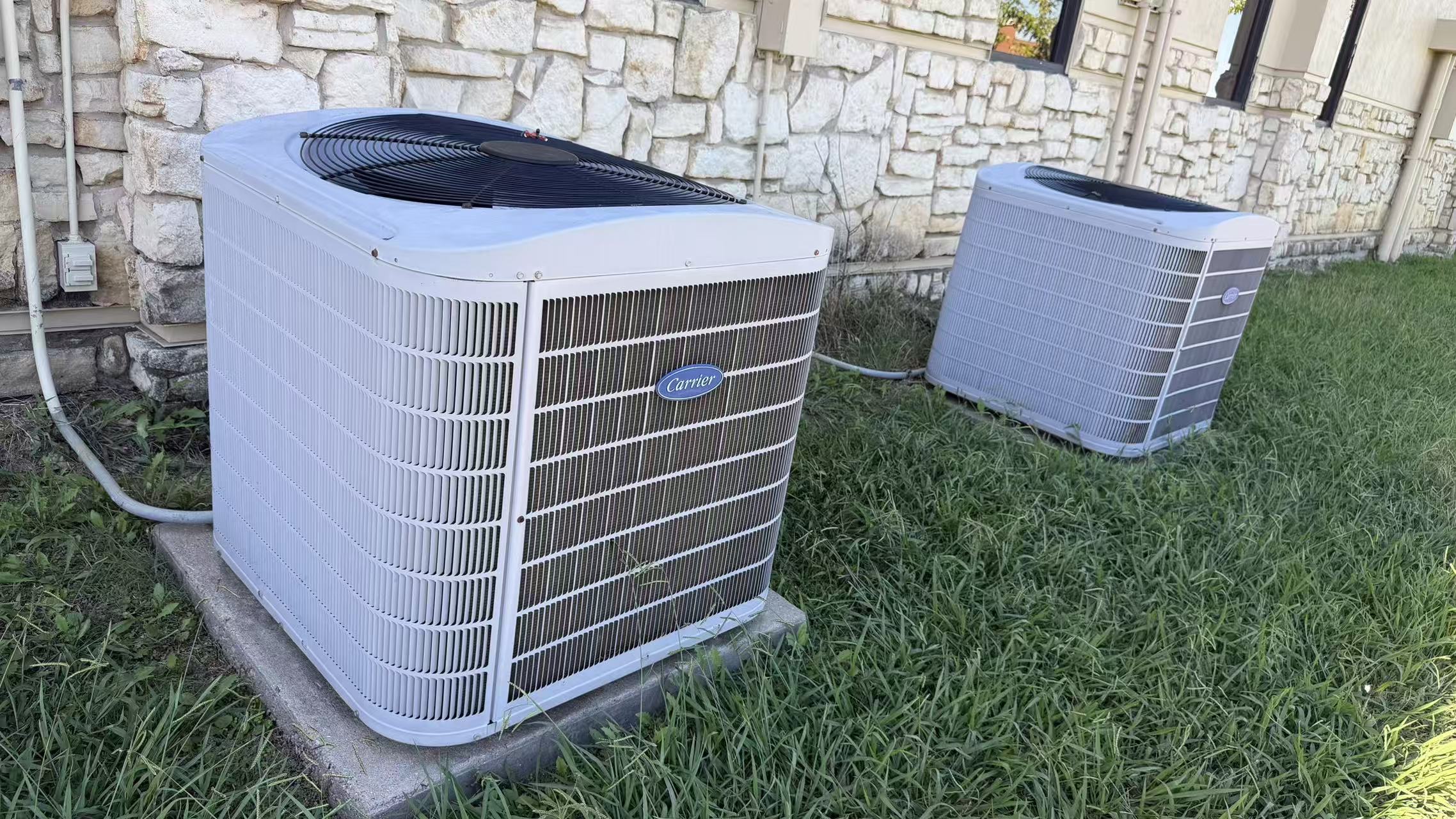
- Existing equipment: Two Carrier split systems
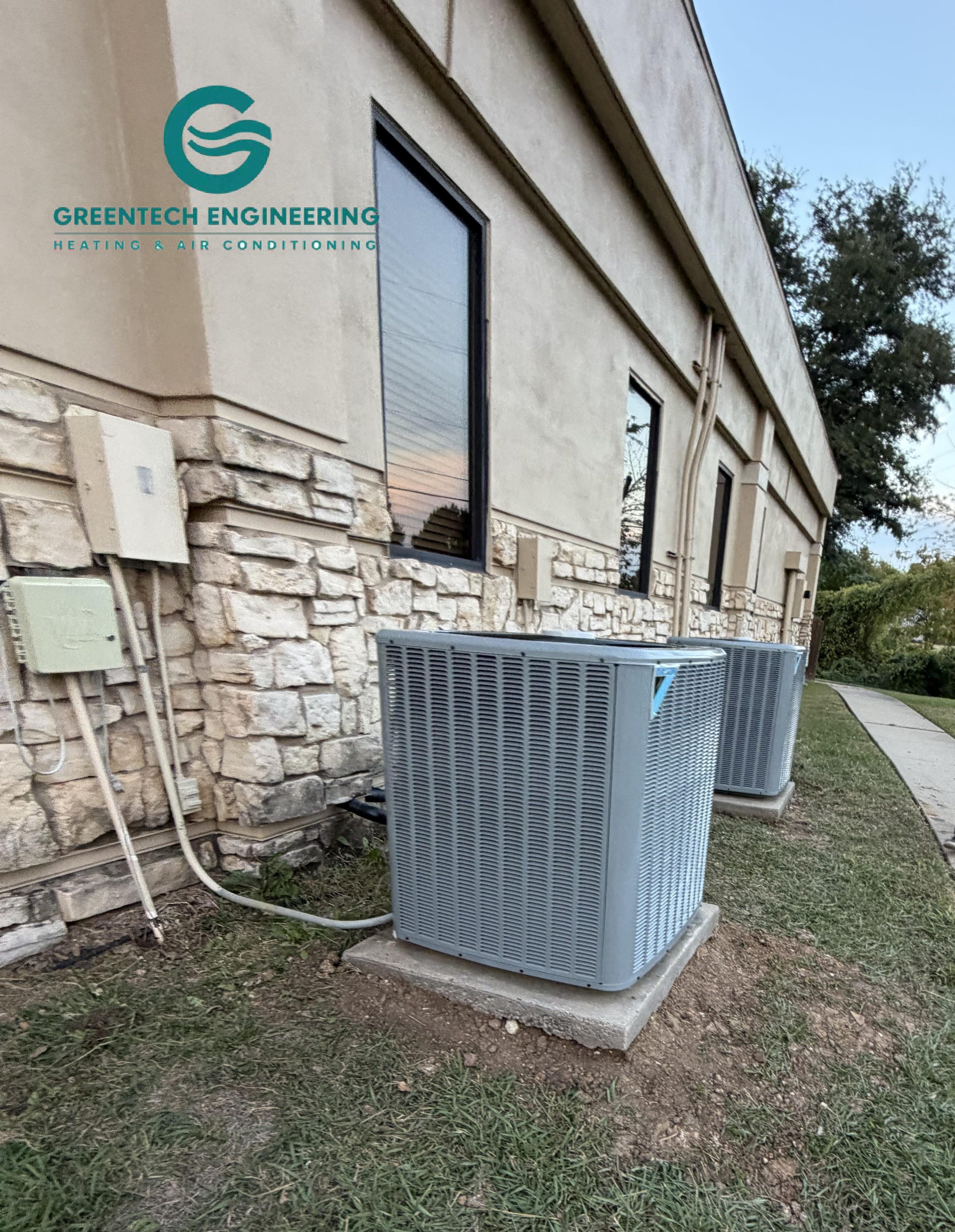
- New cooling equipment: Two separate nominal 5-ton Daikin straight-cool air conditioners
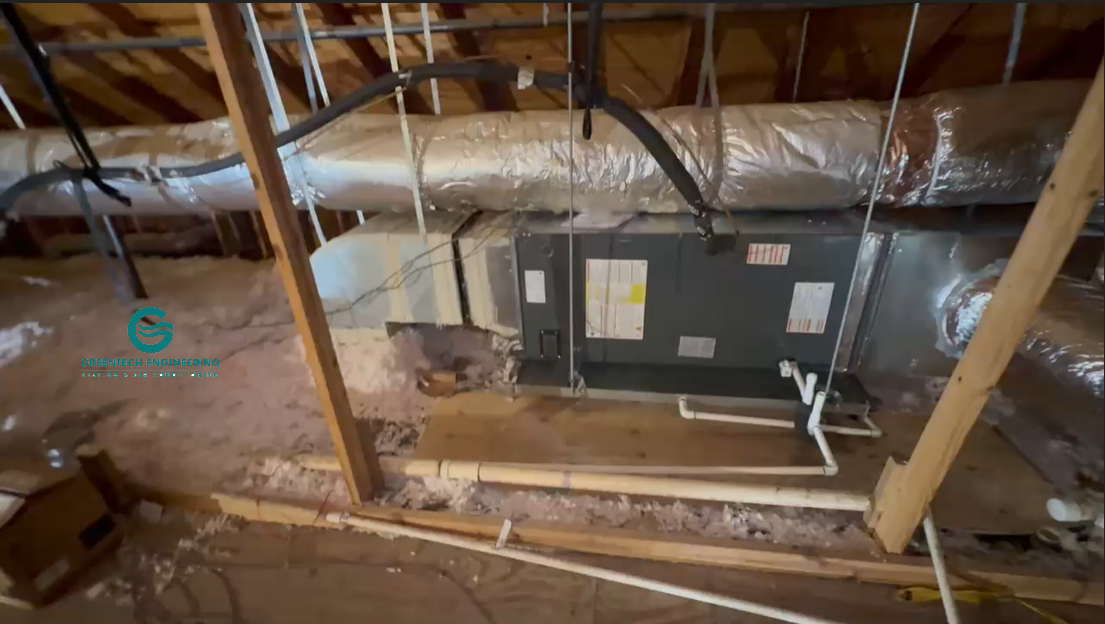
- Indoor equipment: Two horizontal air handlers
- Heating: Electric resistance heat at the indoor equipment
- Air-path work: Two return plenums and two metal duct connection segments
- Controls: Two thermostats
- Drain protection: Drain pans, condensate safety switches and drain-line work in the written scope
- Installation completed: November 7, 2026
- Manufacturer coverage: Daikin five-year limited parts warranty for this commercial application, subject to the applicable written warranty terms, equipment eligibility, limitations and exclusions
- Labor coverage: Greentech three-year labor warranty, separate from the manufacturer parts warranty, nontransferable and subject to its own written terms
The project record does not establish a diagnosis, Manual J result, measured before-and-after performance, utility savings, healthcare ventilation upgrade, permit outcome or inspection result. None is claimed here.
What changed during this Little Elm commercial HVAC replacement?
The clinic’s two Carrier systems were replaced with two independent Daikin split systems. Each replacement has three main operating elements:
- an outdoor straight-cool A/C unit;
- a horizontal indoor air handler with electric resistance heating; and
- its own thermostat.
Calling the project “two 5-ton systems” does not mean one 10-ton unit was installed. Each nominal 5-ton system is separate and serves through its own equipment path and controls.
Cooling and heating also come from different components. The outdoor units provide mechanical cooling. Electric resistance heaters at the indoor equipment provide heat. The outdoor units are not heat pumps, and the documented replacement scope contains no gas furnaces.
Why did the scope include indoor air handlers, plenums and duct connections?
A split-system replacement is more than an outdoor-unit swap. The outdoor air conditioner depends on the indoor coil and blower, while the indoor assembly must connect to the building’s existing return and supply air paths.
A return plenum is the chamber that routes return air into the indoor equipment. Replacing the two air handlers required reconnecting the new equipment to the existing duct system. The written scope included:
- two new return plenums;
- two metal duct connection segments;
- sealing at the equipment connections;
- drain pans and condensate safety switches;
- work on the condensate drain lines; and
- support for the horizontal attic equipment.
These supporting items matter when comparing commercial HVAC bids. Two proposals can list the same number of systems and the same nominal capacity while including very different amounts of sheet-metal, drainage, control and reconnection work.
What installation work was listed beyond the equipment?
The written scope included refrigerant recovery from the old systems, preparation of reused refrigerant lines, leak testing, evacuation and startup-related testing. Those are installation tasks; they are not the same thing as an equipment efficiency rating.
The scope also distinguished reused building infrastructure from replacement work. That distinction helps a business understand what it is buying and reduces ambiguity during bid comparison.
Before approving a commercial replacement, ask:
- Which refrigerant lines, drains and duct sections will be reused?
- Which transitions, plenums, controls and safety devices will be replaced?
- What startup checks are included in writing?
- What documentation will identify the final indoor-and-outdoor equipment combination?
- What labor coverage, limits and exclusions apply?
This article does not report measured evacuation, airflow, static pressure, refrigerant charge, temperature split or electrical results because those measurements were not supplied for public verification.
What did the proposal’s AHRI certificate establish?
The proposal included an AHRI certificate for the equipment combination listed in that proposal. The certificate reports 56,000 BTU/h cooling capacity, 14.00 SEER2 and 11.50 EER2 for that specified combination under standardized rating conditions.
Those figures should not be described as measurements taken at the clinic. The available publication record also does not reconcile the complete installed indoor-unit revision with the proposal-certificate listing. For that reason, this article identifies the numbers only as proposal-certificate ratings and does not present them as verified ratings for either installed system.
“Five ton” describes the nominal equipment class. It does not mean that each listed combination has exactly 60,000 BTU/h of certified capacity, and the two systems’ capacities should not be added together and promoted as one system rating.
The proposal identified the planned combination before replacement. The supplied certificate copy was downloaded on November 11, after the November 7 installation. That download date records when the copy was retrieved, not when the combination was first proposed.
AHRI describes its Directory of Certified Product Performance as the source for certified HVACR equipment performance. A building owner should retain the final equipment documentation and verify that the applicable certificate corresponds to the installed indoor-and-outdoor combination.
What should a clinic or small-business manager compare between HVAC bids?
1. The number of complete systems
Confirm whether each system includes an outdoor unit, indoor equipment, heating components and controls. “Two condensers” is not the same description as “two complete split systems.”
2. The building connections
Ask which plenums, duct transitions, drain components, refrigerant lines, electrical connections and equipment supports are included. Identify what will remain and what will be replaced.
3. The equipment documentation
Request the final indoor-and-outdoor equipment identifiers and the applicable matched-system certificate. A generic brand brochure or nominal tonnage does not establish the rating of a specific combination.
4. The work sequence and access plan
Discuss working hours, equipment access, protected work areas and how the contractor will coordinate any interruption. This article does not publish or promise the clinic’s actual downtime.
5. Startup records and warranty coverage
Ask what startup checks will be documented and obtain both applicable warranty documents. Daikin provides a five-year limited parts warranty for this commercial application, subject to the applicable written warranty terms, equipment eligibility, limitations and exclusions. Greentech’s three-year labor warranty is separate, nontransferable and subject to its own written terms.
What this clinic case confirms—and what it does not
Confirmed by the supplied project record
- Two Carrier systems were replaced at an unnamed Little Elm clinic.
- Two separate nominal 5-ton Daikin straight-cool A/C systems were installed.
- Each system has a horizontal air handler, electric resistance heat and thermostat.
- The scope included two return plenums and two metal duct connection segments.
- The installation was completed November 7, 2026.
- The proposal included an AHRI certificate with the qualified ratings described above.
- Daikin provides a five-year limited parts warranty for this commercial application, subject to the applicable written warranty terms, equipment eligibility, limitations and exclusions.
- Greentech’s three-year labor warranty is separate, nontransferable and subject to its own written terms.
Not established for publication
- A Manual J or other building-load result
- A diagnosis or reason the former systems required replacement
- Measured airflow, static pressure, temperature, humidity, power or energy savings
- Verified installed efficiency for either system
- A healthcare ventilation, filtration or infection-control upgrade
- A permit or inspection result
- A specific downtime, comfort or operating-cost outcome
Frequently asked questions
Did the clinic receive two systems or one 10-ton system?
It received two separate nominal 5-ton split systems. Each has its own outdoor air conditioner, horizontal air handler, electric resistance heat and thermostat.
Are the new outdoor units heat pumps?
No. They are straight-cool air conditioners. Electric resistance heaters at the indoor air handlers provide heat.
Did the project replace all the ductwork?
No. The documented scope included two return plenums and two metal duct connection segments that connect the new equipment to the existing duct system. It does not describe whole-building duct replacement.
Do the AHRI numbers describe performance measured at the clinic?
No. They are standardized ratings for the combination listed on the proposal’s certificate. The available publication record does not establish them as field measurements or verified installed ratings for either system.
Did this project include a healthcare ventilation or infection-control upgrade?
Not in the supplied publication record. This case documents a comfort-HVAC replacement. Requirements for a particular clinic depend on its use, spaces and applicable professional and code review.
What manufacturer and labor warranties apply to this project?
Daikin provides a five-year limited parts warranty for this commercial application, subject to the applicable written warranty terms, equipment eligibility, limitations and exclusions. Greentech’s three-year labor warranty is separate, nontransferable and subject to its own written terms.
Request a commercial HVAC replacement evaluation in Little Elm
Greentech Engineering Heating & Air Conditioning — DFW HVAC helps clinics and small businesses in Little Elm and across Dallas–Fort Worth compare complete HVAC replacement scopes, including indoor and outdoor equipment, air-path connections, drainage, controls and written startup requirements.
Schedule a commercial HVAC evaluation or call (469) 551-6806.
Your comfort, our priority.
About the author
Siwei (Lucas) Chen
Chief Technology Officer | Greentech Engineering Heating & Air Conditioning — DFW HVAC
Siwei (Lucas) Chen applies an engineering-based, data-first approach to HVAC system design, diagnostics, airflow measurement, equipment selection and duct-system optimization across Dallas–Fort Worth. He holds a B.S. in Mechanical Engineering from Virginia Tech.
Lucas completed ACCA’s Residential Design for Quality Installation Course, which covers residential design procedures associated with ACCA Manuals J, S, T and D. He is also an NCI Certified Residential Air Balancer and NCI Certified Duct System Optimization Specialist.

Flexible Financing Options
Explore our range of flexible financing options designed to suit your needs and budget.