






Frisco HVAC Plenum Replacement With a 3-Ton Daikin FIT
Short answer: On October 16, 2026, Greentech replaced the failed upstairs HVAC system in a two-system Frisco 75035 home. The project paired a nominal 3-ton Daikin FIT R-32 variable-speed A/C with a matched coil and two-stage gas furnace, then replaced both plenums, repositioned supply takeoffs and added manual branch dampers. AHRI reference 215488560 rates the installed combination at 33,600 BTUH, 16.0 SEER2 and 9.0 EER2.
The failed compressor was on an approximately 13-year-old, nominal 3.5-ton Goodman system. The central lesson is not that every 3.5-ton system should become a 3-ton system. It is that an upstairs replacement may require evaluating the served-area load, matched equipment, plenum geometry, branch connections, controls and incentive requirements—not simply copying the old outdoor-unit tonnage.
Project facts
- Location: Frisco, Texas 75035
- Home: Two-level single-family house with two HVAC systems
- Project boundary: Upstairs system only; the other system remained in place
- Reported diagnosis: Failed compressor
- Existing system age: Approximately 13 years
- Estimate date: September 15, 2026
- Installation completed: October 16, 2026
- Old outdoor unit: Goodman GSX160421AA, nominal 3.5-ton class, R-410A
- New outdoor unit: Daikin FIT DC6VSS3610AA, nominal 3-ton, variable-speed R-32 straight-cool A/C
- New coil: Daikin CHPEA3626B3 horizontal cased R-32 coil with EEV
- New furnace: Daikin DR80TC0603BN, 60,000-BTU input, approximately 48,000-BTU output, two-stage 80% AFUE gas furnace with variable-speed ECM blower
- Thermostat: Daikin One Touch communicating thermostat
- AHRI reference: 215488560
- AHRI performance: 33,600 BTUH, 16.0 SEER2 and 9.0 EER2
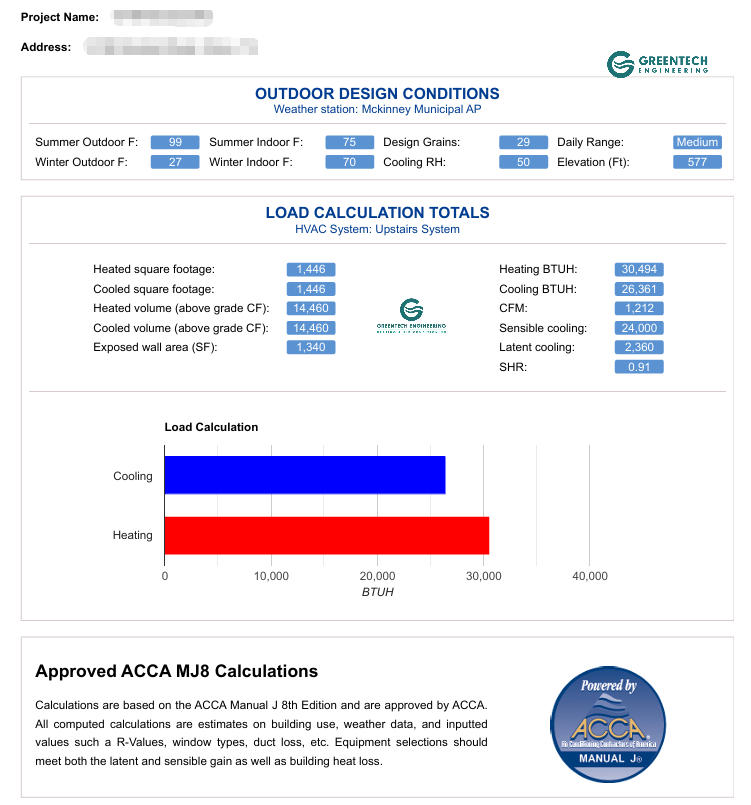
- Manual J record: 26,361-BTUH upstairs cooling load and 30,494-BTUH heating load for 1,446 square feet
- Air-distribution work: New supply and return plenums, adjusted supply takeoffs, limited duct modifications and manual branch dampers
- Oncor incentive: Approved $1,510 project incentive, reflected as a discount
What failed in the Frisco upstairs system?
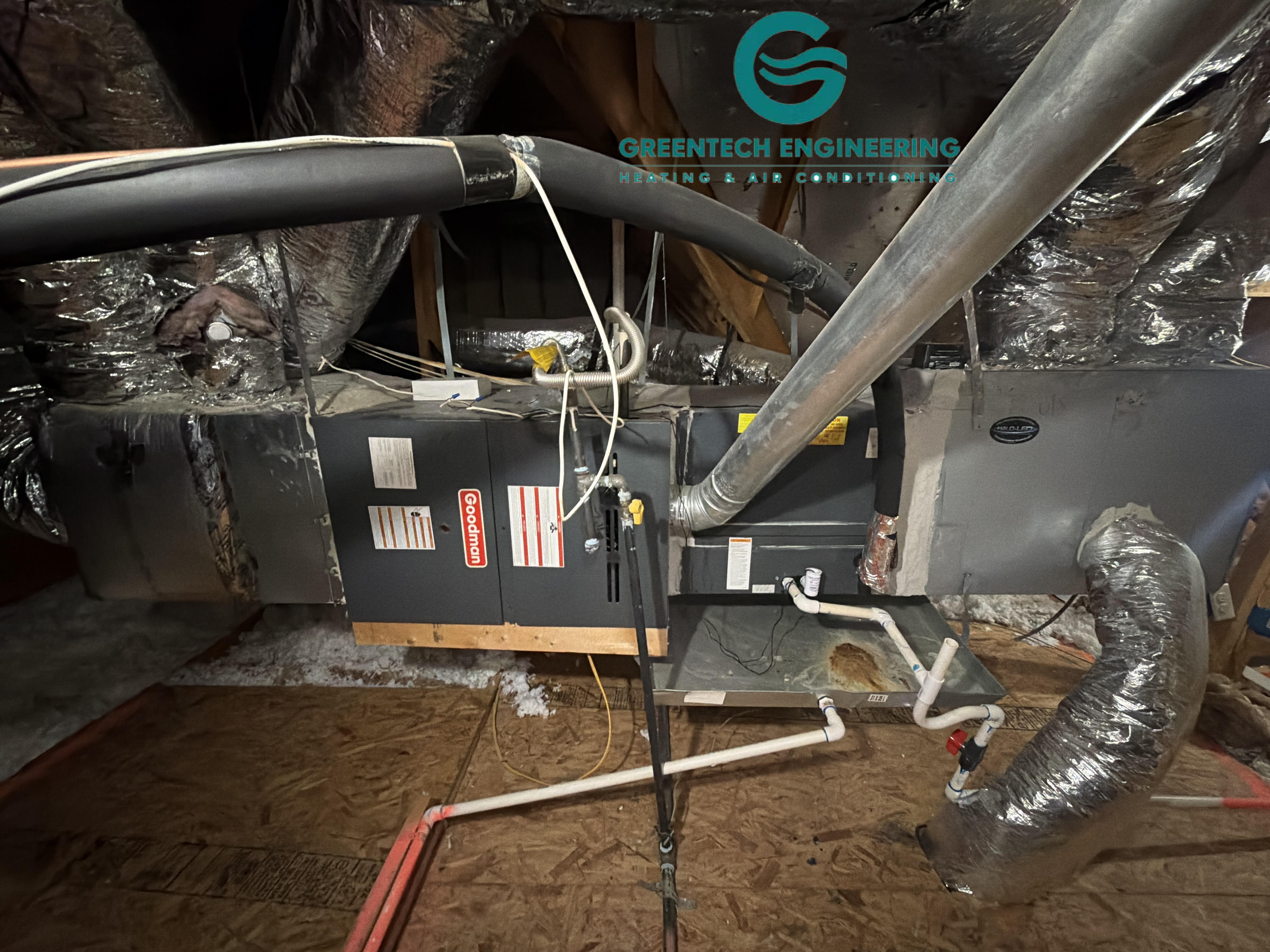
The home has two separate HVAC systems. The affected system served the upstairs, and the project confirmation identified a failed compressor on equipment that was approximately 13 years old. The existing Goodman outdoor model, GSX160421AA, was in the nominal 3.5-ton class.
The homeowner had to decide whether to pursue a major repair or replace the complete upstairs system. The available public record does not include a priced repair alternative, so this case does not claim that replacement is always less expensive than compressor repair. It documents the replacement scope the homeowner selected.
Why wasn’t this treated as a simple box replacement?
Replacing an outdoor unit and reconnecting to the existing indoor distribution system can leave important airflow infrastructure unexamined. In this project, the written scope called for replacement of both the supply and return plenums.
The return-duct routes remained, with their connection locations carried over to the replacement return plenum. On the supply side, branch takeoffs were repositioned according to the project duct plan. Necessary short flex-duct extensions and start-collar changes—quoted at less than six feet—connected the branches to the revised layout.
Manual dampers were added to the supply branches to create adjustment points for future airflow balancing. Dampers make branch-level adjustment possible; they do not, by themselves, prove that each room receives the correct airflow. That conclusion requires measured balancing data.
What did the Manual J and AHRI records document?
Manual J and AHRI answer different questions.
- ACCA Manual J estimates the served area’s heating and cooling loads using documented building inputs and design conditions.
- AHRI certification verifies standardized capacity and efficiency for the listed combination of outdoor unit, coil and furnace/blower families.
- Neither record alone certifies installation workmanship, duct performance or actual post-install comfort.
Project confirmation states that the Manual J and AHRI matched-equipment review were completed before installation. The current Manual J report and AHRI certificate copies were generated or downloaded on October 21, 2026—five days after the October 16 installation. That later file date reflects when these copies were produced, not when the underlying pre-install review occurred.
The project-specific Manual J documents an upstairs cooling load of 26,361 BTUH and a heating load of 30,494 BTUH for 1,446 square feet of conditioned area. The installed nominal 3-ton Daikin FIT combination is covered by AHRI reference 215488560 and is certified at 33,600 BTUH, 16.0 SEER2 and 9.0 EER2.
These figures should not be described as “exactly equal.” A full Manual S compliance claim would require the complete equipment-selection record and applicable performance data—not merely comparison of two headline BTUH values.
Why did the project move from nominal 3.5 tons to nominal 3 tons?
The old Goodman model was in the nominal 3.5-ton class. The installed Daikin FIT is in the nominal 3-ton class, while AHRI lists 33,600 BTUH of certified cooling capacity for the exact matched combination.
The project records support stating that the old and new systems belong to different nominal size classes and that a load calculation was part of the pre-install evaluation. They do not support a universal rule that every 3.5-ton Frisco system is oversized or should be replaced with 3 tons.
The appropriate capacity for another home depends on its served area, envelope, windows, orientation, infiltration, duct conditions, design temperatures and selected equipment performance. Even neighboring houses can require different solutions.
Why were the supply and return plenums replaced?
A plenum is the transition chamber that connects HVAC equipment to the duct system. Its dimensions and branch layout influence how air enters or leaves the equipment and how it is distributed among the connected ducts.
For this project, the replacement scope included:
- A new supply plenum
- A new return plenum
- Retention of the existing return-duct connection locations
- Repositioned supply takeoffs based on the project duct plan
- Limited flex-duct and start-collar modifications where needed
- Sealing of equipment, plenum and duct connections
- Manual dampers in the supply branches
New plenums are not automatically required with every variable-speed system. The decision depends on the old plenums’ condition and geometry, the selected equipment, connection layout and project airflow plan.
What was installed in the attic?
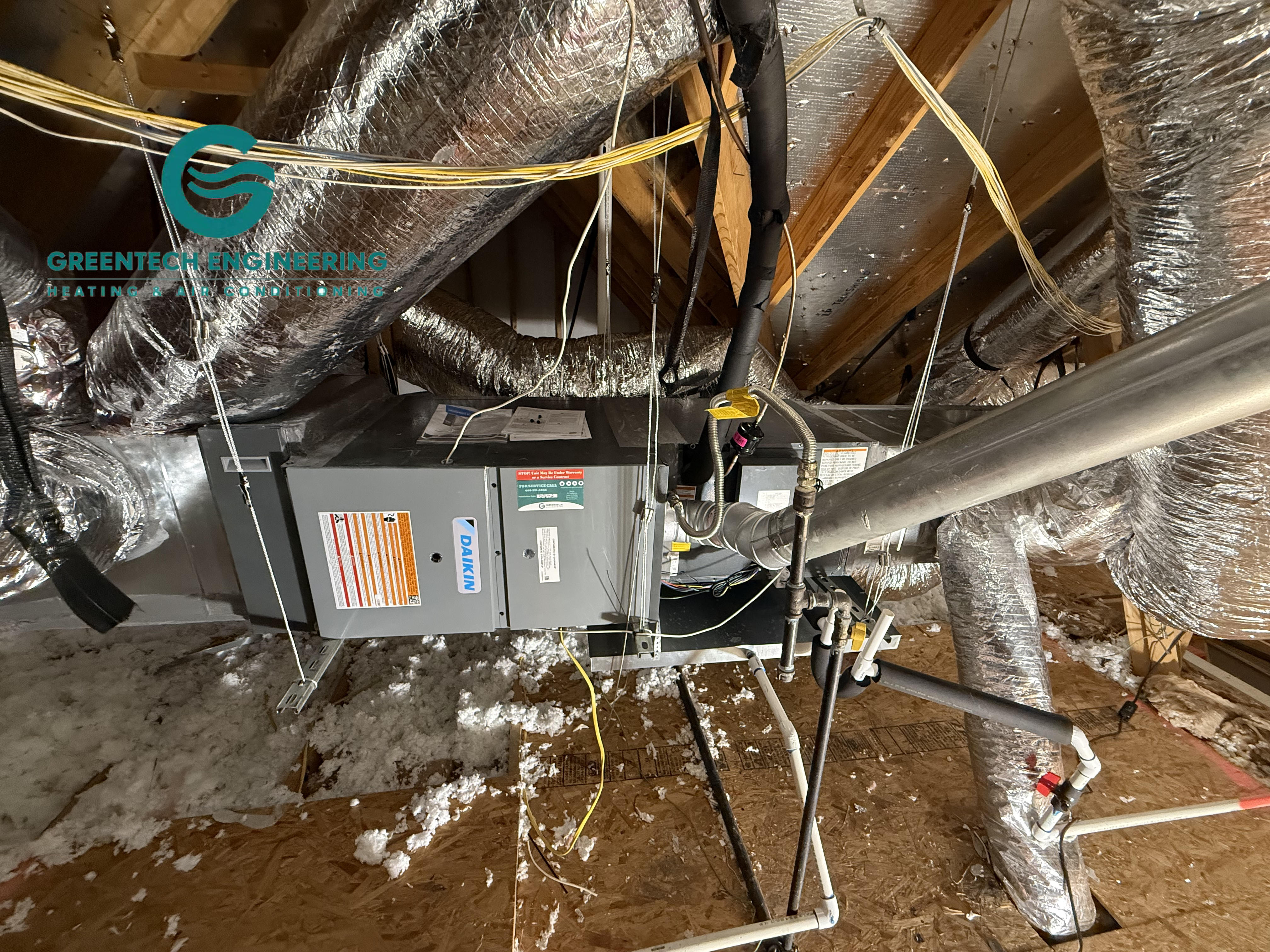
The new indoor combination included a Daikin CHPEA3626B3 horizontal cased coil and a Daikin DR80TC0603BN two-stage, 80% AFUE gas furnace with a variable-speed ECM blower. A new hanging and support arrangement was included for the horizontal attic installation.
The scope also included a Safe-T drain switch, condensate-drain insulation and required drainage modifications. The existing copper line set was prepared using the documented cleaning and dry-nitrogen procedures, and the proposal specified 15% silver-brazed refrigerant connections.
What commissioning and protection items were included?
The written installation requirements included:
- A 250-psi dry-nitrogen pressure test for at least 15 minutes
- Evacuation below 500 microns before charging and startup
- Startup and operational checks
- Daikin One Touch communicating thermostat
- 220V voltage monitoring and surge protection
- Refrigerant locking caps
- Permit and inspection coordination
- Complimentary three-year/1,095-day labor warranty, subject to written exclusions and non-transferability
Unless final commissioning logs are added, the pressure-test duration and vacuum target should be described as documented installation requirements—not published as measured final results. Likewise, permit coordination was included, but a final passed-inspection record has not been supplied for publication.
How did the approved Oncor incentive affect the project?
The project record shows an approved $1,510 Oncor incentive, reflected as a project discount. That amount applies to this completed project only and should not be interpreted as a guaranteed incentive for every Frisco replacement.
Eligibility, program funding, approved equipment, project scope and documentation can affect the available amount. Homeowners should have the current incentive requirements checked for their address and proposed equipment before treating any amount as part of the budget.
Availability update: Oncor’s public Home Energy Efficiency Program page, checked October 21, 2026, states that 2026 funding has been fully exhausted and directs visitors to check back in January 2027. That current program status does not change the approval documented for this project, but it means new customers should not assume 2026 funds remain available.
Project-specific incentive: Approved Oncor incentive: $1,510. Other homes and projects may receive a different amount or may not qualify.
The completed Daikin FIT outdoor installation
The new DC6VSS3610AA is a nominal 3-ton Daikin FIT DC6VS side-discharge, variable-speed R-32 straight-cool air conditioner. It should not be described as a heat pump, and heat-pump features such as defrost mode do not apply to this project.
The adjacent outdoor system remained in place because this scope covered only the upstairs equipment. The completed photo documents the installed condenser; it does not establish an energy-bill reduction, property-specific sound level or municipal inspection result.
What can—and can’t—this case tell other Frisco homeowners?
This case shows why a replacement proposal can extend beyond the condenser model:
- Confirm which system and served area are affected in a multi-system home.
- Compare the old nameplate with a project-specific load calculation instead of copying old tonnage automatically.
- Verify the complete outdoor-unit, coil and furnace/blower combination through AHRI.
- Inspect supply and return plenums, takeoff locations and equipment transitions.
- Include branch-adjustment provisions when the airflow plan requires them.
- Review drainage, equipment support, voltage protection, controls and commissioning requirements.
- Treat incentives as project-specific approvals rather than universal rebates.
This project does not prove that every older compressor failure requires replacement, that every room now has perfect airflow, or that another homeowner should select the same capacity. Those conclusions require another home’s evidence.
What should a homeowner ask before approving similar plenum work?
Before comparing an equipment-only quote with a proposal that includes airflow infrastructure, ask:
- Will the existing supply and return plenums remain, be adapted or be replaced?
- Which supply takeoffs will move, and why does the proposed layout change them?
- Are branch dampers included only as adjustment points, or will measured balancing also be performed?
- Will the contractor document static pressure, airflow or commissioning results—and provide the final readings?
- What exact outdoor unit, coil and furnace/blower combination appears on the AHRI certificate?
- Was the load calculation completed before equipment selection, and what area does it cover?
- Is any utility incentive already approved, merely estimated or still subject to funding?
These questions help separate verified project scope from expected outcomes that still require measurements.
Frequently asked questions
Why did this Frisco project change from 3.5 tons to 3 tons?
The old Goodman model was in the nominal 3.5-ton class, while the replacement Daikin FIT is nominal 3-ton. A project-specific Manual J documents a 26,361-BTUH upstairs cooling load, and AHRI rates the installed match at 33,600 BTUH. This does not establish a universal downsizing rule for other homes.
Does a new variable-speed HVAC system always require new plenums?
No. Plenum replacement depends on the existing dimensions, condition, connection layout, airflow requirements and selected equipment. In this project, the scope called for new supply and return plenums and repositioned supply takeoffs.
Why were manual dampers added to the supply ducts?
Manual dampers provide adjustment points for balancing airflow among branches. They do not prove that every room receives the correct airflow; measured balancing results are needed for that conclusion.
What does AHRI reference 215488560 verify?
It covers the listed outdoor, coil and furnace/blower families and rates the combination at 33,600 BTUH, 16.0 SEER2 and 9.0 EER2 under standardized test conditions. It does not certify the home’s load, duct design or installation workmanship.
Was the other HVAC system replaced?
No. The project replaced only the upstairs system. The home’s other HVAC system remained outside the project scope.
Did this project receive an Oncor incentive?
Yes. This project received an approved $1,510 Oncor incentive, reflected as a project discount. Incentive eligibility, funding and amounts are project-specific and are not guaranteed for other homes.
Schedule a Frisco upstairs HVAC and airflow evaluation
Replacing an upstairs system may require more than matching the old outdoor-unit tonnage. Greentech can evaluate the served area, equipment match, plenums, duct connections, drainage, controls and available incentive requirements before presenting a written scope and transparent estimate.
Schedule a Frisco Upstairs HVAC and Airflow Evaluation: (469) 551-6806
For replacement options, visit Greentech’s Frisco AC replacement service page. For a related but different project, see this Frisco upstairs 3-ton Daikin R-32 replacement. The existing case covers broader replacement intent; this page focuses on plenums, branch connections and balancing provisions.
About the author
Siwei (Lucas) Chen
Chief Technology Officer | Greentech Engineering Heating & Air Conditioning — DFW HVAC
Siwei (Lucas) Chen applies an engineering-based, data-first approach to residential HVAC system design, diagnostics, airflow measurement, equipment selection and duct-system optimization across Dallas–Fort Worth. He holds a B.S. in Mechanical Engineering from Virginia Tech.
Lucas completed ACCA’s Residential Design for Quality Installation Course, which covers residential design procedures associated with ACCA Manuals J, S, T and D. He is also an NCI Certified Residential Air Balancer and NCI Certified Duct System Optimization Specialist.

Flexible Financing Options
Explore our range of flexible financing options designed to suit your needs and budget.