






How to Compare HVAC Repair Quotes in DFW Before You Approve the Work
An HVAC quote is not automatically too high because the replacement part costs less online. The quoted price may also include diagnosis, travel, licensed labor, installation materials, system setup, testing, warranty responsibility and the risk of returning if the repair does not perform as promised.
But a professional quote should still be understandable.
Before approving HVAC work, ask the contractor to identify the diagnosed problem, show the evidence supporting that diagnosis, separate required work from optional upgrades, describe the complete scope and give you the total authorized price in writing.
That is the fastest way to determine whether two Dallas–Fort Worth HVAC estimates are truly comparable—or whether they propose different solutions to different problems.
This guide applies to homeowners across Dallas, Fort Worth, Plano, Frisco, McKinney, Irving and surrounding DFW communities. It is educational information, not a price guarantee or a diagnosis of any individual HVAC system.
Quick answer: How can I tell whether an HVAC quote is reasonable?
Do not start with the total price. First compare these eight items:
- The diagnosis: What exactly failed or is performing incorrectly?
- The evidence: What measurement, test result, error code or photograph supports the diagnosis?
- The exact part or equipment: What manufacturer and model are being proposed?
- Required versus optional work: What restores safe operation, and what is an upgrade?
- The complete scope: What labor, materials, setup, testing and related work are included?
- The total authorized price: What will you owe if the stated scope does not change?
- The warranty: Who covers labor and parts, for how long, and under what conditions?
- The alternatives: Can the system be repaired, safely monitored for now or replaced?
If a contractor cannot explain these items clearly, the problem may not be the price alone. The quote may be too incomplete to evaluate.
Already have a major repair or replacement proposal? Request an independent HVAC second opinion before approving the work.
1. Why you cannot compare an HVAC quote with the online price of one part
Online retail pricing can help identify the general cost of a thermostat, capacitor, control board or motor. It does not show the complete cost of diagnosing and completing a repair at your home.
A service price may include:
- scheduling and dispatch;
- travel to the property;
- the diagnostic process and technician time;
- labor performed under the contractor’s required licensing and insurance;
- the correct replacement part and associated materials;
- removal of the failed component;
- wiring, connectors, mounting hardware or drain materials;
- configuration for the specific HVAC system;
- startup and functional testing;
- documentation and customer walkthrough;
- workmanship or labor-warranty responsibility; and
- business overhead required to support the service after completion.
This does not mean that every price is reasonable. It means that part price and service price answer different questions.
The better question is:
What diagnosis, labor, materials, setup, testing and warranty are included in this total?
Why can thermostat installation cost more than the thermostat?
A thermostat replacement may be a simple like-for-like installation, or it may require more work than the retail box suggests. The contractor may need to verify:
- conventional, heat-pump, dual-fuel, zoned or communicating-system compatibility;
- the number of heating and cooling stages;
- whether a common wire or power accessory is required;
- the condition and identification of low-voltage wiring;
- compatibility with the furnace, air handler, heat pump or zone panel;
- sensor and equipment settings;
- Wi-Fi, app and account setup requested by the homeowner;
- correct heating, cooling, fan and emergency-heat operation; and
- responsibility for returning if the control does not operate correctly.
A higher installed price is not automatically unfair. However, the quote should identify the thermostat model and explain whether the price includes only physical installation or also diagnosis, wiring changes, accessories, programming, commissioning and warranty.
2. What should a professional HVAC estimate include?
The Federal Trade Commission advises consumers to obtain written estimates that describe the work, materials, expected completion timing and price. The Texas Attorney General likewise recommends getting bids in writing and looking for detail about exactly what will be done.
For HVAC work, a useful written estimate should include the following.
Customer concern and system identification
- The problem reported by the homeowner.
- The system or zone involved.
- Existing equipment type, manufacturer and model when relevant.
- Whether the quote applies to one component, one HVAC system or the entire property.
Diagnosis and supporting evidence
- The diagnosed fault or performance problem.
- The test or observation supporting that diagnosis.
- Relevant readings with units and test conditions.
- Photographs, error codes or failed-component evidence when appropriate.
- Important limitations—for example, a fault that could not be reproduced during the visit.
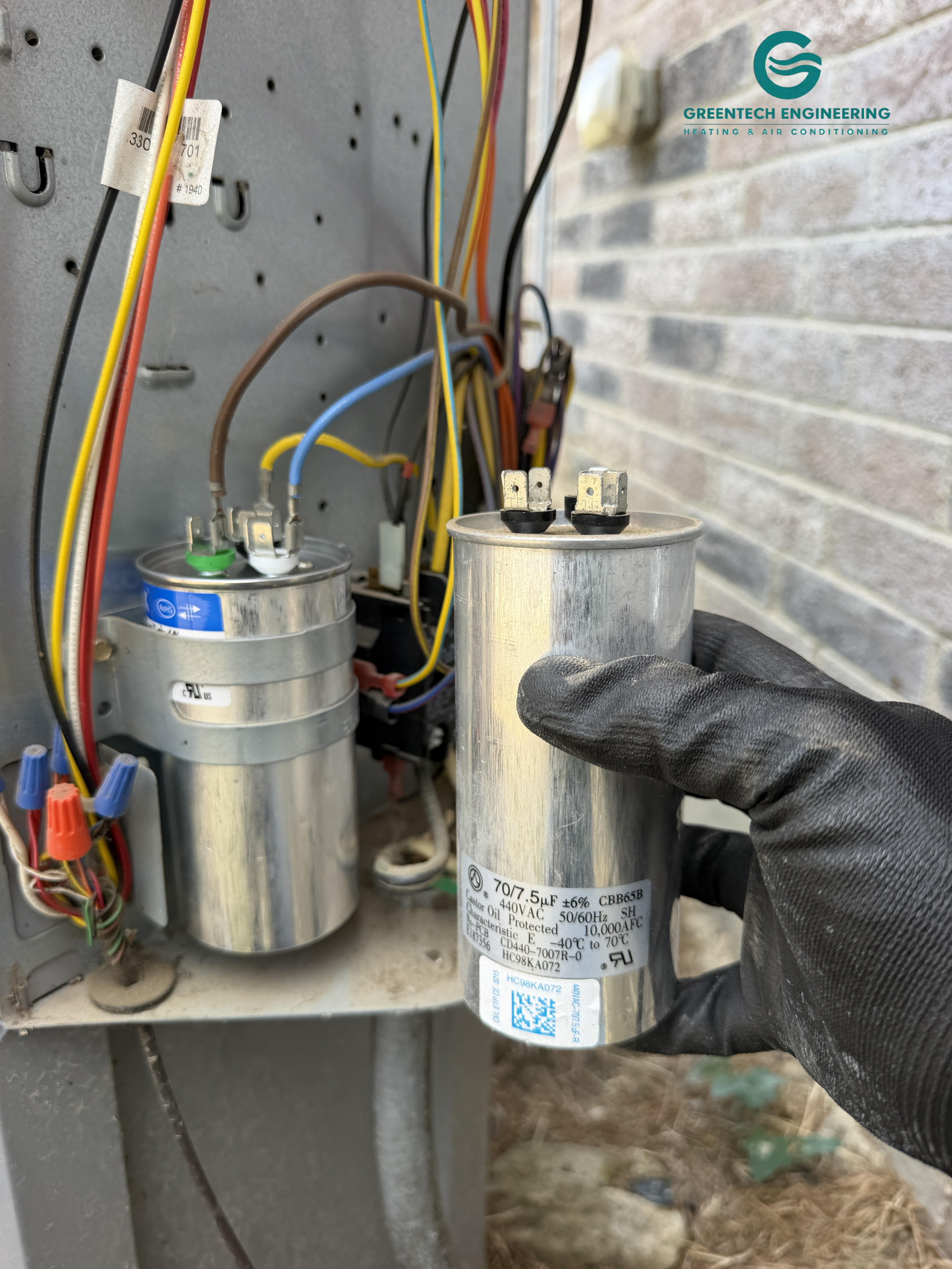
Evidence will differ by problem. It may include voltage, amperage, capacitance, temperature, pressure, static pressure, airflow, refrigerant data, combustion readings, drain condition, an error history or a visible mechanical failure. Not every service call requires every measurement.
Proposed work
- Exact part, accessory or equipment model when known.
- Quantity and major installation materials.
- Labor and configuration included.
- Related work such as drain, electrical, gas, refrigerant, duct or thermostat modifications.
- Removal and disposal responsibilities.
- Startup, testing and customer turnover.
Price and authorization
- Total price before work begins.
- Taxes, fees and discounts.
- Deposit and payment terms when applicable.
- Whether diagnostic fees are applied to approved work.
- How additional work or change orders will be authorized.
Warranty, exclusions and timing
- Parts warranty.
- Contractor labor warranty.
- Manufacturer registration requirements where applicable.
- Items specifically excluded from coverage.
- Expected scheduling or completion window.
- Permit and inspection responsibility if the scope requires them.
The goal is not to make every repair estimate several pages long. The goal is to give the homeowner enough information to understand what is being authorized.
What price transparency looks like at Greentech
Greentech Engineering Heating & Air Conditioning uses written, itemized estimates so the homeowner can see what is included before approving the work. Our quotation standard is clear scope, clear pricing and no hidden fees.
A Greentech estimate may show:
- each service or equipment package as a separately named line item;
- the quantity, unit price and line-item total;
- equipment manufacturer, model numbers, system configuration and certified-match information when applicable;
- a written description of the equipment and included installation work;
- related work—such as plenum replacement, crane service, permit and inspection coordination, controls or accessories—as separate line items; and
- the total authorized price, applicable discounts and the option selected by the customer.
This structure helps prevent unrelated work from disappearing inside a single lump-sum price. It also lets the homeowner compare what is actually included instead of trying to compare two totals with different scopes.
“No hidden fees” does not mean that an unforeseen condition can never change a project. It means additional work should be explained, priced and authorized through a written change before the customer is charged for it. A contractor should not quietly add an unapproved item to the final invoice.
3. How to separate “required repair” from “recommended upgrade”
One of the most important questions is also one of the simplest:
Which items are required to restore safe, intended operation, and which items are optional recommendations?
A transparent quote can group work into four categories.
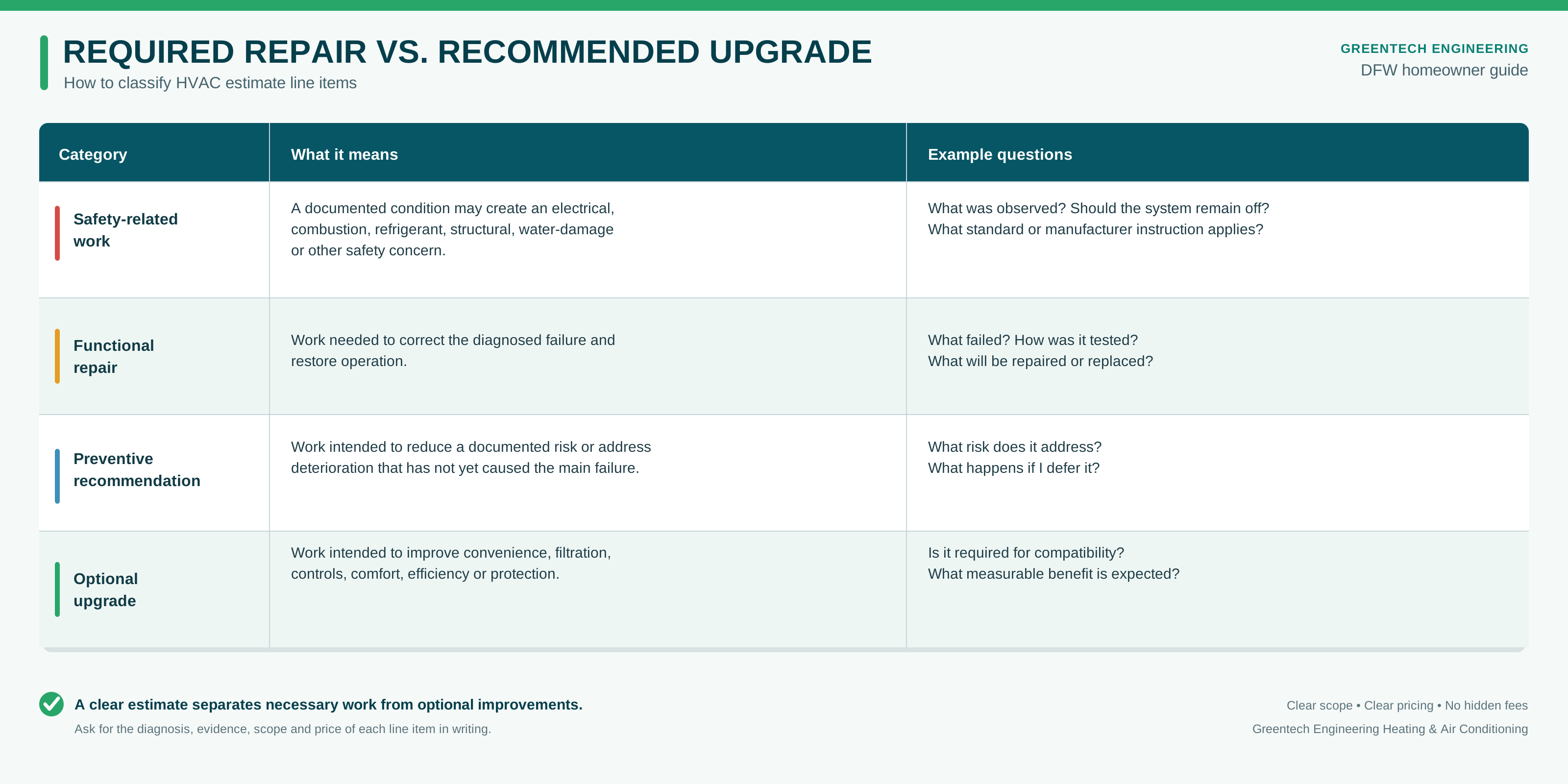
An item can move between categories depending on the system. A drain safety switch may be optional in one limited repair, required by a replacement scope or local code in another, or strongly recommended because of the unit's location above finished space.
The contractor should explain the project-specific reason instead of treating every recommendation as equally urgent.
Questions to ask about each recommended item
- What problem does this item solve?
- Is it required for safe operation or equipment compatibility?
- Is it required by the manufacturer, permit authority or applicable code?
- What is the consequence of postponing it?
- Can it be priced separately?
- Does declining it change the warranty?
4. When is an HVAC second opinion worth getting?
A second opinion is not necessary for every minor repair. It can be valuable when the decision is expensive, technically complex or difficult to verify.
Consider another evaluation when:
- the diagnosis is vague or changes without explanation;
- replacement is recommended without identifying the failed component;
- the quote includes several upgrades that are not separated from required work;
- a major compressor, coil, heat exchanger, inverter board or full-system replacement is proposed;
- refrigerant leakage is claimed without a documented leak-search result;
- airflow, ductwork or equipment sizing is central to the recommendation;
- the first proposal does not list model numbers or a matched-system reference;
- one contractor proposes repair while another proposes replacement;
- permit, electrical, gas, roof or crane work materially changes the scope;
- the price changes significantly after the technician arrives; or
- you feel pressured to approve work before you understand it.
A second opinion should not be a search for someone who will automatically disagree with the first contractor. It should be an independent attempt to confirm the diagnosis, clarify the options and make the scopes comparable.
When not to delay
If a technician documents an active gas leak, unsafe combustion condition, damaged heat exchanger, serious electrical hazard, refrigerant safety issue or another immediate risk, keep the equipment off as directed and address the safety issue promptly. You can still request documentation or another opinion, but continued operation should not be treated as a normal option until a qualified professional confirms it is safe.
5. Is an HVAC maintenance membership worth it?
A maintenance plan can provide value if its benefits match how you intend to use the company. The word “membership” alone does not explain the value.
Before enrolling, ask for these terms in writing:
- annual price and contract term;
- number and type of maintenance visits;
- specific inspection, cleaning or testing included;
- priority-service rules;
- repair or equipment discounts;
- diagnostic-fee treatment;
- after-hours or emergency terms;
- filters or other materials included;
- exclusions;
- whether benefits apply to an existing breakdown;
- automatic-renewal and cancellation terms;
- transferability after a home sale; and
- whether unused visits or benefits expire.
A plan may be worthwhile for a homeowner who values scheduled maintenance, documented system history and priority access. It may provide less value if the included visits are minimal, the exclusions are broad, or the homeowner is unlikely to use the benefits.
Do not compare memberships only by their headline discount. Compare the annual cost with the services you realistically expect to receive.
6. How to compare two HVAC quotes that look completely different
Two totals are not comparable until both contractors are pricing the same outcome.
Use a table like this before choosing:
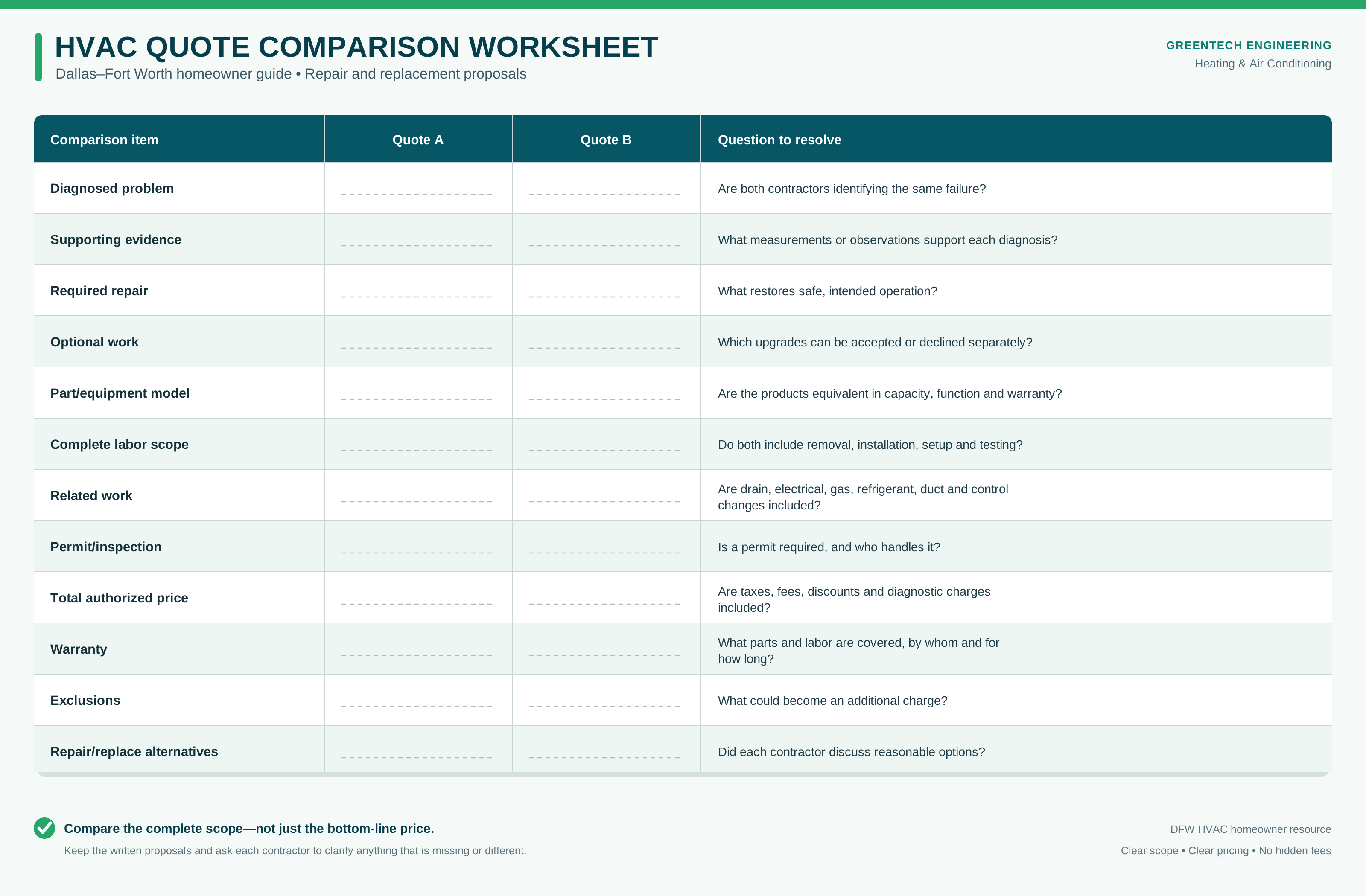
Example: the lower quote may exclude more work
One proposal might include only a replacement component. Another might include the component, new wiring, a drain correction, system configuration, permit fees and a longer labor warranty.
The second quote is not necessarily overpriced. The first quote is not necessarily incomplete. They may simply reflect different findings and scopes.
Ask each contractor to explain every major difference in writing. Then compare equal scopes.
Example: the higher quote may still be unclear
A bundled price is not transparent merely because it includes many items. If the proposal does not distinguish the failed part from optional accessories, the homeowner may not know what can be deferred.
Ask for a required-work subtotal and separately priced options when practical.
7. What should you compare besides price?
Contractor licensing
The Texas Department of Licensing and Regulation states that contractors who install, repair or maintain air-conditioning, refrigeration or heating systems must hold a TDLR license, and that ACR companies must employ an ACR contractor at each permanent location. Homeowners can review the TDLR Air Conditioning and Refrigeration Contractors resources and use its license search before authorizing work.
Exact model numbers
Brand names are not enough for equipment replacement. Ask for the condenser or heat-pump model, indoor coil or air-handler model, furnace model when applicable, thermostat/control and major accessories.
Exact models help you compare:
- capacity;
- staging or variable-speed operation;
- refrigerant type;
- electrical requirements;
- efficiency;
- compatibility; and
- warranty terms.
Matched-system certification
For many split-system replacements, ask for the AHRI Certified Reference Number. AHRI explains that a certified matched system lists the indoor and outdoor combination together and assigns it a unique reference number. The AHRI Directory is the source for the combination's certified performance.
Do not assume the efficiency number on an outdoor unit alone applies to every indoor coil, air handler or furnace combination.
Equipment sizing
Square footage alone is not a complete sizing method. For system replacement, ask how the contractor evaluated the home's heating and cooling requirements and whether the proposed capacity is supported by a documented load calculation when appropriate.
An oversized or undersized system cannot be corrected by choosing the lowest equipment price.
Ductwork and airflow
ENERGY STAR's HVAC quality-installation guidance tells homeowners to ask contractors about duct inspection and leakage because the distribution system affects performance. A quote should state whether it includes:
- supply or return-plenum changes;
- additional return air;
- flex-duct replacement;
- duct sealing;
- filter-base modifications;
- zoning changes;
- static-pressure or airflow testing; and
- air balancing.
Do not assume that ductwork is included in an equipment price.
Permit and inspection
Permit requirements vary by municipality and scope. Ask:
- Is a permit required for this work?
- Who obtains it?
- Are fees included?
- Who schedules the inspection?
- Are inspection corrections included in the stated scope?
Commissioning and closeout
Installation is not complete simply because the equipment turns on. Depending on the system and work performed, closeout may include:
- refrigerant pressure testing and evacuation;
- final charge verification;
- electrical testing;
- thermostat and staging verification;
- temperature measurements;
- static-pressure and airflow checks;
- furnace temperature-rise or combustion checks;
- drain and safety-control testing;
- filter and maintenance instructions; and
- permit inspection closeout.
Ask which results will be documented.
Warranty
Separate three types of coverage:
- Manufacturer parts warranty — coverage provided under the manufacturer's written terms.
- Manufacturer unit or component replacement coverage — available only for certain products and conditions.
- Contractor labor warranty — coverage for eligible labor under the contractor's written terms.
Ask about registration deadlines, maintenance conditions, ownership or transfer restrictions, excluded items and who pays for refrigerant, shipping, diagnostic time or other costs not covered by the part itself.
A transparent HVAC decision record
Before approving significant work, the homeowner should be able to summarize the decision in eight lines:
Decision question:
1.What problem did I report?
2.What did the contractor inspect or measure?
3.What facts were confirmed?
4.What options were provided?
5.What did I choose?
6.What equipment or components are not being replaced?
7.What related work is included in the price?
8.What does this diagnosis or repair not prove?
This decision record helps prevent a common problem: remembering only the final price while losing the reasoning that led to it.
It also gives homeowners a cleaner way to request a second opinion. The next contractor can review the same stated problem, evidence and proposed scope instead of reconstructing the entire conversation.
Before You Approve an HVAC Repair: Printable Checklist
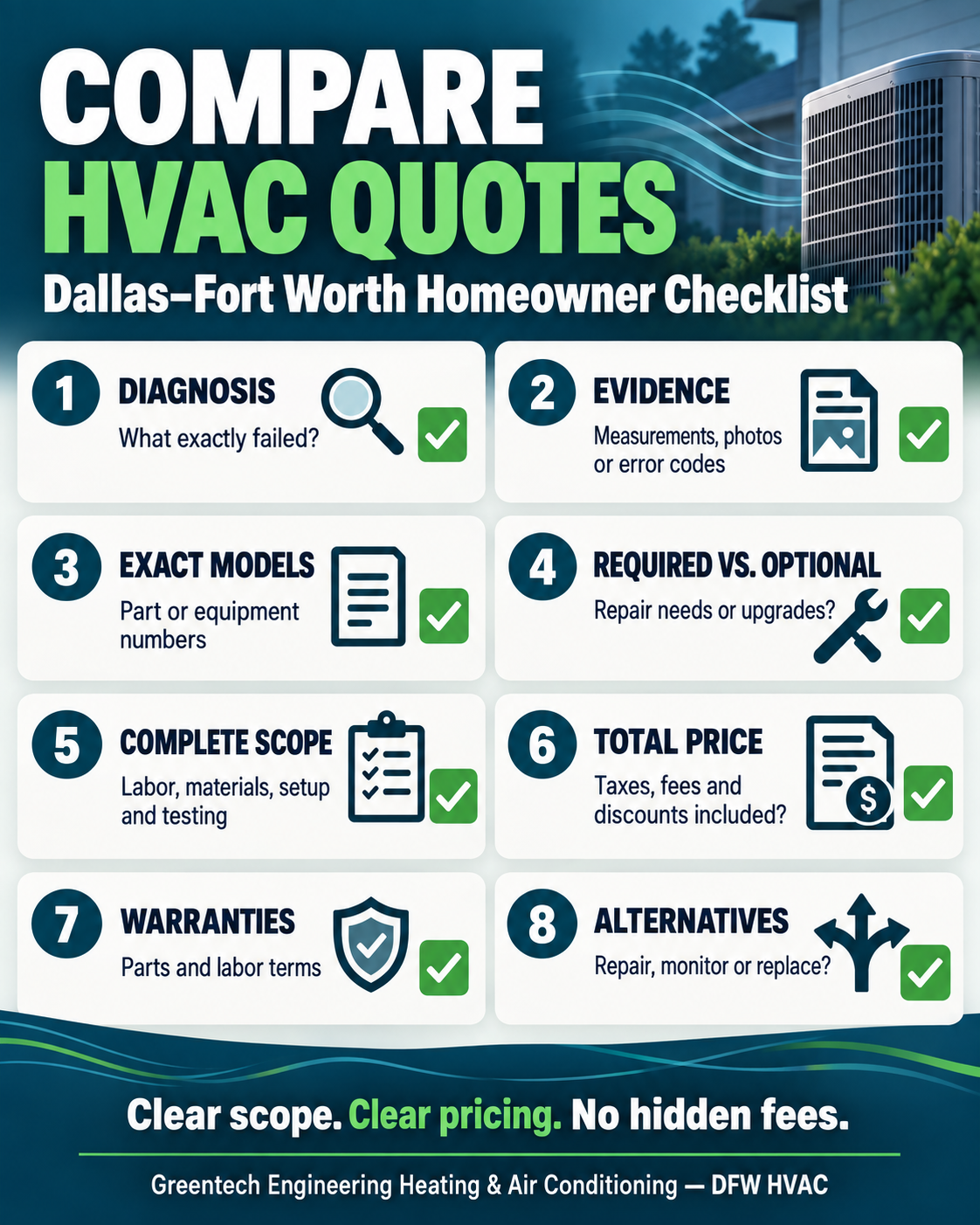
Ask for:
- The specific diagnosis
- Measurements, test results or photographs supporting the diagnosis
- The exact part or equipment manufacturer and model
- A clear distinction between required work and optional recommendations
- A complete written scope of work
- Each quoted item shows its quantity, unit price and line-item total when applicable
- Related drain, electrical, gas, refrigerant, duct and control work
- Permit and inspection responsibility, if applicable
- The total authorized price before work begins
- Taxes, fees, discounts and diagnostic-fee treatment
- Parts and labor warranty terms
- Important exclusions and possible additional charges
- A written approval process for any change to the original scope or price
- Repair, safe continued-use and replacement options when each is technically reasonable
- Your approval documented before work begins
Save the quote, photographs, test results, invoice, equipment model numbers, warranty documents and permit closeout together. Those records can be valuable for future service, warranty claims and home-sale questions.
Frequently asked questions
Is my HVAC repair quote too high?
The total alone cannot answer that question. Compare the diagnosis, evidence, exact part or equipment, complete labor scope, related work, warranty, exclusions and total authorized price. If the proposal remains unclear or the decision is expensive, request a second opinion based on the same documented problem.
How much should an HVAC repair cost in Dallas–Fort Worth?
There is no reliable single DFW repair price without a diagnosis and scope. The total can vary with the failed component, equipment access, system type, part availability, refrigerant or electrical work, testing, permit requirements and warranty responsibility. Compare written scopes rather than an unsupported average or online part price.
Should I get a second opinion on an A/C repair?
Consider one when the diagnosis is vague, a major repair or replacement is proposed, options are not separated, equipment sizing or ductwork is involved, or the contractor cannot explain the evidence supporting the recommendation. Do not continue operating equipment that has been identified as an immediate safety risk merely while waiting for another appointment.
Why does thermostat installation cost more than the thermostat?
The service may include diagnosis, compatibility verification, licensed labor, wiring changes, accessories, programming, equipment setup, testing and labor-warranty responsibility. The quote should still identify the thermostat model and explain the included work.
What should an HVAC estimate include?
It should identify the problem, diagnosis, proposed materials or equipment, complete work scope, required and optional items, total price, authorization method, warranty, exclusions, timing, and permit responsibility when applicable.
Does Greentech provide itemized HVAC estimates?
Yes. Greentech's written estimates identify the quoted services or equipment, quantity, unit price and line-item total, with a description of the included scope. Related work such as plenums, controls, crane service or permit coordination is listed separately when applicable. The customer reviews the selected option and total authorized price before work begins; any change to the approved scope should be separately explained and authorized.
Is the lowest HVAC quote the best choice?
Not necessarily. A lower quote may be appropriate, or it may exclude work included elsewhere. Compare equivalent diagnoses, equipment, materials, labor, testing and warranty before comparing totals.
Is an HVAC maintenance membership worth it?
It may be worthwhile when the included visits, testing, priority service and discounts are useful to you. Review the annual cost, exclusions, renewal and cancellation terms, and whether the benefits apply to current problems before enrolling.
Can I ask an HVAC contractor to separate required and optional work?
Yes. A homeowner should be able to understand what is required to restore safe, intended operation and what is an optional comfort, efficiency, filtration, control or protection upgrade.
Can an HVAC quote change after I approve it?
Unforeseen conditions or a homeowner-requested change can alter the scope, but the estimate or contract should explain how changes are handled. Ask the contractor to document the reason, added or removed work and price difference—and obtain your written authorization before proceeding.
What should I ask for when comparing HVAC replacement quotes?
Ask for exact equipment models, capacity-selection method, AHRI reference where applicable, duct and plenum scope, electrical and drain work, controls, permit responsibility, commissioning plan, total price and separate labor and manufacturer warranty terms.
Get clarity before approving major HVAC work
A trustworthy HVAC recommendation should be understandable even if the system itself is complicated.
The lowest number is not always the best value. The highest number is not automatically evidence of better work. The goal is a diagnosis you can follow, options you can compare and a complete scope you can approve with confidence.
If you already have an HVAC repair or replacement proposal and want another evaluation, request an independent HVAC second opinion from Greentech Engineering.
For an example of a second opinion that led to targeted airflow and zoning work rather than documented equipment replacement, read the Dallas 75248 HVAC second-opinion case study.
About the author
Siwei (Lucas) Chen
Chief Technology Officer | Greentech Engineering Heating & Air Conditioning — DFW HVAC
Siwei (Lucas) Chen applies an engineering-based, data-first approach to residential HVAC system design, diagnostics, airflow measurement, equipment selection and duct-system optimization across Dallas–Fort Worth. He holds a B.S. in Mechanical Engineering from Virginia Tech.
Lucas completed ACCA’s Residential Design for Quality Installation Course, which covers residential design procedures associated with ACCA Manuals J, S, T and D. He is also an NCI Certified Residential Air Balancer and NCI Certified Duct System Optimization Specialist.

Flexible Financing Options
Explore our range of flexible financing options designed to suit your needs and budget.