





Keller HVAC Replacement: 2-Ton Daikin R-32 Case Study
Greentech Engineering Heating & Air Conditioning — DFW HVAC completed this Keller, TX 76248 HVAC replacement on October 17, 2026 after the homeowner reported that the system was not cooling. The project replaced a nominal 2-ton Lennox R-410A condenser and the associated indoor equipment with a matched nominal 2-ton Daikin R-32 air conditioner, horizontal evaporator coil and 60,000-BTU-input 80% AFUE gas furnace.
AHRI Certified Reference Number 214856961 rates the exact installed combination at 23,200 BTUH, 15.2 SEER2 and 12.0 EER2. This is a completed-project record—not a sizing recommendation for another house. The supplied evidence does not identify the exact failed component that caused the original no-cooling condition.
Quick answer
- Reported problem: The Keller home was not cooling; the specific failure was not supplied for publication.
- Replacement type: Complete matched A/C, coil and gas-furnace replacement—not an outdoor-unit-only change.
- Old and new nominal class: Both outdoor units were nominal 2-ton models; this was not documented as a downsizing project.
- Installed system: Daikin
DC4SEA2410AA,CHPTA2426B3AAandDR80SN0604BXAA. - Certified performance: AHRI 214856961 lists 23,200 BTUH, 15.2 SEER2 and 12.0 EER2 for the matched combination.
- Evidence boundary: No project-specific Manual J result, rebate, permit outcome, inspection result or measured energy saving was supplied for publication.
Verified project facts
- Location: Keller, Texas 76248; street address withheld
- Property: Single-family house
- Customer-reported condition: No cooling
- Installation completed: October 17, 2026
- Existing outdoor unit: Lennox
14ACXS024-230A18; nominal 2-ton; R-410A - New outdoor unit: Daikin
DC4SEA2410AA; nominal 24,000-BTU/2-ton class; single-stage; R-32; straight-cool A/C - New horizontal coil: Daikin
CHPTA2426B3AA; R-32/A2L-compatible horizontal coil; factory-installed TXV - New gas furnace: Daikin
DR80SN0604BXAA; 60,000-BTU input; 48,000-BTU output; single-stage; 80% AFUE; 9-speed-tap ECM blower - AHRI reference: 214856961
- AHRI-certified performance: 23,200 BTUH; 15.2 SEER2; 12.0 EER2
- Thermostat: Conventional single-stage, one-heat/one-cool replacement; brand and model not supplied
- Contractor labor warranty: Three years/1,095 days, subject to the complete written terms and exclusions
What was known—and not known—about the no-cooling call
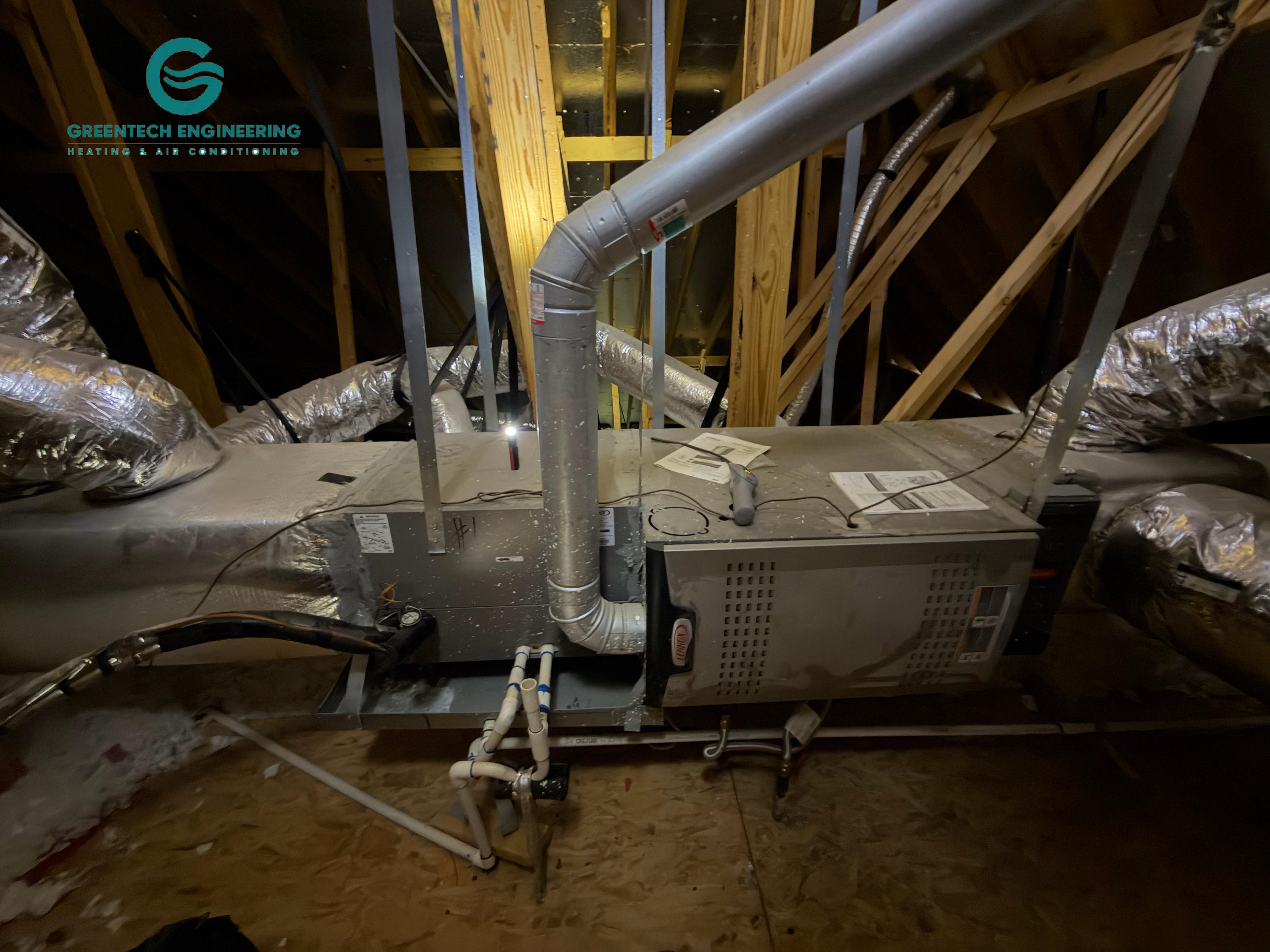
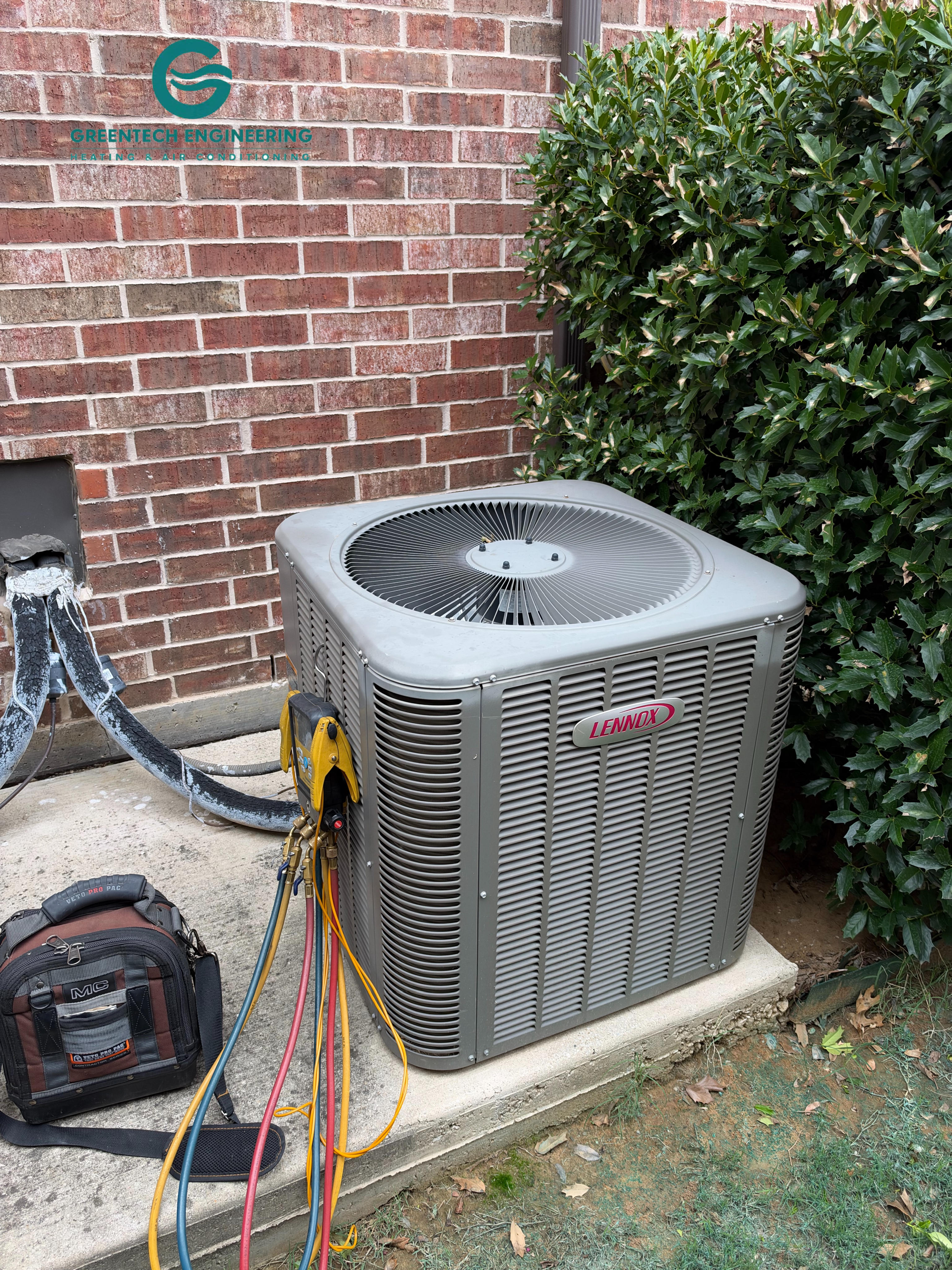
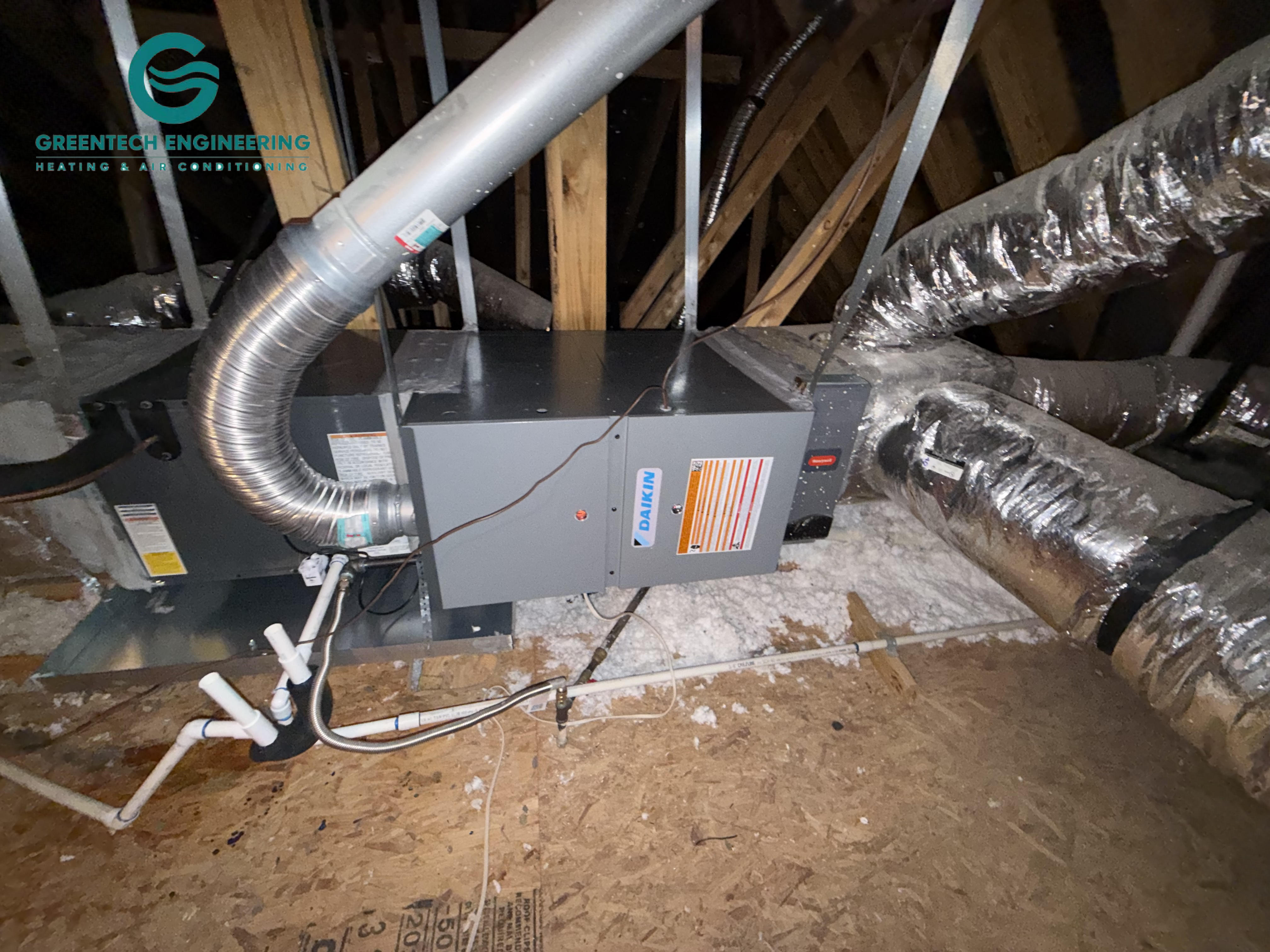
The homeowner reported that the HVAC system was not cooling. The existing outdoor equipment was a Lennox 14ACXS024-230A18, a nominal 2-ton condenser using R-410A. Project photographs also documented the horizontal indoor furnace-and-coil arrangement in the attic.
Those records establish the service condition and the equipment present at the home. They do not establish whether the underlying problem was a refrigerant leak, compressor failure, electrical fault or another issue. The former system’s installation date, complete service history and diagnostic measurements were not supplied for publication.
The old attic photograph matters because this was a complete-system replacement rather than only an outdoor-unit change. It documents the previous horizontal arrangement, but it does not prove airflow, duct leakage, static pressure, combustion safety or the cause of the no-cooling complaint.
Which Daikin components were installed?
Greentech installed three matched Daikin components:
- Daikin DC4SE outdoor unit: Model
DC4SEA2410AA; nominal 24,000-BTU/2-ton; single-stage R-32 straight-cool air conditioner - Daikin CHPTA indoor coil: Model
CHPTA2426B3AA; horizontal R-32/A2L coil with a factory-installed thermal expansion valve - Daikin DR80SN gas furnace: Model
DR80SN0604BXAA; 60,000-BTU input; 48,000-BTU output; single-stage; 80% AFUE; 9-speed-tap ECM blower
Daikin’s current product information identifies the DC4SE family as an R-32, single-stage air-conditioner line and the CHPTA family as horizontal R-32 coils with factory-installed TXVs. The manufacturer’s DR80SN specification lists the 0604B size at 60,000-BTU input, 48,000-BTU natural-gas output and 80% AFUE.
The old and new outdoor units are both in the nominal 2-ton class. This case should not be described as a downsizing project, and it is not evidence that two tons is appropriate for another Keller home. Equipment selection for another property should be based on that home’s load and the complete system design—not a neighbor’s installation.
The refrigerant changed from the documented R-410A used by the Lennox condenser to R-32 used by the new Daikin outdoor unit and coil. That is a factual equipment transition. It is not, by itself, proof of a particular utility-cost reduction, humidity improvement or environmental result for this home.
What does AHRI reference 214856961 verify?
The AHRI Directory of Certified Product Performance identifies certified HVAC equipment combinations. AHRI explains that split-system certification applies to the matched indoor and outdoor combination—not the condenser by itself.
For this installed combination, the project’s AHRI Certificate of Product Ratings lists:
- Certified cooling capacity: 23,200 BTUH
- SEER2: 15.2
- EER2: 12.0
- AHRI Certified Reference Number: 214856961
Why is a nominal 2-ton system rated at 23,200 BTUH?
One nominal ton corresponds to 12,000 Btu/h, so “2-ton” describes a 24,000-Btu/h product class. The 23,200-BTUH figure is the certified capacity of the exact outdoor unit, indoor coil and furnace/blower combination under standardized rating conditions. Nominal size and certified matched-system capacity are related specifications, but they are not interchangeable.
The 23,200-BTUH rating therefore does not mean the project was downsized. It also does not replace a building-specific load calculation.
Greentech completed the installation on October 17, 2026. The supplied AHRI certificate copy is dated October 19, 2026. It verifies the installed model combination and rating; the later certificate-copy date must not be portrayed as proof that the certificate drove a pre-installation decision.
What did the documented installation scope include?
The written scope covered more than placing new equipment. The included work can be explained in three homeowner-readable phases.
1. Removal and preparation
The scope included refrigerant recovery, removal and disposal of the old equipment, a new condenser pad, and drain and safety components including a drain pan and Safe-T drain switch. It also included drain-line clearing, insulation and necessary trap, vent and connection work.
2. Mechanical, gas and refrigerant work
Greentech connected and supported the horizontal furnace-and-coil assembly, sealed equipment-to-duct transitions and completed the necessary gas-line and furnace-vent modifications. The existing refrigerant line set remained after the documented flushing, preparation and required modifications. The record does not describe a whole-home duct replacement.
3. Pressure testing, evacuation and startup
The written scope specified dry-nitrogen pressure testing, evacuation below 500 microns, startup and operational testing. These are documented scope requirements. A separate commissioning report was not supplied for publication, so this article does not invent final refrigerant readings, airflow, external static pressure, temperature split, temperature rise or other measured results.
Thermostat replacement and warranty boundaries
The project included a conventional single-stage thermostat configured for one stage of heating and one stage of cooling. No thermostat brand, model or smart-home feature was supplied, so none is claimed here.
The contractor labor warranty is three years, or 1,095 days, subject to the complete written terms. The supplied terms state that the labor warranty is non-transferable. The proposal also references manufacturer limited-parts and unit-replacement coverage, but registration deadlines, homeowner eligibility, maintenance requirements, exclusions and the manufacturer’s complete documents control the actual coverage.
Homeowners should review both the contractor labor warranty and manufacturer warranty before approving a replacement. A coverage headline is not a substitute for the complete terms.
Completed Daikin R-32 installation in Keller
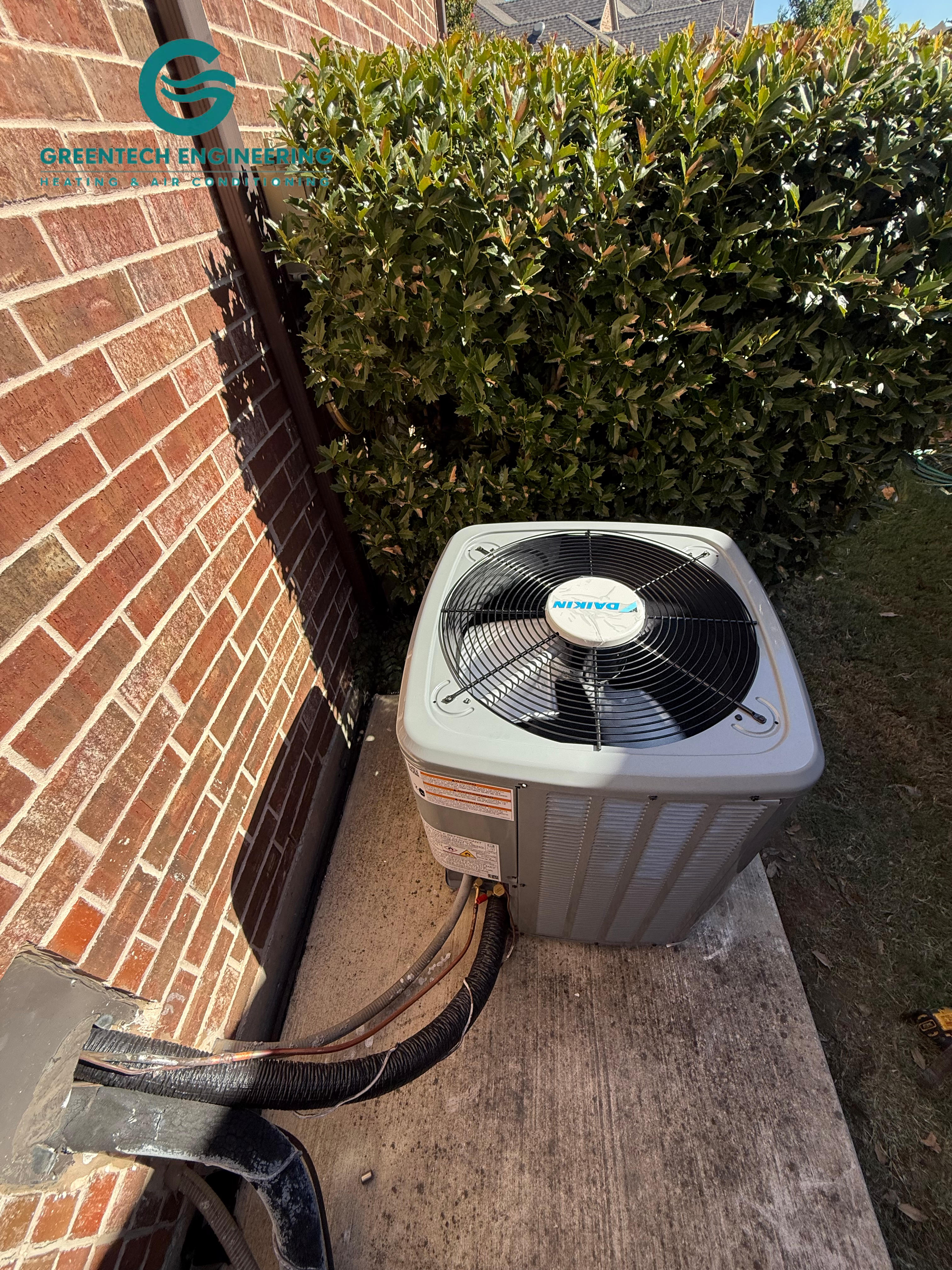
The completed outdoor installation uses the Daikin DC4SEA2410AA condenser on a pad beside the home. The finished photograph documents the outdoor equipment and installation location. It does not prove a specific energy saving, sound level, permit result, inspection approval or code conclusion.
What can Keller homeowners learn from this case?
A useful HVAC replacement proposal should make the complete system and work scope easy to verify. Before approving a project, ask for:
- The outdoor-unit, indoor-coil and furnace or air-handler model numbers—not only the brand and nominal tonnage
- The AHRI reference and certified capacity, SEER2 and EER2 of the complete combination
- A clear distinction between nominal size and certified capacity
- The building-specific load calculation and proposed equipment output when sizing is part of the decision
- Written details for the refrigerant line set, drains, gas line, vent, safety devices, thermostat and duct transitions
- The pressure-testing, evacuation, startup and commissioning steps included in the authorized price
- Separate explanations of contractor labor coverage and manufacturer warranty conditions
- A documented diagnosis and the available repair and replacement options before authorization
This Keller project involved a nominal 2-ton system, but another house—even in the same ZIP code—may need a different design. Tonnage should not be copied from a neighboring installation or selected from a case study alone.
For a more complete proposal review, use Greentech’s HVAC quote-comparison guide. If the furnace choice is part of the project, compare the complete tradeoffs in the 80% versus 95% AFUE furnace guide.
Request a documented HVAC assessment in Keller
If your Keller HVAC system is not cooling, request a documented assessment that identifies the confirmed problem, available options, exact equipment and complete authorized scope before work begins.
Call (469) 551-6806 or request a Keller HVAC assessment. Greentech also offers an independent HVAC second opinion and provides broader HVAC services in Keller.
Frequently asked questions
What system did Greentech install in this Keller 76248 home?
Greentech installed a nominal 2-ton Daikin R-32 straight-cool air conditioner with a horizontal evaporator coil and a 60,000-BTU-input, single-stage 80% AFUE gas furnace. The models are DC4SEA2410AA, CHPTA2426B3AA and DR80SN0604BXAA.
What does AHRI reference 214856961 certify?
AHRI reference 214856961 lists the matched outdoor unit, indoor coil and furnace/blower combination at 23,200 BTUH certified cooling capacity, 15.2 SEER2 and 12.0 EER2.
Why is a 2-ton system rated at 23,200 BTUH instead of exactly 24,000?
Two tons is the equipment’s nominal size class. AHRI reports the performance of the exact matched combination under standardized rating conditions, so the certified capacity does not have to equal the nominal class exactly.
Did this Keller project change the system size?
The existing Lennox outdoor model and replacement Daikin outdoor model are both in the nominal 2-ton class. The supplied record does not document a nominal-size change or a project-specific Manual J calculation.
Does this case prove that a 2-ton system is right for another Keller home?
No. A case study documents one installation. Another home should be evaluated from its construction, exposure, insulation, windows, infiltration, ducts and design loads rather than copying this project’s nominal size.
Was the thermostat replaced?
Yes. The scope included a conventional single-stage, one-heat/one-cool thermostat. The brand and model were not supplied for publication.
What warranties apply to this project?
The project includes a three-year/1,095-day contractor labor warranty subject to its written terms. Manufacturer coverage depends on registration, homeowner eligibility, maintenance requirements, exclusions and the complete manufacturer warranty documents.
Project, product and live-link facts last verified October 19, 2026.
About the author
Siwei (Lucas) Chen
Chief Technology Officer | Greentech Engineering Heating & Air Conditioning — DFW HVAC
Siwei (Lucas) Chen applies an engineering-based, data-first approach to residential HVAC system design, diagnostics, airflow measurement, equipment selection and duct-system optimization across Dallas–Fort Worth. He holds a B.S. in Mechanical Engineering from Virginia Tech.
Lucas completed ACCA’s Residential Design for Quality Installation Course, which covers residential design procedures associated with ACCA Manuals J, S, T and D. He is also an NCI Certified Residential Air Balancer and NCI Certified Duct System Optimization Specialist.

Flexible Financing Options
Explore our range of flexible financing options designed to suit your needs and budget.