






McKinney Manual J HVAC Replacement: Downsizing From 3.5 Tons to a 3-Ton Daikin FIT System
By Siwei (Lucas) Chen
Published: 7/11/2026
Direct answer: A confirmed Manual J load calculation supported replacing the nominal 3.5-ton system at this McKinney home with a nominal 3-ton Daikin FIT air-conditioning system. The final selection also considered the certified performance of the actual equipment combination. Under AHRI Certified Reference Number 215488560, that combination provides 33,600 BTU/h of cooling capacity and is rated at 16.0 SEER2 and 9.0 EER2. The project received a confirmed, project-specific $1,500 Oncor incentive.
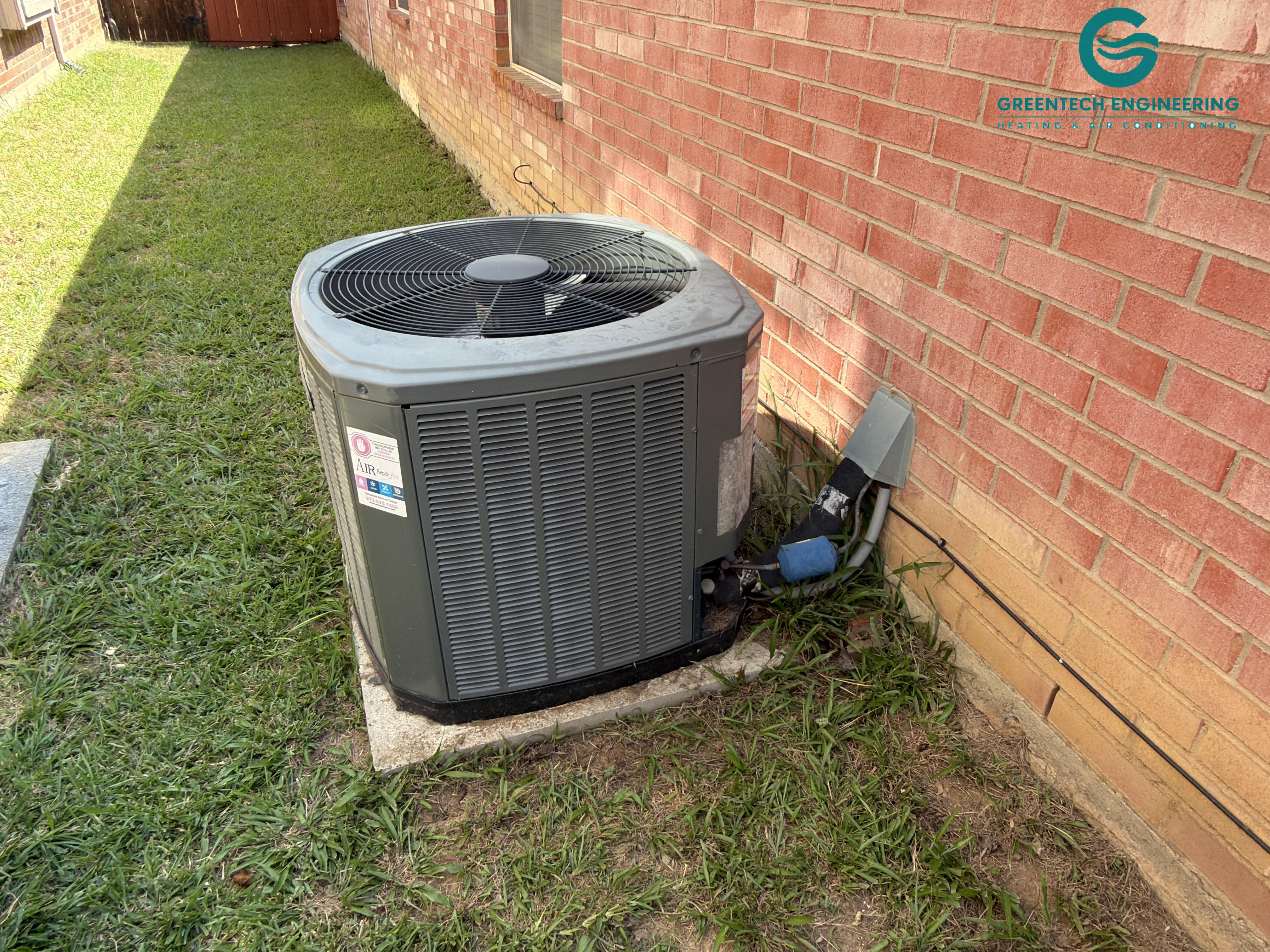
This was a replacement decision for one single-family house in McKinney, Texas 75071. It is not a general rule that every 3.5-ton system should be downsized. It is an example of why an old equipment label should be treated as background information—not as the only input for the next system.
The installation was completed on July 11, 2026 by Greentech Engineering Heating & Air Conditioning — DFW HVAC. The case is useful because it separates three ideas that are often blended together in replacement proposals: nominal tonnage, a home's calculated design load and the certified capacity of a specific equipment match.
Evidence retained by Greentech: the project-specific Manual J confirmation, installation records and photographs, equipment model information, AHRI Certificate 215488560 and the Oncor approval record. Customer-specific documents are retained privately and are not embedded in this article.
McKinney project at a glance
- Location: McKinney, TX 75071
- Property: Single-family house
- Installation date: July 11, 2026
- Previous equipment class: Nominal 3.5 tons
- Replacement equipment class: Nominal 3 tons
- Sizing basis: Confirmed project-specific Manual J plus matched-equipment performance data
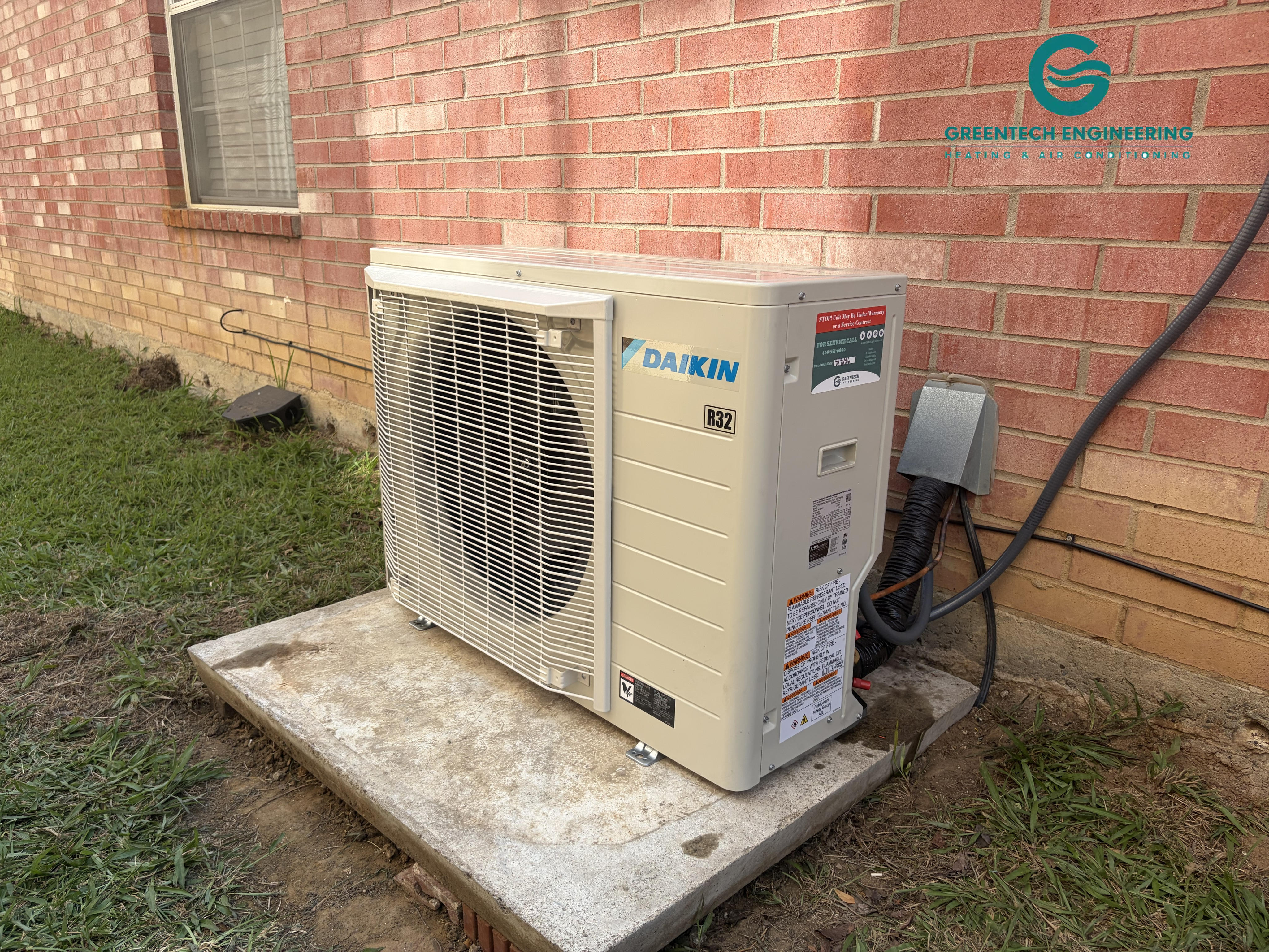
- Outdoor air conditioner: Daikin FIT
DC6VSS3610A - Evaporator coil: Daikin
CHPEA3626B3 - Gas furnace: Daikin
DR80TC0603BN, two-stage, 80% AFUE, variable-speed blower - Refrigerant: R-32
- AHRI Certified Reference Number: 215488560
- Certified cooling capacity: 33,600 BTU/h
- Certified efficiency: 16.0 SEER2 and 9.0 EER2
- Confirmed Oncor incentive: $1,500 for this project
Why wasn't the old 3.5-ton size copied automatically?
The old unit showed what had been installed previously. It did not, by itself, prove what the house required under the design assumptions used for the replacement.
A residential load calculation evaluates the building rather than relying only on square footage or the old nameplate. Inputs can include the home's orientation, windows, insulation, construction, infiltration and internal loads. ACCA Manual J is the recognized residential procedure for calculating heating and cooling loads.
For this project, the confirmed Manual J supported moving to the nominal 3-ton class. Greentech did not publish the customer's full report or its numerical load breakdown. That protects the underlying project record and prevents a private report from being detached from its assumptions and reused as if it applied to another house.
The old and new nominal sizes therefore tell only part of the story:
- Nominal 3.5 tons describes the class of the previous system.
- Manual J provided the home-specific load information that supported the new sizing direction.
- Nominal 3 tons describes the class of the selected replacement.
- 33,600 BTU/h is the AHRI-certified cooling capacity of the selected equipment combination.
The 33,600-BTU/h value is not a field measurement and is not being presented as the home's Manual J cooling load. It comes from the certified match.
How Manual J and matched-system data work together
Manual J estimates the home's design heating and cooling loads. It does not choose a brand or certify the performance of a condenser, coil and furnace combination. Equipment selection is a separate step that uses the calculated loads together with manufacturer performance data. ACCA addresses that relationship in Manual S.
That distinction matters with inverter equipment. “Three ton” is a useful equipment-class label, but it is not a complete performance specification. The capacity and efficiency published for a split system depend on the tested indoor-and-outdoor match.
For this McKinney installation, AHRI Certified Reference Number 215488560 identifies the combination documented for the project. Its certified cooling capacity is 33,600 BTU/h, with ratings of 16.0 SEER2 and 9.0 EER2.
SEER2 is a standardized seasonal cooling-efficiency rating. EER2 evaluates efficiency under specified test conditions. Both are useful for comparing certified equipment, but neither predicts an exact electricity bill for one house. Weather, runtime, thermostat settings, the building envelope, ducts, airflow, utility rates and the condition of the old system can all affect actual consumption.
This article therefore reports the certified ratings without converting them into a savings percentage or promising lower bills.
What Daikin FIT equipment was installed?
The replacement combines three documented components:
- a Daikin FIT
DC6VSS3610Aoutdoor air conditioner; - a Daikin
CHPEA3626B3horizontal cased evaporator coil; and - a Daikin
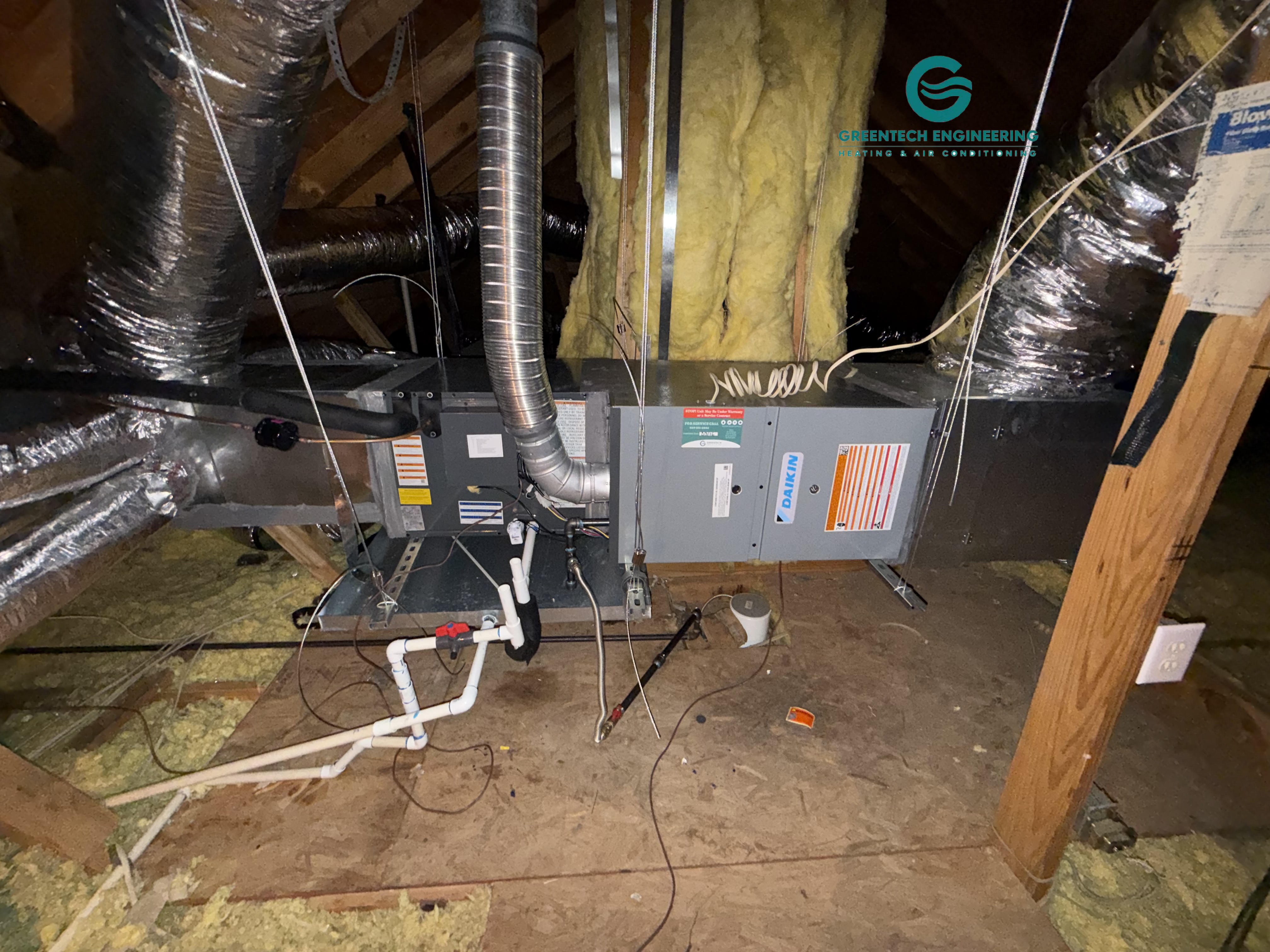
DR80TC0603BNtwo-stage, 80% AFUE gas furnace with a variable-speed blower.
Daikin identifies the current DC6VS family as an R-32 inverter air conditioner. Its side-discharge cabinet differs physically from a conventional top-discharge condenser, and its inverter-driven compressor can adjust cooling output rather than operating only as a single fixed-capacity stage.
The CHPEA R-32 coil family is designed as a horizontal cased coil compatible with Daikin FIT systems. The DR80TC furnace family uses two stages of gas heat and a variable-speed blower.
Those descriptions should remain separate. The outdoor air conditioner is inverter-driven and variable-capacity; the furnace has two heating stages; and the indoor blower is variable-speed. Calling every component “fully variable speed” would hide meaningful differences in how they operate.
What work was included beyond the outdoor unit?
An HVAC replacement is a system project, not only a condenser swap. The documented scope for this installation included removal of the existing equipment and installation of the new outdoor unit, coil and furnace. It also addressed the supply and return plenums, duct and plenum sealing, condensate protection, refrigerant-line preparation, electrical connections and outdoor equipment support.
The project record called for pressure testing, evacuation and startup checks before the system was placed into service. This public case does not convert those procedures into field-performance claims. No measured airflow, static pressure, refrigerant charge, evacuation result, humidity change or post-installation comfort data is published here.
That limitation is intentional. A photograph of an attic installation can document the installed configuration, but it cannot independently prove airflow, code compliance or long-term performance. Likewise, a control screen showing requested demand or requested CFM is not the same as an independent airflow measurement, which is why that image is not part of this article.
What does the $1,500 Oncor incentive mean?
The project received a confirmed $1,500 Oncor incentive. That amount is specific to this installation.
Oncor's residential efficiency programs provide incentives through participating service providers for eligible improvements in Oncor's service territory. Oncor explains that service providers pass program incentives to customers, but funding, eligibility and amounts can change. Homeowners should have their own property and proposed equipment reviewed before including an incentive in a replacement budget. See Oncor's current residential service-provider information.
This article does not imply that every McKinney replacement qualifies, that every qualifying project receives $1,500, or that Oncor endorses Greentech or Daikin. Greentech's DFW Oncor HVAC incentive guide provides additional program context, but current eligibility must still be checked for each project.
What can a homeowner ask before approving a replacement?
This case suggests a practical set of questions:
- Is the recommendation based only on the old unit's nominal tonnage, or is there a current load calculation for the house?
- What is the certified cooling capacity of the proposed indoor-and-outdoor equipment combination?
- Does the proposal clearly identify the condenser, coil and furnace or air handler?
- What plenum, duct-sealing, drainage, refrigerant-line and electrical work is included?
- Which statements are manufacturer ratings, which are calculated design values and which are field measurements?
- Is an incentive confirmed for this address and equipment selection, or is it only an estimate?
These questions make proposals easier to compare because they separate equipment labels from the engineering and documentation behind the selection.
The engineering lesson from this McKinney case
The important result is not simply that the replacement was smaller. It is that Greentech did not assume the previous nominal size had to be repeated.
For this house, a confirmed Manual J supported the nominal 3-ton direction, and the AHRI-certified match supplied the equipment-specific capacity and efficiency data. That sequence produced a documented replacement rationale without claiming that the same answer applies to every McKinney home.
Homeowners can learn more about Greentech's HVAC services in McKinney. If you are comparing repair and replacement options, you can request a project-specific HVAC replacement evaluation.
Frequently asked questions
Why did this McKinney replacement change from 3.5 tons to 3 tons?
A confirmed project-specific Manual J supported the nominal 3-ton replacement instead of automatically repeating the previous nominal 3.5-ton class. The final selection also considered the certified performance of the matched equipment. This conclusion applies to this house, not every 3.5-ton system.
Is 33,600 BTU/h the Manual J load for the house?
No. It is the AHRI-certified cooling capacity of the selected equipment combination. The numerical Manual J load is not published in this article.
Is a nominal 3-ton air conditioner always rated at exactly 36,000 BTU/h?
No. Nominal tonnage is an equipment-class description. Certified capacity depends on the actual tested indoor-and-outdoor combination and can differ from the simple nominal conversion.
Does the 16.0 SEER2 rating guarantee lower electricity bills?
No. SEER2 is a standardized seasonal rating used for equipment comparison. Actual energy use depends on the home, weather, runtime, settings, ducts, airflow, utility rates and the condition of the previous system.
Does every McKinney HVAC project qualify for a $1,500 Oncor incentive?
No. The $1,500 amount was confirmed for this project. Eligibility, funding and incentive amounts are project-specific and may change.
Is the entire installed system fully variable-speed?
The Daikin FIT outdoor air conditioner uses an inverter-driven, variable-capacity compressor. The gas furnace has two heating stages and a variable-speed blower. Those component descriptions are related but not identical.
About the author
Siwei (Lucas) Chen
Chief Technology Officer | Greentech Engineering Heating & Air Conditioning — DFW HVAC
Siwei (Lucas) Chen applies an engineering-based, data-first approach to residential HVAC system design, diagnostics, airflow measurement, equipment selection and duct-system optimization across Dallas–Fort Worth. He holds a B.S. in Mechanical Engineering from Virginia Tech.
Lucas completed ACCA’s Residential Design for Quality Installation Course, which covers residential design procedures associated with ACCA Manuals J, S, T and D. He is also an NCI Certified Residential Air Balancer and NCI Certified Duct System Optimization Specialist.

Flexible Financing Options
Explore our range of flexible financing options designed to suit your needs and budget.