






5 Signs You Need HVAC Repair in Grand Prairie Before a Full Breakdown
Living in Grand Prairie, Texas, means your HVAC system works overtime. During our brutal DFW summers, your air conditioner is the only thing standing between your family and 100°F+ heat.
Too often, homeowners wait until their AC completely stops working before calling an expert. But HVAC systems rarely fail without warning. By recognizing the early warning signs of mechanical or electrical fatigue, you can schedule a targeted Grand Prairie HVAC repair before you are left sweating through a total weekend breakdown.
Here are the top 5 signs your air conditioner is crying out for professional help—and a real-world look at how our engineers recently saved a local home from a total system failure.
1. Why is My AC Blowing Warm Air in Grand Prairie?
If you set your thermostat to 70°F but the air coming from your vents feels lukewarm, your system is in distress. This is rarely a simple thermostat glitch.
Warm air usually points to one of two severe issues: a refrigerant leak or a failing compressor. Because heat pumps and air conditioners rely on a precise charge of refrigerant to move heat out of your home, even a small leak will destroy its cooling capacity. Running a system in this state forces the compressor to overwork, which can lead to catastrophic (and expensive) engine failure.
2. Why Are Some Rooms Hot and Others Freezing?
Are some rooms in your Grand Prairie home freezing while others feel like a sauna? Weak airflow is a primary indicator of systemic issues. It can be caused by something as simple as a clogged air filter, or it can indicate a failing blower motor, frozen evaporator coils, or compromised ductwork.
If changing your filter doesn't instantly fix the pressure, you need a professional to measure the system's static pressure and diagnose the airflow restriction.
3. What Does a Buzzing or Grinding AC Mean?
Your HVAC system should operate with a smooth, consistent hum. If you start hearing aggressive mechanical noises, turn the system off immediately.
- Squealing/Grinding: Often points to failing motor bearings.
- Buzzing/Clicking: Usually indicates a severe electrical issue, such as a failing contactor, a dying capacitor, or short-circuiting wires.
Electrical issues are the number one cause of sudden AC death in Texas, which brings us to a recent emergency call we received right here in town.
🛠 Field Report: Grand Prairie Emergency Repair (ZIP 75051)
The Problem: We were dispatched to a single-family house in Grand Prairie, TX (75051). The homeowner reported a "No Cool" situation. The thermostat was calling for cooling, but the outdoor condenser was completely unresponsive.
The Diagnosis: Upon inspecting the outdoor unit, our engineer immediately noticed a severe electrical hazard. The wires connected to the system's dual run capacitor had severely overheated and completely burned through. The insulation was melted, leaving exposed, corroded copper. When a capacitor's wiring fails like this, the compressor cannot draw the necessary voltage to start, resulting in a completely dead system.
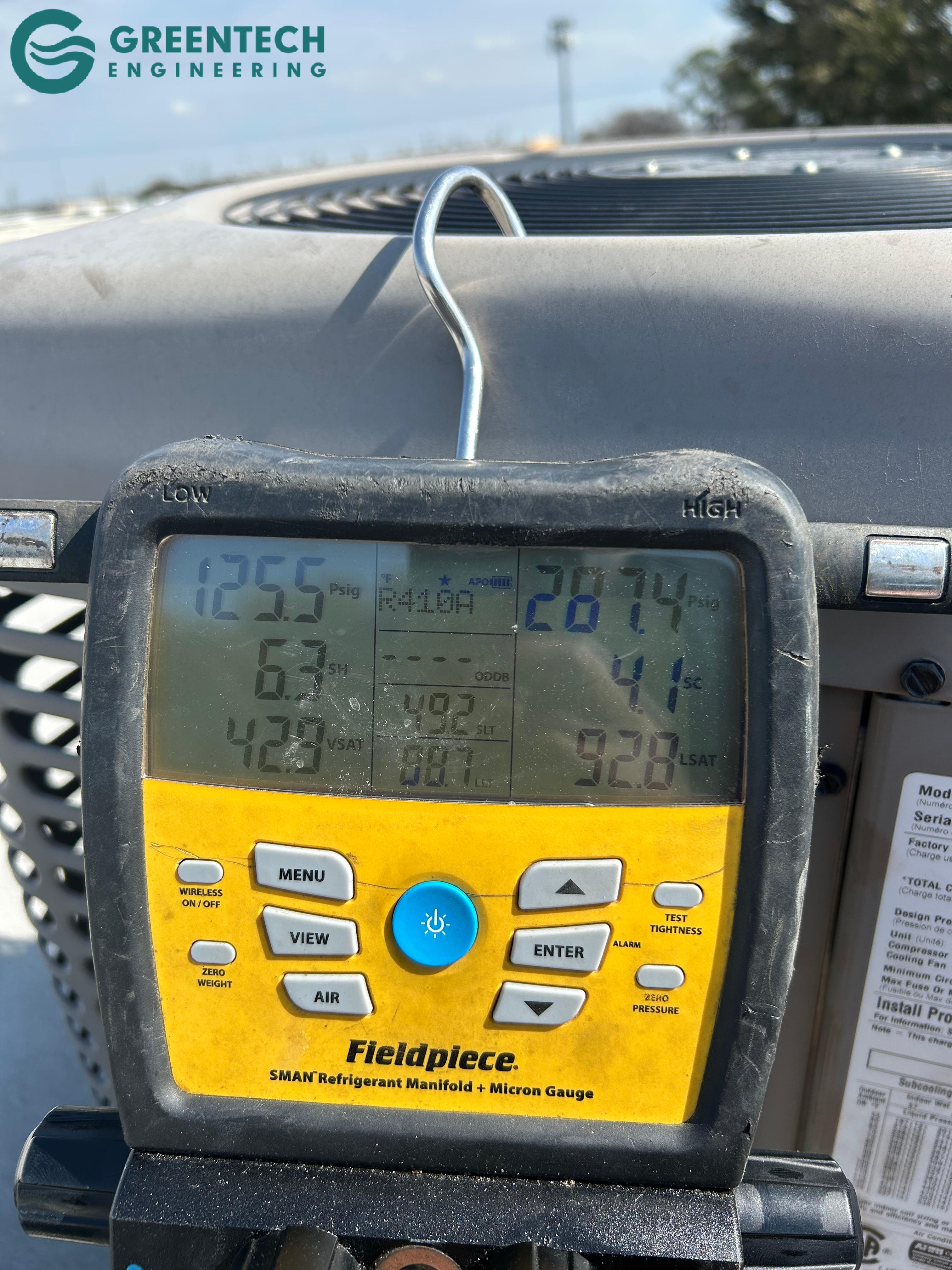
The Solution: 1. We safely removed the compromised, burned wiring.2. We repaired and replaced the electrical connections with proper, high-temperature rated terminals.3. After restoring power, we attached our digital Fieldpiece manifold gauges to monitor the system's pressures and saturation temperatures in real-time.4. We verified that the superheat and subcooling levels were perfectly balanced, ensuring the compressor had not suffered any permanent damage.
Outcome: The system resumed normal operation immediately, restoring comfort to the home and saving the homeowner from a highly expensive compressor replacement.
🚨 Experiencing similar electrical issues or weird noises? Don't risk a compressor failure.Contact our Grand Prairie team today for an emergency electrical diagnostic.
4. Why Does My AC Keep Turning On and Off Rapidly?
"Short cycling" happens when your AC turns on, runs for just a few minutes, and abruptly shuts off before cooling the house. Then, it immediately restarts the process. This is incredibly stressful on your equipment.
It draws massive amounts of electricity and ruins your indoor humidity control. Short cycling can be caused by an oversized AC unit, a malfunctioning thermostat, or a safety switch triggering due to an overheating compressor.
5. Why is My Electric Bill So High This Summer?
While DFW electricity bills naturally rise in July and August, a sudden, inexplicable spike compared to the exact same month last year is a massive red flag. When parts begin to fail—whether it's a capacitor losing its microfarad rating or a slow refrigerant leak—your system has to run twice as long to achieve the same temperature. You end up paying the power company for your AC's mechanical inefficiency.
Trust the Engineers for Your Grand Prairie HVAC Needs
HVAC systems are highly complex thermodynamic machines. At Greentech Engineering Heating & Air Conditioning, we do not believe in guessing or "box-swapping." Whether you have a burned wire in 75051 or need a full high-efficiency system heat pump upgrade in 75052, our engineer-led team relies on strict ACCA Manual J load calculations, digital diagnostics, and deep technical expertise to fix your system properly the first time.
Frequently Asked Questions
Q: How much does it cost to fix an AC that is blowing warm air in Grand Prairie?A: Costs vary depending on the root cause. If it is a minor electrical issue like a burned capacitor wire, repairs are highly affordable. If there is a major refrigerant leak or compressor failure, costs will be higher. We always provide a transparent, data-backed diagnosis before any work begins.
Q: Why is my outside AC unit buzzing but the fan isn't spinning?A: A buzzing sound combined with a stationary fan usually indicates a failed dual run capacitor or a bad contactor. The system is trying to send voltage to start the motors, but the electrical component bridging the gap has failed. Turn the unit off at the thermostat immediately to prevent compressor damage and call a professional.
Q: Should I repair my AC or replace it?A: We evaluate this based on the "5,000 Rule." Multiply the age of your equipment by the estimated cost of the repair. If the number exceeds $5,000, replacing the unit with a high-efficiency system (and taking advantage of Oncor rebates) is usually the better long-term financial decision.
About the Author:
Siwei (Lucas) Chen
CTO | Greentech Engineering Heating & Air Conditioning
Lucas specializes in engineering-driven HVAC diagnostics, performance optimization, and energy-efficiency upgrades for North Texas homeowners. Holding a B.S. in Mechanical Engineering from Virginia Tech, he brings a strict, data-first approach to residential heating and cooling. Under his technical leadership, Greentech Engineering ensures every system is perfectly calibrated for the Dallas-Fort Worth climate.
Professional Certifications:
- ACCA Certified (Manual J, S, D)
- NCI Certified – Air Balancing & Duct Optimization
- Daikin Comfort Pro Contractor
- Oncor Participating Service Provider
About Greentech Engineering Heating & Air Conditioning
Serving Grand Prairie and the greater Dallas-Fort Worth metroplex, Greentech Engineering is an engineer-led HVAC company committed to redefining residential comfort. We replace outdated guesswork with precise, data-driven solutions—utilizing strict ACCA Manual J load calculations to guarantee flawless installations. Whether you need a rapid emergency repair, a high-efficiency Daikin Fit heat pump upgrade, or assistance claiming maximum Oncor energy rebates, our team does the math so you don't have to.
Ready to future-proof your home's comfort or need a free expert second opinion?
👉 Call us Today to schedule your comprehensive engineering evaluation.

Flexible Financing Options
Explore our range of flexible financing options designed to suit your needs and budget.