






Fort Worth 76102 R-22 A/C to Daikin FIT Heat Pump Conversion
On September 10, 2026, Greentech Engineering Heating & Air Conditioning — DFW HVAC converted a Fort Worth, TX 76102 home from legacy nominal 2-ton Lennox R-22 straight-cool equipment to a nominal 1.5-ton Daikin FIT DH6VSA1810AB R-32 variable-speed heat pump with a DFVE24BP1300A* communicating air handler. AHRI reference 215415502 rates the match at 17,100 BTU/h cooling, 17,400 BTU/h heating at 47°F, 19.0 SEER2, 12.0 EER2 and 8.8 HSPF2 Region IV.
The integrated scope also included nominal 10 kW auxiliary electric heat, a Daikin One Touch thermostat, an insulated supply-plenum replacement, a Clean Comfort media air cleaner with MERV 11 media, and 220-volt voltage monitoring/surge protection.
The street address, homeowner identity, billing details, equipment serial numbers and other identifying information are excluded from this case study.
Project at a glance
- Location: Fort Worth, TX 76102; single-family house
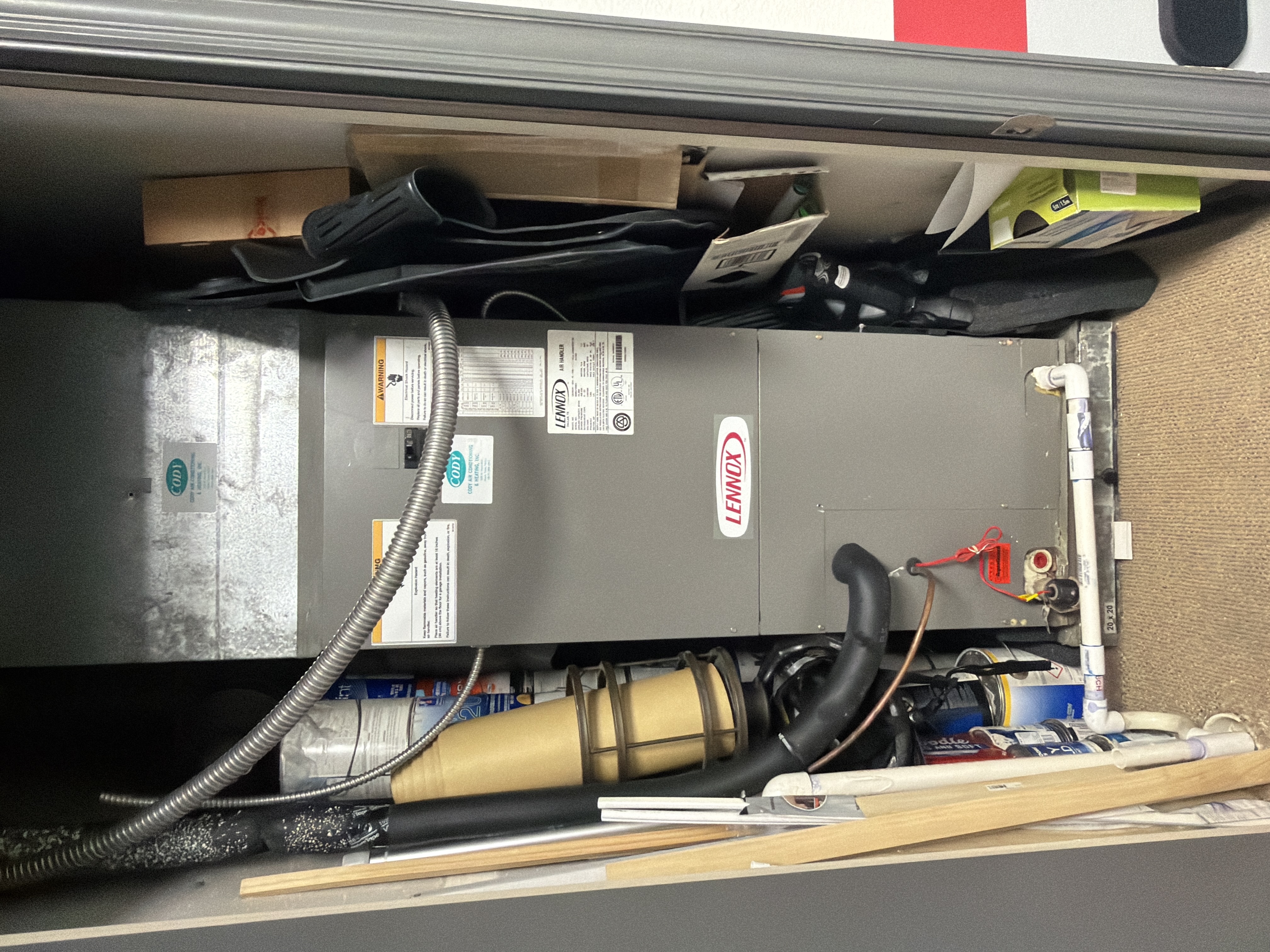
- Existing configuration: Lennox R-22 straight-cool system; nominal 2-ton indoor cooling class
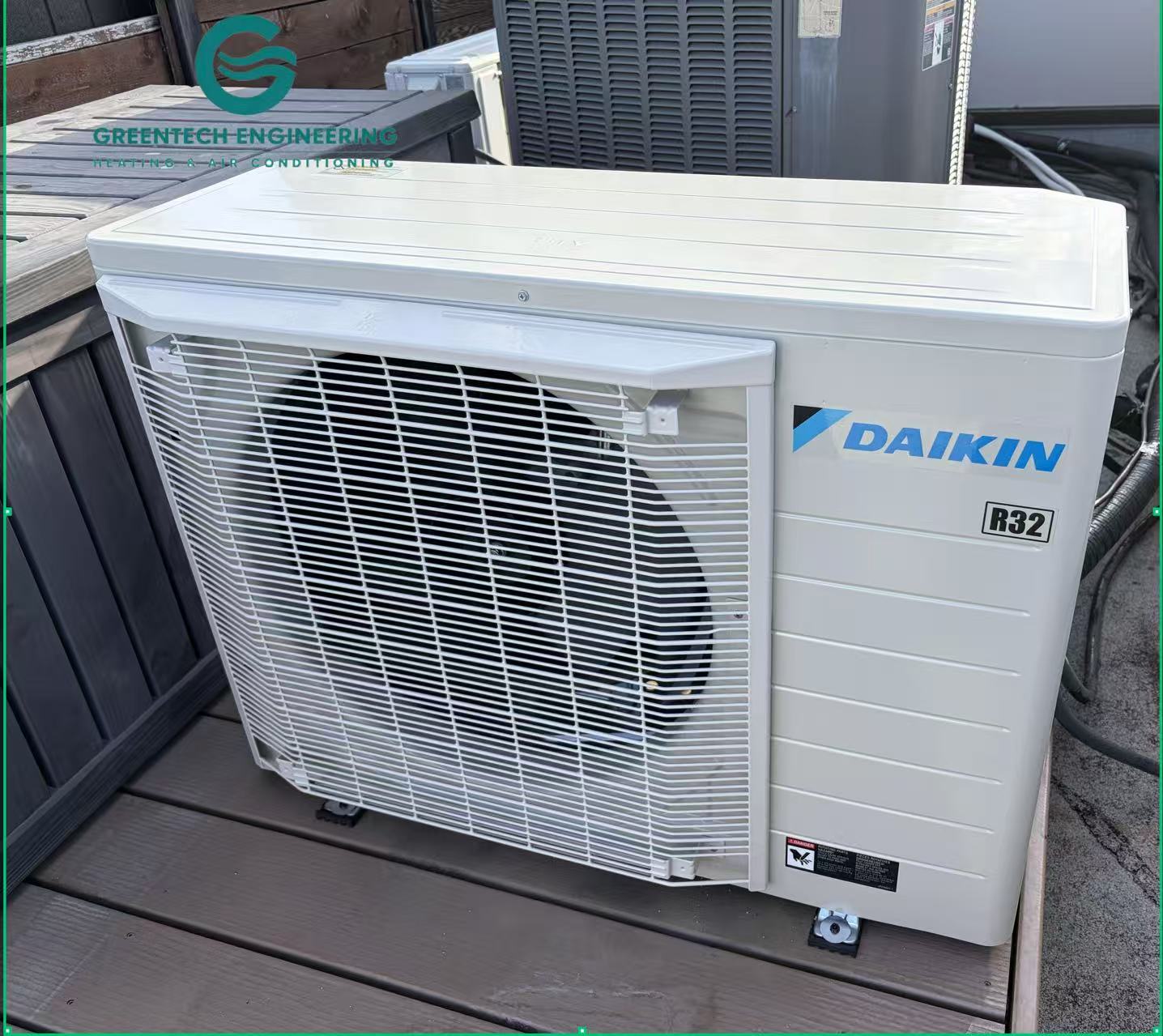
- New outdoor unit: Daikin FIT DH6VSA1810AB; nominal 1.5-ton; side-discharge; variable-speed; R-32 heat pump
- New indoor match: Daikin DFVE24BP1300A* communicating variable-speed air-handler family, as listed by AHRI; full installed suffix not verified for publication
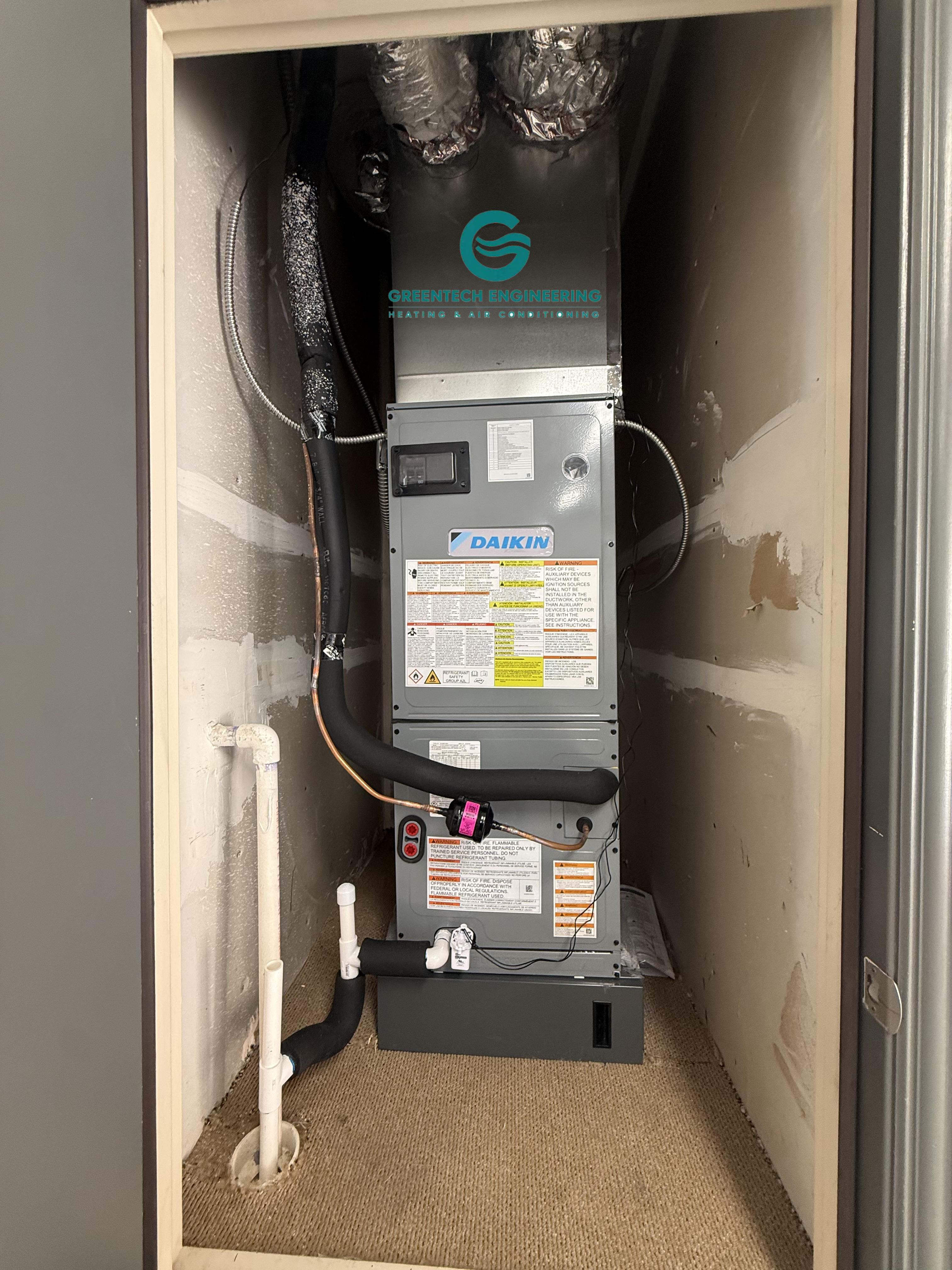
- Indoor orientation: Upflow mechanical-closet installation
- AHRI reference: 215415502
- Certified cooling capacity: 17,100 BTU/h
- Certified heating capacity: 17,400 BTU/h at 47°F
- Certified efficiency: 19.0 SEER2; 12.0 EER2; 8.8 HSPF2 Region IV
- Auxiliary heat: Nominal 10 kW electric heat kit in the documented scope; final kit and voltage-dependent output not verified for publication
- Control: Daikin One Touch communicating thermostat
- Supply-air scope: Replacement insulated metal supply plenum
- Filtration: Clean Comfort media air cleaner with MERV 11 media
- Electrical protection: 220-volt voltage monitoring/surge-protection device in the documented scope
- Completion date: September 10, 2026
- Project incentive: Oncor-approved; retained billing record shows a $1,600 invoice discount
What changed from the old straight-cool system?
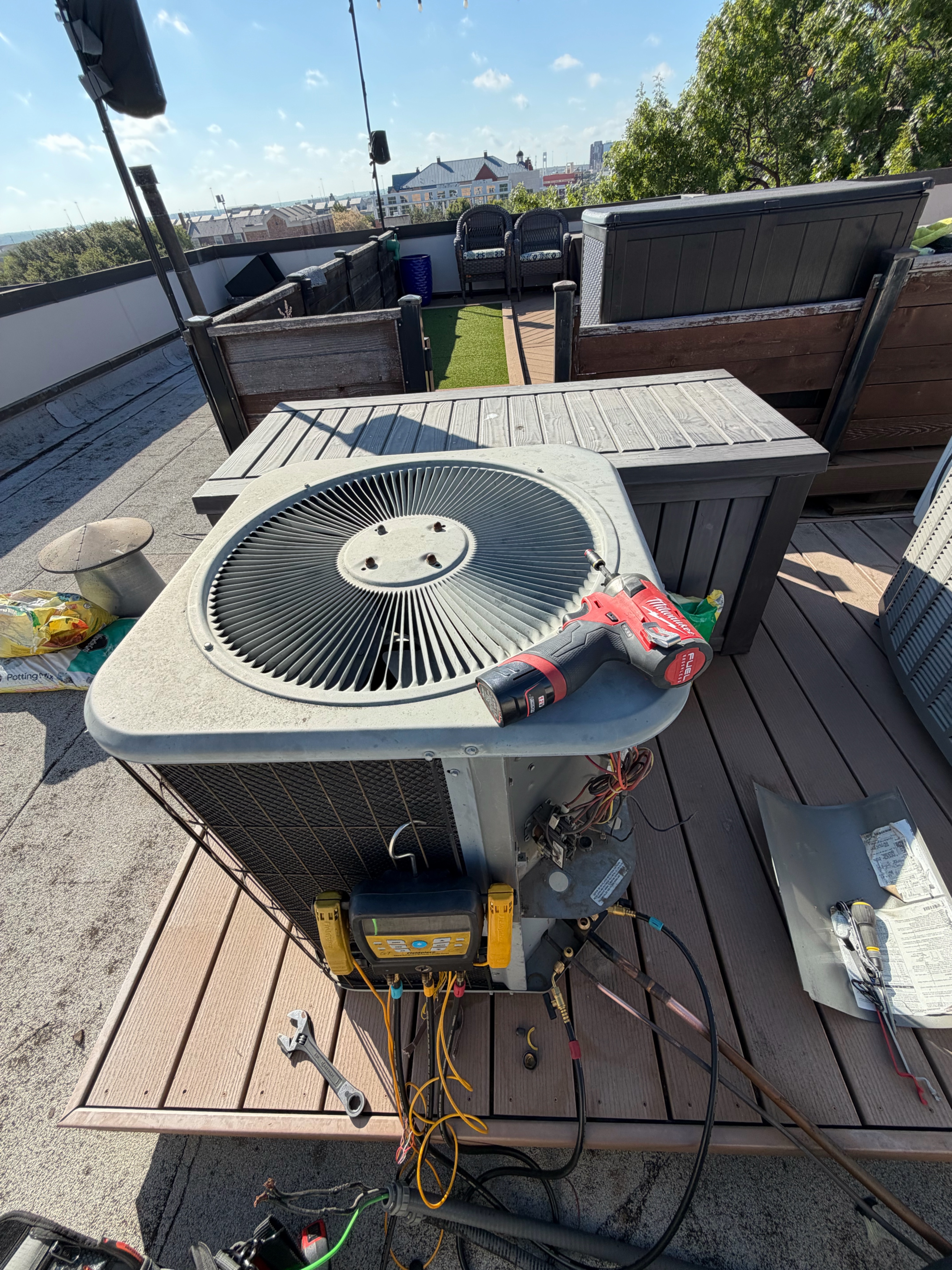
The legacy Lennox indoor nameplate supports the nominal 2-ton R-22 cooling description, while the outdoor photograph shows a conventional top-discharge Lennox condenser. The available evidence does not reliably establish the old outdoor model, manufacture date, efficiency, service age, failure or reason for replacement, so those details are not inferred.
The old outdoor unit provided cooling only. The replacement heat pump can provide both cooling and compressor-driven heating by reversing refrigerant flow. Electric resistance heat remains available through the indoor equipment as auxiliary support when the system controls call for it.
This was an equipment replacement—not an R-22-to-R-32 refrigerant retrofit. The old indoor and outdoor equipment was removed and replaced with a new R-32-compatible combination.
What Daikin equipment and accessories were installed?
The outdoor unit is a Daikin FIT DH6VSA1810AB, nominal 1.5-ton, side-discharge R-32 heat pump with a variable-speed compressor. It is matched with the DFVE24BP1300A* communicating air-handler family listed by AHRI. The air handler uses a variable-speed ECM blower and was installed in the existing upflow mechanical-closet location.
The compressor and blower perform different jobs. The compressor modulates refrigerant-system output; the indoor blower varies air movement according to the system’s control strategy and operating conditions.
The documented accessory scope included:
- Nominal 10 kW auxiliary electric heat
- Daikin One Touch communicating thermostat
- Replacement insulated metal supply plenum
- Clean Comfort media air cleaner with MERV 11 media
- 220-volt voltage monitoring and surge protection
What does AHRI reference 215415502 verify?
AHRI reference 215415502 verifies the standardized rated performance of the listed DH6VSA1810A* outdoor and DFVE24BP1300A* indoor combination:
- 17,100 BTU/h certified cooling capacity
- 17,400 BTU/h certified heating capacity at 47°F
- 19.0 SEER2
- 12.0 EER2
- 8.8 HSPF2, Region IV
AHRI matching documents performance for the listed indoor/outdoor combination. It does not certify the home’s load, duct design or installation workmanship.
The AHRI certificate is dated September 15, 2026, five days after the September 10 installation. It verifies the listed match and is not represented as a pre-installation document. The certificate image remains part of the internal project record and is not published.
Why is nominal 1.5 tons not exactly 18,000 BTU/h?
Nominal tonnage identifies an equipment class; certified capacity describes the standardized performance of a specific equipment combination. A nominal 1.5-ton class is commonly associated with 18,000 BTU/h, while AHRI rates this exact match at 17,100 BTU/h of cooling capacity.
The two figures are not contradictory, but the certified value should not be rounded up when this installation is described.
Does moving from 2 tons to 1.5 tons prove right-sizing?
No. The records document a change from a legacy nominal 2-ton class to a nominal 1.5-ton system, but they do not include a project-specific Manual J load calculation or complete Manual S selection record for publication.
The article therefore does not call the change “proper downsizing” or “right-sizing,” and it does not attribute comfort, humidity or energy outcomes to the smaller nominal class. For a project in which a documented load calculation was central, see this separate Fort Worth Manual J heat-pump case.
Why does a heat pump include auxiliary electric heat?
Auxiliary resistance heat can support compressor-driven heating when the system controls call for additional heat, including certain low-temperature, temperature-recovery or defrost conditions. It does not necessarily run continuously.
The written scope identifies a nominal 10 kW electric heat kit. Exact heat output and operating cost depend on the installed kit, connected voltage, control sequence, weather and building load. A voltage-dependent BTU/h output is not published because the final kit and electrical details were not independently confirmed for this article.
Why replace the supply plenum?
The new air handler was installed in the existing upflow mechanical closet. The insulated metal supply plenum/transition connects the indoor equipment to the supply-air system. Replacement can be appropriate when the new cabinet has different dimensions or connection requirements.
Accessible equipment and duct connections were sealed with HVAC-rated materials. No before-and-after static-pressure or airflow measurements were supplied, so the article does not claim that the plenum replacement produced a measured airflow improvement.
What does MERV 11 mean?
MERV is a standardized filter-efficiency classification. The Clean Comfort cabinet in this project uses MERV 11 media, but that rating does not mean the filter removes every particle and does not establish a health outcome.
Actual filtration depends on the exact media, cabinet fit, airflow, replacement schedule and system operation. No before-and-after particle, static-pressure, airflow or indoor-air-quality measurements were supplied; the accurate claim is that MERV 11 media filtration was integrated into the replacement.
What does voltage monitoring and surge protection do?
The documented scope included a 220-volt voltage monitor and surge-protection device intended to help protect connected HVAC electronics from electrical conditions within the device’s specifications.
Surge protection reduces certain electrical risks; it does not prevent every possible equipment failure. Specific thresholds, modes and warranty claims require the exact installed-device documentation, which was not supplied for publication.
What installation work was documented?
The project scope included:
- Removal of the old Lennox equipment and recovery of the existing refrigerant
- Installation of the compact Daikin FIT outdoor unit on a new equipment pad
- Upflow installation of the communicating air handler and auxiliary electric heat
- Installation of the Daikin One Touch thermostat
- Replacement of the insulated supply plenum and sealing of accessible connections
- Installation of the Clean Comfort media cabinet with MERV 11 media
- Safe-T condensate protection, drain-line insulation and drain cleaning or modification as required
- Preparation of the existing copper line set using RX-11 and dry nitrogen
- Line-set modification and connections brazed using 15% silver brazing alloy
- Installation of the voltage-monitoring and surge-protection device
- Startup and operational testing
The written scope specified nitrogen pressure testing at 250 psi for at least 15 minutes and evacuation below 500 microns. Because achieved readings were not supplied for publication, these figures are documented requirements—not claimed final measurements.
How did the project-specific Oncor incentive work?
Oncor approved an incentive for this completed project, and the retained billing record shows a $1,600 invoice discount.
Oncor states that its home-efficiency incentives are paid to approved participating service providers and that participating providers are independent third parties, not Oncor affiliates or endorsements. Eligibility, technical requirements, funding, approval and amounts vary. This case does not promise that another project will receive $1,600 or claim that Oncor paid the homeowner directly.
Homeowners can review the official Oncor Home Energy Efficiency Program and Greentech’s 2026 Oncor HVAC incentive guide for general program context. Current eligibility must be checked for each property and project.
What warranty applies?
Greentech provided a complimentary three-year, or 1,095-day, labor warranty for qualifying labor performed on the installed system. The labor warranty is non-transferable and remains subject to the controlling written coverage, claim, exclusion and ownership-change terms.
Manufacturer coverage for the equipment, compressor, thermostat and accessories is separate. No project-specific manufacturer duration is stated because registration, model eligibility and final written terms were not supplied for publication.
What was the documented result?
Greentech completed the heat pump, communicating air handler, auxiliary heat, thermostat, supply-plenum, MERV 11 media-filtration and electrical-protection scope on September 10, 2026. The project photographs document the new outdoor and indoor equipment, while AHRI reference 215415502 verifies the standardized performance of the listed match.
No measured energy savings, sound reduction, humidity change, airflow improvement, filtration health benefit or homeowner review was supplied. None is claimed here.
Frequently asked questions
What was installed in this Fort Worth 76102 conversion?
A nominal 1.5-ton Daikin FIT R-32 variable-speed heat pump, communicating air handler and auxiliary electric heat replaced legacy nominal 2-ton Lennox R-22 straight-cool equipment. The scope also included a One Touch thermostat, insulated supply plenum, MERV 11 media cleaner and voltage/surge protection.
Was the old R-22 equipment converted to R-32 refrigerant?
No. The old equipment was removed and replaced with new R-32-compatible indoor and outdoor equipment. “Heat-pump conversion” describes the change from cooling-only equipment to a system that can also provide compressor-driven heating.
What efficiency applies to the exact installed match?
AHRI 215415502 rates the combination at 19.0 SEER2, 12.0 EER2 and 8.8 HSPF2 Region IV, with 17,100 BTU/h cooling and 17,400 BTU/h heating capacity at 47°F.
Did changing from 2 tons to 1.5 tons prove right-sizing?
No. The equipment-class change is documented, but no project-specific Manual J or complete Manual S record was supplied for publication.
Why does the heat pump still use auxiliary electric heat?
Auxiliary resistance heat can support the heat pump when the controls call for additional heating, including certain low-temperature, recovery or defrost conditions. It does not necessarily operate continuously.
Does MERV 11 guarantee a health improvement?
No. MERV 11 is a filter-efficiency classification. Real-world filtration depends on media condition, cabinet fit, airflow, maintenance and system operation.
Does 19.0 SEER2 guarantee lower utility bills?
No. SEER2 is a standardized equipment rating. Actual energy use depends on weather, building load, thermostat settings, ducts, airflow, auxiliary-heat operation, installation, maintenance, utility rates and occupants.
Does every homeowner receive the same $1,600 Oncor incentive?
No. This project’s retained record shows a $1,600 invoice discount associated with an approved incentive. Eligibility, funding, technical requirements, approval and amounts vary by project.
Schedule a Fort Worth heat-pump conversion evaluation
Changing from straight-cool equipment to a heat pump requires evaluation of the indoor/outdoor match, heating sequence, electrical capacity, controls, ducts, filtration, drainage and available incentive process.
Call (469) 551-6806, explore heat-pump replacement in Fort Worth, or visit the Fort Worth HVAC services page.
For a different equipment configuration, see this Irving R-22-to-R-32 heat-pump conversion. For broader refrigerant information, read what homeowners should know about R-32.
About the author
Siwei (Lucas) Chen
Chief Technology Officer | Greentech Engineering Heating & Air Conditioning — DFW HVAC
Siwei (Lucas) Chen applies an engineering-based, data-first approach to residential HVAC system design, diagnostics, airflow measurement, equipment selection and duct-system optimization across Dallas–Fort Worth. He holds a B.S. in Mechanical Engineering from Virginia Tech.
Lucas completed ACCA’s Residential Design for Quality Installation Course, which covers residential design procedures associated with ACCA Manuals J, S, T and D. He is also an NCI Certified Residential Air Balancer and NCI Certified Duct System Optimization Specialist.

Flexible Financing Options
Explore our range of flexible financing options designed to suit your needs and budget.