





Irving Heat Pump Conversion: From R-22 Cooling to Daikin R-32
By Siwei (Lucas) Chen
Project completed August 17, 2026 | Irving, Texas 75038
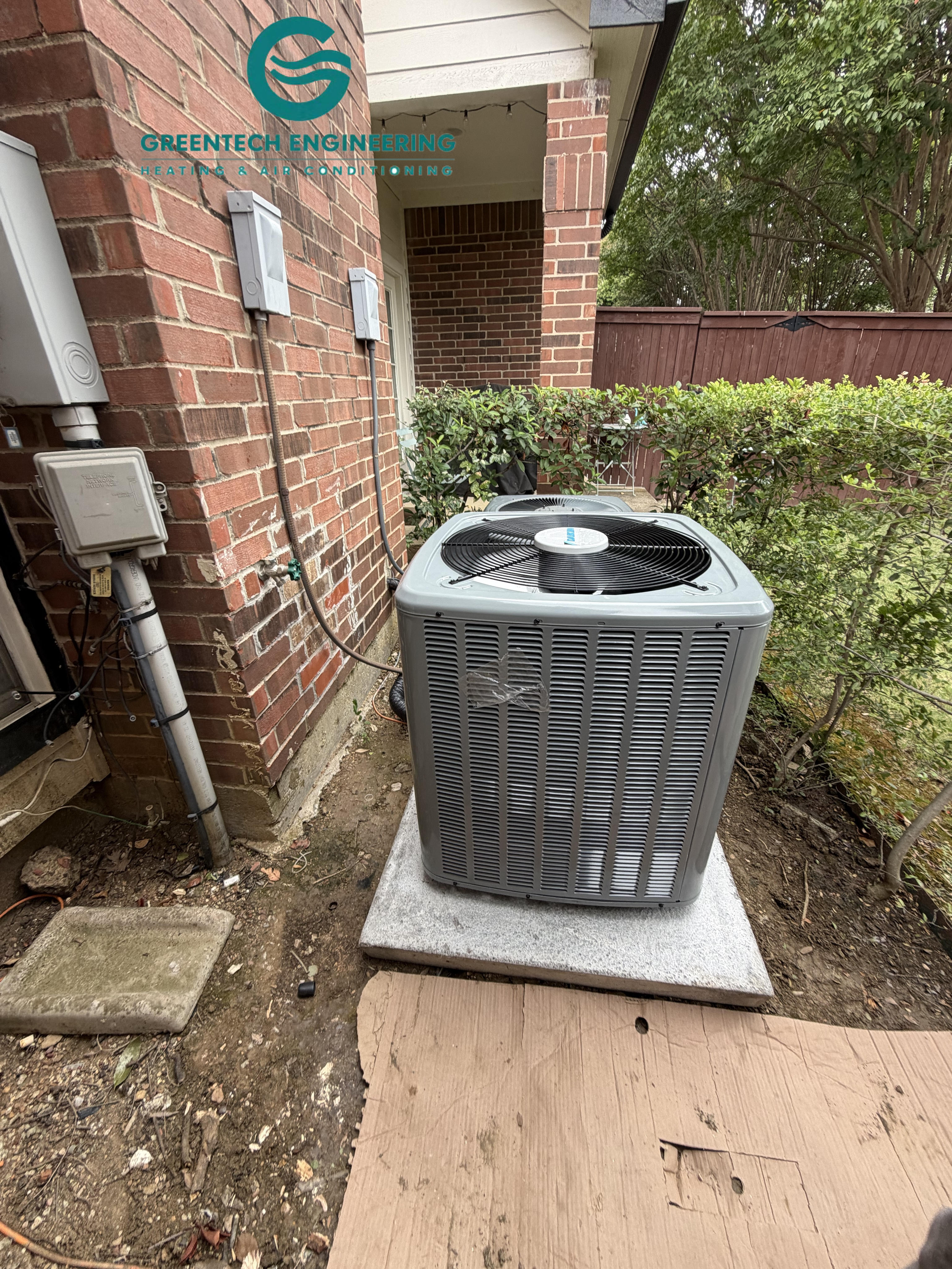
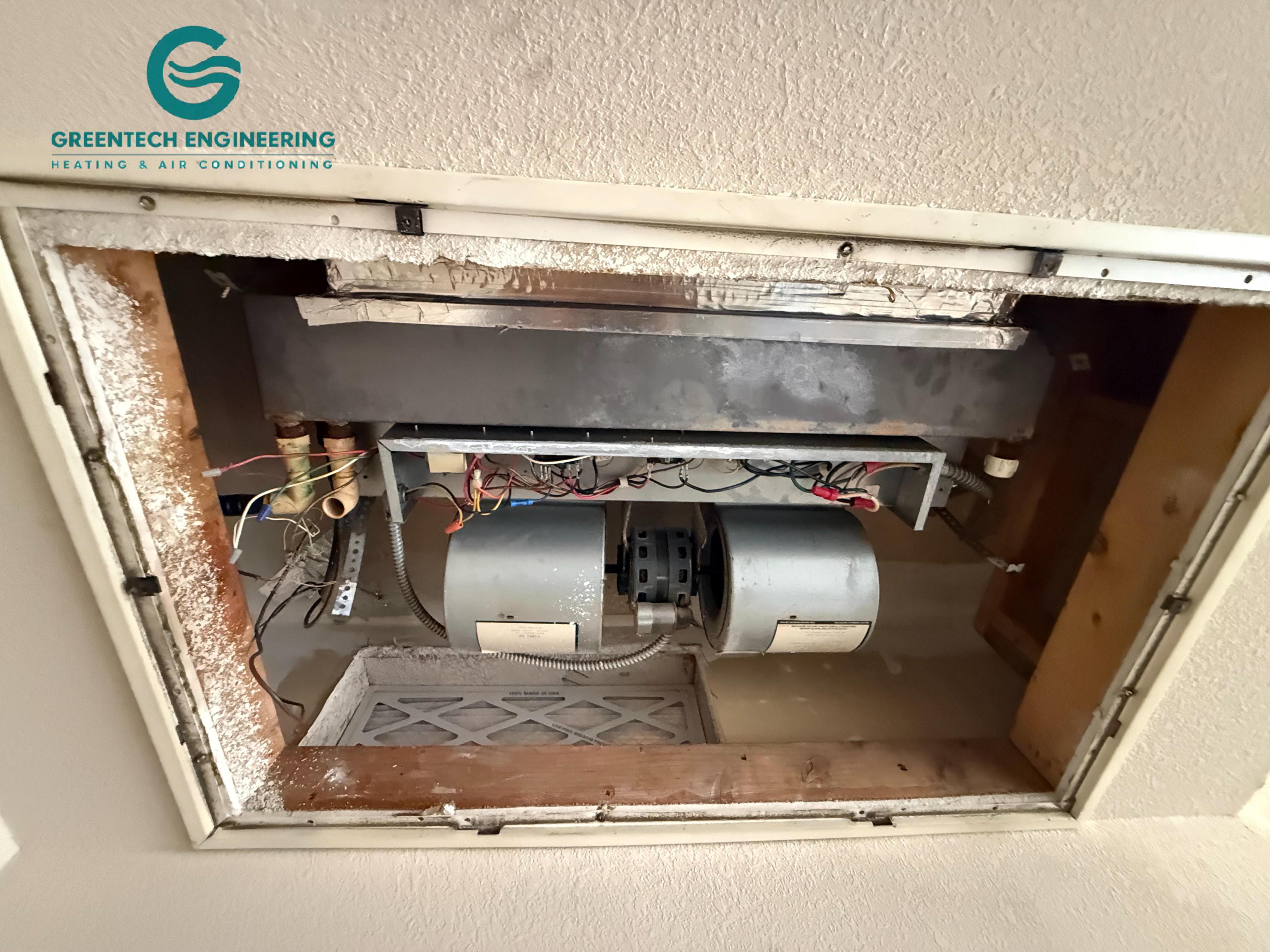
On August 17, 2026, Greentech Engineering Heating & Air Conditioning — DFW HVAC completed an A/C-to-heat-pump conversion at a single-family home in Irving, Texas 75038. The older R-22 outdoor equipment provided straight cooling while electric resistance elements handled heating. Greentech replaced that system with a nominal 1.5-ton Daikin R-32 heat pump and First Co. ceiling air handler, making heat-pump operation the primary heating method while retaining auxiliary electric heat.
This project was more than an outdoor A/C changeout. It changed the home’s all-electric heating sequence and replaced the outdoor and indoor equipment with an AHRI-matched combination.
Homeowners evaluating a similar system can review Greentech’s HVAC service in Irving, TX and heat-pump replacement options in DFW.
Project at a glance
- Location: Irving, Texas 75038
- Property: Single-family house
- Completion date: August 17, 2026
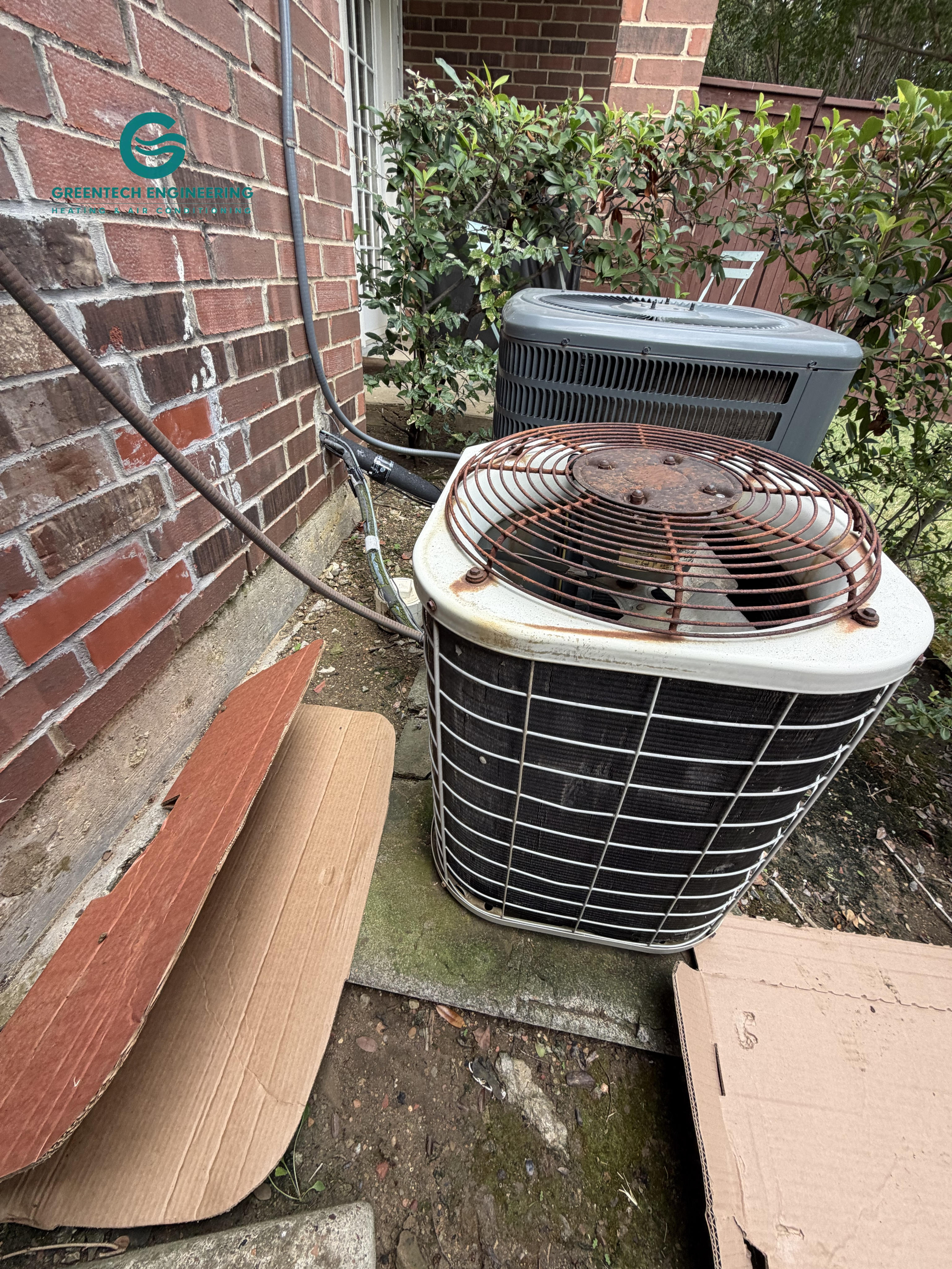
- Previous configuration: Older R-22 straight-cooling outdoor condenser with electric resistance heat through the indoor equipment
- New outdoor unit: Daikin
DH4SEA1810AAR-32 heat pump - New indoor unit: First Co.
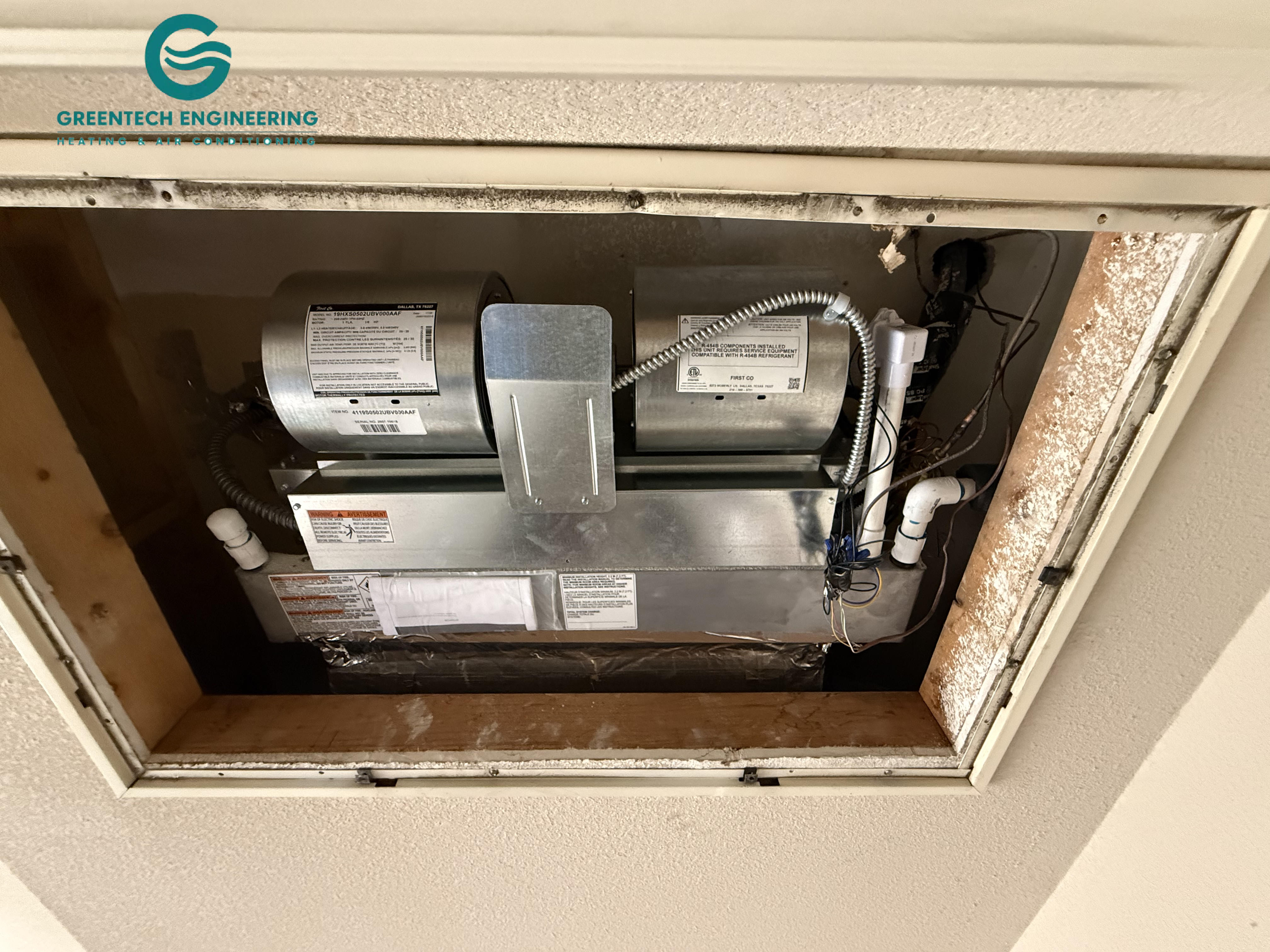
19HXS0502UBV000AAFceiling-mounted air handler - Nominal class: 1.5 tons
- Thermostat: Two-heat/one-cool conventional thermostat
- AHRI reference:
215444861 - Certified cooling capacity: 17,600 BTU/h
- Certified heating capacity: 16,800 BTU/h at 47°F
- Certified efficiency: 14.5 SEER2, 12.2 EER2 and 7.5 HSPF2 Region IV
- Project incentive: $1,600, subsequently approved by Oncor
The city, ZIP code and project photos are published with the homeowner’s permission. The street address, homeowner identity, job records, serial numbers and other private identifiers are excluded.
What changed at this Irving home?
The previous outdoor condenser provided cooling only. The indoor ceiling equipment used electric resistance elements for heating. The replacement keeps the home all-electric but changes how heating normally occurs:
- The Daikin heat pump cools the home during warm weather.
- In heating mode, it reverses the refrigeration cycle and transfers heat indoors.
- Electric resistance heat in the First Co. air handler remains available as auxiliary support when the thermostat and system controls call for it.
Both a straight-cool air conditioner and a heat pump can cool a home. The important difference is that a heat pump can also reverse its refrigeration cycle to provide compressor-driven heating.
Was the old R-22 equipment converted to use R-32?
No. The old R-22 equipment was not refilled or retrofitted to operate with R-32. Greentech removed and replaced the outdoor and indoor HVAC equipment with a new R-32-compatible matched system.
In this article, conversion describes the change in system function—from a straight-cool outdoor unit with resistance heating to a heat pump with auxiliary electric heat. It does not mean the old R-22 condenser was converted to a different refrigerant.
The photograph documents an older, visibly weathered outdoor unit, but a photo alone does not establish its exact age, efficiency, brand, repair history or remaining life. This case study therefore makes no unsupported claim about those details.
Which equipment was installed?
Greentech installed this exact combination:
- Outdoor heat pump: Daikin
DH4SEA1810AA, R-32 - Indoor air handler: First Co.
19HXS0502UBV000AAF, horizontal recessed ceiling configuration - Thermostat: Conventional two-heat/one-cool control
- Heating sequence: Heat-pump heating with auxiliary electric heat available through the air handler
Daikin identifies the DH4SE product family as an R-32 ducted heat pump. First Co. describes the HXS family as horizontal recessed equipment compatible with heat-pump applications and electric heat.
The indoor label lists different electric-heat output depending on connected voltage. Because the supplied project record does not independently confirm that voltage for publication, this article uses the accurate description auxiliary electric heat rather than an unconditional “5 kW heater” claim.
Why does the exact AHRI match matter?
The exact AHRI match identifies the tested outdoor-and-indoor equipment combination. Product-family pages may advertise the highest performance available across many possible matches, but those “up to” values are not automatically the ratings of a particular installation.
AHRI reference 215444861 rates this project’s exact combination at:
- 17,600 BTU/h certified cooling capacity
- 16,800 BTU/h certified heating capacity at 47°F
- 14.5 SEER2
- 12.2 EER2
- 7.5 HSPF2 Region IV
These are the project ratings. The broader Daikin product family may reach up to 15.2 SEER2, but that maximum does not replace the 14.5 SEER2 rating for this installed combination.
Why can a nominal 1.5-ton system be rated at 17,600 BTU/h?
Nominal tonnage describes an equipment-size class; certified capacity describes the tested performance of the exact equipment combination.
A nominal 1.5-ton class is commonly associated with 18,000 BTU/h. The tested Daikin and First Co. combination in this project is certified at 17,600 BTU/h for cooling. Those numbers are not contradictory, and the certified value should not be rounded up when describing the AHRI match.
No project-specific Manual J load calculation was supplied for publication. This article therefore identifies the installed equipment class and certified performance without claiming that a published load calculation proved right-sizing or downsizing for this home.
For a separate project where a documented load calculation was central, see Greentech’s Fort Worth Manual J heat-pump case.
Why does a heat pump still use auxiliary electric heat?
A heat pump can be the primary heater while electric resistance heat remains available as support. The auxiliary heat may operate when the thermostat or equipment controls call for additional heating, including certain higher-demand or defrost conditions.
The presence of auxiliary electric heat does not make the new system a straight-cool A/C, and it does not mean the auxiliary heat operates continuously.
Actual operating cost depends on weather, thermostat settings, building heat loss, utility rates, system operation and how often auxiliary heat runs. No post-installation bill data was supplied, so this article does not claim a savings percentage or payback period.
What installation work supported the conversion?
The written scope addressed more than placement of the outdoor unit. It included provisions involving:
- Recovery of the previous refrigerant
- Preparation of the refrigerant circuit for the new equipment
- Brazed refrigerant connections
- Pressure testing and evacuation
- Condensate drainage and protection for equipment installed above finished space
- Indoor-to-duct connections
- Heat-pump thermostat setup
- Startup and operational checks
These are documented scope items, not published final commissioning measurements. The final closeout readings were not supplied for publication, so this article does not invent pressure, vacuum, refrigerant-charge, airflow, static-pressure or temperature-split results.
How did the $1,600 Oncor invoice discount work?
For this specific project, Greentech applied the anticipated $1,600 Oncor incentive as an immediate invoice discount before installation and before submitting the incentive application. Greentech then handled the application, and Oncor later approved the project incentive.
The chronology matters: Oncor did not pay the homeowner $1,600 before installation. Greentech provided the upfront invoice discount based on the anticipated incentive and handled the later application.
Oncor states that its Home Energy Efficiency Program pays incentives to approved participating service providers and that eligibility depends in part on receiving Oncor electric delivery service. Service providers are third parties and are not affiliated with or endorsed by Oncor.
Homeowners can also read Greentech’s 2026 Oncor HVAC incentive guide for general program questions.
Incentive disclaimer: Utility incentive eligibility, equipment requirements, funding, approval and amounts vary by home, project, program rules and available funds. The $1,600 discount in this completed Irving case is not a promise that another installation will qualify for the same amount.
What should Irving homeowners verify before replacing a similar system?
Before approving a straight-cool-to-heat-pump conversion, ask the contractor to document:
- Existing heating type: Is the home using electric resistance heat, a heat pump, a gas furnace or another configuration?
- Complete equipment match: What exact outdoor and indoor models will be installed, and what AHRI reference covers the combination?
- Certified ratings: What capacity, SEER2, EER2 and HSPF2 apply to the exact match rather than the product-family maximum?
- Sizing evidence: What load calculation or other documented basis supports the proposed nominal equipment class?
- Auxiliary-heat design: What electric-heat capacity, electrical service, thermostat stages and sequence of operation apply?
- Refrigerant procedure: How will the old refrigerant be recovered and the circuit prepared, tested and evacuated for the new equipment?
- Condensate safeguards: What protections apply when the air handler is located above finished space?
- Incentive terms: Who applies, when approval occurs and how the anticipated amount appears on the contract or invoice?
- Written warranties: Which contractor-labor and manufacturer terms apply, and what exclusions, registration or transfer rules matter?
For this project, the written work order included a complimentary three-year/1,095-day labor warranty, subject to its written coverage, exclusions, non-transferability provision and other terms. No manufacturer-warranty duration is stated because exact registration and written coverage were not supplied for publication.
Schedule a heat-pump evaluation in Irving
Replacing a straight-cool A/C and electric-heat system with a heat pump requires evaluation of the indoor and outdoor equipment match, heating sequence, electrical capacity, controls, refrigerant circuit and condensate safeguards.
Greentech Engineering Heating & Air Conditioning — DFW HVAC can document those project requirements and explain any available incentive process before installation.
Frequently asked questions
What was upgraded in this Irving HVAC project?
Greentech replaced an older R-22 straight-cooling condenser and ceiling-mounted electric-heat indoor unit with a Daikin R-32 heat pump, a First Co. ceiling air handler and auxiliary electric heat. The nominal 1.5-ton system was completed on August 17, 2026.
Was the old R-22 unit converted to R-32 refrigerant?
No. The old R-22 equipment was replaced with new R-32-compatible equipment. “Heat-pump conversion” describes the change from a cooling-only outdoor unit with resistance heat to heat-pump heating with auxiliary electric support.
What is the difference between a straight-cool A/C and a heat pump?
Both can cool. A straight-cool air conditioner does not reverse its refrigeration cycle to heat the home. A heat pump can reverse operation and transfer heat indoors, allowing it to provide primary heating as well as cooling.
Does this heat pump still have electric heat?
Yes. The Daikin heat pump provides primary compressor-driven heating, while auxiliary electric heat remains available in the First Co. air handler when the thermostat and system controls call for it.
What efficiency rating applies to the installed system?
AHRI reference 215444861 rates the exact combination at 14.5 SEER2, 12.2 EER2 and 7.5 HSPF2 Region IV. Certified capacity is 17,600 BTU/h for cooling and 16,800 BTU/h for heating at 47°F.
Why is a nominal 1.5-ton system rated at 17,600 BTU/h?
Nominal tonnage identifies the general equipment class. Certified capacity depends on the tested indoor-and-outdoor combination, so it can differ from the simple nominal conversion of 18,000 BTU/h.
How did the $1,600 Oncor discount work?
Greentech applied the anticipated incentive as an immediate invoice discount before installation and before submitting the application. Greentech handled the later application, and Oncor subsequently approved the project incentive.
Can every homeowner receive the same Oncor incentive?
No. Eligibility, funding, equipment requirements, approval and dollar amounts vary. Another installation may qualify for a different amount or may not qualify.
Does this case claim lower energy bills or improved comfort?
No. The project record supplied for publication did not include post-installation bill, airflow, humidity or comfort measurements, so no quantified improvement is claimed.
About the author
Siwei (Lucas) Chen
Chief Technology Officer | Greentech Engineering Heating & Air Conditioning — DFW HVAC
Siwei (Lucas) Chen applies an engineering-based, data-first approach to residential HVAC system design, diagnostics, airflow measurement, equipment selection and duct-system optimization across Dallas–Fort Worth. He holds a B.S. in Mechanical Engineering from Virginia Tech.
Lucas completed ACCA’s Residential Design for Quality Installation Course, which covers residential design procedures associated with ACCA Manuals J, S, T and D. He is also an NCI Certified Residential Air Balancer and NCI Certified Duct System Optimization Specialist.

Flexible Financing Options
Explore our range of flexible financing options designed to suit your needs and budget.