







Fort Worth Daikin Heat Pump Replacement: How Manual J Supported Downsizing From 4 Tons to 3 Tons
By Siwei (Lucas) Chen, Chief Technology Officer
Published July 31, 2026 | Last updated July 31, 2026
When the existing HVAC system at this Fort Worth, Texas 76137 single-family home failed, the homeowner reported that it could no longer cool adequately. The homeowner also reported high indoor humidity and high electricity bills.
Rather than automatically replacing the nominal 4-ton system with another unit of the same tonnage, Greentech Engineering Heating & Air Conditioning — DFW HVAC used a project-specific Manual J load calculation and certified equipment performance data to support the replacement selection.
Quick answer: The home’s Manual J cooling load was 34,584 BTUH. The selected nominal 3-ton Daikin outdoor-unit and air-handler combination provides 35,000 BTUH of AHRI-certified cooling capacity. Those figures supported replacing the failed nominal 4-ton system with the documented nominal 3-ton match.
Evidence reviewed: Project-specific Manual J results, existing and replacement equipment nameplates, installation photographs and AHRI Certificate 215217375. Oncor approval was checked against Greentech’s retained project records. The AHRI certificate and customer-specific records are not published for privacy and document-control purposes.
Case at a Glance
- Project detail: Verified information
- Location: Fort Worth, TX 76137
- Property type: Single-family house
- Installation completed: July 20, 2026
- Existing system: Nominal 4-ton system manufactured in July 2014
- Existing outdoor-unit model: NXH548GKA200
- Homeowner-reported concerns: System failure, inadequate cooling, high indoor humidity and high electricity bills
- Manual J conditioned area: 1,481 square feet
- Manual J total cooling load: 34,584 BTUH
- Manual J sensible cooling load: 31,191 BTUH
- Manual J latent cooling load: 3,393 BTUH
- Manual J heating load: 45,273 BTUH
- Replacement system: Nominal 3-ton Daikin R-32 heat pump
- Outdoor unit: Daikin DH4SEA3610A
- Indoor air handler: Daikin AMST42CU1300A
- Installed auxiliary heat: HKSC20XB nominal 20-kW electric heat kit; not separately listed on the AHRI certificate
- AHRI Certified Reference Number: 215217375
- AHRI-certified outdoor/indoor match: DH4SEA3610A and AMST42CU1300A
- AHRI-certified cooling capacity: 35,000 BTUH
- AHRI heating capacity at 47°F: 34,400 BTUH
- Certified efficiency: 15.2 SEER2, 12.5 EER2 and 7.5 HSPF2, Region IV
- Approved Oncor incentive: $1,725, passed through as an instant discount
What Problems Did the Homeowner Report?
The existing system had failed and could no longer cool the home adequately. The homeowner also reported high indoor humidity and high electricity bills.
Those humidity and cost concerns are homeowner reports. No indoor-humidity trend data or utility-bill comparison was supplied for this case. This article therefore does not claim that the old system definitively caused either condition, and it does not claim a measured post-installation humidity improvement or energy savings.
What Was the Existing HVAC System?
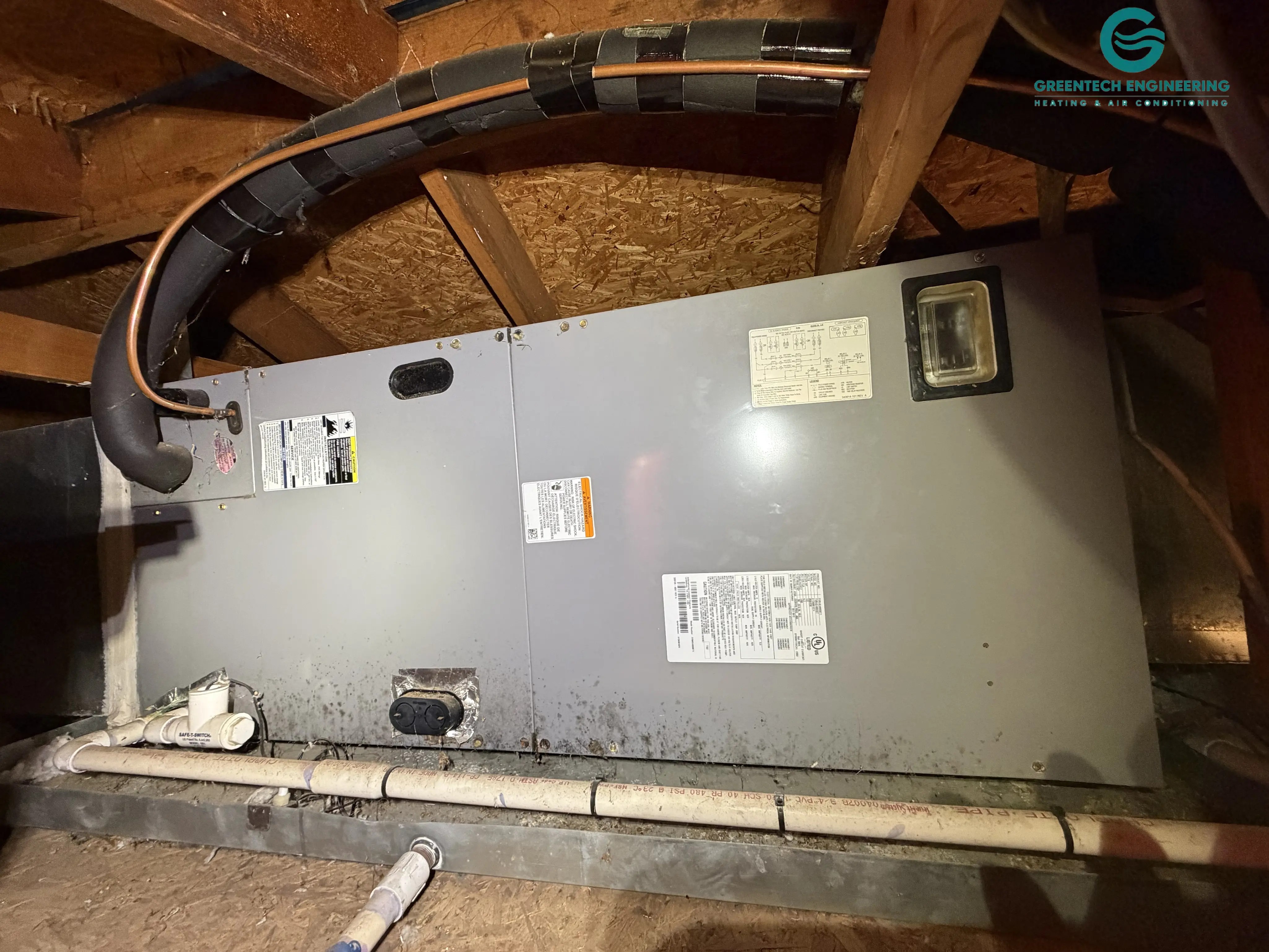
The documented outdoor-unit model was NXH548GKA200. Its label identified a July 2014 manufacture date and a nominal 48,000-BTUH, or 4-ton, capacity.
The system’s age is a documented project fact, but age alone is not presented as the cause of failure.
Why Wasn’t Another 4-Ton System Installed Automatically?
The size of the old equipment is useful background, but it should not automatically determine replacement capacity. A residential load calculation estimates the home’s heating and cooling requirements. The selected equipment’s certified performance data then helps support the final selection.
ACCA describes Manual J as the residential method for calculating heating and cooling loads. ACCA Manual S addresses equipment selection using load information and performance data.
For this project, Greentech compared the home’s calculated load with the certified performance of the proposed Daikin outdoor-unit and air-handler match instead of simply repeating the tonnage shown on the old equipment label.
This does not mean every 4-ton system should be replaced with a 3-ton system. The decision was specific to this home and its documented project data.
What Did the Manual J Calculation Show?
The project-specific Manual J calculation used 1,481 square feet of conditioned floor area and produced the following results:
Manual J resultCalculated loadTotal cooling34,584 BTUHSensible cooling31,191 BTUHLatent cooling3,393 BTUHHeating45,273 BTUH
Manual J estimates the home’s heating and cooling loads. It does not, by itself, diagnose the cause of high humidity, prove that the old equipment caused the homeowner’s reported concerns or guarantee the performance of a replacement installation.
How Did the Load Compare With the Selected Daikin System?
The central sizing comparison was:
Sizing evidenceDocumented resultExisting nominal system48,000 BTUH / 4 tonsManual J cooling load34,584 BTUHNew AHRI-certified cooling capacity35,000 BTUH / nominal 3 tons
The selected Daikin outdoor-unit and air-handler combination’s 35,000-BTUH certified cooling capacity is closely aligned with the 34,584-BTUH calculated cooling load. The figures are not exactly equal, and this article does not characterize the system as “perfectly sized.” The selection was supported by the project-specific load calculation and certified performance data.
What Daikin Heat-Pump Equipment Was Installed?
Greentech completed the installation on July 29, 2026. Installation documentation identifies:
- Daikin DH4SEA3610A outdoor heat pump;
- Daikin AMST42CU1300A indoor air handler; and
- HKSC20XB nominal 20-kW auxiliary electric heat kit.
AHRI Certified Reference Number 215217375 applies to the DH4SEA3610A outdoor unit and AMST42CU1300A indoor-unit combination. The installed auxiliary heat kit is a system component, but it is not separately listed on the AHRI certificate.
The AHRI Directory of Certified Product Performance identifies the outdoor/indoor match at:
- 35,000 BTUH certified cooling capacity;
- 34,400 BTUH heating capacity at 47°F;
- 15.2 SEER2;
- 12.5 EER2; and
- 7.5 HSPF2, Region IV.
AHRI ratings describe the matched equipment under standardized conditions. They are not measurements of this home’s utility use and do not guarantee a specific bill reduction.
What Is the Role of the 20-kW Auxiliary Heat Kit?
The installation documentation identifies an HKSC20XB nominal 20-kW electric auxiliary heat kit. Auxiliary electric heat can supplement heat-pump operation when the system controls call for it, including under certain low-temperature or defrost conditions.
The Manual J heating load for this home was 45,273 BTUH, while the heat pump’s AHRI-rated heating capacity at 47°F is 34,400 BTUH. Those values use different bases: the Manual J figure is the calculated project heating load, while the AHRI figure is certified equipment performance at a specified 47°F rating condition.
The heat kit’s presence does not mean that it operates continuously, and this article does not estimate its operating cost.
How Did the $1,725 Oncor Incentive Work?
The project’s production report was approved, and the final approved Oncor incentive was $1,725. Greentech passed that amount through to the homeowner as an instant discount.
Homeowners commonly search for an “Oncor rebate,” but Oncor’s program uses the term incentive. Oncor explains that eligible residential heating and cooling projects are completed through participating service providers. The 2026 Oncor Home Energy Efficiency Program Manual states that an incentive amount is not final until the production report is approved. That approval occurred for this project.
Eligibility, funding and incentive amounts are project-specific. This case does not imply that every HVAC replacement qualifies, that every homeowner will receive $1,725 or that Oncor endorses Greentech or this article.
What Can Fort Worth Homeowners Learn From This Case?
The practical lesson is not that smaller equipment is always better. It is that replacement capacity should not be selected by automatically repeating the nominal tonnage of the old unit.
For this home:
- The failed existing system was nominally 4 tons.
- A project-specific Manual J calculation showed a 34,584-BTUH cooling load.
- The selected nominal 3-ton Daikin outdoor/indoor match provides 35,000 BTUH of AHRI-certified cooling capacity.
This created a documented connection between the home’s calculated load and the selected equipment’s certified performance. A different home may produce a different result.
Fort Worth homeowners considering replacement can review Greentech’s Fort Worth HVAC services and heat-pump replacement service in Fort Worth.
Frequently Asked Questions
Can a 4-ton HVAC system be replaced with a 3-ton system?
Yes, when a project-specific load calculation and the selected equipment’s performance data support the change. In this case, the old system was nominally 4 tons, the Manual J cooling load was 34,584 BTUH, and the new nominal 3-ton Daikin combination provides 35,000 BTUH of AHRI-certified cooling capacity. This does not mean every home should be downsized.
What does Manual J calculate?
Manual J calculates residential heating and cooling loads using information about the home and applicable design conditions. It supports the sizing process, but equipment selection also requires certified or manufacturer performance data and other project requirements.
Does an oversized HVAC system cause high humidity?
Oversizing can contribute to shorter cycles and reduced moisture-removal time in some applications, but high indoor humidity can have multiple causes. In this case, high humidity was reported by the homeowner. No measurement record was supplied to establish its cause, and this article does not attribute it solely to the former 4-ton system.
Does a 15.2 SEER2 heat pump guarantee lower electricity bills?
No. SEER2 is a standardized seasonal cooling-efficiency rating. Actual electricity use depends on weather, thermostat settings, equipment operation, installation, airflow, duct conditions, the building and utility rates. This case includes no post-installation bill comparison.
What does an AHRI-certified matched system mean?
It means the identified indoor and outdoor equipment combination has published certified performance ratings in the AHRI Directory. For this project, AHRI Certified Reference Number 215217375 applies to the Daikin DH4SEA3610A outdoor unit and AMST42CU1300A air handler. The installed heat kit is not separately listed on the certificate.
Is the Oncor HVAC incentive guaranteed?
No. Eligibility, funding and amounts are project-specific. This completed project received an approved $1,725 incentive, which Greentech passed through as an instant discount. A future project may receive a different amount or may not qualify.
Why does this heat pump include auxiliary electric heat?
Auxiliary electric heat can supplement the heat pump when the system controls call for additional heating, including under certain cold-weather or defrost conditions. This project used a documented nominal 20-kW heat kit. Its presence does not mean it operates continuously.
Schedule an HVAC Replacement Evaluation
Replacing an HVAC system does not always mean copying the old unit’s tonnage. Greentech Engineering Heating & Air Conditioning — DFW HVAC uses project-specific load information and certified equipment performance to support replacement recommendations.
Schedule a free HVAC replacement evaluation or call (469) 551-6806 to discuss a Fort Worth heat-pump project.
About the Author
Siwei (Lucas) Chen
Chief Technology Officer | Greentech Engineering Heating & Air Conditioning — DFW HVAC
Siwei (Lucas) Chen applies an engineering-based, data-first approach to residential HVAC system design, diagnostics, airflow measurement, equipment selection and duct-system optimization across Dallas–Fort Worth. He holds a B.S. in Mechanical Engineering from Virginia Tech.
Lucas completed ACCA’s Residential Design for Quality Installation Course, which covers residential design procedures associated with ACCA Manuals J, S, T and D. He is also an NCI Certified Residential Air Balancer and NCI Certified Duct System Optimization Specialist.

Flexible Financing Options
Explore our range of flexible financing options designed to suit your needs and budget.