






Why Is My Heat Pump Blowing Cold Air Instead of Heat?
When your system stops providing warmth, getting common homeowner questions answered quickly is the best way to determine if your heat pump is actually broken or just struggling to keep up with the temperature drop. Here at GreenTech, our team typically sees a spike in panic calls during the first major DFW winter chill. The immediate discomfort of a heat pump blowing cold air in the dead of winter is hard to ignore, and the urgency often matches the stress of an AC breakdown during peak summer. The key is identifying whether you are dealing with a minor homeowner fix or a complex mechanical issue. By following a safe, step-by-step diagnostic path based on our years of field experience, you can protect your equipment and restore your home's comfort.
If you need immediate assistance with your heat pump systems, scheduling professional heat pump repair in the DFW area is the safest next step.
Normal Operation vs. System Failure: Understanding the Defrost Cycle
The problem: You notice cool air coming from your vents, and your outdoor unit sounds different than usual.
The cause: Sudden DFW winter cold snaps trigger the heat pump's defrost mode frequently. This is a built-in function designed to melt ice buildup on the outdoor coils. During this cycle, the reversing valve temporarily shifts the system into cooling mode to send warm refrigerant outside. The reversing valve is doing the exact same job here as it does when switching your system out of peak summer mode back to heating—it simply operates in reverse for a short period.
The solution: Wait and observe. A normal defrost cycle should last between 10 and 20 minutes. Once the ice is melted, the system will automatically switch back to heating your home. If the cool air continues blowing for more than an hour, you are likely dealing with a genuine system failure rather than a routine defrost cycle.
Safe Homeowner Troubleshooting Steps for a Heat Pump Not Heating
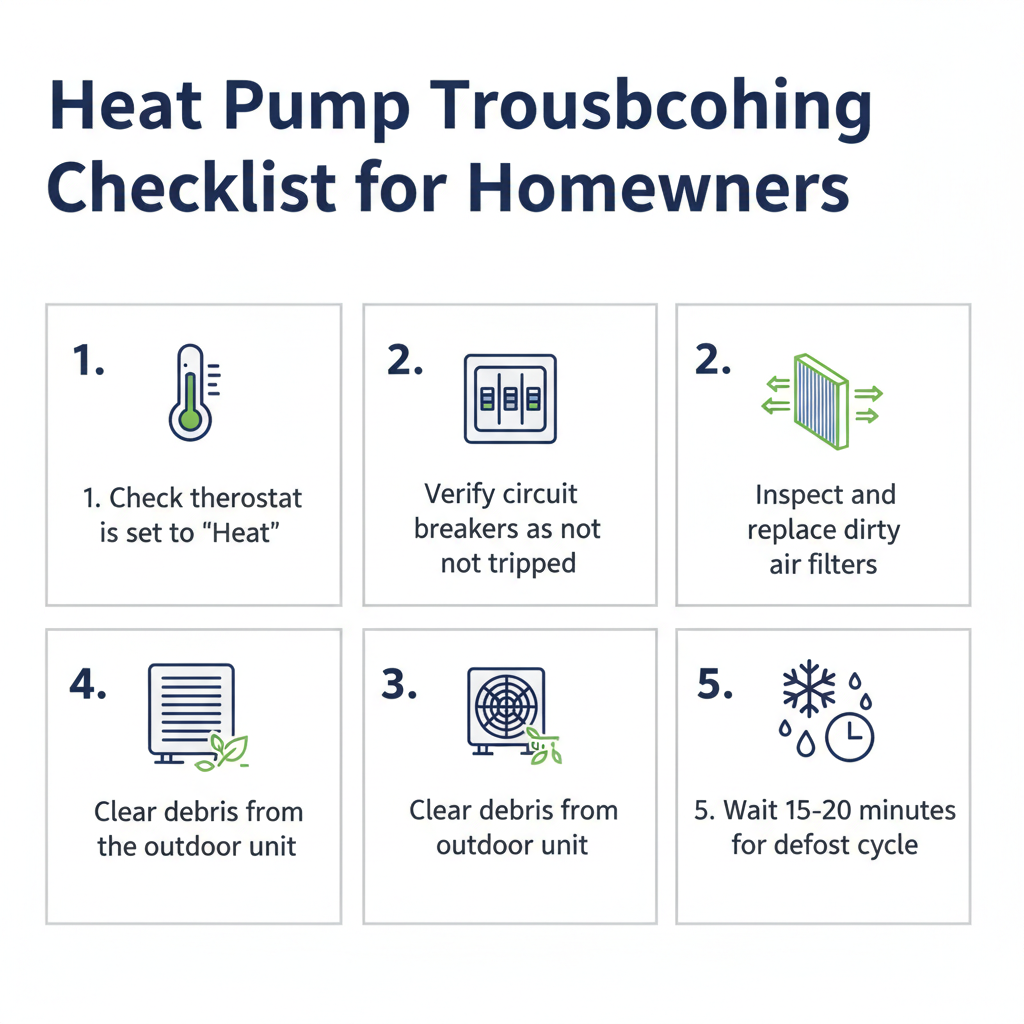
Before calling a professional, there is a definitive, safe checklist of items you can inspect yourself. We regularly advise our local homeowners to check these basics first:
1. Check thermostat settings: Ensure the thermostat is set to "Heat" and the fan is set to "Auto." If the screen is blank, replace the batteries.
2. Inspect the circuit breaker: Look for any tripped switches in your main electrical panel. A power surge can easily trip the breaker dedicated to your HVAC system.
3. Examine the air filter: Heavy usage during peak summer can leave air filters heavily clogged by winter if they are not changed. A dirty filter restricts airflow, which can cause the internal coils to freeze and stop the heating process.
4. Clear the outdoor unit: Ensure the outdoor cabinet is completely clear of debris, leaves, or snow blockages. Heat pumps need unobstructed airflow to extract heat from the outside air.
Keeping up with a regular preventative maintenance plan ensures these basic airflow and power requirements are always met.
When to Call for Engineering-Level HVAC Diagnostics
There is a clear boundary where safe DIY troubleshooting ends and professional intervention begins. If you have verified your filter, breaker, and thermostat, but the system still fails to heat, you likely have a mechanical or electrical issue. Components that endured extreme stress during peak summer are much more susceptible to failure during sudden winter load shifts.
Warning signs of mechanical failure: A system that constantly runs without raising the indoor temperature often points to a refrigerant leak or a stuck reversing valve. Handling refrigerant requires EPA certification and specialized equipment due to high-pressure hazards and environmental regulations.
This is where our engineering-level approach at GreenTech makes a difference. Based on the countless winter heating emergencies our team handles in the local area, we know that simply guessing and swapping parts isn't enough. Our professional technicians focus on diagnosing the exact root cause of the heating failure—whether it is an electrical fault, a refrigerant imbalance, or a mechanical breakdown. If you are unsure about a previous diagnosis, exploring engineering-level heat pump troubleshooting or requesting a free second opinion ensures your system is repaired accurately and safely.
Frequently Asked Questions About Heat Pump Heating Failures
Why is my heat pump running but not heating?
In our experience, a heat pump running without producing heat is usually in defrost mode, has a clogged filter, or has suffered a tripped breaker. If those basic issues are ruled out, a faulty reversing valve or low refrigerant charge is likely preventing the system from transferring heat indoors.
How do I reset my heat pump?
You can reset your heat pump by turning it off at the thermostat and then flipping the dedicated circuit breaker off for about 60 seconds. Turn the breaker back on, wait a few minutes, and set the thermostat back to heat to see if normal operation resumes.
At what temperature does a heat pump stop working?
Modern heat pumps work efficiently well below freezing, but they may rely on auxiliary heat strips when temperatures drop significantly. While your system operates with high efficiency during peak summer cooling, extreme winter drops force it to use more energy to extract ambient heat.
Why is my heat pump blowing cold air in the winter?
Your heat pump will temporarily blow cold air during its normal defrost cycle to melt ice off the outdoor unit. If this lasts longer than 20 minutes, it indicates a malfunction, such as a failing compressor or a stuck reversing valve.
How do I know if my reversing valve is bad?
A bad reversing valve often leaves the system permanently stuck in cooling mode despite your thermostat settings. Because this valve controls the flow of high-pressure refrigerant, confirming its failure requires professional diagnostic testing.
What does it mean when my heat pump is in defrost mode?
Defrost mode means your system has temporarily reversed its operation to send warm refrigerant outside and melt accumulated frost off the outdoor coils. This protects the equipment from freezing solid and is a normal part of winter operation.
Taking the Next Step for Your Home's Winter Comfort
While basic checks like replacing a filter or resetting a breaker solve many common issues, complex mechanical problems require expert eyes. A clear, safe checklist helps you resolve minor faults quickly, but knowing exactly when to stop and call a professional is just as important for protecting your equipment. Resolving these deeper electrical and refrigerant issues now ensures your system provides reliable warmth through the winter and is fully prepared for the upcoming peak summer. If your troubleshooting steps haven't restored your heat, scheduling a professional diagnostic will get your home's comfort back on track.

Flexible Financing Options
Explore our range of flexible financing options designed to suit your needs and budget.