






Variable-Speed HVAC & Duct Optimization in Dallas (75240): 5-Ton Daikin FIT Upgrade
Living in a two-story, single-family home in the 75240 zip code of North Dallas offers fantastic space for growing families. However, from an engineering perspective, cooling a two-story home with a single HVAC system is notoriously difficult. Without proper airflow design, you are inevitably left with a freezing downstairs living room and a sweltering, uncomfortable upstairs master bedroom.
Most Dallas homeowners believe the solution is to simply buy a "bigger" air conditioner. But bolting a massive, single-stage AC unit onto restrictive, poorly designed ductwork is like putting a Ferrari engine onto bicycle tires. It will fail, and it will cost you thousands in wasted electricity.
“In the AI-driven energy era, HVAC is no longer just about comfort — it’s about how efficiently your home uses power. At Greentech, we engineer systems that reduce your energy load and prepare your home for the future.”
Recently, a homeowner in Dallas (75240) contacted Greentech Engineering desperate for a solution to their uneven cooling and skyrocketing summer energy bills. In this comprehensive technical case study, we will break down exactly how we transformed their home’s comfort. We utilized strict ACCA Manual J and Manual D calculations, completely rebuilt their duct plenums, installed the revolutionary 5-Ton Daikin FIT Variable-Speed System, and secured over $1,500 in instant Oncor utility rebates.
The Root Cause: Why Single-Stage Systems Fail Two-Story Homes
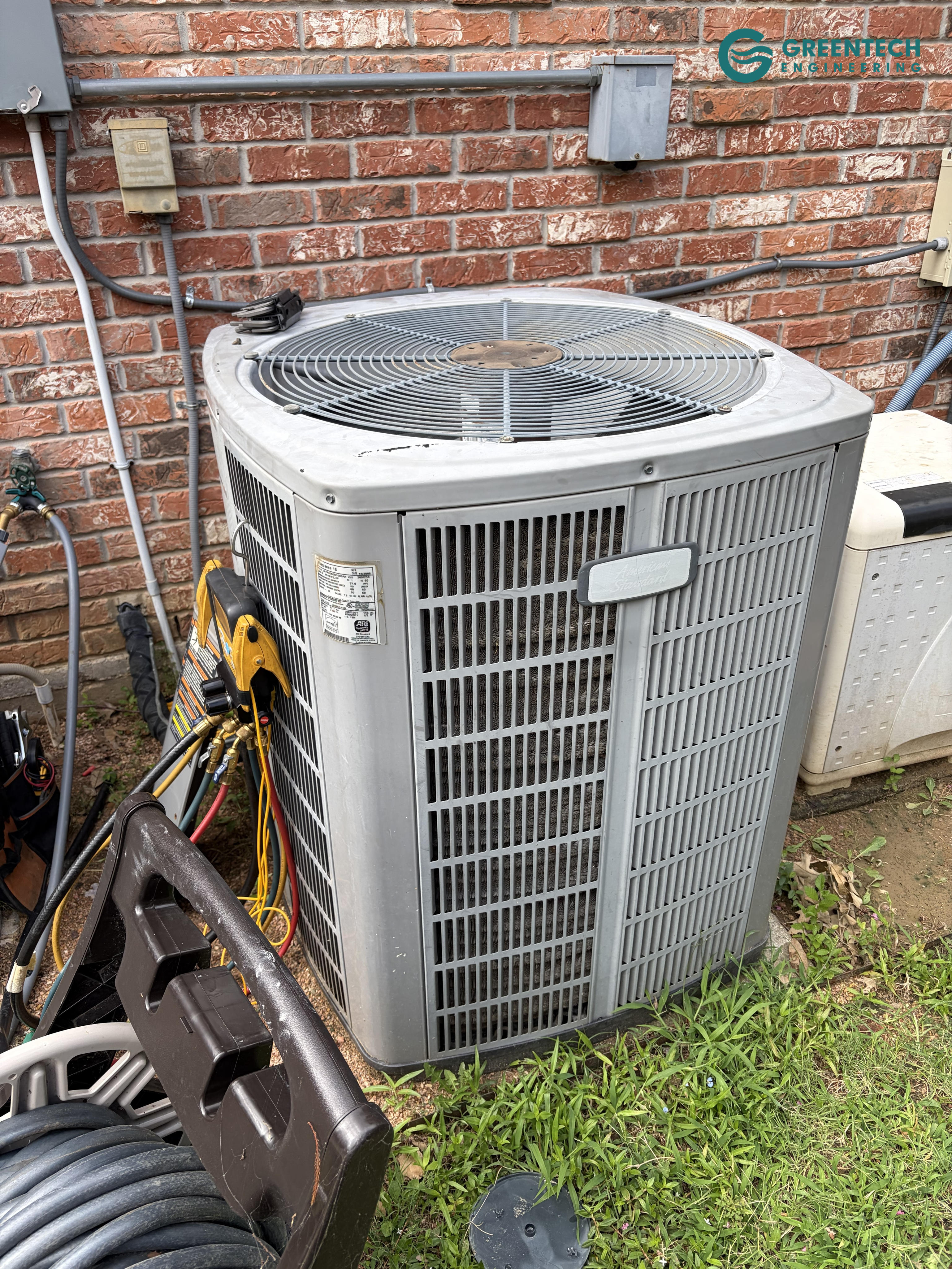
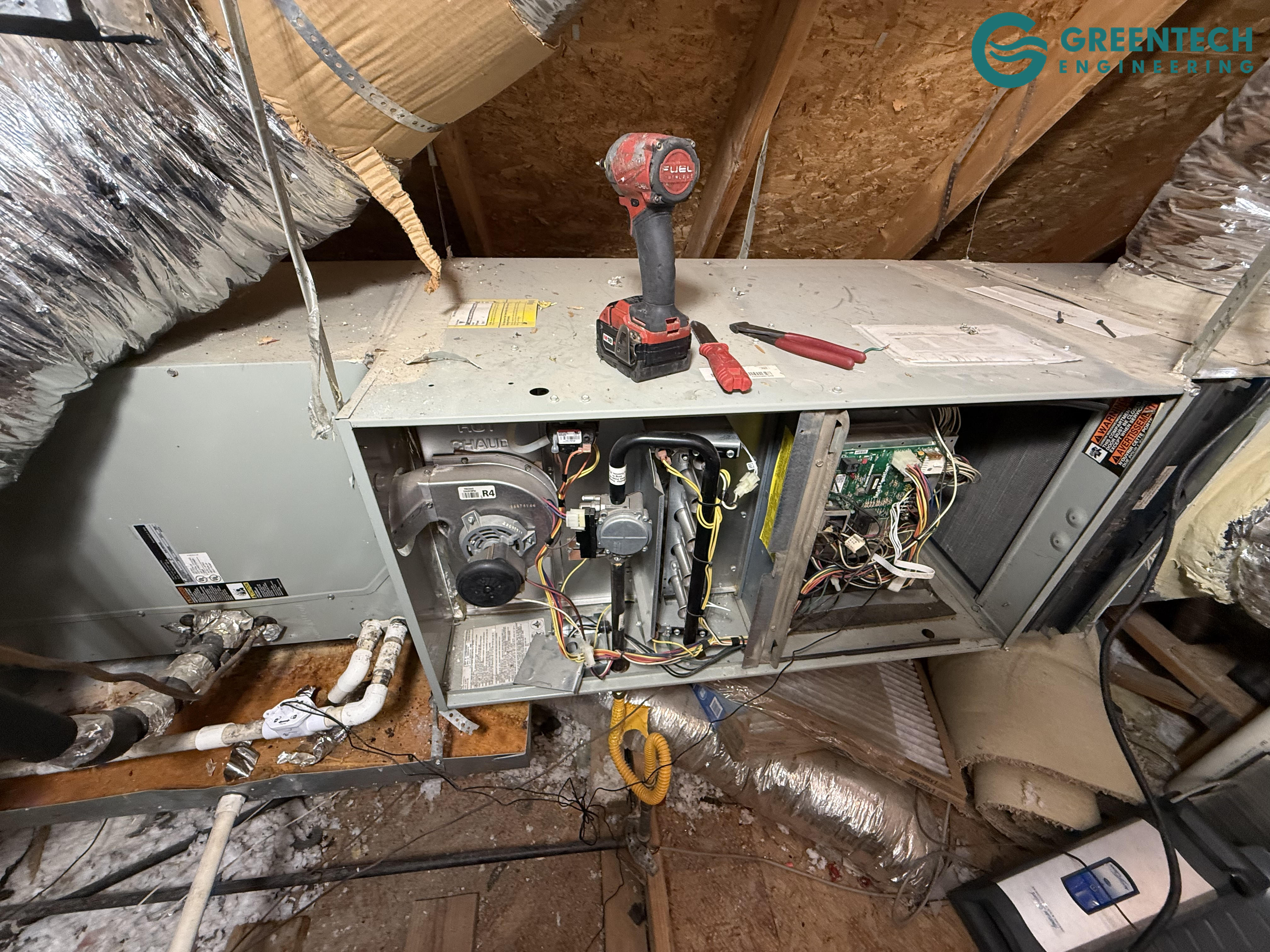
Before recommending a replacement, our engineers evaluated the existing system. The home was utilizing an older, single-stage condenser paired with a standard PSC blower motor inside the attic.
Single-stage systems only have one speed: 100% full blast. When the thermostat calls for cooling, the system slams on, blasts freezing air into the ductwork, rapidly cools the hallway where the thermostat is located, and immediately shuts off. Because the run cycle is so short, the air never has enough time to reach the upstairs bedrooms, and the indoor coil never has time to extract the thick Texas humidity from the air.
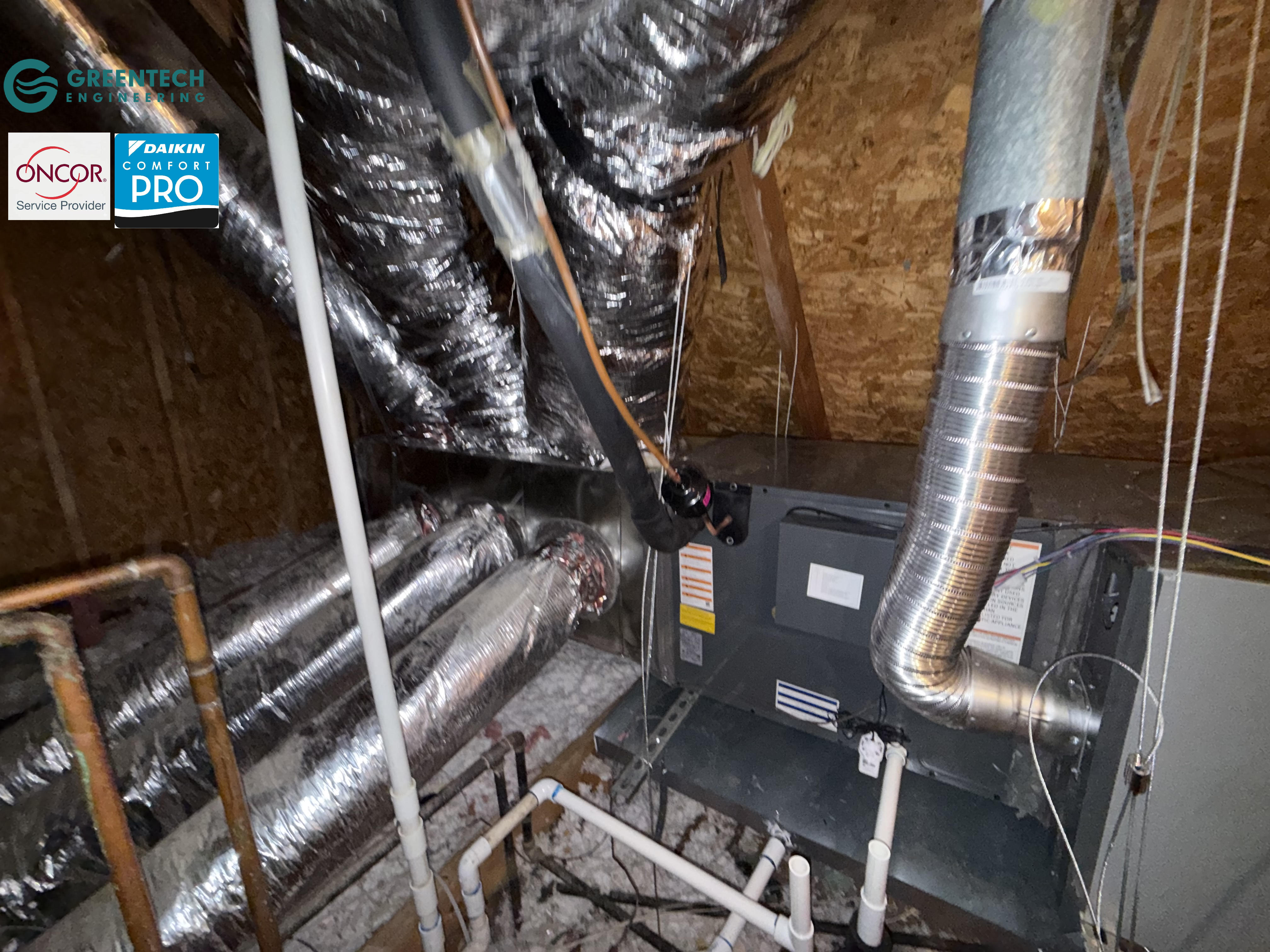
📍 [IMAGE PLACEMENT 2: The Degraded Attic Infrastructure]
- File Name:
Old low efficent indoor unit.jpg - Alt Text: An older, inefficient indoor furnace and coil system with failing ductwork connections opened up in a Dallas, TX attic.
- Caption: The Airflow Bottleneck: The original indoor unit was attached to poorly sealed, degrading plenums. Conditioned air was leaking directly into the hot attic before it could ever reach the upstairs bedrooms.
The Engineering Solution: Manual J Sizing & Manual D Duct Optimization
To permanently fix the hot spots in this 75240 home, we relied on mechanical engineering, not guesswork.
First, we performed a strict ACCA Manual J Load Calculation. By measuring the cubic volume of the home, the exact R-value of the attic insulation, and the solar heat gain through the windows, we mathematically confirmed that a 5-Ton capacity was required to cool the property.
However, generating 5 tons of cooling is useless if the ductwork cannot deliver it. We then executed an ACCA Manual D Duct Design assessment. The original ductwork was choking the system with high static pressure.
Our Duct Optimization Protocol:
- Custom Supply Plenum Rebuild: We removed the restrictive old supply plenum. In its place, our team fabricated a customized, fully insulated metal air box to smoothly handle the massive 5-ton airflow without creating turbulence.
- Targeted Airflow Addition: To solve a specific hot spot upstairs, we modified the existing ductwork. We cut a new hole in the supply plenum, installed a new start collar, and ran a brand new R-8 insulated flex duct.
- Clinical Sealing & Suspension: We installed a new insulated supply boot for the upstairs room. The new duct run was carefully hung using wide nylon tape to prevent sagging (which restricts airflow). Finally, every single connection point on the plenums and collars was meticulously sealed with HVAC metal tape and mastic duct sealant to guarantee zero conditioned air leaks into the 130-degree attic.
The Technological Upgrade: The 5-Ton Daikin FIT Variable-Speed System
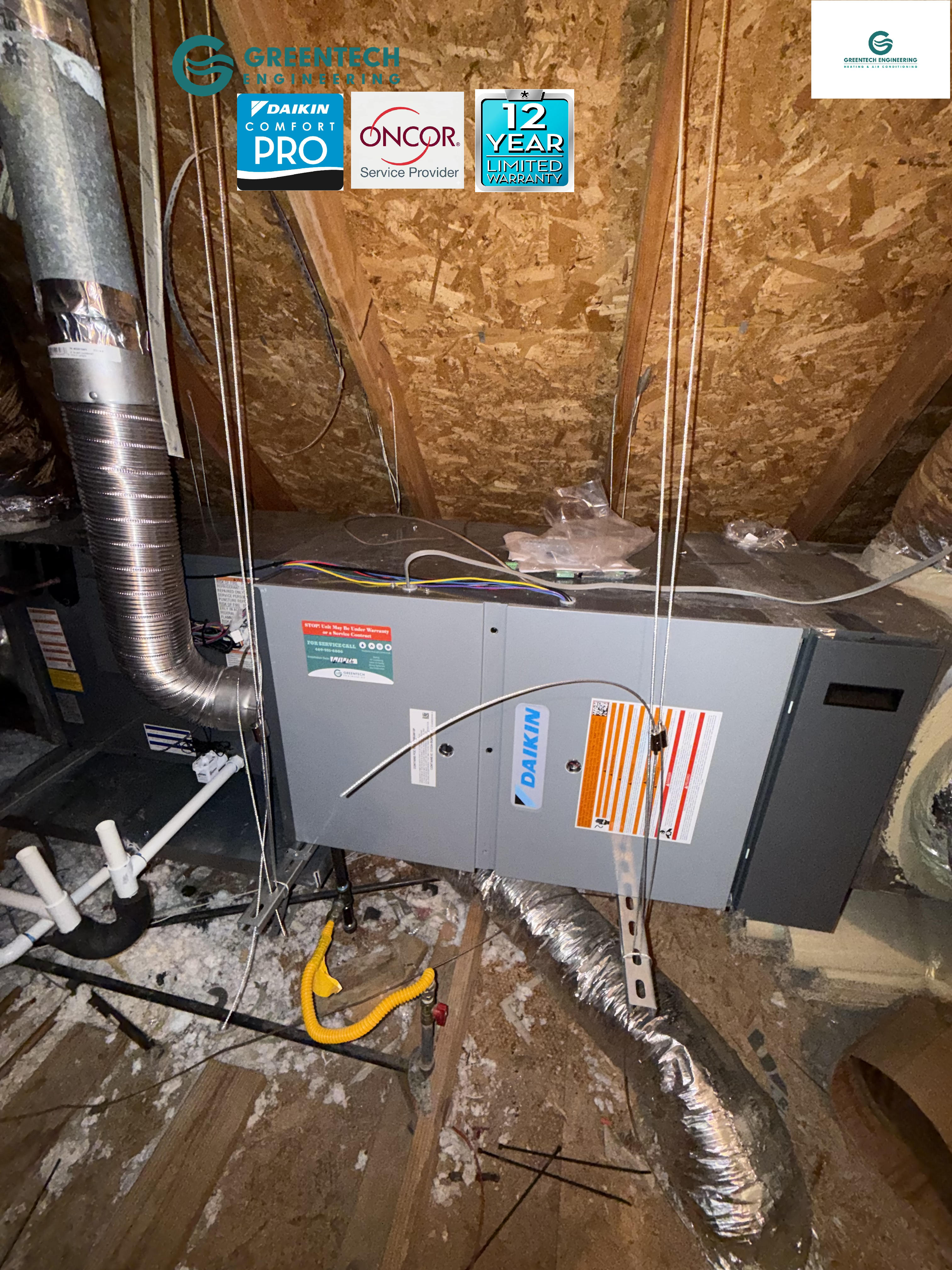
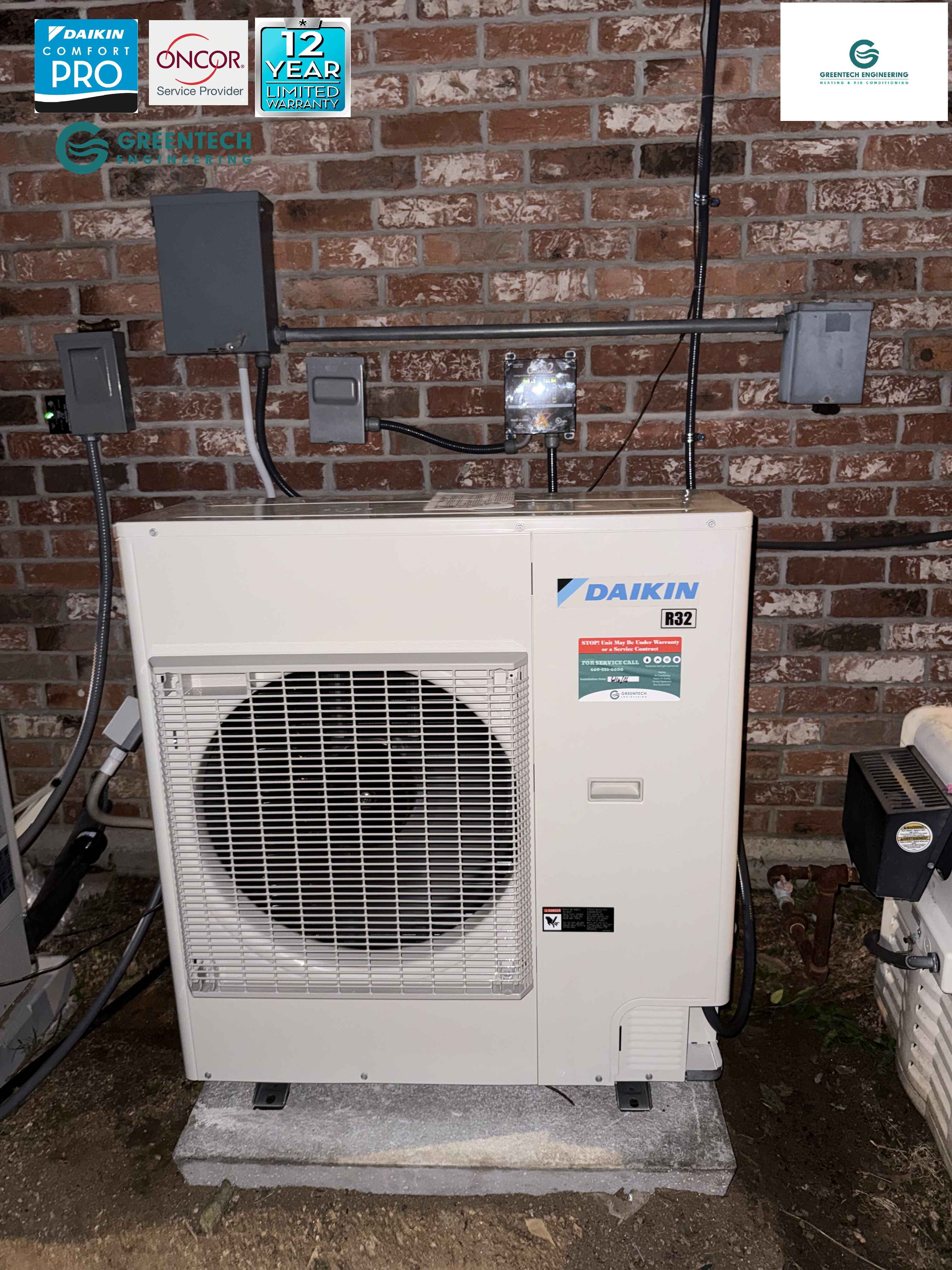
With the airflow delivery system perfected, we installed the ultimate thermodynamic engine: the Daikin FIT 5-Ton Full Variable Speed AC System paired with a Two-Stage Variable Speed 80% AFUE Gas Furnace.
This AHRI-certified matchup achieves an elite 15.2 SEER2 and 8.2 EER2 performance rating. But the real magic lies in how it operates.
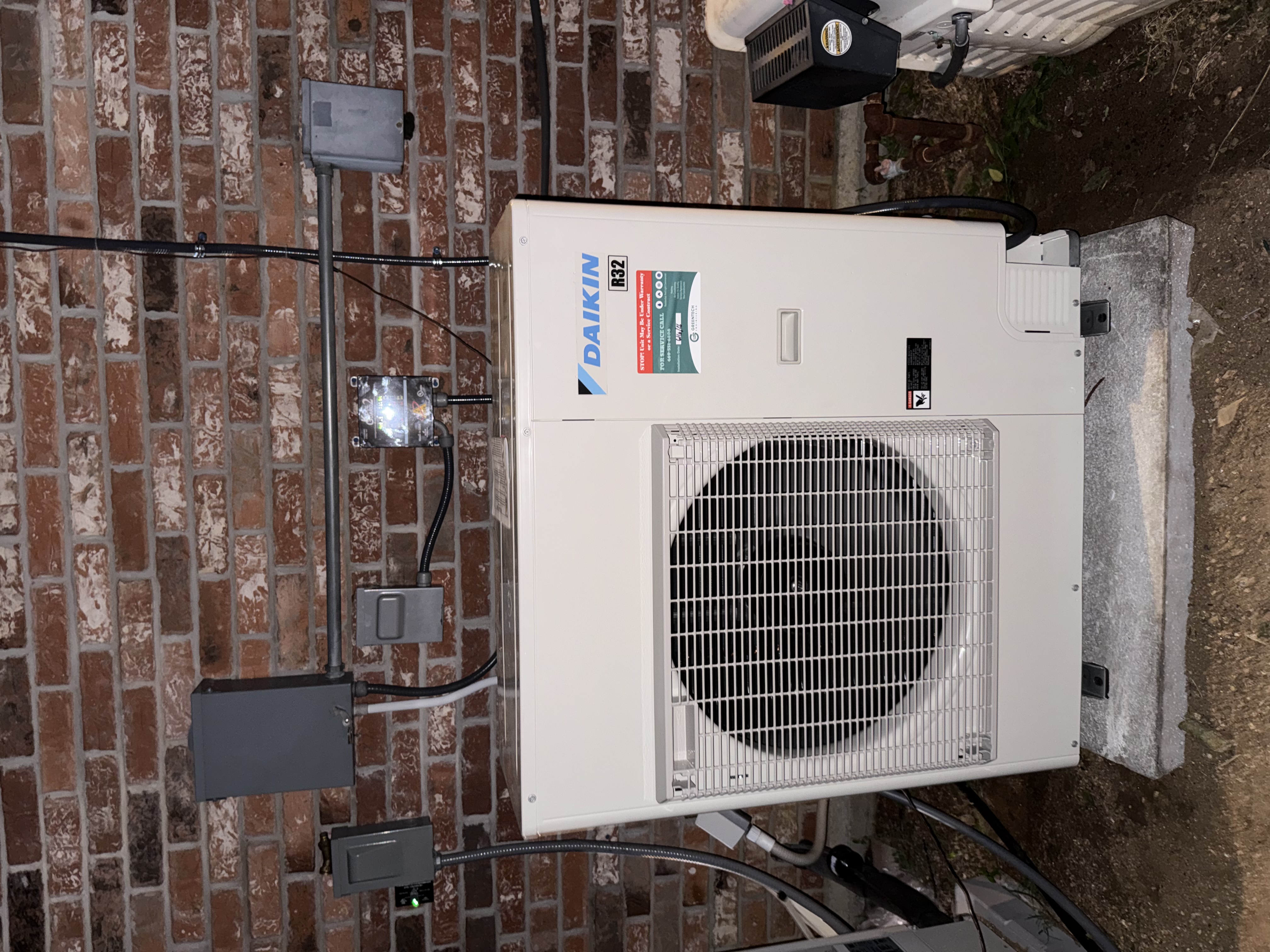
The Daikin FIT Condenser: Swing Compressor Technology
Unlike the old single-stage unit, the Daikin FIT features an inverter-driven variable-speed swing compressor. It acts like the gas pedal in a hybrid car. Instead of turning on at 100%, it can ramp down to lower capacities to perfectly match the real-time heat load of the house.
- Continuous Dehumidification: By running longer, slower, and whisper-quiet cycles, it constantly pulls humidity out of the home.
- Ultra-Quiet Operation: The side-discharge design and digitally commutated fan motor allow it to operate as low as 45 dBA—quieter than a normal conversation.
- Intelligent Defrost & Diagnostics: Daikin Inside intelligence continuously monitors system performance, utilizing a 7-segment LED display for advanced fault code storage.
The Indoor Unit: EEV & Variable Speed Blower
Inside the attic, the new Daikin evaporator coil utilizes an Electronic Expansion Valve (EEV). Unlike standard thermal valves, an EEV is digitally controlled by the system's microprocessors, providing microscopic precision over the refrigerant flow to maximize SEER2 efficiency.
Paired with the quiet variable-speed motor of the new gas furnace, this system gently and continuously circulates air throughout the sprawling two-story home, completely eliminating the hot and cold spots.
The Greentech Standard: Clinical Installation & Protection
Premium inverter technology requires clinical installation. A speck of dust or a drop of moisture in the copper lines will destroy a variable-speed compressor. To ensure longevity and back our Complimentary Three Years Labor Warranty, we executed the following:
- Nitrogen-Purged System: The condensation drain was cleared with 250 psi of dry nitrogen. We installed a new drain trap, vent, and a Safe-T drain switch to prevent ceiling floods.
- RX-11 Chemical Flush: We flushed the existing copper line sets with RX-11 and chased it with dry nitrogen to completely strip the acidic mineral oil left by the old system.
- 15% Silver Brazing: All copper joints were welded with 15% silver brazing rods while flowing dry nitrogen through the pipes to prevent internal oxidation.
- 500-Micron Deep Vacuum: Utilizing digital gauges, we pulled the system pressure under 500 microns, physically boiling off atmospheric moisture from the lines.
- Electrical Defense: We installed a dedicated Voltage Monitor and Surge Protector at the condenser to defend the sensitive Daikin inverter boards from Dallas power grid spikes.
- Indoor Air Quality (IAQ): We installed a Clean Comfort Media Air Cleaner to capture microscopic dust and dander before it enters the variable-speed blower.
- Smart Control: The entire system is commanded by the Daikin One Touch Smart Communicating Thermostat, allowing the homeowner to control their comfort and monitor energy usage directly from their smartphone.
The Results: Pristine Comfort & Massive Rebates
Upon commissioning the system, the results were instantaneous. The Daikin FIT ramped up, the variable-speed blower pushed air smoothly through the optimized ductwork, and the upstairs hot spots vanished.
Why You Need an Authorized Oncor Service Provider
You cannot claim the Oncor rebate by buying an AC online or hiring an uncertified handyman. The utility company strictly regulates the disbursement of these funds to protect the integrity of the power grid.
To access the Home Energy Efficiency Program, you must hire an official Oncor Participating Service Provider.
When you partner with Greentech Engineering, we handle the entire bureaucratic process. We gather the AHRI (Air-Conditioning, Heating, and Refrigeration Institute) performance certificates, document the baseline load of your old system, submit the engineering data to the Oncor portal, and secure the approval.
Best of all, you do not have to wait months for a check to arrive in the mail. We apply the approved Oncor incentive as an instant, upfront discount directly on your installation invoice. For this specific Dallas 75240 project, our engineering data secured over $1,500 in instant Oncor rebates for the homeowner!
2026 Oncor Incentive Snapshot: Dallas-Fort Worth
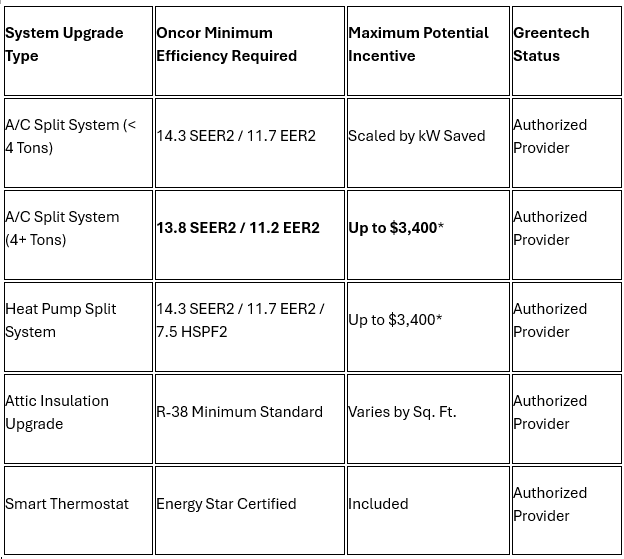
*Incentive Disclaimer: The $3,400 figure represents the absolute maximum potential incentive. Actual instant discount amounts are strictly determined by Oncor's customized kW/kWh reduction formula based on your specific home’s thermodynamic load reduction. Proactive replacement and proper Manual J sizing are the keys to maximizing your payout.
Answer Engine Optimization (AEO): Frequently Asked Questions
Q: What is a Daikin FIT system?
A: The Daikin FIT is an ultra-high-efficiency, variable-speed air conditioning system. Unlike traditional cube-shaped ACs that blast on and off, the FIT uses inverter technology to run continuously at very low speeds. It features a slim, side-discharge design, runs incredibly quietly, and provides unmatched indoor humidity control.
Q: What is an ACCA Manual D duct calculation?
A: While Manual J tells you what size AC you need, Manual D is the engineering formula used to design your ductwork. It calculates the necessary size, length, and layout of your supply and return ducts to ensure the air travels at the correct velocity and reaches every room without creating high static pressure bottlenecks.
Q: Why do inverter AC systems need a voltage surge protector?
A: Variable-speed systems like the Daikin FIT operate using highly sophisticated electronic inverter boards to modulate the compressor speed. The Texas power grid frequently experiences micro-surges and brownouts. A dedicated surge protector acts as a shield, sacrificing itself to block electrical spikes before they can fry your system's expensive computer boards.
Q: Can I get an Oncor rebate for a Daikin FIT in Dallas?
A: Absolutely. The Daikin FIT achieves elite SEER2 and EER2 ratings that easily qualify for the Oncor Home Energy Efficiency Program. However, the installation must be performed by an Authorized Oncor Participating Service Provider like Greentech Engineering to claim the instant discount.
Ready to Fix Your Home's Hot Spots?
If you are tired of battling uneven temperatures and high energy bills in the Dallas area, trust the mechanical engineers. Contact Greentech Engineering today to schedule your comprehensive Residential HVAC diagnostic and oncor energy rebate.
About the Author: Siwei (Lucas) Chen
CTO | Greentech Engineering Heating & Air Conditioning
Siwei (Lucas) Chen specializes in engineering-driven HVAC diagnostics, thermodynamic performance optimization, and custom ductwork design for Dallas homeowners. Holding a B.S. in Mechanical Engineering from Virginia Tech, he brings a strict, data-first approach to residential heating and cooling. Under his technical leadership, Greentech Engineering ensures every system is perfectly calibrated for the Texas climate, focusing relentlessly on ACCA Manual J load calculations, meticulous clinical installation standards, and securing maximum utility rebates for his clients.
Professional Certifications:
- ACCA Certified (Manual J, S, D)
- Daikin Comfort Pro Contractor
- NCI Certified – Air Balancing & Duct Optimization
- Oncor Participating Service Provider
Industry Affiliations:

Flexible Financing Options
Explore our range of flexible financing options designed to suit your needs and budget.