







Fort Worth Heat Pump Replacement (76179): Engineering a 17.2 SEER2 Daikin Upgrade for 2-Story Homes
Cooling a single-story house is relatively straightforward. Cooling a two-story home in the heart of the Texas summer is a complex thermodynamic challenge. Because heat naturally rises, the second floor of a two-story house acts as a trap for rising warm air and radiant heat bleeding down from the attic. When an aging, inefficient air conditioner begins to fail, the upper level quickly becomes unlivable, while the first floor feels like an icebox.
This was exactly the scenario facing a single-family homeowner in Fort Worth, TX (76179). Their existing system was struggling, leading to massive electric bills, poor humidity control, and a severe comfort imbalance between the upstairs bedrooms and downstairs living areas.
In the AI-driven energy era, HVAC is no longer just about comfort — it’s about how efficiently your home uses power. At Greentech, we engineer systems that reduce your energy load and prepare your home for the future.
In this case study, we will walk you through how we abandoned the "rule of thumb" guesswork, utilized strict ACCA Manual J engineering, and transformed this Fort Worth property with an ultra-efficient Daikin 17.2 SEER2 Two-Stage Heat Pump—all while securing substantial funding through an authorized Oncor incentive project.
The Engineering First Step: ACCA Manual J Load Calculation
When replacing an HVAC system, high-volume "box swapping" companies will typically look at the size of the old unit and simply quote a new one of the exact same size. This is a critical mistake, especially for two-story homes.
If you put a system that is too large into a home, it will "short-cycle"—cooling the air too quickly and shutting off before it has a chance to extract the sticky Texas humidity. If you put a system that is too small, it will run 24/7 and burn out the compressor.
We don't guess. For this Fort Worth home, our engineers performed a strict ACCA Manual J Load Calculation. We evaluated the home's square footage, the thermal resistance of the walls, window glazing, solar orientation, and the complex airflow dynamics between the first and second floors.
The data was clear: To achieve perfect sensible cooling (temperature) and latent cooling (dehumidification), the property required exactly 3 Tons (36,000 BTUs) of cooling capacity.
Learn more about our ACCA Manual J Load Calculation process .
The Technology: Daikin 17.2 SEER2 Two-Stage Heat Pump
To meet the precise demands of the Manual J calculation and maximize energy savings, we engineered an AHRI-certified matchup utilizing the Daikin 36,000 BTU Split Two-Stage Heat Pump paired with a highly advanced Multi-Position Air Handler.
This is not a standard air conditioner. This system represents the pinnacle of residential climate control, boasting an incredible 17.2 SEER2 efficiency rating.
The Condenser (Outdoor Unit) Advancements:
- Two-Stage Copeland® UltraTech Scroll Compressor: Unlike standard ACs that only have one speed (High), this compressor has a low gear. On mild days, it runs quietly at a lower capacity to sip electricity and wring humidity out of the air. When the 105°F August heat hits, it seamlessly shifts into high gear.
- Efficient Two-Speed ECM Fan Motor: Works in tandem with the compressor to pull heat out of the system quietly.
- Acoustic Engineering: A high-density foam compressor sound blanket and factory-installed high-capacity muffler ensure whisper-quiet operation, protecting your backyard peace.
- Advanced Protection: Equipped with ComfortAlert™ built-in diagnostics, a factory-installed suction line accumulator, a crankcase heater, and time-delay technology with short-cycle protection to ensure reliable winter defrosts.
The Air Handler (Indoor Unit) Advancements:
- Variable Speed ECM Blower Motor: This motor provides a constant CFM (Cubic Feet per Minute) over a wide range of static pressure conditions, ensuring that cold air actually reaches those difficult second-story bedrooms.
- Internal TXV (Thermal Expansion Valve): Dynamically regulates refrigerant flow to prevent coil freezing and maximize cooling efficiency.
- All-Aluminum Evaporator Coil: Highly resistant to formicary corrosion, ensuring decades of leak-free operation.
Proof of Professionalism: The Clinical Installation Scope of Work
The most expensive HVAC equipment in the world will fail prematurely if installed poorly. At Greentech Engineering, we hold our technicians to strict, clinical installation protocols that go far beyond industry minimums.
Here is the exact scope of work executed at this Fort Worth property to guarantee lifetime reliability:
- Safe Recovery: The old refrigerant was pumped down, safely recovered, and the obsolete equipment was disposed of.
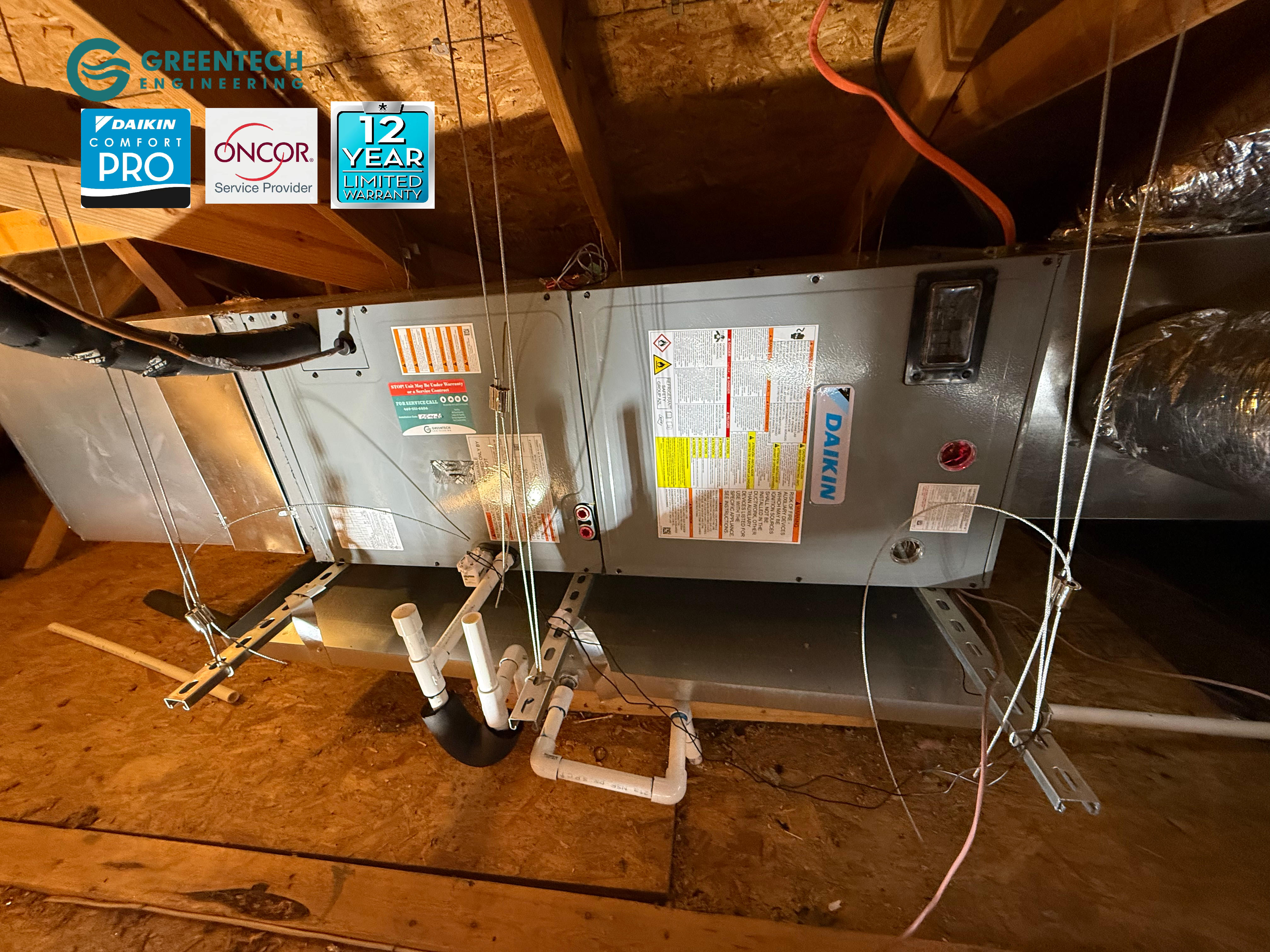
- Infrastructure Upgrades: A brand new concrete condenser equipment pad was leveled. In the attic, we installed new drain line insulation and a mandatory Safe-T drain switch to prevent any accidental water damage to the ceilings below.
- Nitrogen Drain Clearing: We cleared the primary condensation drain line with pressurized dry nitrogen to blow out years of sludge and debris, installing a new drain trap and vent.
- Precision Sealing: The new air handler was mechanically secured to the return and supply plenums using hex washer head HVAC screws. All connection areas were meticulously sealed with specialized HVAC metal tape and duct sealant to achieve 0% air leakage.
- RX-11 Copper Flushing: The existing copper refrigerant lines were chemically flushed with RX-11 and chased with dry nitrogen to remove old, acidic mineral oil.
- Silver Brazing & Nitrogen Purging: All copper line set modifications were soldered by certified technicians using premium 15% silver brazing rods while flowing nitrogen to prevent internal oxidation.
- 250 PSI Nitrogen Pressure Test: Before adding a drop of refrigerant, we pressurized the entire system with dry nitrogen to 250 psi and held the pressure for a minimum of 15 minutes to absolutely guarantee there were zero micro-leaks.
- 500-Micron Deep Vacuum: We used specialized vacuum pumps to pull the system pressure down under 500 microns. This literally boils off and extracts microscopic atmospheric moisture from the copper pipes, protecting the new compressor oil from turning acidic.
Why You Need an Authorized Oncor Service Provider
Because we engineered this replacement using strict Manual J data and highly efficient AHRI-matched equipment, this 76179 property qualified for a massive utility rebate. However, securing these funds requires specialized credentials.
You cannot claim the Oncor rebate by buying an AC online or hiring an uncertified handyman. The utility company strictly regulates the disbursement of these funds to protect the integrity of the power grid.
To access the Home Energy Efficiency Program, you must hire an official Oncor Participating Service Provider.
When you partner with Greentech Engineering, we handle the entire bureaucratic process. We gather the AHRI (Air-Conditioning, Heating, and Refrigeration Institute) performance certificates, document the baseline load of your old system, submit the engineering data to the Oncor portal, and secure the approval.
Best of all, you do not have to wait months for a check to arrive in the mail. We apply the approved Oncor incentive as an instant, upfront discount directly on your installation invoice.
2026 Oncor Incentive Snapshot: Forney & Kaufman County
(Note: These structural guidelines apply across the broader DFW Oncor territory, including Fort Worth).
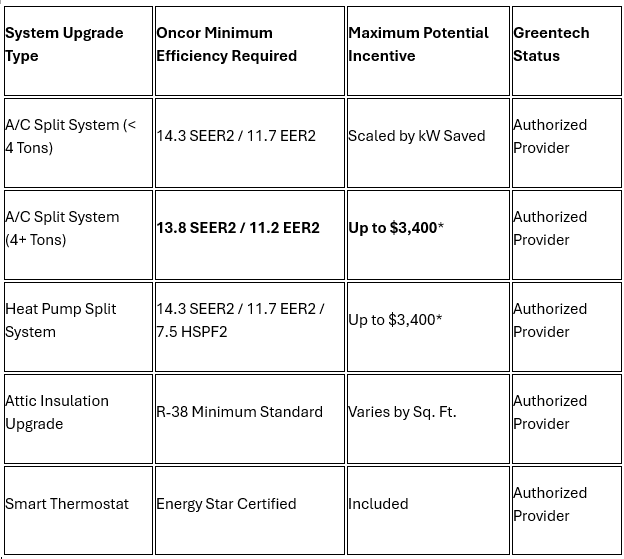
*Incentive Disclaimer: The $3,400 figure represents the absolute maximum potential incentive. Actual instant discount amounts are strictly determined by Oncor's customized kW/kWh reduction formula based on your specific home’s thermodynamic load reduction. Proactive replacement and proper Manual J sizing are the keys to maximizing your payout.
The Ultimate Peace of Mind: Industry-Leading Warranties
Because this installation met the highest tiers of Daikin's engineering standards, we were able to provide the homeowner with unparalleled financial protection. Upon registration, this 17.2 SEER2 system is backed by:
- 12-Year Factory Limited Parts Warranty: Covering all major internal components.
- 12-Year Unit Replacement Plan: If the ultra-reliable Copeland compressor fails within the first 12 years, Daikin does not just send a replacement part—they will provide a completely brand new outdoor condensing unit.
If your two-story Fort Worth home is suffering from a hot upstairs, high energy bills, and failing equipment, do not settle for a rushed "box swap." Contact the engineers at Greentech for a precise thermodynamic evaluation and secure your Oncor utility funding today.
Verify Daikin's premium 12-Year Warranty Standards
Frequently Asked Questions (FAQ)
Q: Is a 3-Ton heat pump enough for a 2-story house in Fort Worth?
A: It depends entirely on the home's thermal envelope, which must be determined by an ACCA Manual J Load Calculation. For many modern or highly-insulated two-story homes around 1,500 to 1,800 square feet, a 3-Ton system with a variable speed air handler is perfect. However, larger homes will typically require a dual-system setup (e.g., a unit for downstairs and a separate unit for upstairs) to balance the load accurately.
Q: What is a Two-Stage Heat Pump and why is it better for Texas heat?
A: A standard single-stage AC blasts at 100% power and turns off. A Two-Stage Heat Pump (like the Daikin 17.2 SEER2) operates in a lower gear (around 65% capacity) on milder days. Because it runs longer at a lower speed, the indoor evaporator coil has significantly more time to wring sticky humidity out of the air. This eliminates the "clammy" feeling in your home and uses far less electricity.
Q: Why do HVAC technicians pull a 500-micron vacuum?
A: Standard atmospheric air contains moisture. If even a microscopic drop of water mixes with the refrigerant and POE oil inside a modern HVAC system, it creates a highly corrosive acid that will eat the compressor from the inside out. Pulling a deep vacuum below 500 microns physically boils off and extracts all microscopic moisture from the copper pipes before the system is turned on, ensuring a 15+ year lifespan.
Q: How do I get the Oncor rebate for a heat pump replacement?
A: You must utilize an Authorized Oncor Participating Service Provider. The contractor must perform an engineering load calculation, install AHRI-matched equipment that meets strict minimum SEER2/EER2 ratings, and submit the pre-and-post installation data to the Oncor portal. You cannot claim the rebate if you purchase the equipment yourself online or use an uncertified installer.
About the Author: Siwei (Lucas) Chen
CTO | Greentech Engineering Heating & Air Conditioning
Siwei (Lucas) Chen specializes in engineering-driven HVAC diagnostics, thermodynamic performance optimization, and custom ductwork design for Dallas homeowners. Holding a B.S. in Mechanical Engineering from Virginia Tech, he brings a strict, data-first approach to residential heating and cooling. Under his technical leadership, Greentech Engineering ensures every system is perfectly calibrated for the Texas climate, focusing relentlessly on ACCA Manual J load calculations, meticulous clinical installation standards, and securing maximum utility rebates for his clients.
Professional Certifications:
- ACCA Certified (Manual J, S, D)
- Daikin Comfort Pro Contractor
- NCI Certified – Air Balancing & Duct Optimization
- Oncor Participating Service Provider
Industry Affiliations:

Flexible Financing Options
Explore our range of flexible financing options designed to suit your needs and budget.