





80 Percent Humidity in the House: What DFW Homeowners Should Check
By Siwei (Lucas) Chen, Chief Technology Officer
Published: 7/30/2026
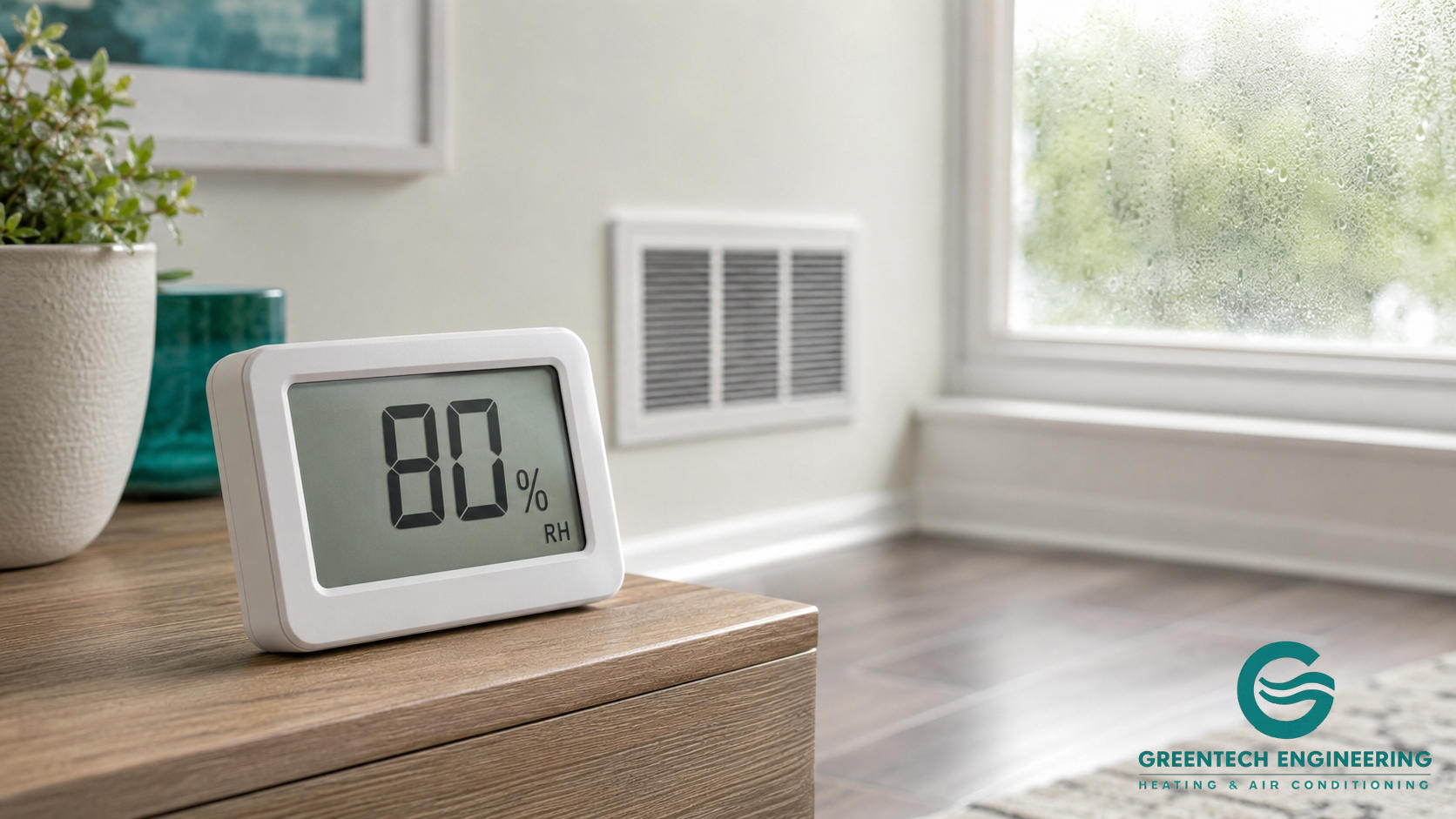
Yes. A sustained indoor relative-humidity reading of approximately 80% is substantially elevated. First, confirm it with another reliable hygrometer and promptly investigate active leaks, standing water or condensation. The cause may involve plumbing, drainage, the building enclosure, HVAC operation, ductwork, airflow or equipment sizing. A whole-house dehumidifier can help in some homes, but it should not automatically be treated as the first or only solution.
The U.S. Environmental Protection Agency recommends keeping indoor humidity below 60% when possible and ideally between 30% and 50%. That makes a sustained 80% reading a reason to investigate, but one reading alone does not prove mold, an HVAC failure or a particular health problem. The first task is to determine whether the reading is accurate and whether an active source is adding moisture. (EPA: A Brief Guide to Mold, Moisture and Your Home)
Editorial basis: This educational guide synthesizes EPA moisture-control guidance, ACCA residential-design references and Greentech’s HVAC diagnostic framework. It is not a report about a specific customer, home or Reddit post.
This guide from Greentech Engineering Heating & Air Conditioning — DFW HVAC explains a practical diagnostic sequence for Dallas–Fort Worth homeowners:
Confirm the reading → rule out active moisture sources → evaluate HVAC operation and ducts → review equipment sizing → consider dedicated dehumidification when appropriate.
Is 80% Indoor Humidity Too High?
Yes, approximately 80% indoor relative humidity is substantially above the range generally recommended for homes.
A brief spike is different from a condition that remains elevated for hours or days. Showering, cooking or opening a door during humid weather may temporarily raise a nearby sensor. A sustained high reading across several rooms is more concerning and deserves a measured evaluation.
Do not treat one number as a complete diagnosis. It does not establish the moisture source, prove that the air conditioner is oversized, confirm mold growth or show that a dehumidifier is required.
Confirm That the Humidity Reading Is Accurate
Before changing HVAC equipment or buying a dehumidifier, verify the observation.
- Compare the reading with a second hygrometer.
- Check more than one room, including the area near the thermostat and a room farther from it.
- Record both indoor temperature and relative humidity.
- Note the time, weather, thermostat mode, fan setting and whether the compressor is running.
- Repeat the readings over several hours or days to see whether the condition persists.
- Check whether the thermostat or sensor is near a supply grille, exterior door, window, bathroom or another location that may distort the reading.
Consumer hygrometers are useful screening tools, but they are not laboratory instruments. Two devices may not show exactly the same number. The goal is to identify a consistent pattern, not to overinterpret a one-point difference.
Relative humidity also changes when air temperature changes. That is why temperature and humidity should be recorded together.
Relative Humidity Versus Dew Point
Relative humidity describes how close the air is to saturation at its current temperature. Dew point more directly reflects how much moisture is actually in the air.
For example, two rooms can contain similar amounts of water vapor but display different relative-humidity readings if one room is cooler. Cooling air without removing moisture can raise its relative humidity because cooler air reaches saturation more easily.
This distinction also matters outdoors. A pleasant-looking outdoor temperature does not mean opening the windows will dry the house. When the outdoor dew point is high, ventilation through open windows can add moisture. Compare indoor and outdoor dew points rather than relying only on outdoor temperature.
Immediate Conditions Homeowners Should Check
Before focusing only on the air conditioner, look for active water or persistent dampness:
- Plumbing leaks beneath sinks, around toilets, near water heaters or behind appliances;
- Roof, flashing or exterior-envelope leaks;
- Standing water near equipment or inside drain pans;
- Wet carpet, drywall, insulation or cabinetry;
- Condensation on windows, supply grilles, ducts, pipes or other cool surfaces;
- A blocked, disconnected or overflowing condensate drain;
- Bathroom and kitchen exhaust fans that do not operate or do not vent outdoors;
- A clothes dryer that is not properly vented outdoors;
- Recent flooding, storm entry or other water intrusion.
The EPA advises acting quickly when condensation or moisture collects and correcting the underlying water source. (EPA moisture guidance)
Active water intrusion may require a plumber, roofer, restoration contractor or other qualified building professional—not only an HVAC contractor. If substantial water damage or suspected contamination is present, consult an appropriate remediation professional. Individual health concerns belong with a qualified medical professional.
Why Can a House Be Humid While the AC Is Running?
An air conditioner can lower temperature without removing enough moisture when its operating conditions are unsuitable.
Moisture removal occurs as warm, humid air passes over a sufficiently cold evaporator coil and water condenses and drains away. A system may still produce cool air while providing inadequate dehumidification. Possible contributors include:
- Short cooling cycles;
- A thermostat fan set continuously to “On”;
- Airflow outside the equipment’s intended operating range;
- Supply- or return-duct leakage;
- Humid outdoor-air infiltration;
- Building-pressure conditions;
- Moisture from cooking, bathing, drying clothes or many occupants;
- Equipment-capacity or sizing issues;
- Improper equipment setup or control configuration;
- Dirty heat-transfer surfaces, maintenance issues or drainage problems.
These are diagnostic possibilities, not a conclusion that every factor applies to one home. A professional HVAC diagnostic evaluation should separate homeowner observations from measured findings.
Can an Oversized AC Cause High Indoor Humidity?
Yes. Oversized cooling equipment can contribute to poor moisture removal because it may satisfy the temperature setting with shorter cycles. However, high humidity alone does not prove that the system is oversized.
The U.S. Department of Energy explains that oversizing can cause short cycling and reduced moisture removal. (DOE: Residential Humidity Control Strategies)
A project-specific sizing review may consider:
- Cooling runtime and cycling behavior;
- Indoor temperature, relative humidity and dew point;
- Outdoor conditions;
- Measured airflow;
- Equipment capacity and performance data;
- Insulation, windows, orientation and other building characteristics;
- Enclosure and duct leakage;
- Internal and ventilation moisture loads;
- A project-specific load calculation.
An oversized system does not automatically require immediate replacement. Controls, airflow, duct conditions and other moisture sources may also need evaluation before a recommendation is made.
Thermostat Fan Settings and Moisture Control
With the fan set to Auto, the indoor blower generally cycles with heating or cooling calls. With the fan set continuously to On, the blower continues moving air even after the compressor stops.
In some systems and operating conditions, continuous fan operation can re-evaporate moisture remaining on a wet evaporator coil or in the drain pan and return some of it to the occupied air. That does not mean “Auto” is the universal correct setting for every system.
Variable-speed equipment, communicating controls and equipment-specific dehumidification modes may use different fan strategies. Follow the manufacturer’s verified instructions and evaluate the actual sequence of operation before changing advanced settings.
Duct Leakage, Infiltration and Building Pressure
Return-side duct leakage can draw humid air from an attic, garage, wall cavity or other unconditioned space. Supply-side leakage can reduce conditioned-air delivery and affect building pressure. Enclosure leakage can allow humid outdoor air to enter through gaps in the building itself.
These issues are related but not interchangeable:
- A blower-door test evaluates leakage through the building enclosure.
- Duct-leakage testing evaluates leakage associated with the duct system.
- Air balancing measures and adjusts airflow distribution to rooms or zones.
The appropriate test depends on the reported condition and the home. An attic inspection alone does not quantify leakage, and a standard tune-up is not automatically a complete building-science evaluation.
Explore a residential duct-system evaluation when duct leakage, design or airflow fits the observed condition.
OPTIONAL DUCT IMAGE: Insert after this section.
Suggested subject: Technician inspecting insulated attic ductwork
Alt text: HVAC technician inspecting insulated ductwork in an attic
Caption: Duct leakage and pressure conditions can allow humid unconditioned air to enter a home.
What Role Do ACCA Manual J, S and D Play?
ACCA’s residential design procedures answer different questions:
- Manual J estimates a home’s project-specific heating and cooling loads.
- Manual S supports equipment selection using the calculated load and equipment-performance data.
- Manual D supports residential duct-system design.
ACCA describes Manual J as its residential load-calculation standard, Manual S as guidance for residential equipment selection and Manual D as its residential duct-design standard. (ACCA technical manuals)
These procedures can help evaluate equipment capacity, building load and duct design. They do not independently locate a plumbing leak, roof leak, wet building materials or every source of indoor moisture. A Manual J calculation is one design tool—not a complete humidity diagnosis.
For a related project example, see Greentech’s guide to Manual J load calculation for a North Texas home.
When Might a Whole-House Dehumidifier Help?
A dedicated whole-house dehumidifier may be appropriate when moisture remains elevated after active water problems are addressed and cooling operation alone cannot reliably maintain the intended humidity range.
Potential applications include:
- Low cooling demand that provides too little compressor runtime for adequate moisture removal;
- A verified latent-moisture load;
- Significant ventilation or infiltration moisture;
- A home that cannot maintain its humidity target through properly operating cooling equipment alone.
Selection should account for moisture-removal capacity, airflow, duct configuration, drainage, controls, heat added to the space, maintenance and interaction with the existing HVAC system.
A dehumidifier should not be used to hide an unresolved roof leak, plumbing leak, drainage failure or major duct problem. It is a tool within a moisture-control strategy—not an automatic first recommendation or a guaranteed solution.
What Should a Professional Humidity Evaluation Include?
Depending on the home and reported condition, an evaluation may include:
- Confirmation of temperature and humidity readings;
- Indoor and outdoor dew-point comparison;
- A visual check for water and condensation;
- Thermostat settings and sequence of operation;
- Cooling runtime and cycling behavior;
- Condensate drainage;
- Temperature measurements;
- Measured airflow;
- Filter and coil condition;
- Supply- and return-duct inspection;
- Duct-leakage evaluation where appropriate;
- Building-pressure or enclosure testing where appropriate;
- Review of equipment capacity and design conditions;
- A project-specific load calculation when sizing is in question.
Not every service call requires or automatically includes every item. The diagnostic scope should follow the symptoms, initial observations and findings.
What DFW Homeowners Should Do Next
- Confirm the reading with another hygrometer.
- Check promptly for active water, leakage and condensation.
- Record indoor temperature and relative humidity in multiple rooms.
- Note thermostat mode, fan setting and cooling runtime.
- Avoid opening windows based only on outdoor temperature; compare dew points.
- Seek the appropriate trade or restoration help if active water intrusion exists.
- Arrange a measured HVAC evaluation if humidity remains elevated.
North Texas homes face long cooling seasons, high outdoor dew points and, in many properties, attic duct systems. Those are useful regional considerations, but they do not establish the cause in any individual home.
For broader air-quality information, visit Greentech’s indoor air quality page. High humidity can affect indoor conditions, but humidity diagnosis should not be replaced by unsupported claims about pollutants or health outcomes.
Frequently Asked Questions
Is 80% humidity too high inside a house?
Yes. Sustained indoor relative humidity around 80% is substantially above the EPA’s recommended range and deserves investigation. First confirm the reading with another hygrometer and check for active leaks, condensation and wet materials. A brief spike is not the same as a persistent condition, and one reading alone does not diagnose mold or an HVAC failure.
Why is my house humid even when the AC is running?
The AC may be cooling without removing enough moisture. Possible contributors include short cycles, continuous-fan operation, airflow outside the intended range, duct leakage, infiltration, drainage or maintenance problems, moisture generation and equipment sizing. These possibilities require a project-specific evaluation; the symptom alone does not identify which factor applies.
Can an oversized air conditioner cause high humidity?
Yes. An oversized air conditioner can reach the temperature setting quickly and shut off before providing enough moisture-removal time. However, high humidity does not prove oversizing. Runtime, measured airflow, equipment capacity, building load, duct conditions and other moisture sources should be evaluated before recommending corrective work or replacement.
Should I open the windows when my house is humid?
Only when outdoor air is actually drier. Outdoor temperature alone is not enough; compare indoor and outdoor dew points. Opening windows when the outdoor dew point is high can add moisture to the house. If active cooling is running, open windows can also increase the sensible and latent load.
Does turning on the heat remove moisture?
No. Heating air can lower its relative-humidity percentage by raising the temperature, but it does not remove the underlying water vapor or correct the moisture source. The displayed RH may fall while the actual moisture content remains similar. Find and control the source rather than using heat as a substitute for dehumidification or repair.
Can the thermostat fan setting affect indoor humidity?
Yes, in some systems. Continuous fan operation may re-evaporate moisture from a wet coil or drain pan after the compressor stops. “Auto” is not a universal instruction for every system because control designs vary. Verify the equipment sequence and manufacturer guidance before changing advanced airflow or dehumidification settings.
Can leaky ductwork increase indoor humidity?
Yes. Return leakage may pull humid air from an attic, garage or wall cavity, while supply leakage can affect pressure and conditioned-air delivery. Duct leakage is only one possible contributor. Inspection and, when appropriate, duct-leakage testing can help distinguish it from enclosure leakage and other moisture sources.
Does a Manual J calculation diagnose a humidity problem?
No. Manual J estimates project-specific heating and cooling loads; it does not locate plumbing leaks, roof leaks, wet materials or every source of moisture. It can help when equipment sizing is in question and should be considered alongside measured conditions, HVAC operation, airflow, ductwork, drainage and enclosure observations.
What is the difference between a blower-door test and duct-leakage testing?
A blower-door test evaluates air leakage through the building enclosure. Duct-leakage testing evaluates leakage associated with the duct system. They answer related but different questions and should not be used interchangeably. The appropriate test depends on the home, reported symptoms and initial findings.
When is a whole-house dehumidifier appropriate?
It may be appropriate after active water problems are corrected and moisture remains elevated because cooling operation alone cannot maintain the desired range. Selection requires attention to moisture-removal capacity, airflow, ducts, drainage and controls. A dehumidifier is not a substitute for repairing water intrusion or confirmed HVAC and duct defects.
Can high indoor humidity cause mold?
Sustained dampness can support microbial growth, but an 80% reading alone does not prove that mold is present. The EPA emphasizes moisture control and prompt drying of wet materials. Consult a qualified remediation professional for substantial contamination or water damage and a medical professional for individual health concerns.
What should an HVAC technician check when indoor humidity is high?
Depending on the home, a technician may confirm temperature and humidity, compare dew points, review thermostat operation and runtime, inspect condensate drainage, assess filter and coil condition, take temperature and airflow measurements, inspect ducts and review equipment capacity. Additional leakage, pressure or load testing may be appropriate but is not automatic on every visit.
Schedule an Indoor Humidity and HVAC Evaluation
Persistent indoor humidity can involve more than one cause. Greentech Engineering Heating & Air Conditioning — DFW HVAC evaluates HVAC operation, airflow, duct conditions and equipment design before recommending corrective work.
Schedule an Indoor Humidity Evaluation
Prefer a diagnostic-first conversation? Call (469) 551-6806 or booking online.
About the Author
Siwei (Lucas) Chen
Chief Technology Officer | Greentech Engineering Heating & Air Conditioning — DFW HVAC
Siwei (Lucas) Chen applies an engineering-based, data-first approach to residential HVAC system design, diagnostics, airflow measurement, equipment selection and duct-system optimization across Dallas–Fort Worth. He holds a B.S. in Mechanical Engineering from Virginia Tech.
Lucas completed ACCA’s Residential Design for Quality Installation Course, which covers residential design procedures associated with ACCA Manuals J, S, T and D. He is also an NCI Certified Residential Air Balancer and NCI Certified Duct System Optimization Specialist.
Technically reviewed by Siwei (Lucas) Chen, Chief Technology Officer.

Flexible Financing Options
Explore our range of flexible financing options designed to suit your needs and budget.