





Moving the Needle: How Single-Stage ACs are Costing Dallas Homeowners
In the dense, historic neighborhoods of Oak Cliff and the sprawling, established subdivisions of Far North Dallas, homeowners share a common summer anxiety: the arrival of the monthly electric bill. As temperatures soar into the triple digits, the Texas power grid (ERCOT) faces immense strain, and older, inefficient air conditioners consume massive amounts of electricity just to maintain baseline comfort.
If you are currently researching the cost to run an AC in Dallas, or debating whether an AC replacement is necessary, you might be surprised to learn that the type of compressor you choose dictates your financial future for the next 15 years.
In the AI-driven energy era, HVAC is no longer just about comfort — it’s about how efficiently your home uses power. At Greentech, we engineer systems that reduce your energy load and prepare your home for the future.
As a Dallas-based engineering firm specializing strictly in high-performance heating and cooling infrastructure, we see the financial damage caused by outdated technology every day. In this deep-dive, we will explain the hidden costs of basic single-stage AC units, explore the new federal minimums, and answer the ultimate question: Is an 18 SEER AC worth it in Dallas?
The 14.3 SEER2 Baseline: Why "Code Minimum" Isn't Enough for Dallas
When an air conditioner fails, many homeowners ask for the most affordable replacement option. In today's market, that usually means installing a unit that meets the bare minimum federal efficiency standard, which was recently updated by the Department of Energy to 14.3 SEER2 for states in the southern region (including Texas).
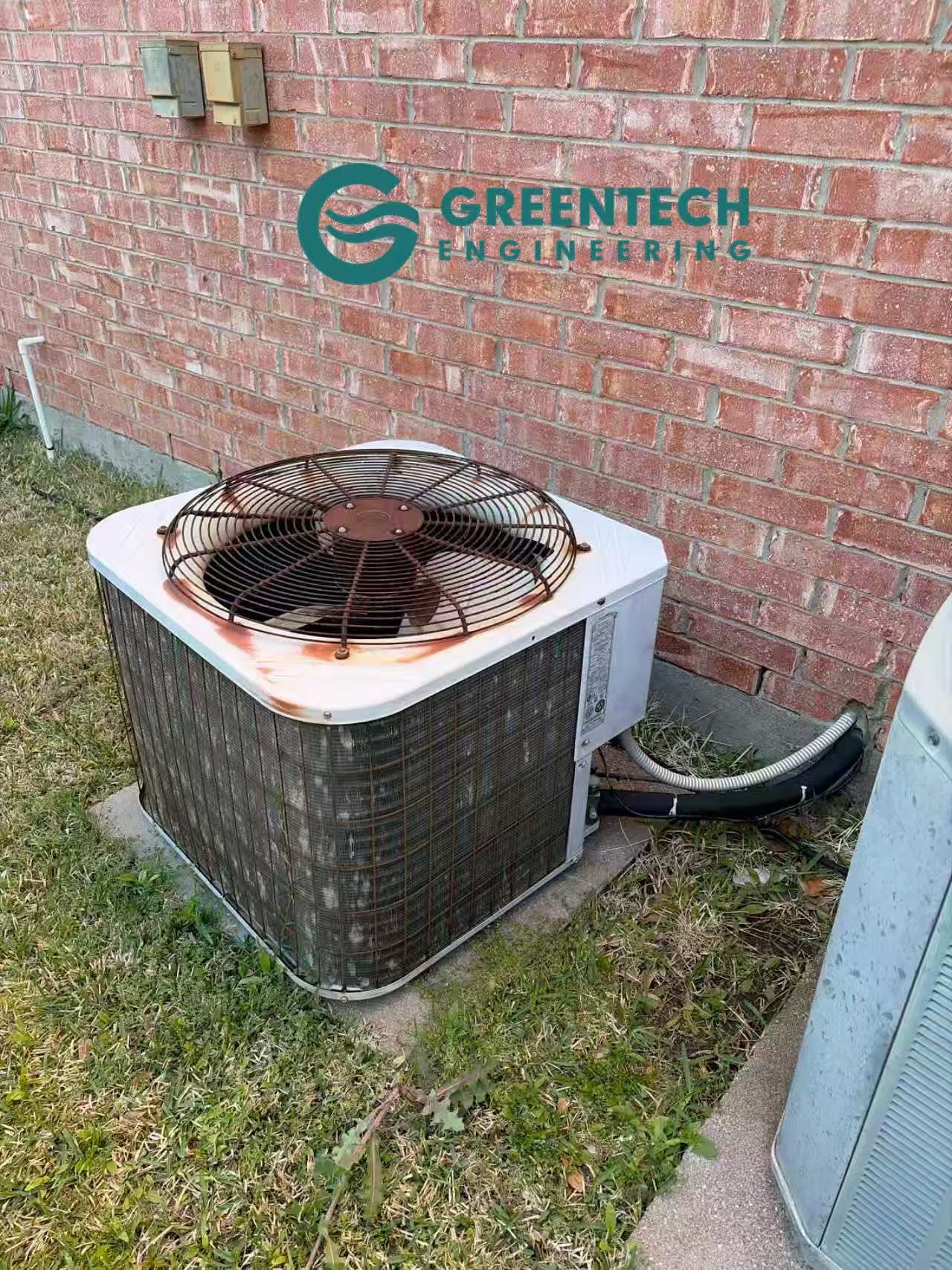
While a 14.3 SEER2 unit is undoubtedly more efficient than a 20-year-old system, installing a "code minimum" system in a climate like Dallas is a strategic mistake. These baseline units almost exclusively utilize single-stage compressors.
The Physics of Single-Stage Inefficiency
A single-stage AC operates with all the nuance of a light switch. It has exactly two modes: 100% ON or 100% OFF.
When your thermostat registers that your Far North Dallas home is too warm, a single-stage system blasts cold air at its absolute maximum capacity. Because it runs so aggressively, it cools the ambient air quickly and then abruptly shuts off. This creates a host of thermodynamic problems:
- The "Cold but Clammy" Effect: Because the system cools the air so rapidly, it doesn't run long enough to pull the thick Texas humidity out of your home.
- Massive Energy Spikes: The most electricity an AC unit ever consumes is during startup. A single-stage unit turning on and off 40 times a day creates massive kW demand spikes, driving up your utility bill.
- Grid Strain: When thousands of single-stage units in high-density areas like Oak Cliff all kick on at 5:00 PM during a heatwave, it causes severe stress on the Texas power grid.

Multi-Stage and Variable-Speed: Is an 18+ SEER AC Worth It in Dallas?
If single-stage is a light switch, advanced HVAC technology is a dimmer switch. Homeowners frequently ask us if upgrading to an 18+ SEER2 system is worth the upfront investment. In the Dallas climate, the answer is an unequivocal yes, because these high-SEER2 ratings are achieved through two-stage or variable-speed (inverter) technology.
How Variable-Speed Changes the Game
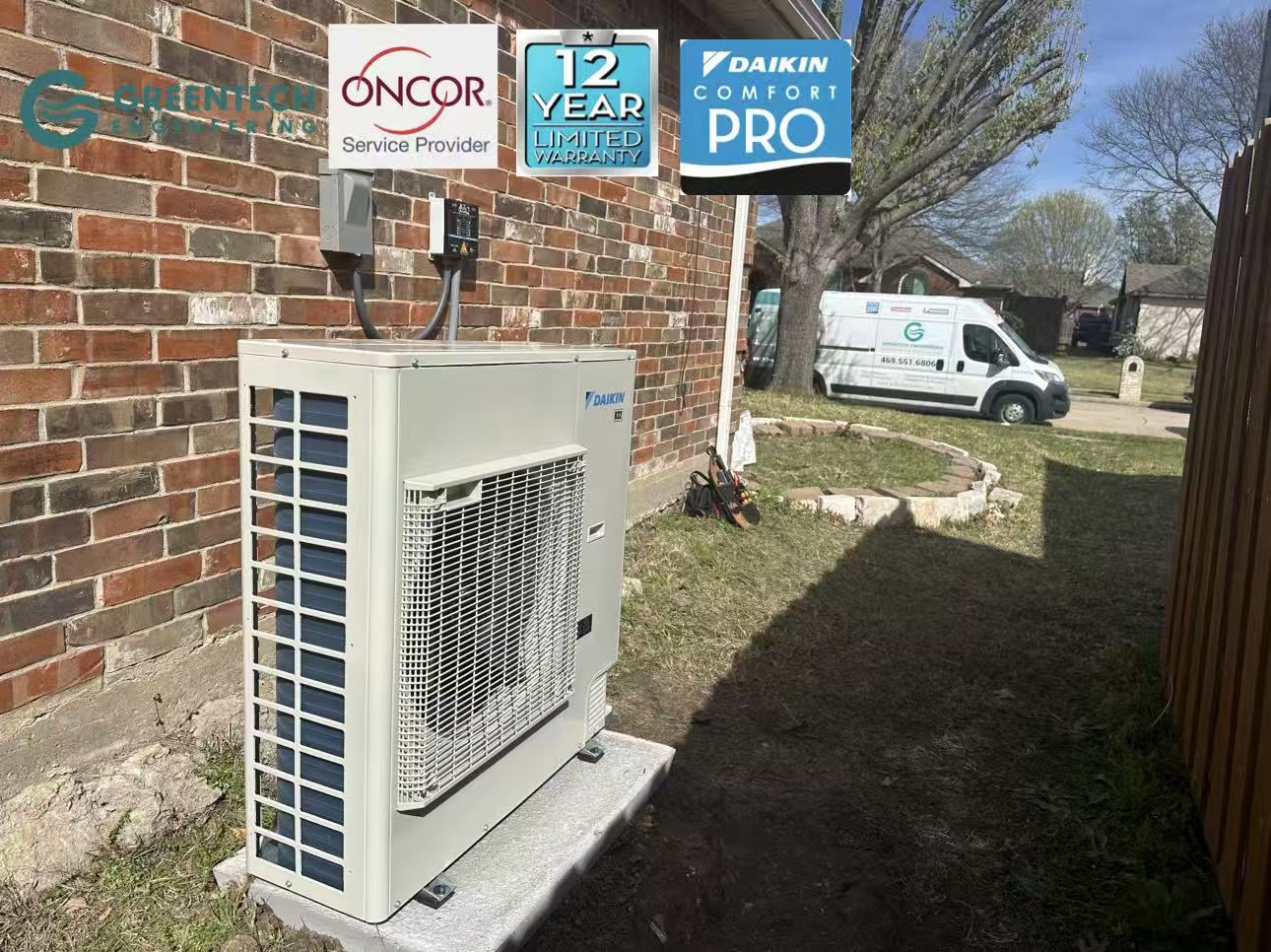
Premium systems, like the Daikin Fit variable-speed heat pump, do not blast at 100% capacity all day. Instead, an inverter-driven compressor can precisely modulate its output—running at 30%, 50%, or 70% capacity depending on exactly what your home needs at that exact moment.
The ROI of High-Efficiency Systems:
- Continuous Dehumidification: By running long, low-speed, whisper-quiet cycles, variable-speed systems constantly pass indoor air over the evaporator coil, wringing out the humidity. You can comfortably set your thermostat to 74°F instead of 70°F because dry air feels cooler.
- Eliminating Temperature Swings: Variable-speed systems maintain your set temperature within half a degree, eliminating the hot and cold spots common in multi-level Dallas homes.
- Slashing Peak Demand: Because they rarely start and stop, variable-speed systems drastically lower your peak kW consumption, heavily reducing your monthly "cost to run AC in Dallas."
Guesswork is Dead: The Power of Manual J Load Calculations
Even the most advanced 18 SEER2 variable-speed AC will fail miserably if it is improperly sized. One of the biggest mistakes Dallas homeowners make is hiring a contractor who performs a simple "box swap"—looking at the old 4-ton unit and simply ordering a new 4-ton unit.
At Greentech Engineering, we operate out of our single Dallas headquarters with a strict adherence to building science. We never guess. Before installing a high-efficiency system, we mandate an ACCA Manual J Load Calculation.
A Manual J calculation evaluates the exact thermodynamic load of your specific home by analyzing:
- Square footage and ceiling heights.
- Window glazing, solar orientation, and shading.
- Attic insulation depth (R-value) and building envelope tightness.
- Ductwork friction and static pressure.
By relying on ACCA and NCI-certified engineering practices, we often find that older homes are equipped with wildly oversized air conditioners. By accurately sizing the new system down via a Manual J calculation, we ensure the variable-speed equipment runs flawlessly, maximizes its lifespan, and delivers the elite efficiency you paid for.
2026 Oncor Incentives: Upgrading Pays for Itself
The ultimate proof that high-efficiency HVAC systems are essential to the future of Texas lies in the utility companies themselves. Oncor does not want to build expensive new power plants; it is far more cost-effective for them to pay homeowners to reduce their energy load.
Because Greentech Engineering is an official Oncor Participating Service Provider, our clients gain access to the 2026 Home Energy Efficiency Program (HEEP). By upgrading from a dying, single-stage unit to an engineered variable-speed system, you can secure massive instant discounts on your invoice.
2026 Oncor Incentive Snapshot: Dallas Citywide
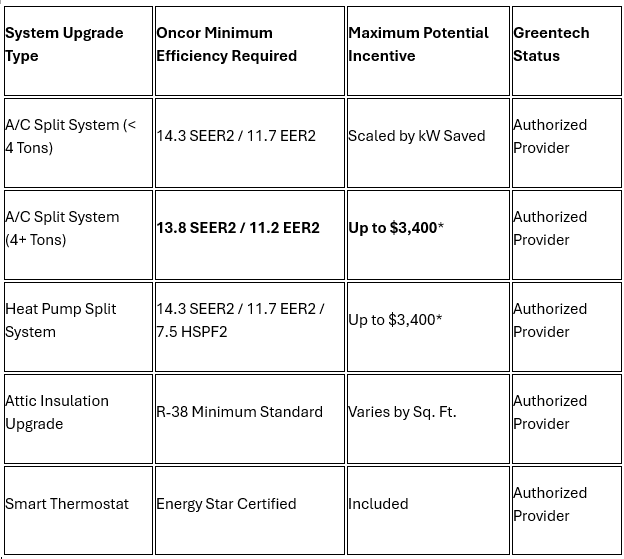
*Incentive Disclaimer: The potential $3,400 incentive is the maximum ceiling dictated by Oncor's strict kW/kWh reduction formula. Your exact instant discount is calculated based on the thermodynamic load reduction verified by our engineering team.
Don't wait until your system fails in July. Schedule a comprehensive HVAC engineering consultation and Manual J assessment with Greentech today.
FAQ: High-Efficiency HVAC in Dallas
Q:Is an 18 SEER AC worth it in Dallas?
A: Absolutely. Dallas experiences prolonged, extreme heat waves and high humidity. While a 14.3 SEER2 single-stage unit will cool your home, an 18+ SEER variable-speed unit will drastically lower your monthly electric bills, provide vastly superior humidity control, operate much more quietly, and qualify you for top-tier Oncor utility rebates. The long-term energy savings quickly offset the initial investment.
Q: What is the average cost to run an AC in Dallas?
A:The cost to run an AC in Dallas varies wildly based on system efficiency and building insulation. An older, 10 SEER single-stage unit in a poorly insulated Oak Cliff home can cost $300 to $500+ per month during peak summer. Upgrading to a properly sized 18+ SEER2 variable-speed system can slash cooling costs by 30% to 50%, depending on the specific thermodynamic load of the home.
Q:Why do I need a Manual J load calculation?
A:An ACCA Manual J load calculation is the only scientific way to determine the exact size (tonnage) your home needs for cooling and heating. Skipping this step leads to oversized systems that short-cycle, fail to dehumidify, and break down prematurely. Proper engineering guarantees optimal comfort and efficiency.
Q:Does Greentech Engineering install solar panels to help with AC costs?
A:No. Greentech Engineering specializes strictly in high-performance heating and air conditioning infrastructure. We have absolutely no involvement in the solar energy sector. Our philosophy is that the most effective way to lower your energy bill is to drastically reduce your home's consumption footprint through highly efficient, perfectly engineered HVAC systems.
Read more about how variable-speed inverter technology works directly from Daikin .
Discover how custom ductwork and supply plenums can fix hot upstairs rooms in Dallas .
About the Author: Siwei (Lucas) Chen
CTO | Greentech Engineering Heating & Air Conditioning
Siwei (Lucas) Chen specializes in engineering-driven HVAC diagnostics, thermodynamic performance optimization, and custom ductwork design for Dallas homeowners. Holding a B.S. in Mechanical Engineering from Virginia Tech, he brings a strict, data-first approach to residential heating and cooling. Under his technical leadership, Greentech Engineering ensures every system is perfectly calibrated for the Texas climate, focusing relentlessly on ACCA Manual J load calculations, meticulous clinical installation standards, and securing maximum utility rebates for his clients.
Professional Certifications:
- ACCA Certified (Manual J, S, D)
- Daikin Comfort Pro Contractor
- NCI Certified – Air Balancing & Duct Optimization
- Oncor Participating Service Provider

Flexible Financing Options
Explore our range of flexible financing options designed to suit your needs and budget.