






Dallas Ceiling-Mounted Heat Pump Replacement: 2-Ton Daikin R-32
By Siwei (Lucas) Chen | Project completed August 27, 2026
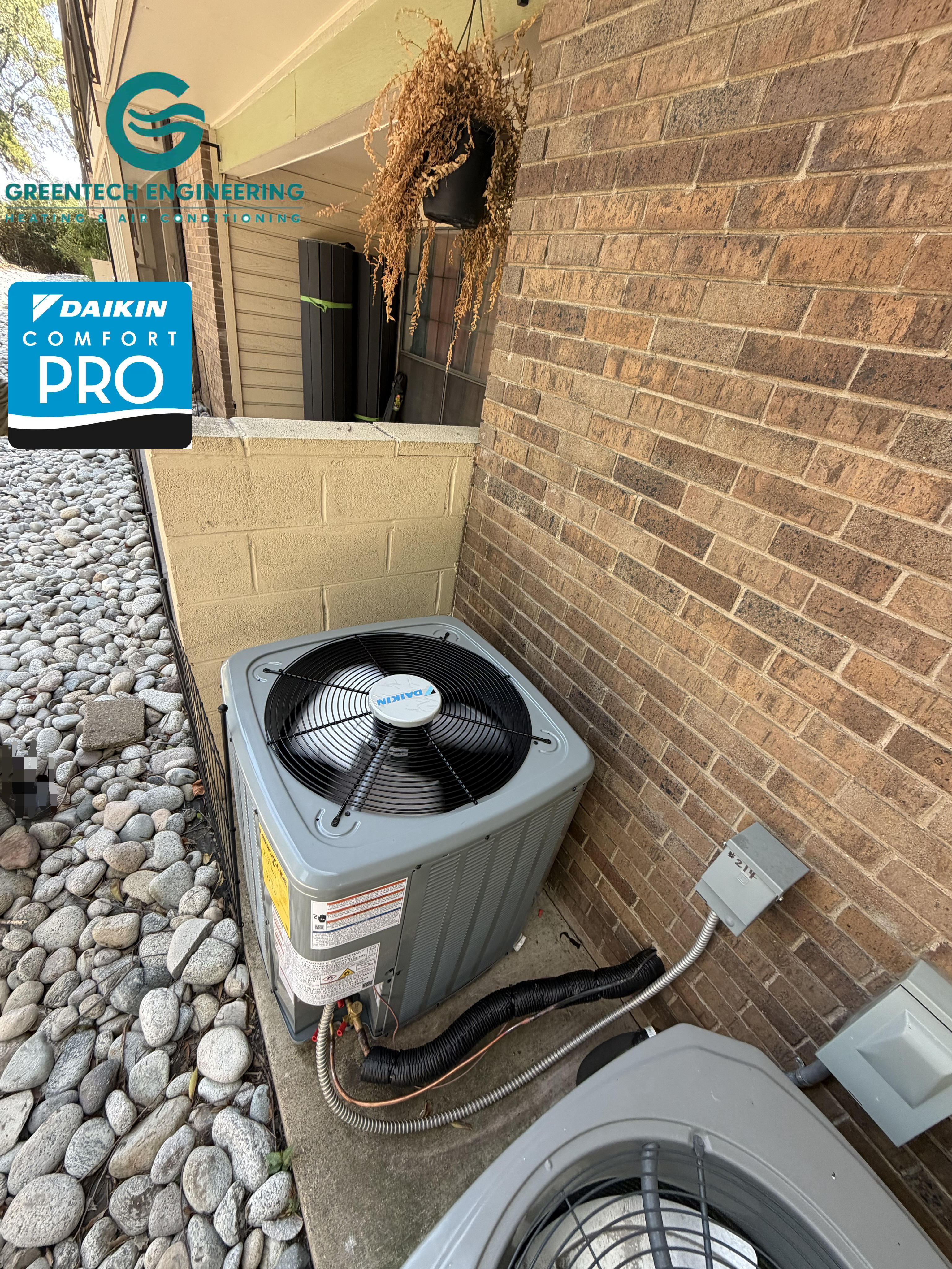
On August 27, 2026, Greentech Engineering Heating & Air Conditioning — DFW HVAC replaced a homeowner-reported 12-plus-year-old, no-cooling system at a two-story home in Dallas, TX 75211. The new matched system uses a nominal 2-ton Daikin R-32 heat pump and a First Co. ceiling-recessed fan coil. AHRI certifies the combination at 23,600 BTU/h cooling, 15.2 SEER2, 12.5 EER2 and 7.5 HSPF2.
The customer authorized publication of the project photos and ZIP code. The street address, homeowner identity, serial numbers and other identifying details are intentionally excluded.
Dallas 75211 project at a glance
- Property: Two-story, single-family home
- Homeowner-reported condition: More than 12 years old, no longer cooling and inefficient
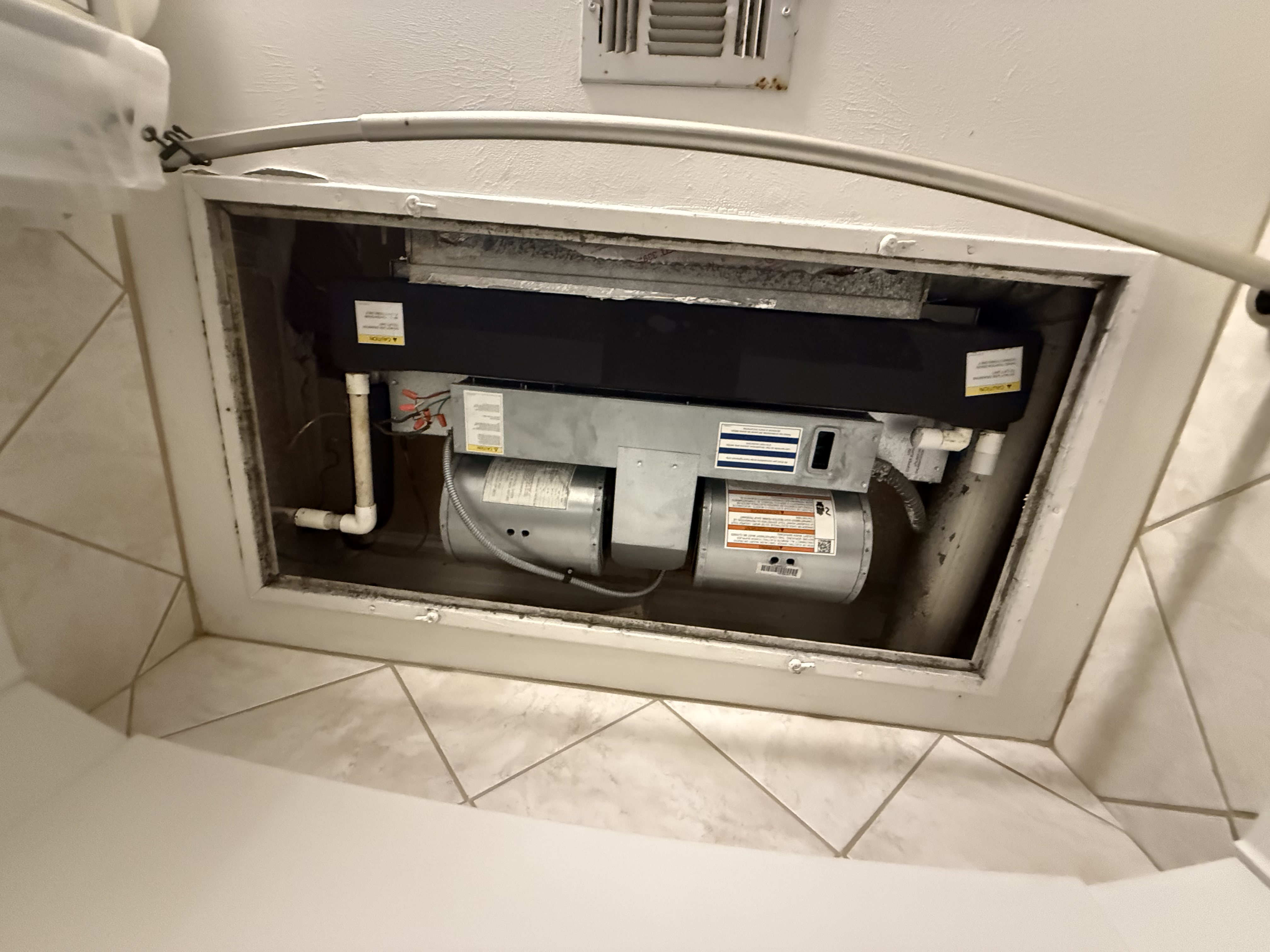
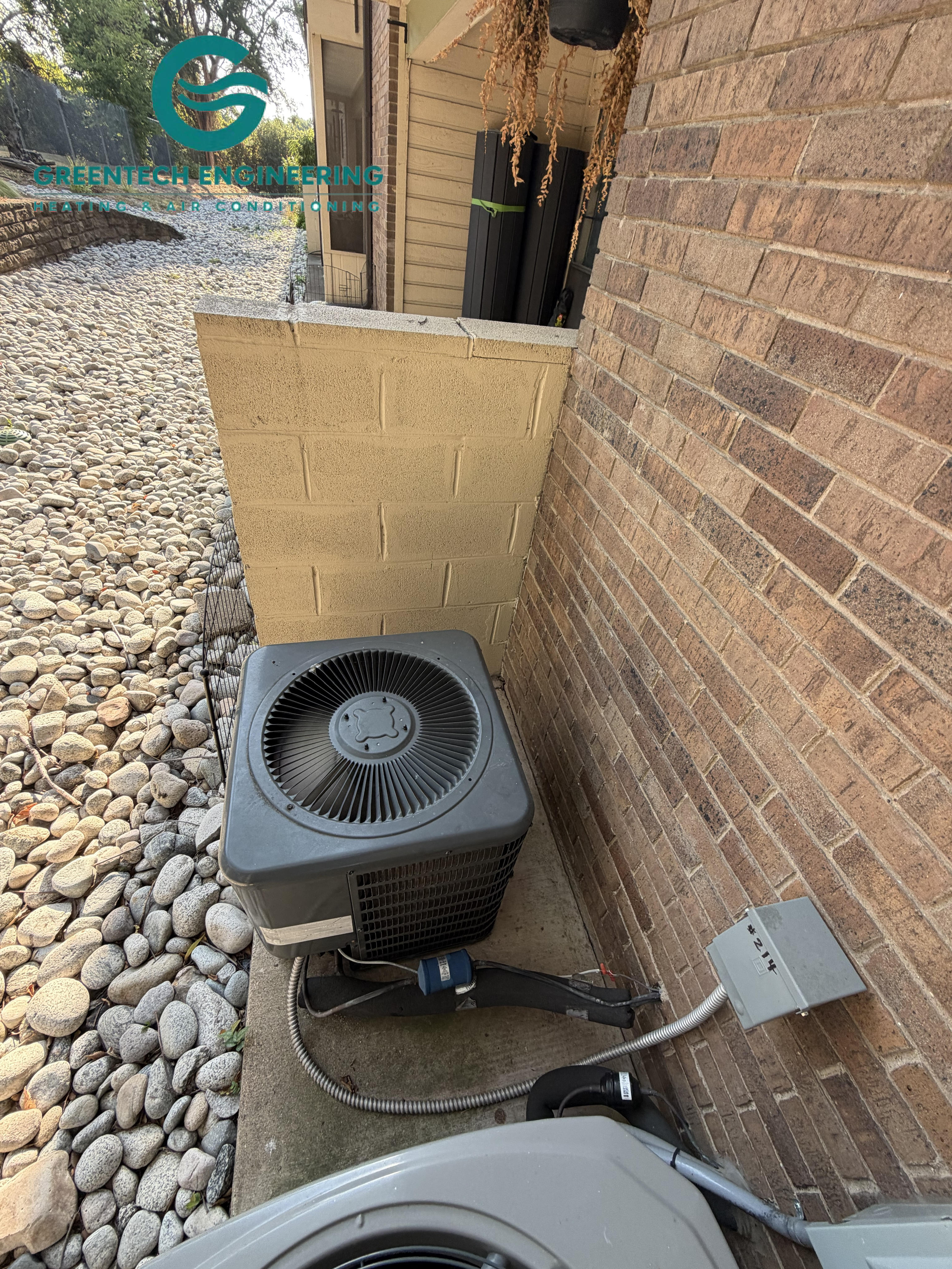
- Previous system: Goodman R-410A straight-cool condenser with a ceiling-mounted fan coil and electric heat
- New outdoor unit: Daikin DH4SEA2410AA R-32 heat pump
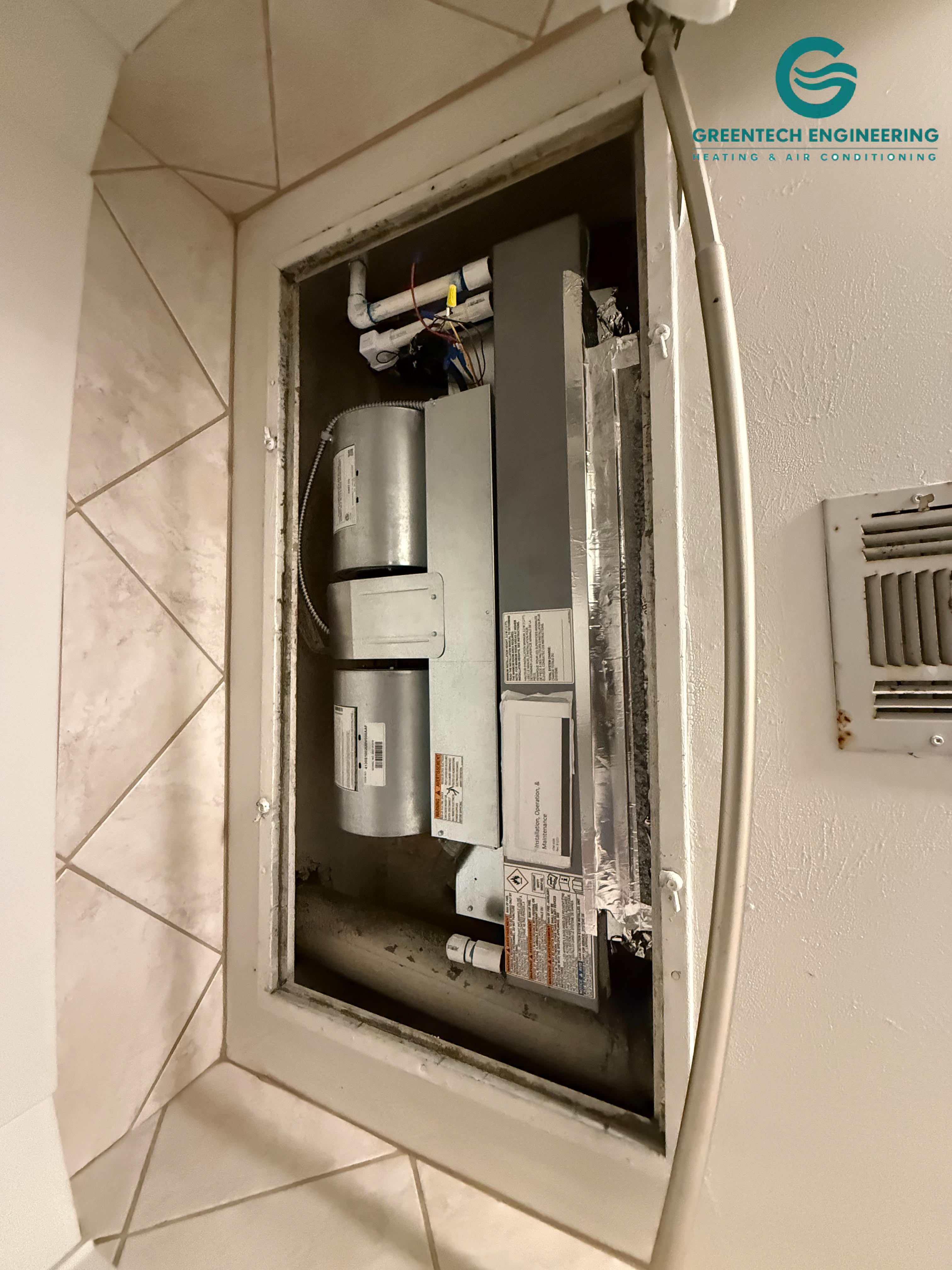
- New indoor unit: First Co. 30HXS1002UBV000AAF ceiling-recessed fan coil
- Nominal outdoor size: 2 tons
- AHRI certificated
- Certified cooling capacity: 23,600 BTU/h
- Certified heating capacity at 47°F: 21,200 BTU/h
- Certified efficiency: 15.2 SEER2, 12.5 EER2 and 7.5 HSPF2 Region IV
- Auxiliary electric heat: 7.5 kW at 208V or 10.0 kW at 240V, per the indoor-unit label
- Completion date: August 27, 2026
- Permit and inspection: Applicable process completed by Greentech
- Contractor labor warranty: Three years, subject to the signed written terms
Why did the homeowner replace the old Dallas HVAC system?
The homeowner described the previous system as more than 12 years old, inefficient and no longer cooling. The homeowner chose replacement rather than continued repair.
Those conditions are homeowner-reported. The project record does not include a component-level failure diagnosis, pre-installation efficiency test or utility-bill analysis. For that reason, this case study does not name a failed component or promise a savings percentage.
The previous outdoor unit was a Goodman R-410A straight-cool condenser. It provided mechanical cooling but did not reverse the refrigeration cycle to heat the home. Electric resistance heat was available through the ceiling-mounted indoor equipment.
Can a ceiling-mounted air handler be replaced without changing the layout?
Yes. A ceiling-mounted indoor system can remain in the same general equipment format when the opening, structural support, airflow, drainage, electrical provisions, refrigerant requirements and certified equipment match are evaluated for the project.
In this Dallas home, the indoor unit was recessed into the ceiling. Replacement therefore involved more than selecting an outdoor unit. The indoor cabinet format, condensate drainage, duct connections, controls, refrigerant compatibility and electric auxiliary heat all had to work together.
Homeowners considering a similar project can review Greentech’s Dallas heat-pump replacement service and ask whether the proposed indoor and outdoor models form a certified match.
Which Daikin and First Co. equipment was installed?
Greentech installed a Daikin DH4SEA2410AA R-32 heat pump and a First Co. 30HXS1002UBV000AAF ceiling-recessed fan coil. The outdoor unit is in the nominal 2-ton class, and AHRI reference 215444867 identifies the certified performance of this exact indoor-and-outdoor combination.
The First Co. unit preserves the home’s ceiling-recessed mechanical format. Its label lists auxiliary electric heat at 7.5 kW with 208-volt service or 10.0 kW with 240-volt service. That voltage-dependent rating is more accurate than describing this installation as having a 5 kW heat kit.
What changed when the home moved from straight cooling to a heat pump?
Both the previous straight-cool condenser and the new heat pump can cool the home. The operational difference appears during heating.
The previous outdoor unit did not provide heat-pump heating. The Daikin heat pump can reverse refrigerant flow and transfer heat indoors, allowing the outdoor system to provide primary heating. Electric heat in the First Co. fan coil remains available as auxiliary or backup heat when the thermostat and controls call for it.
Auxiliary heat may operate during certain control conditions, higher heating demand or defrost. Its presence does not mean resistance heat runs continuously. See Greentech’s explanation of heat pumps versus electric resistance heat in Texas for a broader comparison.
Actual operating cost depends on weather, thermostat settings, building heat loss, duct performance, utility rates and system operation. No post-installation utility data were provided, so this project does not promise a particular bill reduction or payback period.
Why does AHRI reference 215444867 matter?
AHRI reference 215444867 verifies the rated performance of the installed Daikin outdoor unit and First Co. indoor unit as a matched system. A split system’s published performance comes from the certified combination—not either cabinet by itself and not the highest rating advertised for a broader product family.
For this exact combination, the certified ratings are:
- 15.2 SEER2 seasonal cooling efficiency;
- 12.5 EER2 cooling efficiency under specified test conditions;
- 7.5 HSPF2, Region IV seasonal heat-pump heating efficiency;
- 23,600 BTU/h certified cooling capacity; and
- 21,200 BTU/h heating capacity at 47°F.
The outdoor unit is nominal 2-ton equipment, but that description should not be converted into an asserted 24,000 BTU/h certified capacity. Nominal tonnage identifies an equipment class; the AHRI certificate supplies the performance of the exact match.
The “30” in the indoor model number also does not mean that this system delivers 30,000 BTU/h. For the installed pairing, the applicable certified cooling capacity is 23,600 BTU/h.
What does R-32 mean for this Dallas replacement?
The new Daikin heat pump uses R-32 refrigerant, while the previous outdoor configuration used R-410A. Refrigerant type is an important equipment-compatibility and service fact, but it does not by itself prove lower utility bills, better comfort or quieter operation.
The refrigerant circuit must be prepared and serviced according to the equipment manufacturer’s requirements. Equipment, tools and work practices must be appropriate for the refrigerant used.
What installation work was documented?
The documented scope included removal and disposal of the previous equipment, refrigerant recovery, a new condenser pad, drain pan, drain insulation and Safe-T condensate protection.
For the ceiling-recessed fan coil, the work included securing the indoor unit, connecting it to the supply and return plenums and sealing accessible connections with HVAC-approved materials. The condensate drain was to be cleared and modified as needed, including the trap and vent.
The existing copper line set was prepared with RX-11 and dry nitrogen. Required changes used brazed refrigerant connections with 15% silver brazing alloy. The written scope specified dry-nitrogen pressure testing at 250 psi for at least 15 minutes and evacuation below 500 microns before final charging and startup.
Those numbers describe documented installation requirements. The supplied gauge photograph does not independently establish the final refrigerant charge or total system performance because it does not show all target calculations and operating conditions.
The installation was completed and run-tested on August 27, 2026.
Were permit and inspection requirements completed?
Yes. Greentech confirmed that permit and inspection requirements applied to this project and completed the applicable process. This statement is specific to the Dallas 75211 installation; requirements may differ by jurisdiction and project scope.
Readers can use Greentech’s Dallas HVAC service-area page to learn about local service coverage.
What labor warranty applies to this project?
The installation includes a three-year contractor labor warranty, subject to the signed written warranty’s coverage, exclusions, non-transferability provision and other terms.
Contractor labor coverage is separate from manufacturer parts or equipment coverage. Any manufacturer warranty duration and registration status should be confirmed from the applicable Daikin and First Co. warranty records rather than inferred from general product marketing.
What should Dallas homeowners ask before replacing a ceiling-mounted system?
Before approving a ceiling-mounted heat-pump replacement, ask the contractor to document:
- the exact indoor and outdoor model numbers;
- the AHRI reference for the proposed combination;
- certified cooling and heating capacity;
- the auxiliary-heat rating and available voltage;
- condensate drainage and overflow protection;
- duct and plenum connection work;
- refrigerant-line preparation and startup scope;
- permit and inspection responsibilities; and
- written contractor and manufacturer warranty terms.
Model numbers and an AHRI reference help a homeowner evaluate the proposed equipment match. They are not private homeowner information. Serial numbers, registration details and the private project address should remain protected.
Dallas ceiling-mounted heat-pump replacement FAQs
Can a ceiling-mounted air handler work with a heat pump?
Yes, when the indoor unit is compatible with heat-pump operation and the electrical provisions, refrigerant requirements, drainage, airflow, controls and structural support are confirmed. This Dallas project paired a First Co. ceiling-recessed fan coil with a Daikin R-32 heat pump under AHRI reference 215444867.
Why is the indoor unit a 30,000-BTU class model when the outdoor unit is nominal 2 tons?
Indoor and outdoor model sizes do not independently establish certified system capacity. The AHRI reference rates this exact combination at 23,600 BTU/h of cooling. The indoor model’s size designation should not be presented as the complete system’s delivered capacity.
Is a heat pump different from a straight-cool air conditioner?
Yes. Both can cool, but a heat pump can reverse the refrigeration cycle to provide heating. A straight-cool outdoor unit does not provide heat-pump heating.
What do SEER2, EER2 and HSPF2 mean?
SEER2 is a seasonal cooling-efficiency rating, EER2 describes cooling efficiency under specified test conditions, and HSPF2 is a seasonal heating-efficiency rating for heat pumps. These are laboratory ratings for a certified equipment combination, not guarantees of a particular utility bill.
Did this Dallas replacement require a permit and inspection?
Yes. Greentech confirmed the applicable requirements and completed the permit and inspection process for this project. Requirements can vary by jurisdiction and project scope.
Does the installation include a labor warranty?
Yes. The project includes a three-year contractor labor warranty, subject to the signed written terms. Manufacturer coverage is separate and must be confirmed through applicable registration and warranty documents.
Schedule a Dallas heat-pump replacement evaluation
Have an aging system, a ceiling-mounted air handler or an air conditioner that is no longer cooling? Contact Greentech for a Dallas heat-pump replacement evaluation.
Call (469) 551-6806 and ask for the proposed indoor-and-outdoor equipment match, AHRI reference, auxiliary-heat configuration, permit scope and written warranty terms before installation.
About the author
Siwei (Lucas) Chen
Chief Technology Officer | Greentech Engineering Heating & Air Conditioning — DFW HVAC
Siwei (Lucas) Chen applies an engineering-based, data-first approach to residential HVAC system design, diagnostics, airflow measurement, equipment selection and duct-system optimization across Dallas–Fort Worth. He holds a B.S. in Mechanical Engineering from Virginia Tech.
Lucas completed ACCA’s Residential Design for Quality Installation Course, which covers residential design procedures associated with ACCA Manuals J, S, T and D. He is also an NCI Certified Residential Air Balancer and NCI Certified Duct System Optimization Specialist.

Flexible Financing Options
Explore our range of flexible financing options designed to suit your needs and budget.