






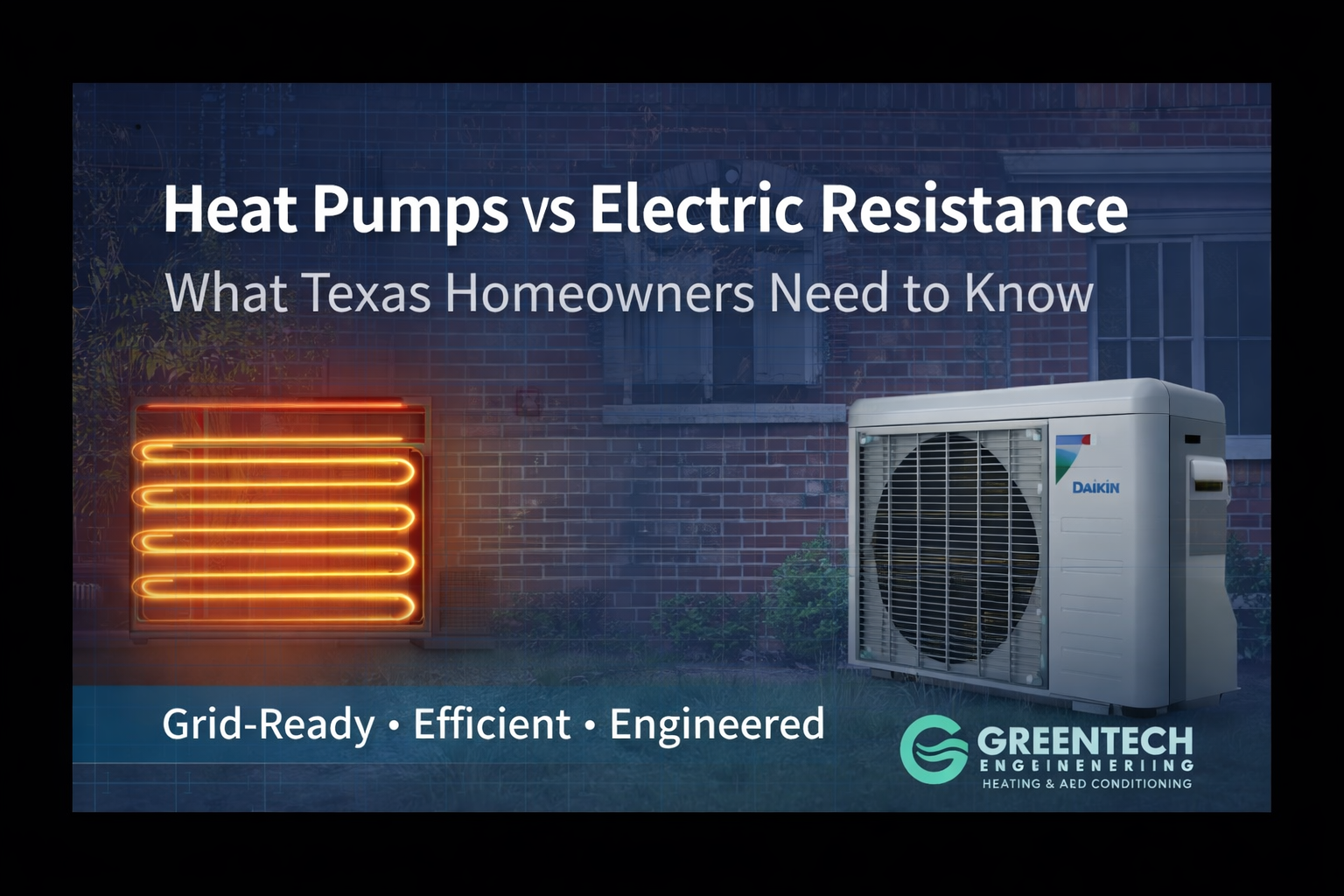
The Future of Heating in Texas: Heat Pumps, Electrification & Grid Readiness in DFW
Texas is at a turning point in how homes are heated.
As energy policy, grid modernization, and refrigerant regulations evolve, the conversation is shifting away from traditional electric resistance heating toward high-efficiency heat pump systems engineered for performance, resilience, and long-term cost control.
Recent industry discussions across Texas have highlighted four critical themes:
- The role of electric resistance heating in today’s market
- Heat pump adoption readiness in Texas
- Grid implications of large-scale electrification
- Policy and education pathways accelerating efficient heating solutions
For homeowners in Plano, Frisco, Allen, McKinney, Little Elm, Forney, Irving, Grand Prairie, and North Dallas, this is no longer theoretical. It directly impacts comfort, utility bills, and equipment decisions in 2026 and beyond.
Electric Resistance vs. Heat Pumps: What’s the Difference?
Electric Resistance Heating
Electric heat strips convert electricity directly into heat. While simple and inexpensive upfront, they:
- Consume high amounts of electricity
- Offer no efficiency multiplication
- Increase winter utility bills significantly
- Add grid demand during cold snaps
In Texas freeze events, electric resistance systems contribute heavily to peak grid load.
Modern Heat Pump Technology
A heat pump does not “create” heat—it moves heat using refrigeration cycle physics.
That difference matters.
A properly designed heat pump can deliver 2–3 times more heat energy than the electrical energy it consumes, dramatically improving efficiency.
In North Texas climates, modern inverter-driven systems:
- Maintain stable indoor temperatures
- Provide superior humidity control
- Reduce short cycling
- Lower overall energy consumption
- Integrate with auxiliary heat for extreme events
When engineered correctly, heat pumps are not a compromise—they are an upgrade.
Are Heat Pumps Reliable in Texas Cold Weather?
This is the most searched question in DFW regarding electrification.
The answer depends on three variables:
- Correct Load Calculation (Manual J)
- Proper Equipment Selection (Manual S)
- Duct Design & Static Pressure Control (Manual D)
Most performance failures are not technology failures—they are installation failures.
Modern inverter heat pumps, particularly newer R-32 platforms, are designed for variable output and low-ambient performance. When paired with properly sized auxiliary heat, they handle Texas cold events effectively.
The key is engineering—not oversizing.
Grid Impact & Electrification in Texas
Texas operates an independent grid system (ERCOT). Large-scale electrification increases winter electric demand.
However, high-efficiency heat pumps reduce per-home consumption compared to resistance heat, easing long-term grid stress when deployed correctly.
Efficient electrification is not about “adding load”—it’s about optimizing load.
In cities like Plano, Frisco, and Allen, where new construction and retrofit upgrades are accelerating, correct system design ensures:
- Reduced peak draw
- Balanced heating performance
- Lower operational strain on infrastructure
What This Means for DFW Homeowners in 2026
If you live in:
- Plano 75023 / 75024
- Frisco 75033 / 75034
- Allen 75002 / 75013
- McKinney 75070 / 75072
- Little Elm 75068
- Forney 75126
- Irving 75062
- Grand Prairie 75052
You should evaluate:
- Is your current system electric resistance?
- Is your heat pump older than 10–15 years?
- Are you prepared for A2L refrigerant transitions?
- Are you eligible for Oncor energy incentives?
2026 marks a significant shift toward newer refrigerant platforms and higher efficiency standards. Planning early prevents rushed decisions during peak season failures.
Engineering-Driven HVAC in North Texas
At Greentech Engineering Heating & Air Conditioning, we do not “swap boxes.”
We design systems using:
- ACCA Manual J load calculations
- Manual S equipment selection
- Manual D duct evaluation
- Static pressure testing
- Airflow balancing
As a Daikin Comfort Pro Contractor and Oncor Authorized Service Provider, we help homeowners in DFW transition from outdated electric resistance heating to modern inverter-driven heat pump systems that qualify for rebates and meet evolving code standards.
Electrification works when engineering leads the installation—not shortcuts.
Frequently Asked Questions (FAQ)
1. Are heat pumps better than electric resistance heat in Texas?
Yes. Heat pumps are significantly more energy-efficient and lower operating costs when properly sized and installed.
2. Will a heat pump work during a Texas freeze?
Yes—when paired with auxiliary heat and designed using proper load calculations. Performance issues usually stem from poor sizing, not technology limitations.
3. Do heat pumps reduce electricity bills?
In most North Texas homes transitioning from resistance heat, yes. Savings depend on home insulation, duct condition, and system sizing.
4. Is electrification mandatory in Texas?
Not currently. However, efficiency regulations and refrigerant transitions are influencing equipment options available in 2026 and beyond.
5. How do I know if my home is ready for a heat pump?
A professional evaluation including Manual J calculation and duct assessment is required. Square footage alone is not sufficient.
6. Are rebates available in DFW?
Yes. As an Oncor Authorized Service Provider, qualifying high-efficiency systems may be eligible for energy incentives.
Final Thoughts
The future of heating in Texas is not about trends—it’s about physics, grid readiness, and engineered efficiency.
Homeowners in Plano, Frisco, Allen, McKinney, Little Elm, Forney, Irving, and surrounding DFW communities should approach electrification strategically:
✔ Calculate before replacing
✔ Engineer before installing
✔ Optimize before oversizing
If you are considering upgrading your heating system in 2026, now is the time to evaluate options before peak season demand returns.Contact us.
Author
Siwei(Lucas) Chen
CTO | Greentech Engineering Heating & Air Conditioning
B.S. Mechanical Engineering
ACCA Certified (Manual J, S, D)
NCI Certified – Air Balancing & Duct Optimization
Daikin Comfort Pro Contractor
Oncor Authorized Service Provider
10+ Years Residential HVAC Engineering Experience in Dallas–Fort Worth
Reviewed and approved by Greentech Engineering Heating & Air Conditioning
Licensed & Insured HVAC Contractor – Serving Plano, Frisco, Allen, McKinney, Little Elm, Forney, Irving & Greater DFW

Flexible Financing Options
Explore our range of flexible financing options designed to suit your needs and budget.