




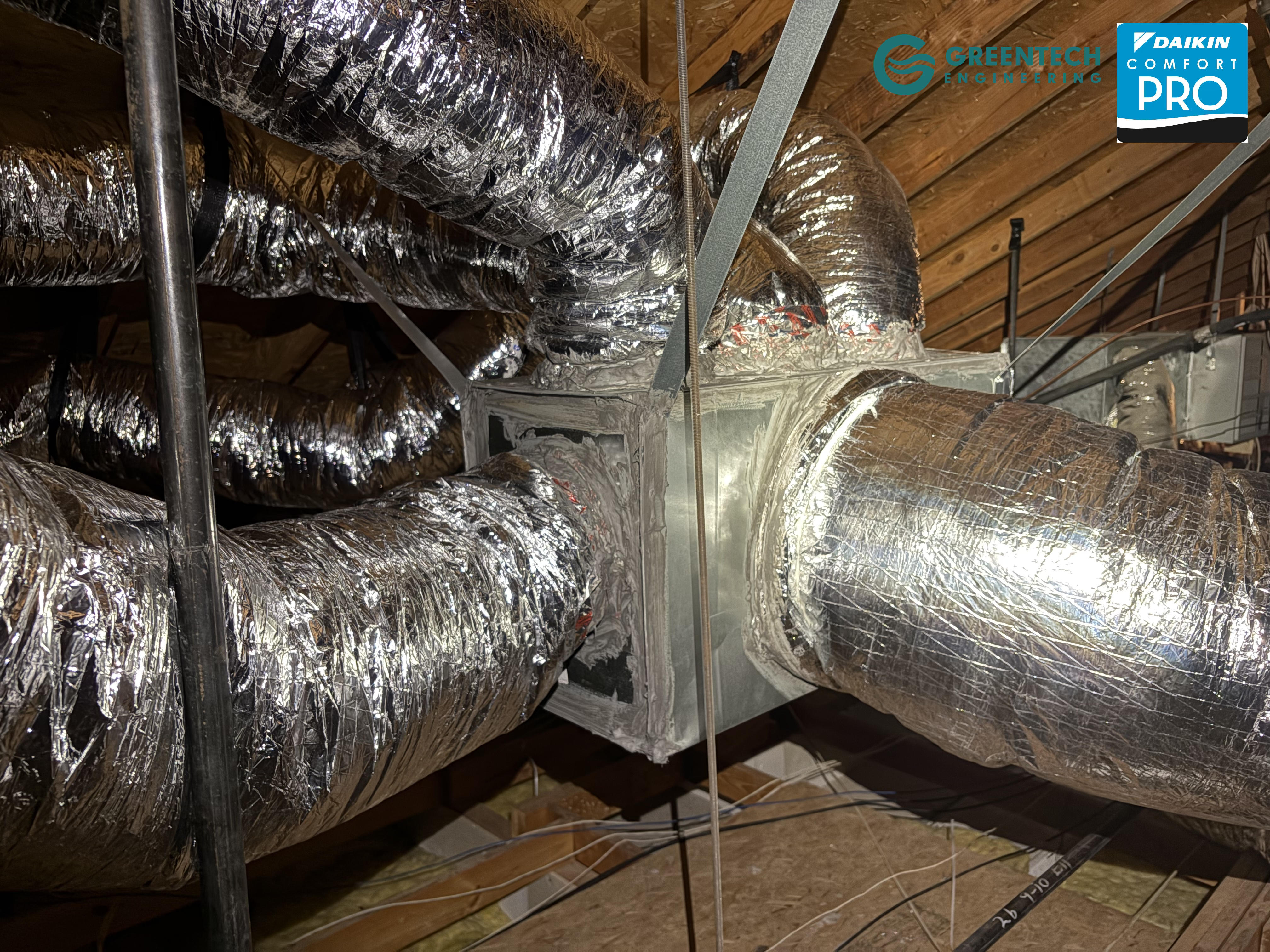
Dallas Commercial Case Study: Precision Duct System Design & High-Capacity AC Replacement
When a commercial HVAC system fails in Dallas, the impact extends far beyond basic discomfort. For office buildings and retail spaces, erratic temperatures lead to plummeting employee productivity, frustrated tenants, and skyrocketing energy overhead. Unfortunately, many business owners mistakenly hire standard residential technicians to solve complex commercial airflow issues, resulting in inadequate "box swaps" that completely ignore the underlying mechanical failures.
Commercial HVAC requires a drastically different approach. It demands precise mechanical engineering, custom air distribution drafting, and an intricate understanding of static pressure across multi-tenant zones.
Our foundational philosophy at Greentech Engineering applies universally to every project we undertake: In the AI-driven energy era, HVAC is no longer just about comfort — it’s about how efficiently your home uses power. At Greentech, we engineer systems that reduce your energy load and prepare your home for the future. We bring this exact same rigorous, data-driven mindset to our B2B commercial clients, transforming energy-wasting properties into optimized, high-performing assets.
In this comprehensive commercial case study, we will break down a massive infrastructure overhaul at a multi-suite office building in the Dallas 75248 zip code. We will explore the dangers of failing ductwork, the engineering behind commercial zoning and bypass dampers, and how this project qualifies for the Oncor 2026 Commercial Energy Efficiency Program.
The Challenge: Airflow Chaos and Failing Infrastructure
We were contacted by the property management team of a bustling office building in Far North Dallas. The facility was experiencing severe thermal imbalances. Suite 102 was freezing, while the main conference rooms and back offices (Suites 106 and 108) were uncomfortably warm.
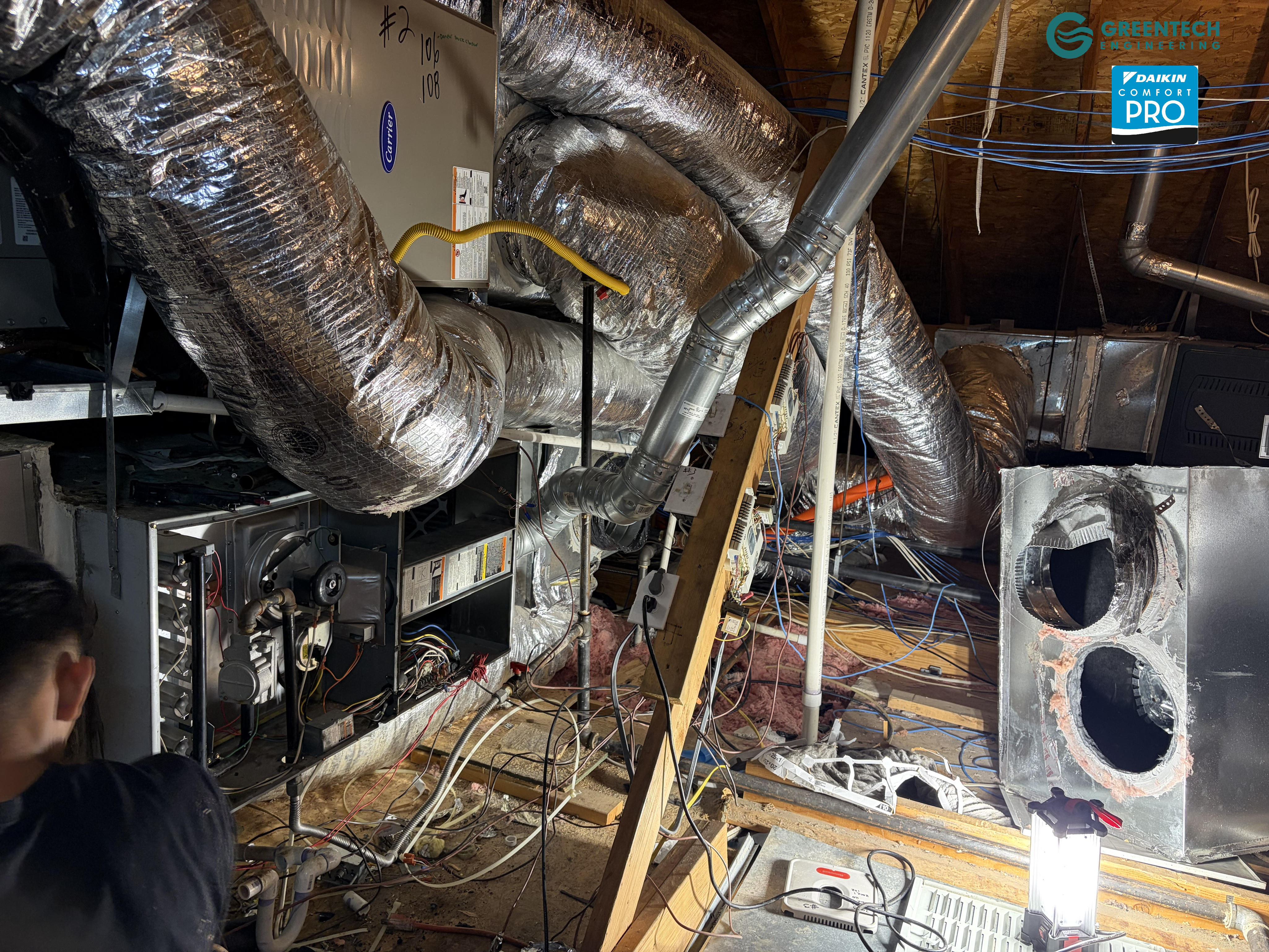
Upon initial inspection, our engineers discovered a mechanical nightmare in the ceiling space. The building was operating on a network of five distinct rooftop and split systems, but the ductwork connecting them was disastrously flawed.
System #3 was completely failing and improperly located, struggling to push air across too far of a distance. System #2 was operating with restrictive, deteriorating supply and return plenums. Furthermore, multiple independent systems (Systems #1 and #4) were starved for return air, creating negative pressure zones that pulled unconditioned, humid air into the building envelope.
The business operations were suffering, and a simple equipment replacement would not solve the root aerodynamic problems. It was time for a complete commercial redesign.
The Engineering Solution: Precision Duct System Design
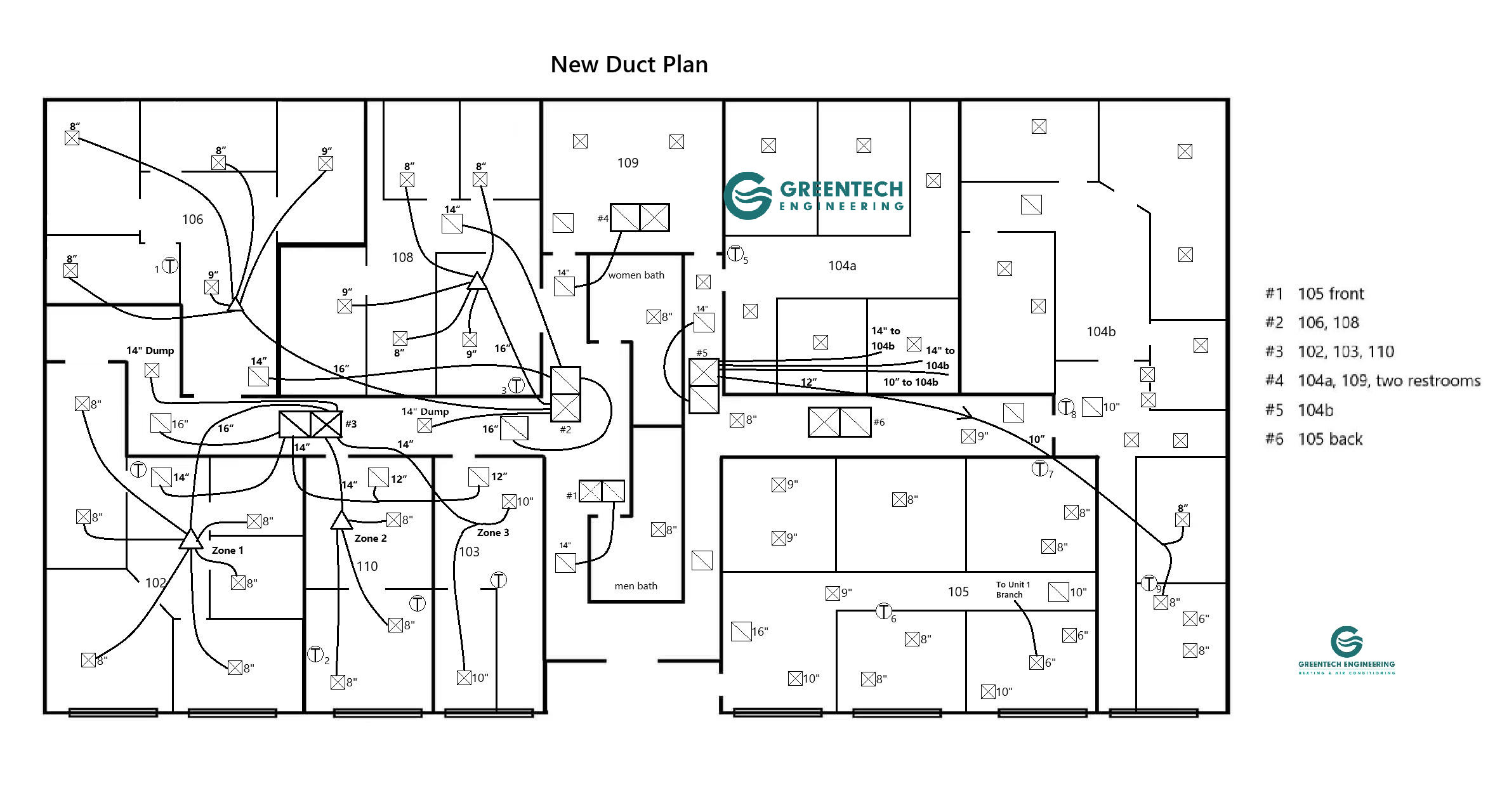
Before removing a single piece of equipment, Greentech engineers mapped the entire facility. To permanently solve the thermal imbalances across the various office suites, we drafted a highly detailed New Duct Plan, calculating the exact Cubic Feet per Minute (CFM) required for each individual room based on occupancy and solar load.
Commercial Zoning and Static Pressure Management
The core of our engineering solution was dividing Systems #2 and #3 into highly controlled, independent temperature zones. This allows different office suites on the same AC system to request cooling independently. However, commercial zoning requires complex safeguards.
1. Motorized Zone Dampers & DAT Sensors:
We installed 3 new zone dampers for System #3 and 2 new zone dampers for System #2. These motorized valves open and close based on real-time thermostat demands. Crucially, we equipped these systems with DAT (Discharge Air Temperature) sensors. If only one small office calls for cooling, the AC compressor continues to run. The DAT sensor constantly monitors the air temperature leaving the coil; if it drops too low, the sensor temporarily cuts the compressor to prevent the evaporator coil from freezing into a block of solid ice.
2. Bypass and Dump Air Dampers:
When zone dampers close to restrict air to a satisfied office, the system's static pressure spikes dangerously. To protect the expensive ECM blower motors from burning out under this intense pressure, we engineered and installed bypass/dump air dampers and relief ducts for both System #2 and System #3. These mechanical valves automatically open to safely redirect excess air pressure into common areas (like hallways), preserving the integrity of the HVAC equipment.
The Execution: High-Capacity AC Replacement & Optimization
With the mechanical blueprints finalized, our commercial installation team executed a 15-point scope of work with surgical precision, minimizing disruption to the active business suites below.
Major Overhauls: Systems #2 and #3
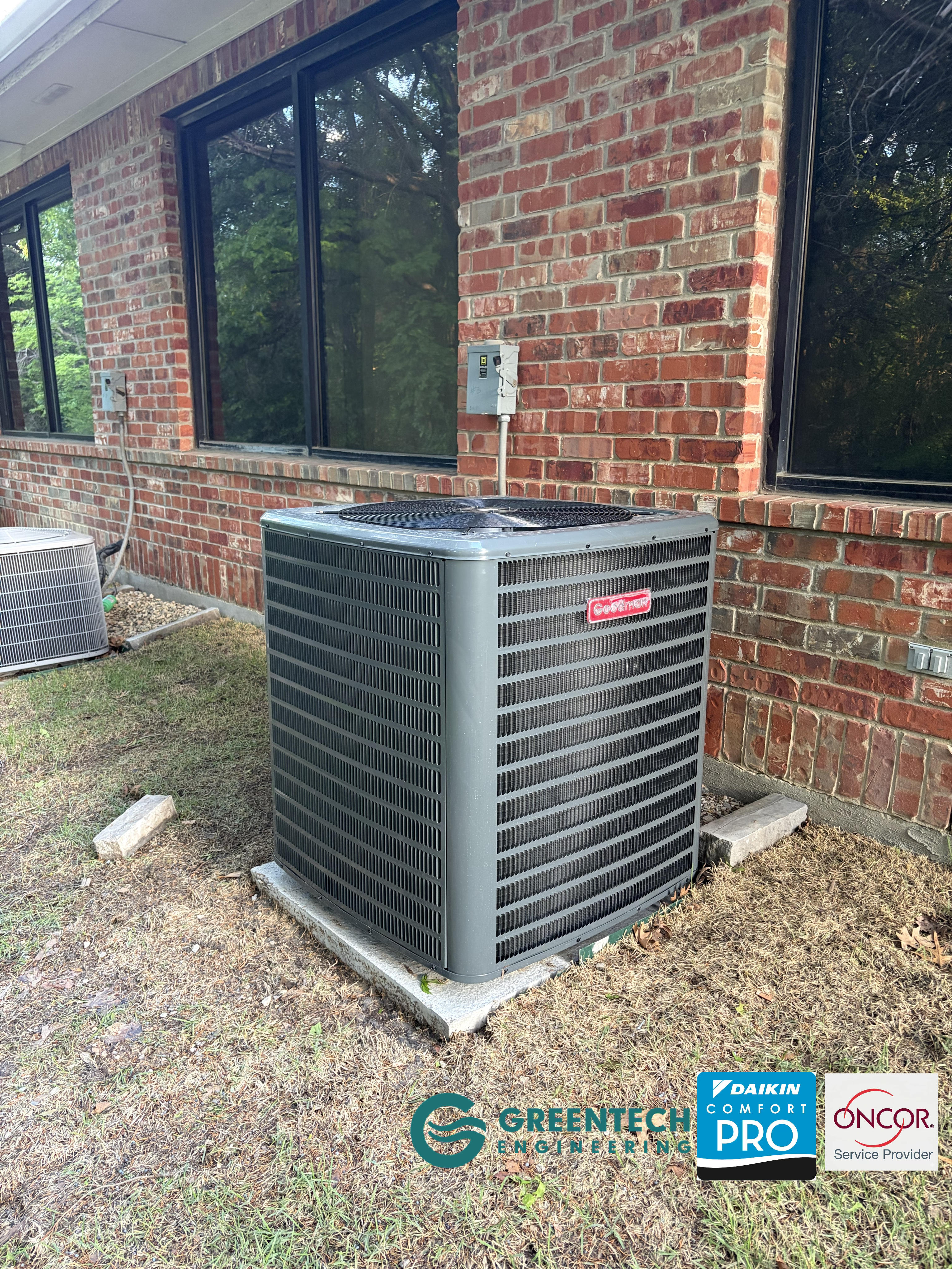
- System #3 Relocation & Replacement: We completely extracted the failing System #3 equipment. To optimize airflow delivery, we relocated the new indoor air handler to a centralized, strategically optimal position.
- Custom Plenums: For both System #2 and System #3, we ripped out the restrictive duct boxes. We custom-fabricated and installed brand-new, aerodynamically optimized supply and return plenums using thick, commercial-grade insulated metal.
- Duct Redesign: We installed an entirely new network of rigid and flexible ductwork for both systems precisely according to our engineered CAD plan.
System-Wide Balancing and Maintenance Fixes
To ensure the entire building operated as a cohesive thermal envelope, we performed critical interventions on the remaining systems:
- Thermostat Relocation: We relocated the thermostat for Suite 102 to a neutral interior wall to ensure accurate ambient temperature readings.
- System #5 Optimization: We ran and installed new dedicated ductwork for System #5 to match the updated floor print.
- Curing Negative Pressure: We installed brand-new return ducts for System #1 and System #4, allowing those units to "breathe" properly and stop pulling humid air through the building's exterior doors.
- Vital Repairs: We diagnosed and replaced a failing gas ignitor on System #2 to restore reliable heating, and recovered, evacuated, and added the precise factory charge of refrigerant to System #4.
The Commercial ROI: 2026 Oncor Energy Efficiency Program
For commercial property managers and B2B building owners, an HVAC upgrade is a capital expenditure that must yield a tangible Return on Investment (ROI).
By redesigning the ductwork, managing static pressure, and installing properly zoned, high-efficiency equipment, this Dallas 75248 office building drastically reduced its daily peak kW demand. The AC systems no longer run continuously just to overcome bad ductwork.
Furthermore, Greentech Engineering is an official Oncor 2026 Commercial Energy Efficiency Program Service Provider. We design and commission our commercial projects to meet strict utility efficiency guidelines, unlocking massive cash incentives that offset the initial capital investment.
Commercial Incentive Snapshot: Oncor 2026 Program
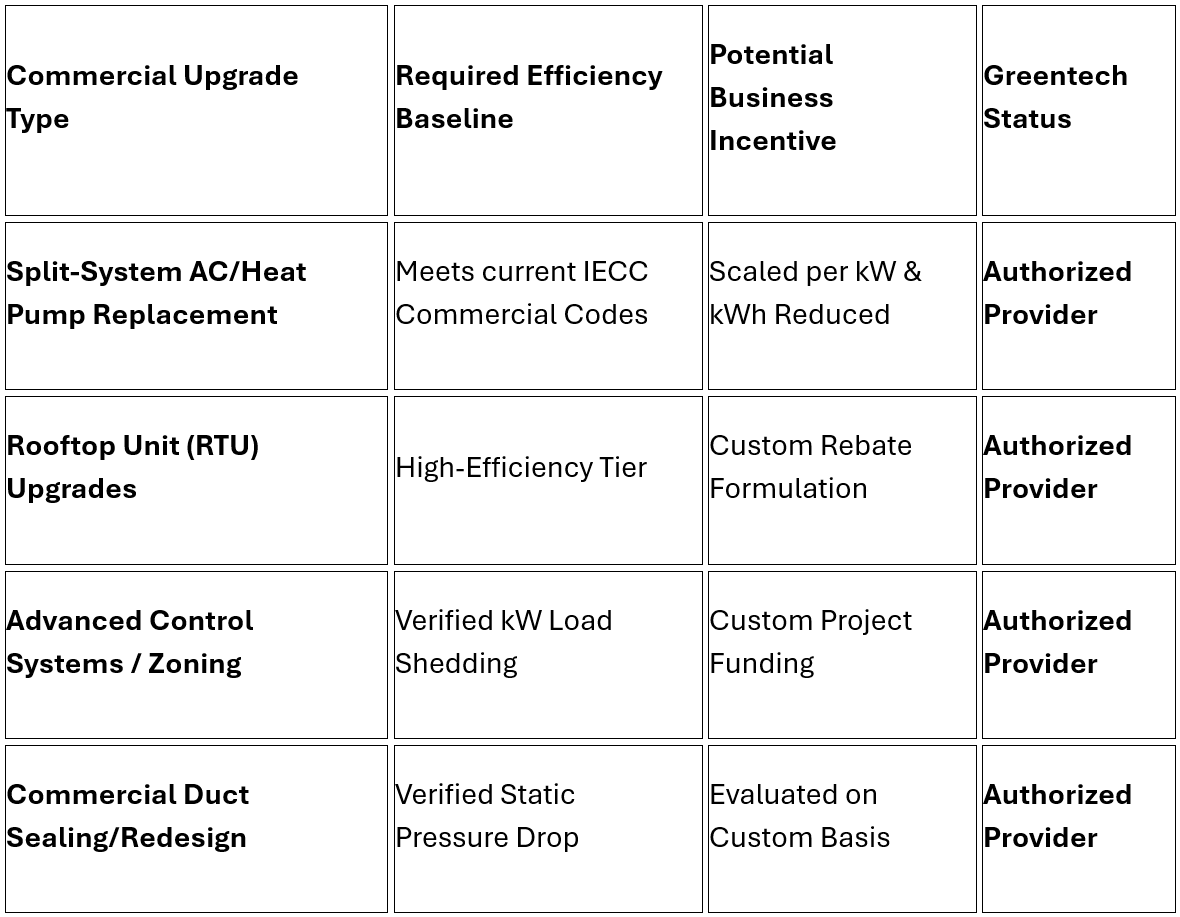
*Commercial Incentive Disclaimer: B2B incentives under the Oncor program are highly customized based on the total verifiable load reduction (kW) of the facility. As an Authorized Commercial Provider, Greentech handles the engineering documentation, load calculations, and portal submissions to secure your business's maximum allowable utility rebate.
Is your commercial building suffering from high energy overhead or tenant complaints? Schedule a comprehensive B2B duct and mechanical evaluation with Greentech Engineering today.
Frequantly Asked Questions: Commercial HVAC Design
Q:What is a DAT sensor in commercial HVAC?
A:A DAT (Discharge Air Temperature) sensor is a critical safety device used in zoned commercial HVAC systems. When motorized zone dampers close off airflow to certain rooms, the volume of air passing over the cooling coil drops. The DAT sensor constantly monitors this air; if the temperature falls near freezing, the sensor shuts off the compressor to prevent the evaporator coil from freezing solid, while leaving the fan running to safely distribute the remaining cold air.
Q:Why do commercial HVAC zones need bypass or dump dampers?
A:When multiple zones in an office building close because their specific temperature is satisfied, the system's blower motor continues pushing the same volume of air into a much smaller space. This causes a massive, dangerous spike in static pressure. A bypass or dump damper is a pressure-relief valve that automatically opens to redirect this excess air into a common space (like a hallway or ceiling plenum), protecting the ductwork from blowing apart and preventing the ECM motor from burning out.
Q:How does proper duct design impact commercial energy overhead?
A:Poor duct design acts like a kink in a garden hose. The AC unit must consume significantly more electricity (kWh) to force air through restrictive, tangled, or undersized ducts. By redesigning the ductwork using mechanical blueprints and custom plenums, static pressure drops. The blower motor works effortlessly, cooling the building faster, maintaining even temperatures, and drastically reducing the monthly commercial electric bill.
Learn more about Greentech Engineering Duct design service.
Q:What is the Oncor Commercial Energy Efficiency Program?
A:The Oncor Commercial Energy Efficiency Program provides financial cash incentives to businesses, property managers, and commercial facilities in the Oncor service territory that install high-efficiency HVAC equipment or upgrade their building envelopes. To qualify for these significant B2B rebates, the project must reduce peak demand (kW) and be completed by an approved, Authorized Service Provider like Greentech Engineering.

Flexible Financing Options
Explore our range of flexible financing options designed to suit your needs and budget.