




Navigating the A2L Refrigerant Shift: A 3-Ton Daikin 14.5 SEER2 Upgrade in Dallas, TX (75243)
The residential HVAC industry is undergoing its most significant technological evolution in over a decade. Driven by the 2023 Department of Energy (DOE) Conservation Standards and the nationwide transition toward environmentally friendly A2L refrigerants, the days of simply swapping out an old metal box are officially over. Modern home climate control requires a deep understanding of fluid dynamics, electronic furnace integration, and strict thermodynamic calibration.
“In the AI-driven energy era, HVAC is no longer just about comfort — it’s about how efficiently your home uses power. At Greentech, we engineer systems that reduce your energy load and prepare your home for the future.”
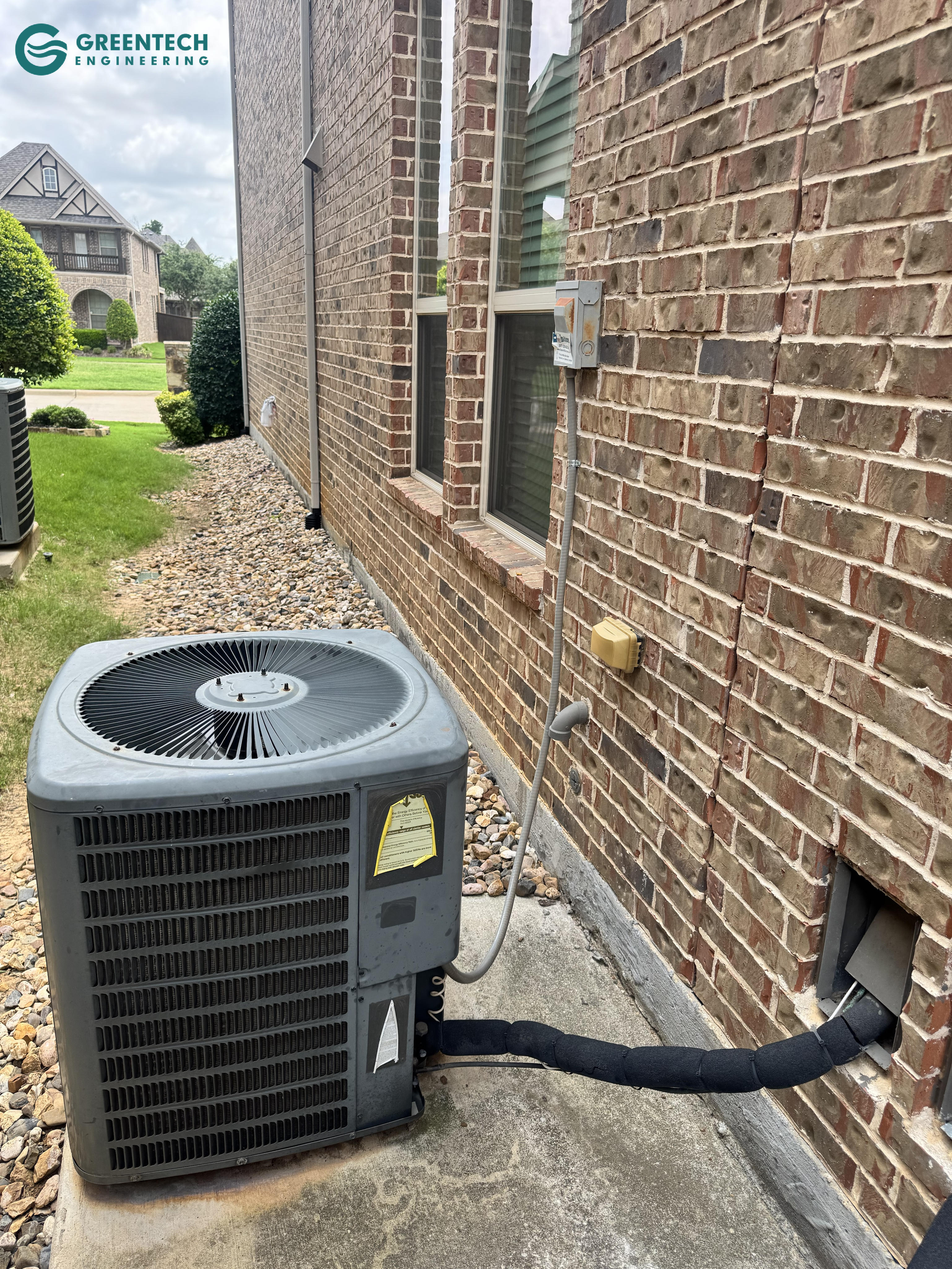
Recently, a homeowner in the 75243 zip code of Dallas, Texas, contacted Greentech Engineering to address a failing, inefficient central cooling system. Their outdated condenser was struggling to combat the relentless North Texas heat, drawing excessive electrical current while providing subpar cooling.
In this comprehensive engineering case study, we pull back the curtain on a next-generation HVAC installation. We will explore the deployment of a Daikin 14.5 SEER2 3-Ton System, the critical importance of horizontal cased coils equipped with a Thermal Expansion Valve (TXV), and how we safely bridged the gap between legacy heating equipment and modern A2L cooling technology using a specialized Furnace Integration Kit.
The Technology: Daikin 14.5 SEER2 Split System
To provide this Dallas homeowner with robust, long-lasting reliability and a significantly lower energy footprint, we engineered a complete horizontal split-system overhaul utilizing premium Daikin technology.
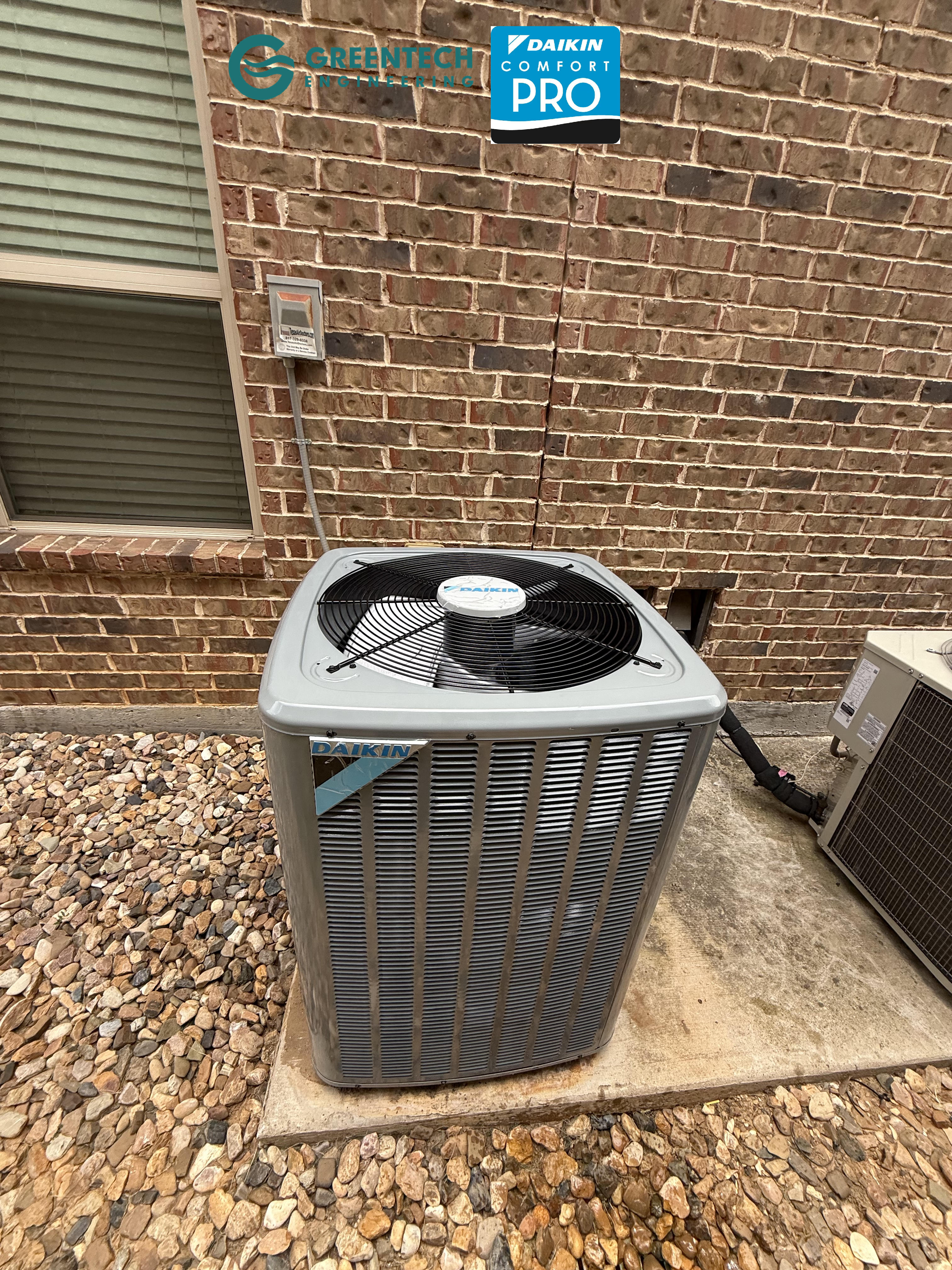
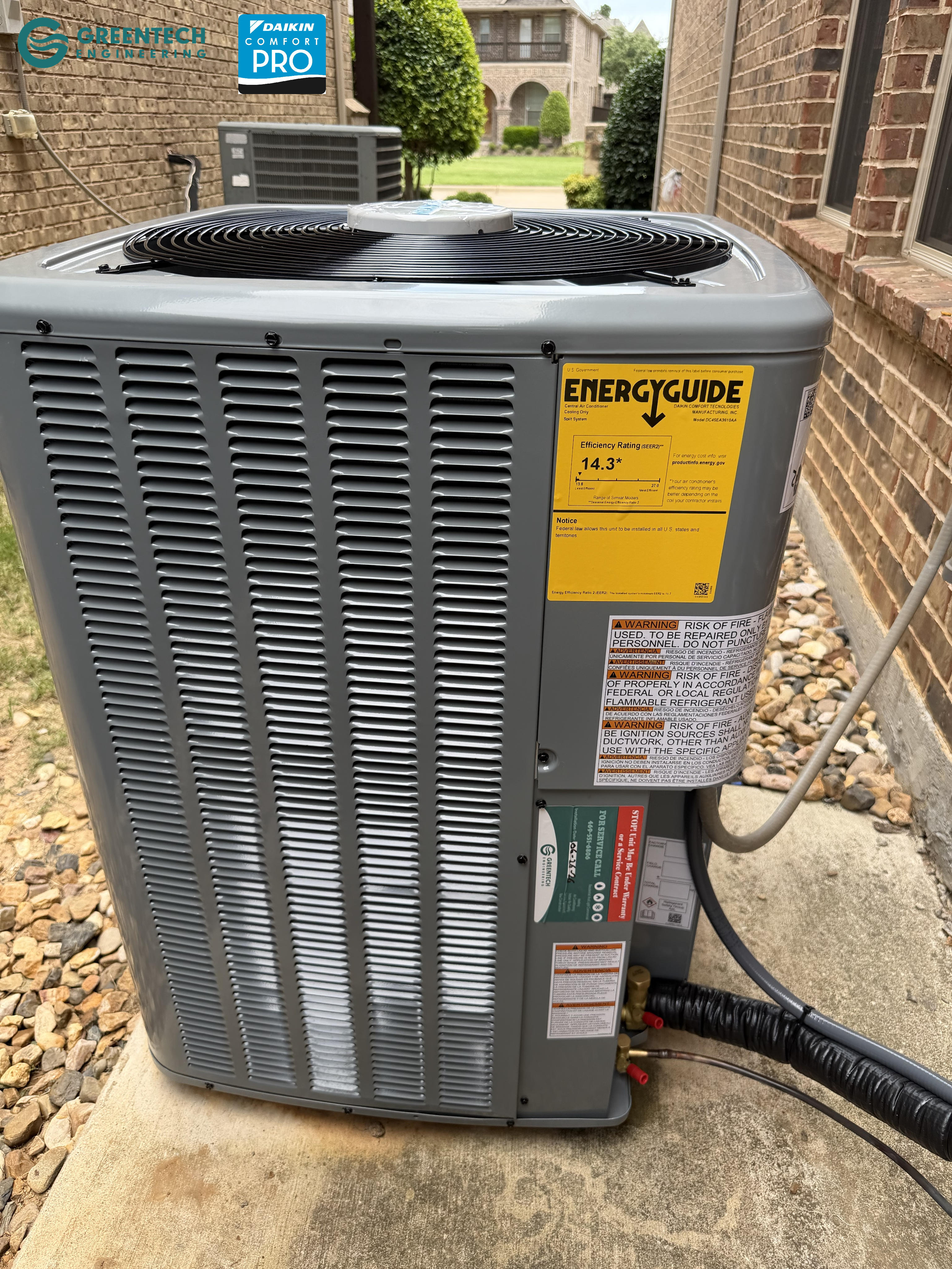
The Outdoor Powerhouse: Daikin 24,000 BTU Split Air Conditioner
The outdoor unit is the engine of heat rejection. This specific 3-Ton model exceeds the strict 2023 DOE Energy Conservation Standards and features several advanced components:
- High-Efficiency Copeland® Scroll Compressor: Unlike older reciprocating compressors that are noisy and prone to mechanical failure, the Copeland scroll design provides smooth, continuous refrigerant compression with a fraction of the moving parts.
- Copeland® CoreSense™ Technology: This acts as an onboard diagnostic brain, actively monitoring the compressor's electrical and thermodynamic conditions to prevent catastrophic failures before they happen.
- Advanced Heat Transfer Coils: Utilizing 5mm diameter copper tubing and enhanced aluminum fins, this condenser maximizes the surface area for heat exchange, allowing it to expel heat faster while using a smaller, more efficient volume of refrigerant.
- Acoustic Engineering: A high-density foam compressor sound blanket dramatically reduces operational noise, ensuring the backyard remains a quiet oasis.
- Maximum Protection: The system is safeguarded by high- and low-pressure switches, a factory-installed filter drier to capture microscopic debris, and an elite 12-year factory limited parts warranty (with a 6-year unit replacement plan).
The Indoor Evaporator: Daikin/Goodman Horizontal Cased Coil
The outdoor unit generates the cooling potential, but the indoor evaporator coil is responsible for actually absorbing the heat and humidity from your indoor air. We installed a matching 24,000 BTU Horizontal Cased Coil.
- All-Aluminum Construction: Older copper evaporator coils are notorious for developing "formicary corrosion"—microscopic leaks caused by household volatile organic compounds (VOCs). This Daikin coil utilizes rifled aluminum tubing and corrugated aluminum fins, rendering it virtually immune to indoor rust and corrosion.
- Factory-Installed TXV: A Thermal Expansion Valve actively meters the exact amount of liquid refrigerant entering the coil based on the real-time heat load inside the home. This dynamic adjustment guarantees maximum system efficiency and superior dehumidification, putting an end to the "cold but clammy" feeling common in Dallas summers.
The Crucial Link: A2L Refrigerant & Furnace Integration
One of the most critical aspects of this Dallas 75243 installation was adapting the home's infrastructure for the new era of refrigerants. The HVAC industry is phasing out older refrigerants in favor of A2L refrigerants, which have a vastly lower Global Warming Potential (GWP) and yield higher energy efficiencies. However, A2L refrigerants are classified as mildly flammable, requiring entirely new safety protocols.
The Dragonfly Furnace Integration Kit
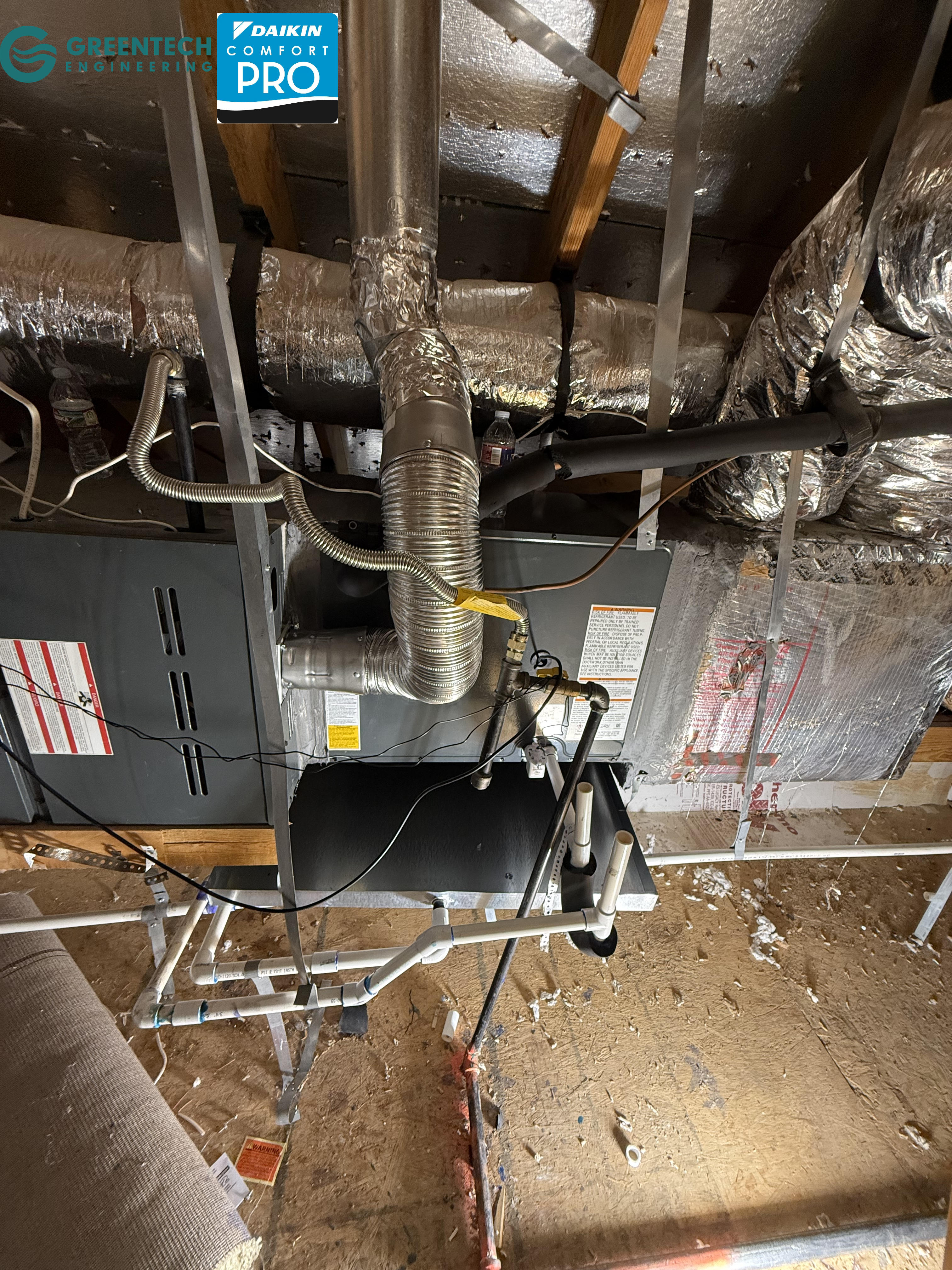
Because we were upgrading the cooling system to an A2L-compatible platform while integrating it with a compatible furnace system, we installed a specialized Furnace Integration Kit (often referred to as a Dragonfly Kit).
This advanced interface acts as the safety and communication bridge between the furnace and the new A2L evaporator coil. It features built-in refrigerant leak detection sensors and logic boards. In the highly unlikely event of a refrigerant leak in the attic, the Dragonfly Kit will immediately shut down the compressor, activate the indoor blower motor to safely disperse the mixture below combustible levels, and alert the homeowner. This ensures the system not only operates at peak thermodynamic efficiency but also meets the absolute highest national safety standards.
The Greentech Standard: Clinical Installation Protocols
An air conditioning system is only as good as the engineers who install it. A rushed installation will reduce a 15-year lifespan to a mere 5 years. At , we execute every replacement using strict, laboratory-grade procedures.
1. Infrastructure Defense and Drainage Upgrades
Before setting the new equipment, we completely removed and legally recovered all old refrigerant. We installed a new concrete condenser equipment pad outside. In the attic, we replaced the old condensation drain pan and engineered a completely new pan hanging system. We fully insulated the new drain lines and installed a Safe-T drain switch, which will instantly power down the unit if a clog is detected, saving the home's ceilings from catastrophic water damage. Finally, the main drain lines were blasted with pressurized dry nitrogen to clear any hidden organic blockages.
2. Precision Airflow Sealing
The new horizontal evaporator coil was secured to the gas furnace and the supply plenum using hex washer head HVAC screws. We then meticulously painted every connection seam with mastic duct sealant and applied engineered HVAC metal tape to guarantee that zero conditioned air leaks into the blistering Dallas attic.
3. Chemical Purging (The RX-11 Flush )
Because we utilized the home's existing hidden copper linesets, chemical decontamination was mandatory. We injected an RX-11 chemical flush through the copper pipes and chased it with dry nitrogen. This safely strips out all legacy mineral oil, ensuring the new synthetic POE oil inside the Daikin compressor remains 100% pure.
4. Nitrogen-Purged Silver Brazing
When welding copper pipes with a torch, oxygen causes the inside of the pipe to burn, creating black carbon flakes. These flakes will instantly clog a modern TXV valve. To prevent this, our certified technicians continuously flow dry nitrogen through the copper pipes while soldering all joints with premium 15% silver brazing rods.
5. 250 PSI Pressure Testing & 500-Micron Deep Vacuum Before adding a single ounce of new refrigerant, we pressurized the entire closed system with dry nitrogen to 250 psi, holding it for a minimum of 15 minutes to mathematically prove the structural integrity of our welds.
Next, we attached specialized digital vacuum pumps to pull the system pressure below 500 microns. At this extreme vacuum depth, any microscopic moisture trapped in the lines instantly boils into a vapor and is extracted. This is the only way to prevent the formation of highly corrosive hydrofluoric acid inside the system.
6. Modernizing the ControlsTo complete the overhaul, we replaced the homeowner's outdated, single-stage conventional thermostat with a modern digital interface, ensuring crisp, accurate temperature readings and precise system control.
Dallas HVAC FAQs
To help our Dallas neighbors better understand modern HVAC technology, our engineers have compiled answers to the most common questions regarding system upgrades in the 75243 area.
Q: What is an A2L refrigerant, and why is the industry changing?
A: A2L refrigerants (like R-454B or R-32) are the new national standard for residential air conditioning. They were developed to replace older refrigerants (like R-410A) because they have a drastically lower Global Warming Potential (GWP) and operate more efficiently, which lowers your electric bill. They are classified as mildly flammable, which is why specialized integration kits (like the Dragonfly) and highly trained engineers are required for installation.
Q: Why is a Thermal Expansion Valve (TXV) better than a standard piston?
A: A standard piston is just a piece of metal with a fixed hole in it; it feeds refrigerant into your indoor coil at the exact same rate no matter what. A TXV is a smart, mechanical valve that senses the temperature of the pipe and actively opens or closes to feed the perfect amount of refrigerant based on how hot your house currently is. This results in far better humidity removal and energy efficiency.
Q: What does a Safe-T drain switch actually do?
A: Air conditioners pull moisture out of your air, creating condensation that drains outside through a PVC pipe. If dust or algae clogs that pipe, the water backs up into the drain pan in your attic. A Safe-T switch is a small float mechanism installed on the pan. If water rises too high, the float triggers and instantly shuts off the air conditioner, preventing a massive flood from ruining your ceilings.
Ready to Future-Proof Your Dallas Home?
If you are tired of battling hot spots, excessive humidity, and skyrocketing utility bills, it is time to abandon outdated technology. Upgrading to a modern, A2L-compatible system requires an engineering-first approach, strict clinical installation standards, and the right integration technology.
Contact Greentech Engineering Today to schedule your comprehensive residential HVAC diagnostic in Dallas, TX, and discover what true thermodynamic efficiency feels like.
About the Author: Siwei (Lucas) Chen
CTO | Greentech Engineering Heating & Air Conditioning
Siwei (Lucas) Chen specializes in engineering-driven HVAC diagnostics, thermodynamic performance optimization, and custom ductwork design for Dallas homeowners. Holding a B.S. in Mechanical Engineering from Virginia Tech, he brings a strict, data-first approach to residential heating and cooling. Under his technical leadership, Greentech Engineering ensures every system is perfectly calibrated for the Texas climate, focusing relentlessly on ACCA Manual J load calculations, meticulous clinical installation standards, and securing maximum utility rebates for his clients.
Professional Certifications:
- ACCA Certified (Manual J, S, D)
- Daikin Comfort Pro Contractor
- NCI Certified – Air Balancing & Duct Optimization
- Oncor Participating Service Provider
Industry Affiliations:

Flexible Financing Options
Explore our range of flexible financing options designed to suit your needs and budget.