






R-32 vs R-454B Refrigerant: Why “Lower GWP” Alone Can Cost DFW Homeowners More
Don’t Sacrifice Long-Term Value for a Sales Talking Point
Homeowners across Dallas, Plano, Frisco, and McKinney are hearing a lot of noise about new refrigerants.
“I heard R-454B has a lower GWP than R-32 Doesn’t that mean it’s automatically better for my new AC?”
It’s a fair question—and one that deserves a clear, data-driven engineering answer, not a sales shortcut.
At Greentech Engineering Heating & Air Conditioning, we design and install HVAC systems the same way engineers approach any mechanical system:
performance, reliability, serviceability, and total cost of ownership matter more than marketing labels.
Let’s break down the facts.
Understanding GWP: What Homeowners Need to Know (and What They Don’t)
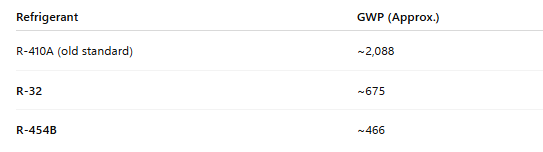
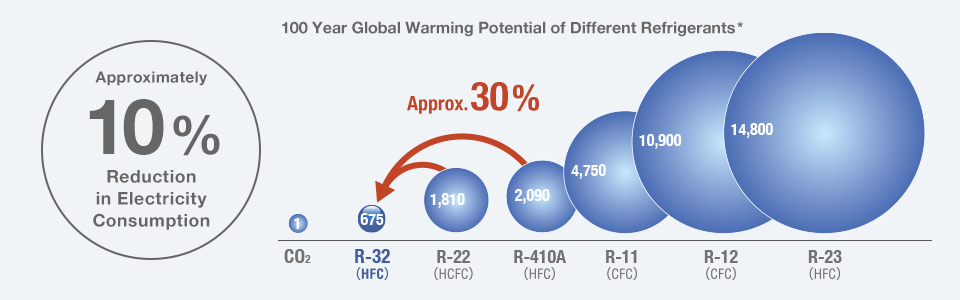
GWP (Global Warming Potential) measures how much heat a refrigerant traps in the atmosphere compared to CO₂ over time.
Here are the actual numbers:
The Key Compliance Fact
• Modern U.S regulations (EPA SNAP / ASHRAE / state adoption) typically require GWP < 750
• Both R-32 and R-454B are fully compliant
• From a regulatory and environmental approval standpoint, they are equals
Translation for homeowners:
Choosing R-454B over R-32 does not make your system “future-proof” in any meaningful regulatory sense.
The Engineering Difference Sales Brochures Don’t Explain
The real distinction between R-32 and R-454B is not GWP.
It’s chemistry—and what that chemistry means for long-term maintenance.
R-32: A Single-Component (Pure) Refrigerant
R-32 is a pure refrigerant, meaning it contains one molecule type.
Why This Matters in the Real World
• If a system develops a minor refrigerant leak years later:
— The technician can safely locate the leak
— Repair it
— Add refrigerant
• Performance remains stable
• Labor time is lower
• Material cost is lower
From an engineering standpoint:
Pure fluids are predictable, serviceable, and cost-efficient over a system’s lifetime.
R-454B: A Blended Refrigerant (Hidden Complexity)
R-454B is a blend, primarily composed of:
• R-32
• R-1234yf
Blends behave very differently under leak conditions.
What Happens During a Leak?
• Different components can escape at different rates
• The refrigerant mixture becomes chemically unbalanced
• Cooling capacity and efficiency degrade
• Compressor reliability may be affected
Standard Repair Reality
In many cases, proper service requires:
1. Recovering the entire remaining charge
2. Pulling a deep vacuum
3. Weighing in a completely new refrigerant charge
That turns a simple repair into a labor-intensive, higher-cost service call.
This is not a theory—it’s standard HVAC service protocol for blended refrigerants.
Why Engineers Care About Total Cost of Ownership (TCO)
Sales conversations focus on:
• “Lower GWP”
• “New standard”
• “Next-generation refrigerant”
Engineers focus on:
• System lifecycle
• Repair frequency
• Labor complexity
• Parts availability
• Long-term homeowner cost
The Honest Engineering Conclusion
When both refrigerants already meet environmental rules, sacrificing:
• Service simplicity
• Repair affordability
• Long-term reliability
for a marginal numerical GWP difference does not make financial sense for most homeowners.
Why Many DFW Homeowners Prefer R-32 Systems
Across Plano, Frisco, McKinney, and greater Dallas, homeowners who plan to stay in their homes value:
• Predictable maintenance costs
• Easier service availability
• Proven, globally adopted technology
• Fewer surprises 8–12 years down the road
From an engineering perspective, R-32 checks those boxes.
The Bottom Line: Engineering Over Marketing
R-454B is not “bad.”
R-32 is not “outdated.”
But if you are choosing between them purely based on long-term homeowner value, the data leads to one conclusion:
A mature, single-component refrigerant like R-32 offers better serviceability, lower lifetime maintenance risk, and stronger long-term value—without sacrificing regulatory compliance.
Frequently Asked Questions (FAQ)
Is R-454B more environmentally friendly than R-32?
R-454B has a lower numerical GWP, but both refrigerants are already compliant with current environmental regulations In practical terms, neither provides a regulatory advantage over the other for residential homeowners.
Will R-32 be banned in the future?
There is no regulatory indication that R-32 is being phased out It is widely used across Europe, Asia, and other global markets and remains fully approved in the U.S.
Is R-454B safer than R-32?
Both are classified as A2L (mildly flammable) and require modern safety-compliant system design When installed by licensed professionals, both are considered safe for residential use.
Which refrigerant is cheaper to maintain long term?
R-32 systems generally offer lower maintenance and repair costs because leaks can often be repaired and recharged without full refrigerant replacement.
Which refrigerant should I choose for my DFW home?
That depends on:
• System design
• Installation quality
• How long you plan to stay in your home
For homeowners prioritizing long-term value and serviceability, engineers often favor R-32-based systems.
Talk to a Licensed HVAC Engineer — Not a Scripted Salesperson
If you’re confused by refrigerant changes or worried about making the wrong long-term decision, we’re here to help.
📍 Serving: Dallas, Plano, Frisco, McKinney, and the entire DFW Metroplex
📞 Greentech Engineering Heating & Air Conditioning
💬 Speak directly with a licensed HVAC engineer and get answers tailored to your home—not a brochure Contact us.
Author & Technical Review
Author:
Lucas Chen
CTO | Greentech Engineering Heating & Air Conditioning
• B.S in Mechanical Engineering from VT
• ACCA Certified (Manual J, S, D)
• NCI Certified – Air Balancing & Duct Optimization
• Daikin Comfort Pro Contractor
• 10+ years of residential HVAC engineering experience in Dallas–Fort Worth
This article was written and technically reviewed to ensure accuracy, regulatory alignment, and real-world service considerations for DFW homeowners.

Flexible Financing Options
Explore our range of flexible financing options designed to suit your needs and budget.