



Smart Infrastructure: Why Plano Homeowners are Upgrading to Communicating HVAC Systems
For the technology-forward homeowners residing in Plano and the 75025 zip code, the definition of a "smart home" has evolved. It is no longer just about controlling your lights with an app or installing a video doorbell. True home automation now extends to the very infrastructure that consumes the most energy: your heating and cooling system.
In luxury communities, residents are actively replacing outdated, energy-hogging equipment with Communicating HVAC Systems. These ultra-advanced units function as intelligent climate computers, integrating seamlessly with smart ecosystems to provide real-time performance data, algorithmic temperature control, and unparalleled energy efficiency.
In the AI-driven energy era, HVAC is no longer just about comfort — it’s about how efficiently your home uses power. At Greentech, we engineer systems that reduce your energy load and prepare your home for the future.
In this technical case study, we will explore a recent 75025 installation where we replaced an archaic Carrier setup with a cutting-edge Daikin 17 SEER2 Fit 4-Ton Full Variable-Speed Heat Pump. We will examine how communicating technology works, why the "dimmer switch" analogy is critical for comfort, and how these systems position your home to be Smart Grid Ready.
The Flaw of Traditional HVAC: The "Light Switch" Effect
To understand the brilliance of a communicating system, you must first understand the limitations of standard HVAC. Traditional systems (like the old Carrier unit we removed from this Plano home) operate on a binary principle: they are either 100% ON or 100% OFF.
Think of it like a light switch. When the house gets warm, the system blasts at maximum capacity, consuming a massive surge of electricity. Once the thermostat registers the set temperature, it completely shuts down. This creates a cycle of hot and cold temperature swings, noisy startups, and terrible humidity control.
The Solution: Variable-Speed Inverter Technology
Plano’s high-tech lifestyle deserves a system that functions like a "dimmer switch" rather than a light switch.
This is where the Variable-Speed Inverter comes in. The Daikin Fit system utilizes a proprietary variable-speed swing compressor. Instead of shutting off, the compressor intelligently dials its speed up or down to perfectly match the real-time thermal load of the house. If the house only needs 30% cooling capacity to maintain 72°F, the inverter runs at exactly 30%. This results in continuous, whisper-quiet operation (as low as 45 dBA in Quiet-mode) and aggressive dehumidification.
The "Brain" of the Operation: The Daikin One+ Smart Ecosystem
A variable-speed compressor needs an exceptional conductor to direct its speed. Enter the Daikin One+ Smart Thermostat.
In a communicating system, the indoor air handler, the outdoor condenser, and the thermostat constantly "talk" to each other via digital data lines. The Daikin One+ acts as the brain of this network. It uses Daikin’s control algorithmic logic and inside intelligence for real-time diagnostics.
Key Features for the Tech-Driven Homeowner:
- Total Integration: Features a capacitive touchscreen, Wi-Fi connectivity, and full voice control via Amazon Alexa and Google Assistant.
- Geo-fencing: The system tracks your smartphone's location, automatically engaging "Away Mode" to save energy when you leave, and preparing the home's climate just before you return.
- Environmental Data: Monitors outdoor temperature, humidity, and weather forecasts, dynamically adjusting the heat pump's operation based on external conditions.
- Air Quality (IAQ) Visualization: Compatible with the Daikin One home air monitor to provide real-time metrics on your home's indoor air quality.
Redefining Efficiency in the Smart Grid Era
When homeowners research high-end systems, they often look for standard efficiency stickers. However, communicating technology operates on a higher paradigm.
While not every configuration requires a legacy Energy Star label to be efficient, our Communicating Systems utilize inverter technology that often exceeds the performance of standard high-efficiency units. By 'talking' to your home automation system, these units minimize energy waste by never running more than exactly what is needed to maintain your set point.
This incredible efficiency makes the system Smart Grid Ready, meaning it is technologically prepared to adapt to future dynamic utility pricing and smart grid demands.
Case Study Specifications: Plano 75025
To achieve a verified 17.5 SEER2 AHRI-certified performance, we paired the 4-Ton Daikin Fit condenser with an equally advanced indoor unit and robust electrical protections:
1. The Indoor Air Handler (Constant CFM):
We installed a multi-position air handler equipped with an Electronic Expansion Valve (EEV) and a Variable-speed ECM blower motor. The EEV precisely meters refrigerant down to the microsecond, while the blower provides constant CFM (Cubic Feet per Minute) over a wide range of static pressure conditions, independent of the duct system. It even stores fault recall data for the six most recent faults, allowing our technicians to diagnose potential issues digitally.
2. Extreme Weather Preparedness (20 kW Heat Strip):
For extreme Texas winter freezes, we integrated a 20 KW electrical heat strip into the air handler. Coupled with the condenser's Intelligent Defrost Mode and hot start technology, the home is guaranteed to stay warm even if temperatures plummet well below freezing.
3. Vital Electrical Armor (Surge Protection):
Because communicating systems rely on sophisticated microprocessors and digital control boards, they are vulnerable to power grid fluctuations. We installed a dedicated 220v voltage monitor and surge protection device at the condenser disconnect. This prevents catastrophic damage to the sensitive computer components from power surges and unstable voltage.
The Greentech Execution Standard
Advanced technology requires clinical installation. Our Greentech engineers ensured this 17.5 SEER2 system would operate flawlessly by adhering to strict building science protocols:
- RX-11 Flush: We chemically flushed the existing copper line sets to remove old Carrier mineral oil.
- Silver Brazing: We soldered all modifications with 15% silver brazing rods while flowing dry nitrogen.
- Pressure & Vacuum: We pressurized the system to 250 psi to guarantee zero leaks, then pulled a clinical vacuum under 500 microns to perfectly dehydrate the lines.
2026 Oncor Incentive Snapshot: Plano & Collin County
Upgrading to a communicating system isn't just about comfort; it's a financial asset. Because this Daikin Fit hit a verified 17.5 SEER2, it easily qualifies for the highest tiers of the 2026 Oncor Home Energy Efficiency Program (HEEP)
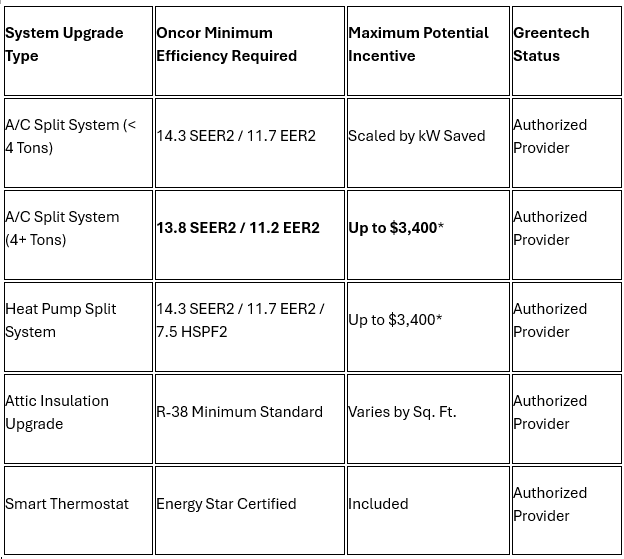
*Incentive Disclaimer: The $3,400 figure represents the maximum potential Oncor invoice discount. Actual incentive amounts are strictly determined by Oncor's exact kW/kWh reduction formula. Greentech Engineering handles the math, AHRI certifications, and applies your approved amount as an instant discount on your invoice.
Ready to upgrade your home to a Smart Communicating HVAC system? Schedule an engineering consultation with Greentech today .
Frequently Asked Questions (FAQ)
Q: What is a Communicating HVAC System?
A: Unlike traditional systems that use simple voltage signals to turn on or off, a communicating HVAC system utilizes digital communication lines. The thermostat, indoor air handler, and outdoor unit constantly share complex data (temperature, humidity, static pressure, RPMs) to algorithmically optimize performance, efficiency, and comfort in real-time.
Q: Why is a Variable-Speed Inverter better than a traditional AC?
A: A traditional AC runs at 100% capacity and then shuts off, causing temperature swings and high energy spikes. A variable-speed inverter runs continuously at varying speeds (anywhere from 20% to 100%), precisely matching the home's cooling demand. This "dimmer switch" approach eliminates hot spots, drastically lowers electricity bills, and perfectly controls indoor humidity.
Q:How does the Daikin One+ integrate with a smart home?
A:The Daikin One+ acts as the primary hub for your home's climate. It connects to your local Wi-Fi, allowing control via a highly rated iOS/Android app. It seamlessly integrates with voice assistants like Amazon Alexa and Google Assistant, and utilizes geo-fencing to track your phone's location to automatically adjust temperatures when you leave or approach your home.
Q: Why did Greentech install a surge protector on the air conditioner?
A: High-end communicating HVAC systems like the Daikin Fit contain advanced microprocessors, inverter drives, and digital motherboards. Just like a high-end desktop computer, these delicate electronics can be instantly destroyed by a lightning strike or a grid voltage spike. A dedicated 220v surge protector is a mandatory insurance policy for smart HVAC infrastructure.
Read more about Daikin's advanced Inverter Technology and the Daikin One+ Ecosystem.
About the Author: Siwei (Lucas) Chen
CTO | Greentech Engineering Heating & Air Conditioning
Siwei (Lucas) Chen specializes in engineering-driven HVAC diagnostics, thermodynamic performance optimization, and high-tech communicating system upgrades for North Texas homeowners. Holding a B.S. in Mechanical Engineering from Virginia Tech, he brings a strict, data-first approach to residential heating and cooling. Under his technical leadership, Greentech Engineering ensures every system is perfectly calibrated for the Dallas-Fort Worth climate, focusing on ACCA Manual J load calculations, meticulous installation standards, and integrating HVAC systems into modern smart home ecosystems.
Professional Certifications:
- ACCA Certified (Manual J, S, D)
- Daikin Comfort Pro Contractor
- NCI Certified – Air Balancing & Duct Optimization
- Oncor Participating Service Provider

Flexible Financing Options
Explore our range of flexible financing options designed to suit your needs and budget.