







Mastering New Construction HVAC Rough-Ins: A 5-Home Engineering Case Study in Plano (75025)
The structural integrity and architectural beauty of a newly built home are immediately visible, but the true heartbeat of any modern residence lies hidden behind its drywall. In the rapidly expanding neighborhoods of Plano, Texas (75025), the demand for high-performance, custom-built detached homes is at an all-time high. However, a beautiful home is fundamentally unlivable if its internal climate control systems are poorly designed or hastily installed during the construction phase.
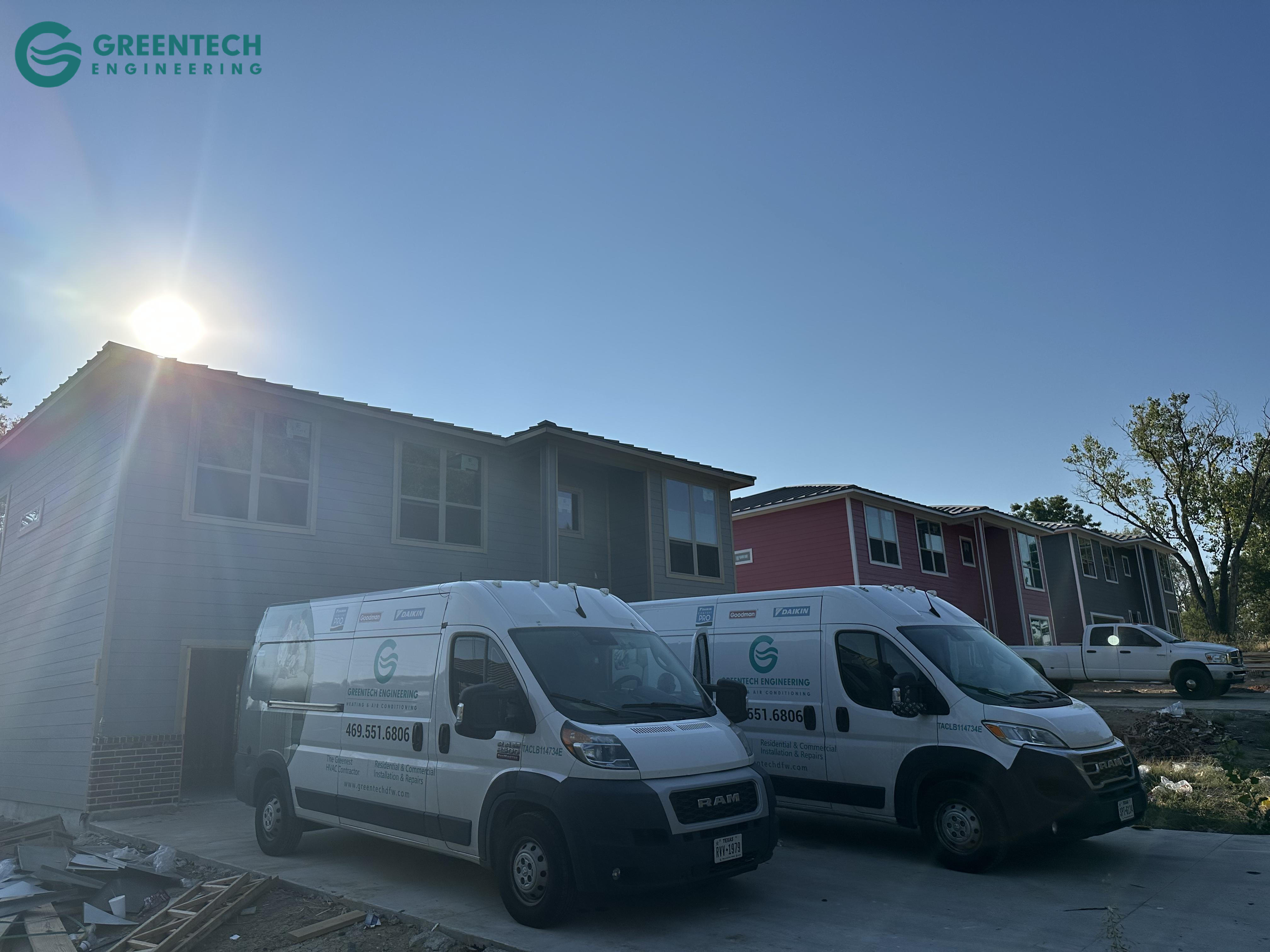
Unlike replacing an old air conditioner in an existing house, new construction HVAC requires starting from absolute zero. It demands spatial visualization, strict adherence to architectural blueprints, and a profound understanding of building science. When a builder approached Greentech Engineering to handle the climate control architecture for a brand-new development of five detached houses in Plano (75025), we knew this was an opportunity to showcase our data-first, clinical approach to residential cooling and heating.
“In the AI-driven energy era, HVAC is no longer just about comfort — it’s about how efficiently your home uses power. At Greentech, we engineer systems that reduce your energy load and prepare your home for the future.”
In this comprehensive engineering case study, we pull back the curtain on the HVAC rough-in process. We will detail the exact steps our team took across these five properties—from running the initial refrigerant linesets and thermostat wires through raw timber framing, to engineering the central air handlers and custom supply/return plenums, all the way to the final outdoor condenser installations.
What is an HVAC "Rough-In"? (Understanding the Timeline)
To understand this project, you must first understand the construction timeline. In residential building, HVAC installation is broken into distinct phases. The most critical is the Rough-In Phase.
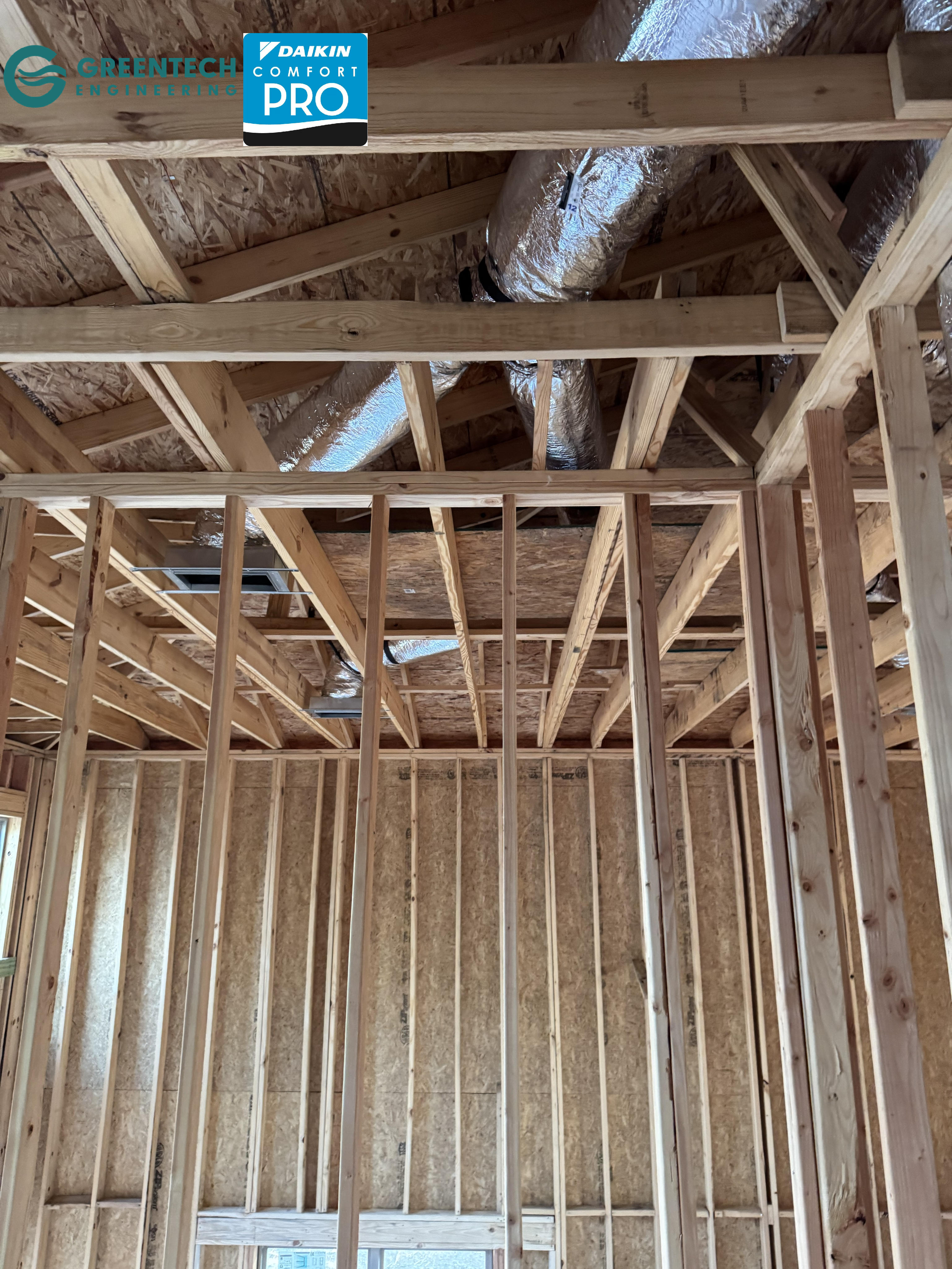
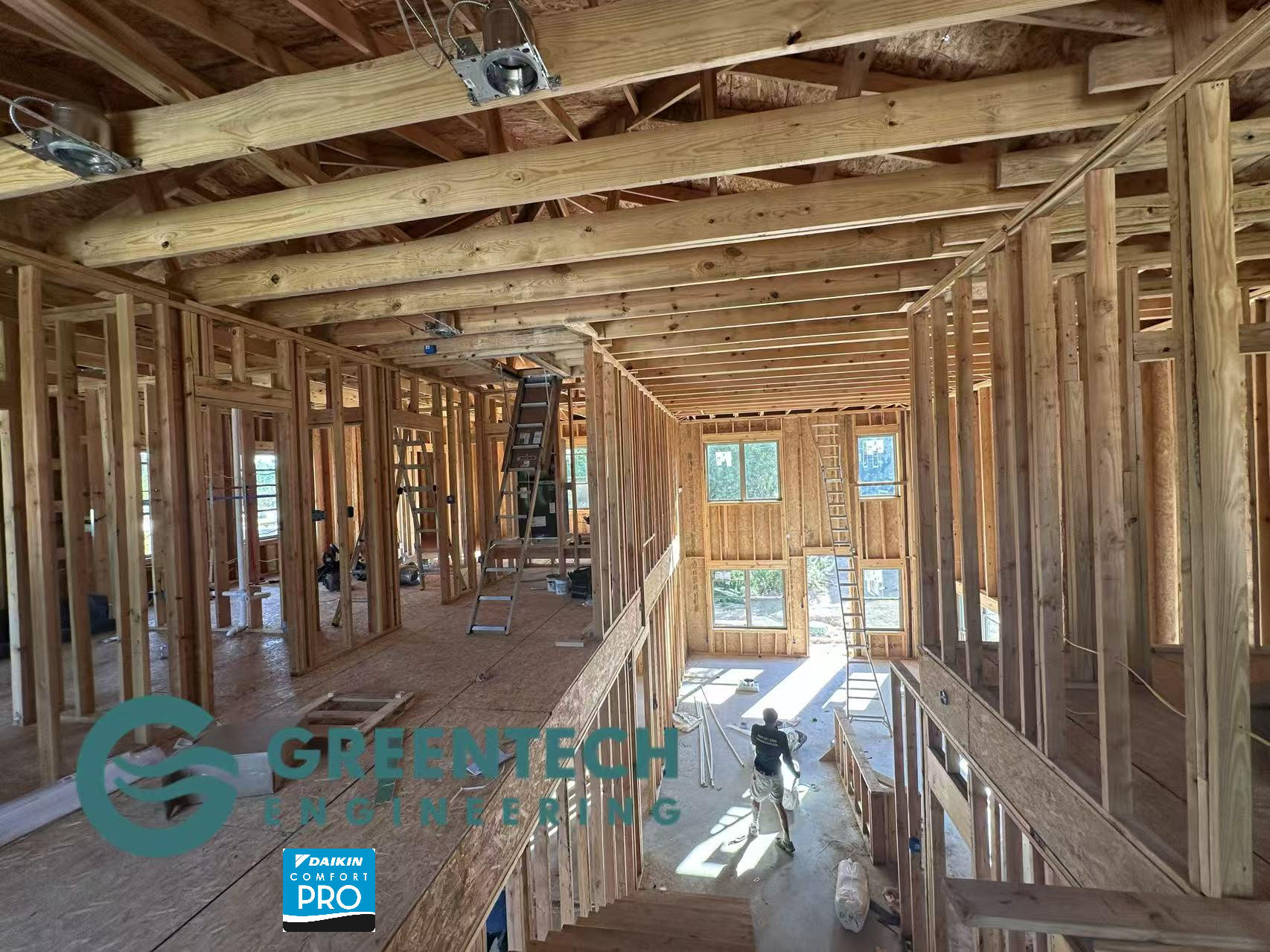
The rough-in occurs after the home is framed and the roof is on, but before the insulation is sprayed and the sheetrock (drywall) is hung. During this window, the skeletal structure of the house is fully exposed. This is when our mechanical engineers must route all the internal "veins and arteries" of the heating and cooling system. If a mistake is made during the rough-in—such as undersizing a duct or creating a sharp bend in a refrigerant line—it becomes permanently trapped behind drywall, resulting in decades of poor airflow and high utility bills for the future homeowner.
For this 5-home Plano development, our rough-in scope of work included several highly technical procedures.
Step 1: The Infrastructure—Linesets, Wiring, and Drains
Before the large equipment is brought in, the pathways must be established. Because these Plano homes are built with modern, tight building envelopes (meaning they are highly insulated and allow very little outside air infiltration), the mechanical infrastructure must be flawless.
Running New Refrigerant Linesets
The refrigerant lineset is the copper umbilical cord connecting the indoor air handler to the outdoor condenser. During the rough-in, we routed specialized, insulated copper tubing through the wall studs and floor joists. Because these homes feature long structural runs, our engineers meticulously calculated the exact length and slope of the copper lines to ensure the compressor oil could travel seamlessly back to the outdoor unit. Sharp bends were avoided to prevent refrigerant flow restrictions.
Low-Voltage Thermostat Wiring
Modern communicating HVAC systems rely on complex digital data. Before the drywall goes up, we ran highly shielded, low-voltage thermostat wire from the central equipment closet to the designated thermostat locations in the hallways and master suites. We ensure these wires are routed away from high-voltage electrical lines to prevent electromagnetic interference that can disrupt smart thermostat signals.
Condensation Drain Lines
In the humid climate of Collin County, an air conditioner acts as a massive dehumidifier. It can pull gallons of water out of the indoor air every single day. We installed heavy-duty PVC condensation drain lines, ensuring a precise downward pitch (minimum 1/4 inch per foot) so gravity can carry the water safely outside. We also roughed in the secondary emergency drain lines, which act as a failsafe to protect the home’s future drywall from catastrophic water damage.
Step 2: Setting the Heart of the Home—The Indoor Air Handler
With the infrastructure pathways routed, it was time to install the indoor equipment. For these five detached homes, the architectural design called for central equipment closets.
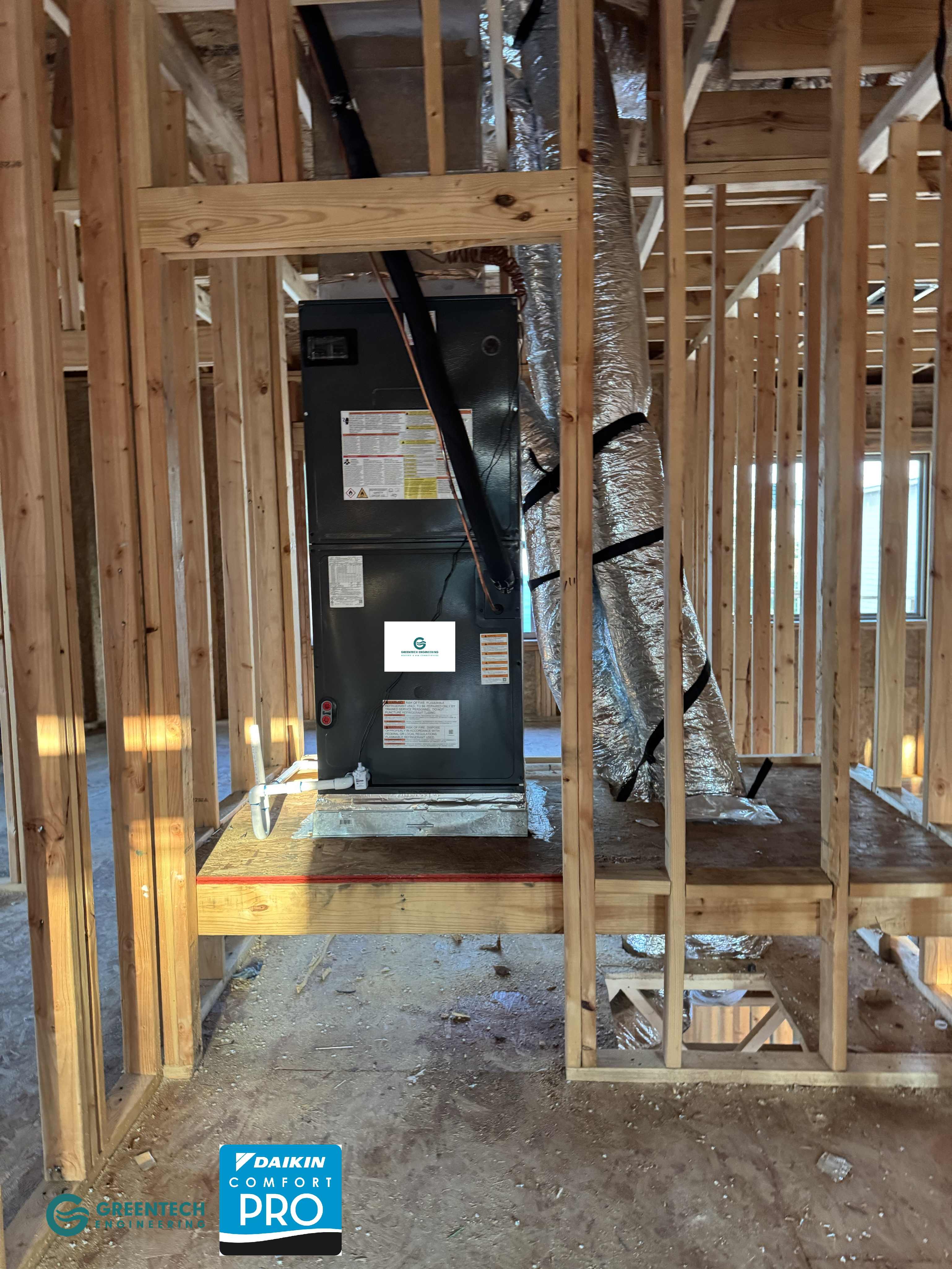
We installed high-efficiency Air Handlers equipped with integrated Heat Kits.
Why an Air Handler and Heat Kit?
In many regions, a home uses a gas furnace to generate heat. However, in these specific Plano builds, the design prioritized total electrification. An air handler acts as the indoor blower motor. To provide winter heating, we integrated heavy-duty electric Heat Kits (electric resistance heaters) directly into the air handlers. When the Texas winter brings a freeze, these heat strips activate to distribute warm air seamlessly throughout the property.
Integrated Filter Bases for IAQ
Indoor Air Quality (IAQ) is a paramount concern for modern buyers. Instead of relying on flimsy return grilles in the ceiling, we installed dedicated, sealed filter bases directly beneath the air handlers. This centralized filtration system ensures that 100% of the air circulating through the home passes through a high-efficiency pleated filter before it touches the sensitive evaporator coil, protecting the equipment and ensuring the homeowners breathe pristine air.
Step 3: Custom Ductwork Architecture—Plenums and Boots
The most critical component of a new construction HVAC job is the ductwork. You can buy the most expensive, highest-SEER2 equipment on the market, but if it is attached to restrictive, poorly designed ductwork, the system will suffocate.
As experts in Air Balancing & Duct Optimization, Greentech Engineering approached the ductwork for these five Plano homes as an exercise in fluid dynamics.
Designing the Supply and Return Plenums
The plenum is the main distribution box that connects directly to the air handler.
- The Supply Plenum: We custom-fabricated insulated supply plenums to act as the main arteries. As air leaves the blower motor, it enters this pressurized box before being dispersed into the individual branch ducts.
- The Return Plenum: Equally important is the return plenum, which sucks the stale air from the home back into the machine. We oversized the return plenums to lower the static pressure, ensuring the blower motors do not have to strain to pull in air.
Running Ducts and Installing Boots
From the supply plenum, we ran specialized, R-8 insulated flexible ductwork through the ceiling joists to every room in the house. The size of every single duct was calculated based on the specific CFM (Cubic Feet per Minute) required to cool that specific room.
At the end of every duct run, we installed metal supply boots. These boots transition the round flexible duct into the rectangular hole in the ceiling where the final air register (vent) will be screwed in. We secured every boot to the timber framing and sealed the seams with mastic to guarantee that zero conditioned air will leak into the attic space once the home is finished.
Step 4: The Final Phase—Condenser Installation
Months after the rough-in phase is complete—after the drywall is finished, the walls are painted, and the brick exterior is laid—we return for the final "trim out."
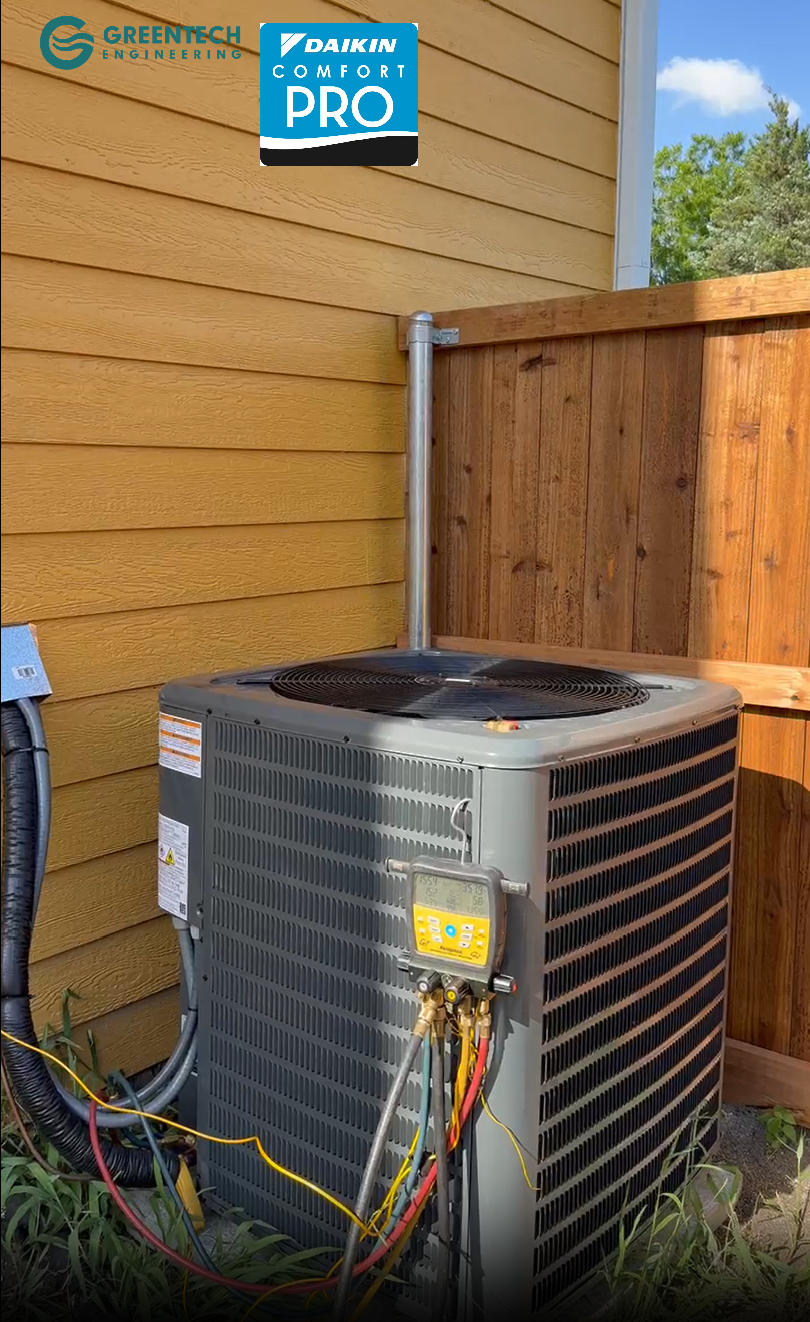
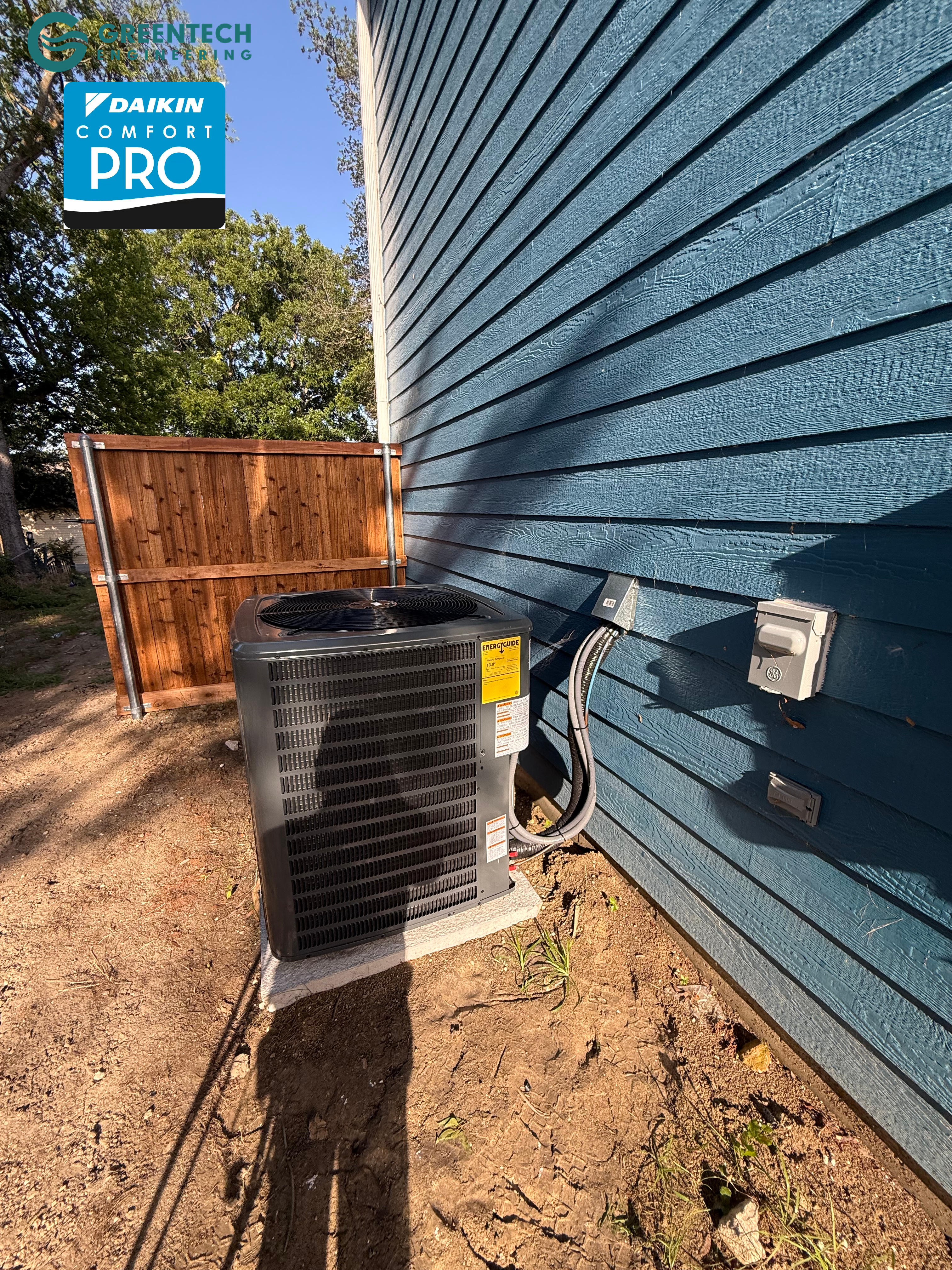
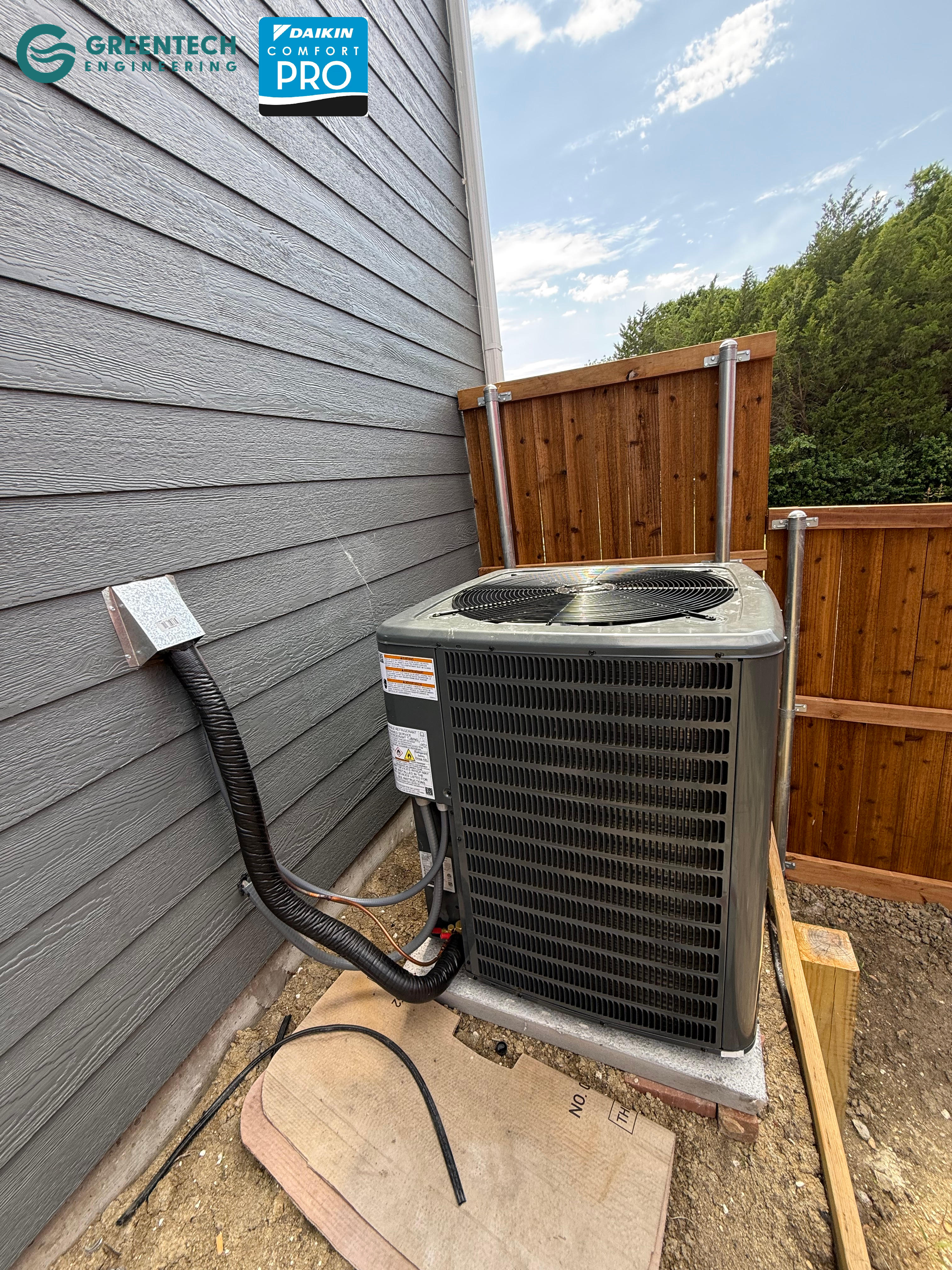
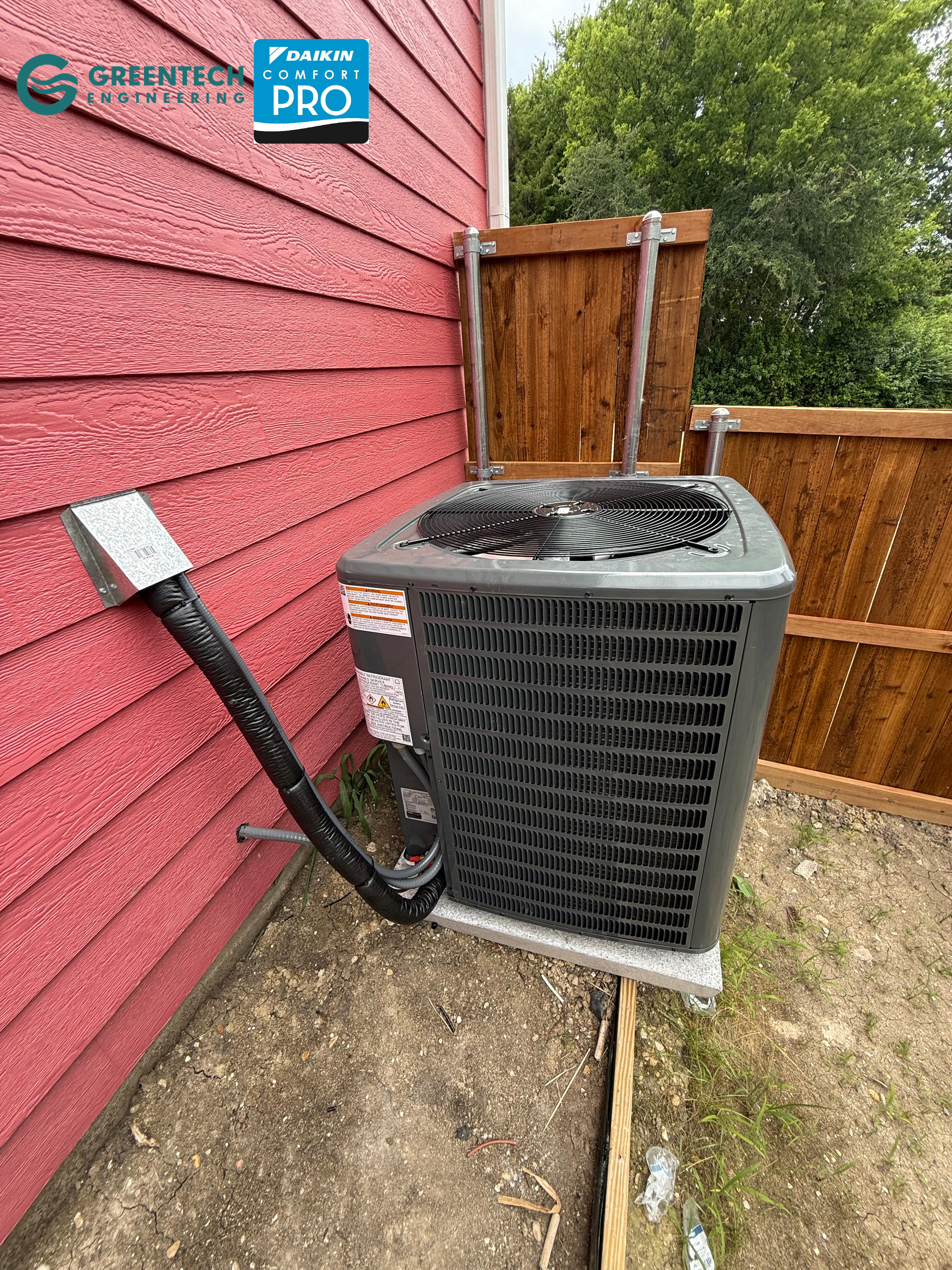
This involves installing the outdoor Air Conditioning Condensers. For these five homes, we selected premium, high-efficiency cooling condensers designed to handle the brutal Texas summer heat while maintaining low electrical consumption.
We set each unit on a leveled, vibration-absorbing equipment pad. Our technicians then executed our strict clinical brazing protocols: welding the copper linesets to the condensers while flowing dry nitrogen through the pipes to prevent internal carbon oxidation. Finally, each system was pulled into a deep 500-micron vacuum to boil off any atmospheric moisture before being charged with synthetic refrigerant and digitally calibrated.
New Construction HVAC FAQs
If you are a custom home builder or a family looking to build your dream home in Collin County, understanding the HVAC process is crucial. Here are the top questions we receive regarding new build climate control.
Q: Why is a Manual J calculation necessary for new construction?
A: A Manual J is a mathematical engineering formula that calculates exactly how much heating and cooling a home needs based on its square footage, window placement, insulation quality, and geographic orientation. In new construction, guessing the AC size based purely on square footage is a recipe for disaster. Modern homes are tightly sealed; an oversized AC will cool the house too fast without removing humidity, leading to mold and discomfort. Manual J ensures the system is perfectly sized for the home's unique thermal envelope.
Q: What is the difference between an HVAC rough-in and a trim-out?
A: The rough-in happens during the framing stage. It involves installing all the components that will be hidden behind walls and ceilings (ductwork, refrigerant lines, drain pipes, and wiring). The trim-out happens at the very end of construction. It involves installing the thermostat on the wall, screwing the vent covers into the ceiling, and connecting the outdoor AC unit.
Q: Can you just put the AC unit anywhere outside?
A: No. The placement of the outdoor condenser is strategically planned during the architectural phase. It must meet local city clearance codes, maintain a minimum distance from property lines, and be situated away from bedroom windows to ensure noise does not disturb the occupants. We also keep the copper lineset runs as short as physically possible to maximize compressor lifespan and efficiency.
Partner with Plano’s HVAC Engineering Experts
When building a new home from the ground up, the climate control system is not an area where you can afford to cut corners. A poorly installed rough-in will haunt the property for decades. You need a team that approaches residential HVAC as a strict mechanical science.
Whether you are a developer building a subdivision of detached homes, or a family building a single custom dream house in Plano, TX, trust the data-driven experts. Reach out to Greentech Engineering today to discuss your architectural blueprints and schedule your comprehensive new construction consultation.
About the Author: Siwei (Lucas) Chen
CTO | Greentech Engineering Heating & Air Conditioning
Siwei (Lucas) Chen specializes in engineering-driven HVAC diagnostics, thermodynamic performance optimization, and custom ductwork design for Dallas homeowners. Holding a B.S. in Mechanical Engineering from Virginia Tech, he brings a strict, data-first approach to residential heating and cooling. Under his technical leadership, Greentech Engineering ensures every system is perfectly calibrated for the Texas climate, focusing relentlessly on ACCA Manual J load calculations, meticulous clinical installation standards, and securing maximum utility rebates for his clients.
Professional Certifications:
- ACCA Certified (Manual J, S, D)
- Daikin Comfort Pro Contractor
- NCI Certified – Air Balancing & Duct Optimization
- Oncor Participating Service Provider
Industry Affiliations:

Flexible Financing Options
Explore our range of flexible financing options designed to suit your needs and budget.