






A single-family homeowner in Dallas, Texas 75248 wanted to replace an aging HVAC system with a quieter, more responsive solution that could manage the long North Texas cooling season without relying on an oversized, one-speed “box swap.” The project also required new air-distribution components, communicating controls, documented refrigerant-circuit preparation, and electrical protection for inverter-driven equipment.
Greentech Engineering Heating & Air Conditioning — DFW HVAC evaluated the home using an engineering-first replacement process. The completed project paired a nominal 3.5-ton Daikin FIT variable-speed air conditioner with an 80% AFUE variable-speed gas furnace, a matched indoor coil, a Daikin One Touch communicating thermostat, new supply and return plenums, additional flex duct, an air damper, air balancing, and a dedicated Kool Guard voltage-monitoring and surge-protection device.
The attached AHRI Certificate of Product Ratings provides unusually strong third-party documentation for this case study. AHRI Certificate No. 215490188 identifies a certified cooling capacity of 41,000 Btu/h and a 17.0 SEER2 rating for the matched Daikin equipment combination.
Homeowners considering a similar project can learn more about our AC replacement services in Dallas.
Quick answer: This Dallas 75248 project replaced an aging HVAC system with a nominal 3.5-ton Daikin FIT variable-speed AC, an 80% AFUE variable-speed gas furnace, communicating controls, new plenums and ductwork, air balancing, and voltage protection. AHRI Certificate No. 215490188 documents a 41,000 Btu/h matched system rated at 17.0 SEER2, while Manual J data guided the equipment-selection process.
Project at a Glance
Location
Dallas, TX 75248
Property Type
Single-family home
System Type
Daikin FIT full variable-speed air conditioner with a gas furnace
Nominal Capacity
3.5 tons
AHRI-Certified Cooling Capacity
41,000 Btu/h
AHRI-Certified Efficiency
17.0 SEER2
AHRI Reference Number
215490188
Heating Equipment
80% AFUE variable-speed gas furnace, according to the project scope
Controls
Daikin One Touch communicating thermostat
Air-Distribution Work
New supply and return plenums, additional flex duct, an air damper, and air balancing
Electrical Protection
New disconnect components plus a 220V voltage monitor and surge-protection device
Labor Protection
Complimentary three-year labor warranty, subject to the signed agreement
The Existing System and Project Goals
The original outdoor condenser and attic equipment had reached the point where replacement was selected as the more appropriate long-term option. The goal was not simply to put a new condenser in the same location. The replacement plan addressed the complete system: equipment sizing, matched indoor and outdoor components, plenums, duct connections, thermostat communication, drainage, refrigerant preparation, electrical protection, and commissioning.
This distinction matters because a new high-efficiency condenser cannot deliver its certified performance by itself. The outdoor unit, evaporator coil, furnace blower, duct system, refrigerant circuit, controls, and field settings operate as one connected system.
Why Manual J Comes Before Equipment Selection
Residential HVAC capacity should not be selected from square footage alone or by automatically copying the tonnage of the previous unit. A proper load calculation evaluates how the home gains and loses heat under local design conditions.
An ACCA Manual J calculation can account for:
- Conditioned floor area and ceiling height
- Window area, orientation, and solar exposure
- Insulation levels and attic conditions
- Air leakage and building-envelope characteristics
- Occupancy and internal heat sources
- Duct location and distribution losses
- Dallas summer and winter design conditions
The purpose is not to force the smallest possible system or the largest possible system. It is to select equipment that can meet the calculated load while supporting reasonable cycle length, humidity removal, airflow, and equipment reliability.
For this home, the project documentation supported a nominal 3.5-ton Daikin FIT system. The AHRI certificate lists a certified cooling capacity of 41,000 Btu/h, which is close to the 42,000 Btu/h nominal capacity commonly associated with 3.5 tons.
ACCA describes Manual J as the ANSI-recognized method for calculating residential heating and cooling loads. Homeowners can also read our local guide explaining why rule-of-thumb AC sizing can fail in Dallas homes.
AHRI-Certified Equipment Match: 41,000 Btu/h and 17.0 SEER2
Efficiency claims should be based on the complete equipment combination—not only the marketing rating of the outdoor condenser. AHRI certification documents how a specific outdoor unit, indoor coil, and furnace or air handler perform as a matched system under standardized rating procedures.
The certificate supplied for this Dallas 75248 project identifies:
- AHRI Certified Reference Number: 215490188
- Certificate date: July 22, 2026
- Model status: Active
- Outdoor-unit family: DC6VSS4210A*
- Indoor-coil family: CHPEA4830*3A*
- Furnace family: D*80TC0804C*A*
- Certified cooling capacity: 41,000 Btu/h
- Certified SEER2: 17.0
Customers can independently review matched-system records through the AHRI Directory of Certified Product Performance.
Why the Daikin FIT Was Selected
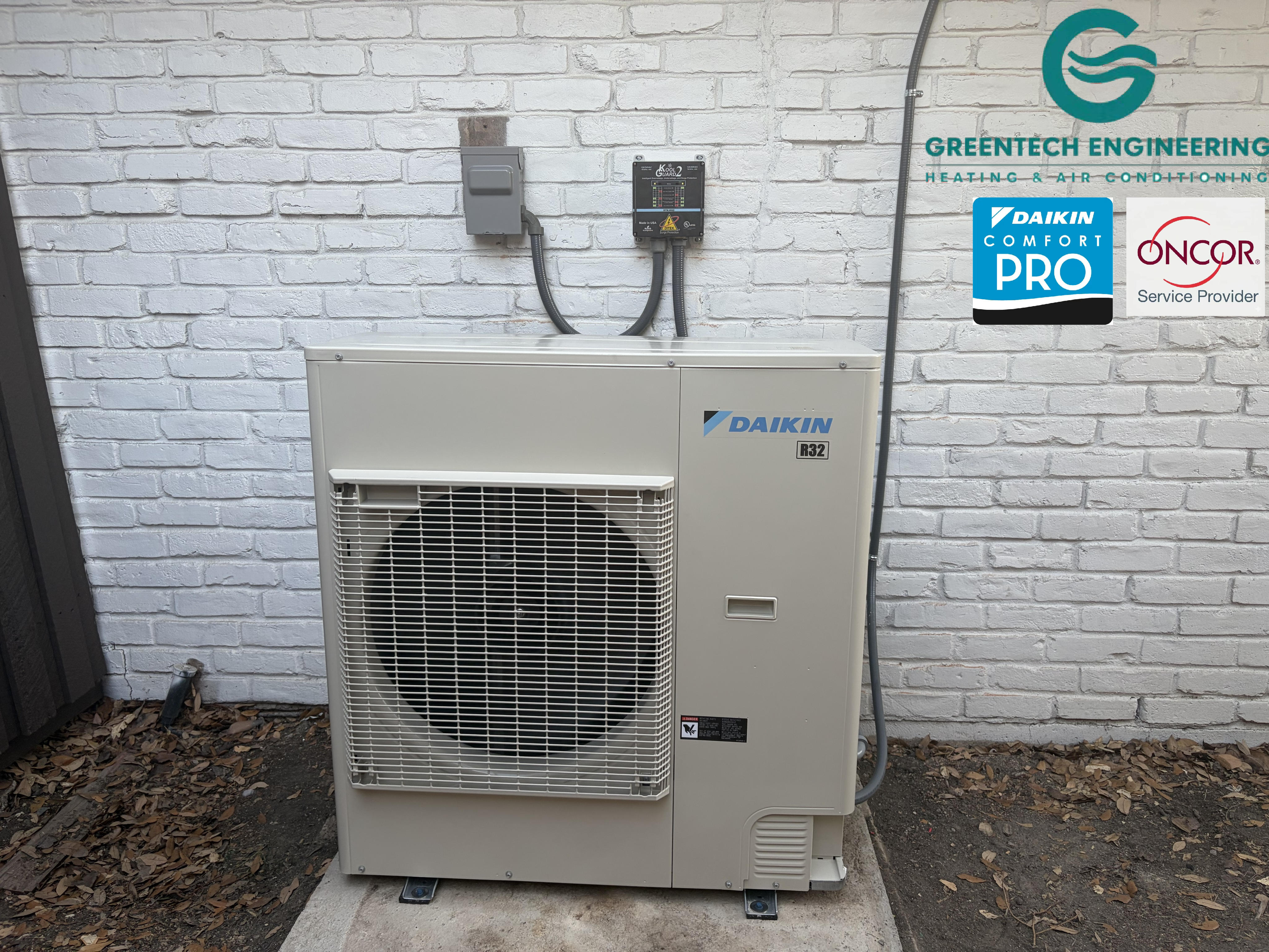
The Daikin FIT DC6VS is a slim, side-discharge air conditioner using inverter technology. Unlike a conventional single-stage compressor that generally operates at full output and then shuts off, an inverter-driven system can adjust compressor capacity as the home’s cooling demand changes.
Variable-speed operation can support steadier indoor temperatures and longer low-capacity cycles when the equipment, controls, airflow, and building load are properly matched. Daikin lists the DC6VS product family at up to 17.2 SEER2 and 1.5 to 5 tons; the exact certified combination installed here is documented at 17.0 SEER2.
The system also uses R-32 refrigerant and communicates with compatible Daikin controls. Product specifications and warranty conditions should always be confirmed through the official Daikin FIT product page and the homeowner’s written equipment documents.
“In the AI-driven energy era, HVAC is no longer just about comfort — it’s about how efficiently your home uses power. At Greentech, we engineer systems that reduce your energy load and prepare your home for the future.”
The Variable-Speed Furnace and Communicating Thermostat
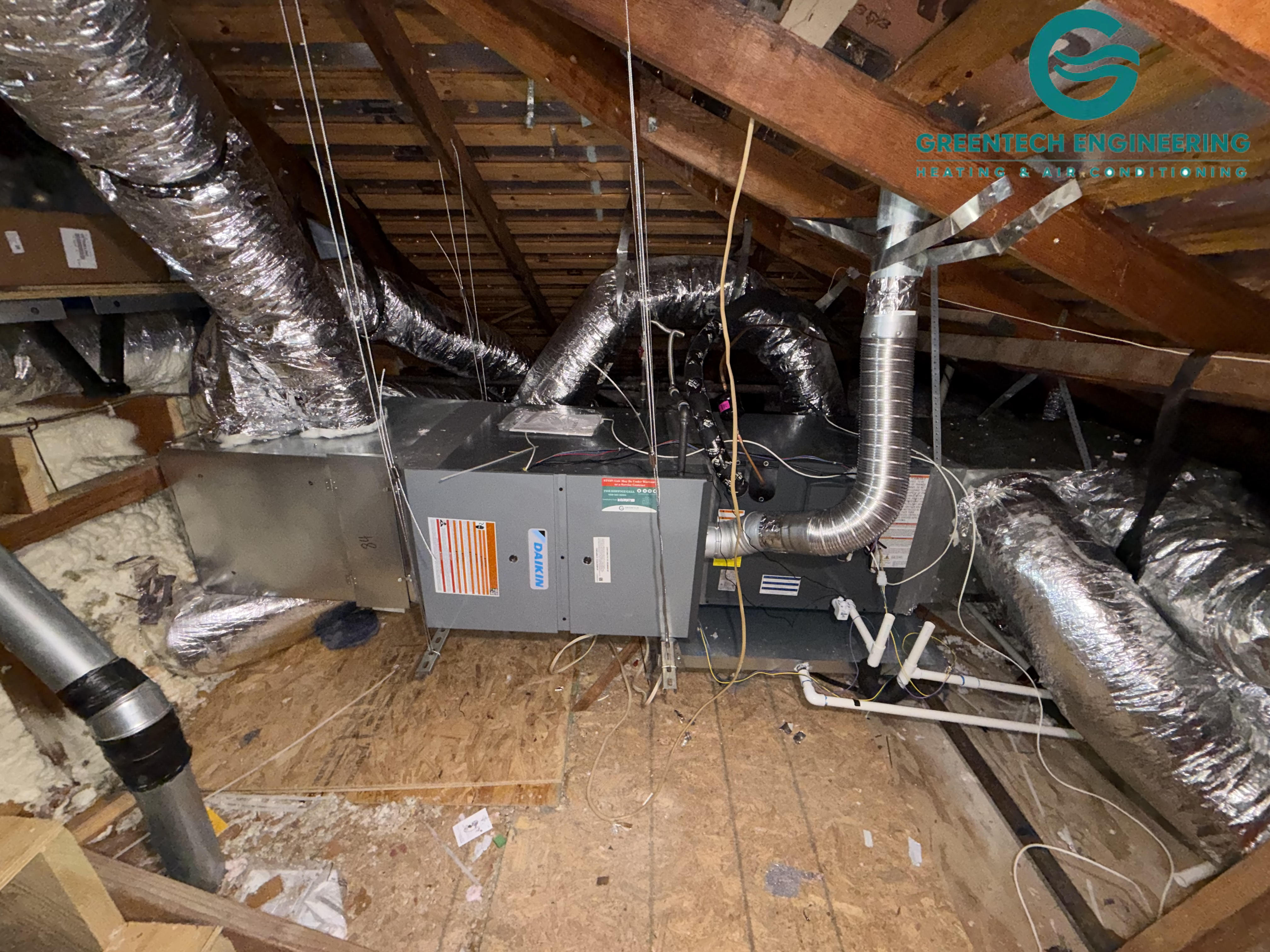
The project scope paired the Daikin FIT outdoor system with an 80% AFUE variable-speed gas furnace. During cooling operation, the furnace blower moves air across the indoor evaporator coil and through the home’s duct system. Its setup therefore affects both heating and cooling performance.
The Daikin One Touch communicating thermostat was installed as the primary control. In a communicating system, the thermostat, furnace controls, indoor coil components, and inverter outdoor unit exchange operating information. This allows the system to coordinate staging, airflow, and compressor output rather than relying only on a basic on/off call.
New thermostat wiring was included to support reliable communication between the components. The thermostat should be configured and commissioned to the specific installed equipment rather than treated as a generic wall control.
Ductwork, Air Distribution, and Indoor Equipment
The project included replacement of the supply and return plenums, additional flexible duct, installation of an air damper, and air balancing. These items are important because certified equipment efficiency assumes that the system receives and delivers adequate airflow.
The indoor scope included:
- Connecting the new furnace and coil to the supply and return plenums
- Securing and balancing the equipment with appropriate structural support
- Sealing equipment and plenum transitions with HVAC-approved tape and duct sealant
- Running additional flexible duct as required by the project design
- Installing an air damper to support distribution control
- Performing airflow balancing after startup
- Replacing the supply and return plenums with the system replacement
Sealing and supporting the connections helps reduce air loss around the equipment and prevents poorly supported flex duct from sagging and restricting airflow. Learn more about our duct design and airflow services in Dallas.
Electrical Protection for an Inverter-Driven HVAC System
Variable-speed air conditioners contain inverter electronics and communicating control boards. The project therefore included a new disconnect box, whip and wiring, together with a dedicated 220V voltage-monitoring and surge-protection device.
The installed Kool Guard unit is designed to monitor incoming voltage and protect HVAC equipment from damaging undervoltage, overvoltage, and transient surge events. DITEK states that its DTK-KG2 can disconnect the equipment when voltage is outside its acceptable range and restore power after a delay when conditions normalize.
This device is protective equipment, not a voltage regulator, and no surge-protection device can promise immunity from every electrical event. Its purpose is to reduce exposure to specified voltage conditions and transients. Technical information is available from the DITEK Kool Guard product page.
Documented Installation and Commissioning Process
1. Removal and Refrigerant Recovery
The old system was removed and disposed of. Existing refrigerant was pumped down and recovered using appropriate handling procedures.
2. Drainage and Equipment Foundation
A new Safe-T drain switch, drain-line insulation, and concrete condenser equipment pad were installed. The condensate drain was cleared with pressurized dry nitrogen, and the drain trap, vent, and necessary drain-line modifications were completed.
3. Indoor Equipment Support and Sealing
The new indoor equipment was connected to the supply and return plenums with appropriate HVAC fasteners, secured with the required support or hanging system, and sealed at connection points to reduce air leakage.
4. Refrigerant-Line Preparation
The existing copper line set was flushed with RX-11 and dry nitrogen as specified in the project scope. Necessary line-set modifications were made, and the new joints were brazed using 15% silver brazing alloy.
5. Nitrogen Pressure Test
The refrigerant circuit was pressurized with dry nitrogen to 250 psi and held for at least 15 minutes as part of the leak-check procedure.
6. Deep-Vacuum Evacuation
The system was evacuated below 500 microns before charging and startup. Deep evacuation helps remove air and moisture from the closed refrigerant circuit.
7. Controls, Power, and Protection
The work included thermostat wiring, a Daikin One Touch communicating thermostat, disconnect components, whip and wires, and a 220V voltage monitor with surge protection.
8. Startup and Air Balancing
After the installation was complete, the system was run and tested. The project also included damper installation and air balancing so that final airflow settings could be evaluated with the operating system.
Why an Oncor Participating Service Provider Matters
Oncor’s Home Energy Efficiency Program provides incentives to approved participating service providers that install eligible energy-efficiency measures at qualifying residential properties with active Oncor electric-delivery service. Oncor pays the service provider—not the homeowner directly—and the service provider determines the customer-facing value it will pass through.
For qualifying HVAC submissions, Oncor’s 2026 program documentation generally requires a Production Report, an electronically signed customer agreement, an AHRI certificate, supplemental photographs, and a Manual J calculation when required by the project circumstances. Existing baseline equipment must remain in place until applicable program requirements have been completed.
When working with Greentech Engineering Heating & Air Conditioning — DFW HVAC, the team can review potential eligibility, document the existing equipment, obtain the AHRI certificate, prepare applicable Manual J information, collect required photographs, and submit the project through the Oncor program system. Greentech may reflect the customer-facing incentive described in the signed proposal as an invoice discount, but eligibility and final program payment remain subject to documentation, available funding, inspection results, and Oncor approval.
Oncor also states that participating service providers are independent third parties and are not affiliated with or endorsed by Oncor or the Public Utility Commission of Texas. Homeowners can review the Oncor Home Energy Efficiency Program and the official Find a Service Provider tool.
2026 Oncor HVAC Reference
A/C Split System Below 45,000 Btu/h
2026 minimum efficiency: 14.3 SEER2 and 11.7 EER2
Individual system incentive cap: Based on verified savings and tonnage. The 3.5-ton cap is $2,900.
A/C Split System at or Above 45,000 Btu/h
2026 minimum efficiency: 13.8 SEER2 and 11.2 EER2
Individual system incentive cap: The 4-ton cap is $3,200, and the 5-ton cap is $3,400.
Heat-Pump Split System
2026 minimum efficiency: 14.3 SEER2, 11.7 EER2, and 7.5 HSPF2
Individual system incentive cap: Based on verified savings and the applicable tonnage cap.
Incentive disclaimer: A cap is not a promised incentive amount. Oncor calculates incentives from verified kW and kWh savings, and the actual amount is not finalized until the Production Report is approved. Funding must also remain available. This project’s attached AHRI certificate confirms 17.0 SEER2 and 41,000 Btu/h, but the visible certificate image does not display EER2; final eligibility must be verified through the complete project record.
Learn more about our Oncor HVAC incentive consulting services.
What This Dallas 75248 Project Demonstrates
This project shows why a variable-speed HVAC upgrade should be designed as a complete system rather than purchased as an isolated outdoor unit. The major elements worked together:
- Manual J information guided equipment selection.
- The AHRI certificate documented the matched-system rating.
- The inverter outdoor unit adjusted capacity instead of relying only on full-output operation.
- The variable-speed furnace supported coordinated indoor airflow.
- The Daikin One Touch thermostat provided communicating control.
- New plenums, flex duct, damper work, sealing, and balancing addressed air distribution.
- The Kool Guard device added voltage monitoring and surge protection.
- Pressure testing, deep evacuation, startup, and commissioning documented installation quality.
No article should promise a specific reduction in utility bills, humidity, sound, or runtime without measured before-and-after data. The strongest verified performance evidence available for this project is the AHRI certificate and the documented installation scope.
Frequently Asked Questions
What size Daikin FIT system was installed in this Dallas 75248 home?
The project used a nominal 3.5-ton Daikin FIT variable-speed air-conditioning system. The attached AHRI certificate lists a certified cooling capacity of 41,000 Btu/h for the matched equipment combination.
What does 17.0 SEER2 mean?
SEER2 is a standardized seasonal cooling-efficiency rating. AHRI Certificate No. 215490188 lists the complete matched system at 17.0 SEER2. Actual electricity use still depends on weather, thermostat settings, ductwork, airflow, insulation, installation quality, and occupant behavior.
Why is Manual J important for a variable-speed HVAC system?
Variable-speed capability does not correct an inappropriate equipment selection. Manual J estimates the home’s design heating and cooling loads so the contractor can select equipment with suitable capacity before configuring airflow and controls.
Why does the AHRI certificate matter?
The AHRI certificate verifies the standardized performance of the specific outdoor unit, indoor coil, and furnace or air-handler combination. It is stronger evidence than quoting the maximum rating of an equipment product family.
Does a 17.0 SEER2 system automatically qualify for an Oncor incentive?
No. SEER2 is only one requirement. Eligibility can also depend on EER2, the existing equipment, active Oncor service, required documentation, verified savings, available funding, inspection results, and final approval.
Why add a voltage monitor to a Daikin FIT system?
Inverter-driven HVAC systems contain sensitive power electronics. A compatible voltage-monitoring and surge-protection device can disconnect the equipment during specified undervoltage or overvoltage conditions and help divert transient surges. It reduces risk but does not guarantee protection from every electrical event.
What is included in the three-year labor warranty?
The exact coverage, exclusions, maintenance obligations, and effective dates are controlled by the signed Greentech proposal and warranty terms. Homeowners should retain the written agreement and complete all required manufacturer registration and maintenance.
Schedule a Dallas HVAC Replacement and Load Evaluation
Greentech Engineering Heating & Air Conditioning — DFW HVAC provides AC replacement, Manual J load calculations, duct design, airflow testing and balancing, heating services, smart controls, electrical-protection options, and Oncor incentive documentation support for Dallas homeowners.
Explore our full range of HVAC services in Dallas or contact the Greentech HVAC team to schedule an evaluation.
About the Author: Siwei (Lucas) Chen
CTO | Greentech Engineering Heating & Air Conditioning
Siwei (Lucas) Chen specializes in engineering-driven HVAC diagnostics, thermodynamic performance optimization, and custom ductwork design for Dallas homeowners. Holding a B.S. in Mechanical Engineering from Virginia Tech, he brings a strict, data-first approach to residential heating and cooling. Under his technical leadership, Greentech Engineering ensures every system is perfectly calibrated for the Texas climate, focusing relentlessly on ACCA Manual J load calculations, meticulous clinical installation standards, and securing maximum utility rebates for his clients.
Professional Certifications:
- ACCA Certified (Manual J, S, D)
- Daikin Comfort Pro Contractor
- NCI Certified – Air Balancing & Duct Optimization
- Oncor Participating Service Provider
Industry Affiliations:
- Supplier Partner Member – Apartment Association of Greater Dallas

Flexible Financing Options
Explore our range of flexible financing options designed to suit your needs and budget.