





Frisco 75034 HVAC Case Study: 4-Ton Daikin Replacement and Return-Air Upgrade
A downstairs HVAC system in a Frisco, Texas 75034 home was approaching failure while the homeowners were also dealing with uneven cooling, humidity concerns, and limited return airflow. Rather than treating the project as a simple equipment swap, Greentech Engineering Heating & Air Conditioning — DFW HVAC evaluated both the system capacity and the air-distribution path serving the downstairs area.
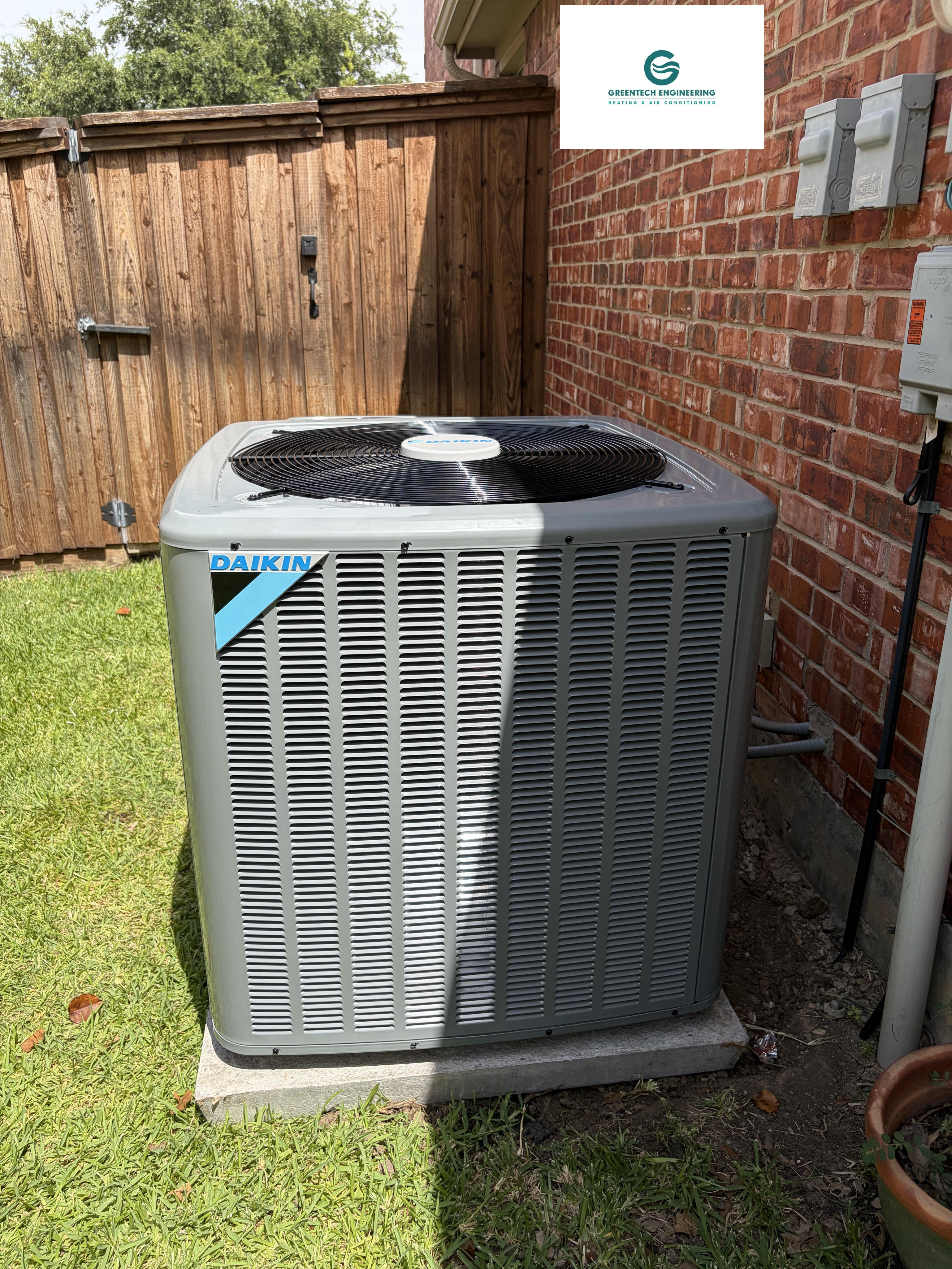
Project records identify a 4-ton Daikin replacement system rated at 14.5 SEER2, together with an additional insulated return-air path intended to improve the amount of air available to the system. The work also included indoor and outdoor equipment replacement, drainage protection, duct-transition sealing, refrigerant-line preparation, pressure testing, deep-vacuum evacuation, startup, and commissioning.
Homeowners considering a similar project can learn more about our AC replacement services in Frisco.
Quick answer: This Frisco 75034 project combined a 4-ton Daikin HVAC replacement with a return-air improvement. The Greentech HVAC team used residential load-calculation information to confirm system capacity, added an insulated return-air duct, sealed equipment-to-duct connections, prepared and tested the refrigerant circuit, evacuated the system below 500 microns, and completed startup and commissioning.
Why This Was More Than an HVAC Equipment Replacement
When an air conditioner begins to fail, replacing the outdoor unit alone may not correct the conditions that contributed to poor performance. Equipment sizing, return-air capacity, duct restrictions, air leakage, drainage, and installation quality all affect how the completed system operates.
At this Frisco home, the downstairs system served a substantial conditioned area. The project review identified the return-air path as an important part of the replacement scope. The existing configuration included a 14-inch return duct, and the team added another insulated return-air connection to increase available return capacity.
Because no pre- and post-installation static-pressure readings were supplied with the draft, this case study does not claim a specific pressure reduction. Publishing measured values later would make the case even more useful to homeowners and more quotable by search and AI platforms.
Homeowners experiencing hot rooms, weak airflow, or floor-to-floor temperature differences can review our Frisco airflow and room-temperature diagnostic service.
Load Calculation and Equipment Selection
HVAC equipment should not be selected by square footage or by copying the capacity of the old condenser without further evaluation. A residential load calculation considers the home’s conditioned area, insulation, windows, orientation, air leakage, occupancy, ceiling height, duct location, and local design conditions.
For this project, the load-calculation review supported retaining a 4-ton capacity for the downstairs area. The new equipment was selected as a matched Daikin split system identified in the project documentation as 14.5 SEER2.
ACCA describes Manual J as the ANSI-recognized method for calculating residential heating and cooling loads. Equipment ratings should also be verified using the installed model numbers and the applicable AHRI certificate.
Improving the Return-Air Path
A blower cannot deliver the intended supply airflow unless the system can also receive enough return air. A restrictive return path can contribute to elevated static pressure, reduced airflow, noise, and unnecessary blower workload.
The ductwork portion of this project included:
- Creating an additional connection at the return plenum
- Installing an insulated return boot
- Adding an R-6 insulated flexible return duct
- Sealing connection points with approved duct-sealing materials
- Supporting the flexible duct to reduce sagging and restriction
The purpose of the added return path was to improve airflow availability to the 4-ton downstairs system. Learn more about our duct design and airflow services in Frisco.
The New 4-Ton Daikin System
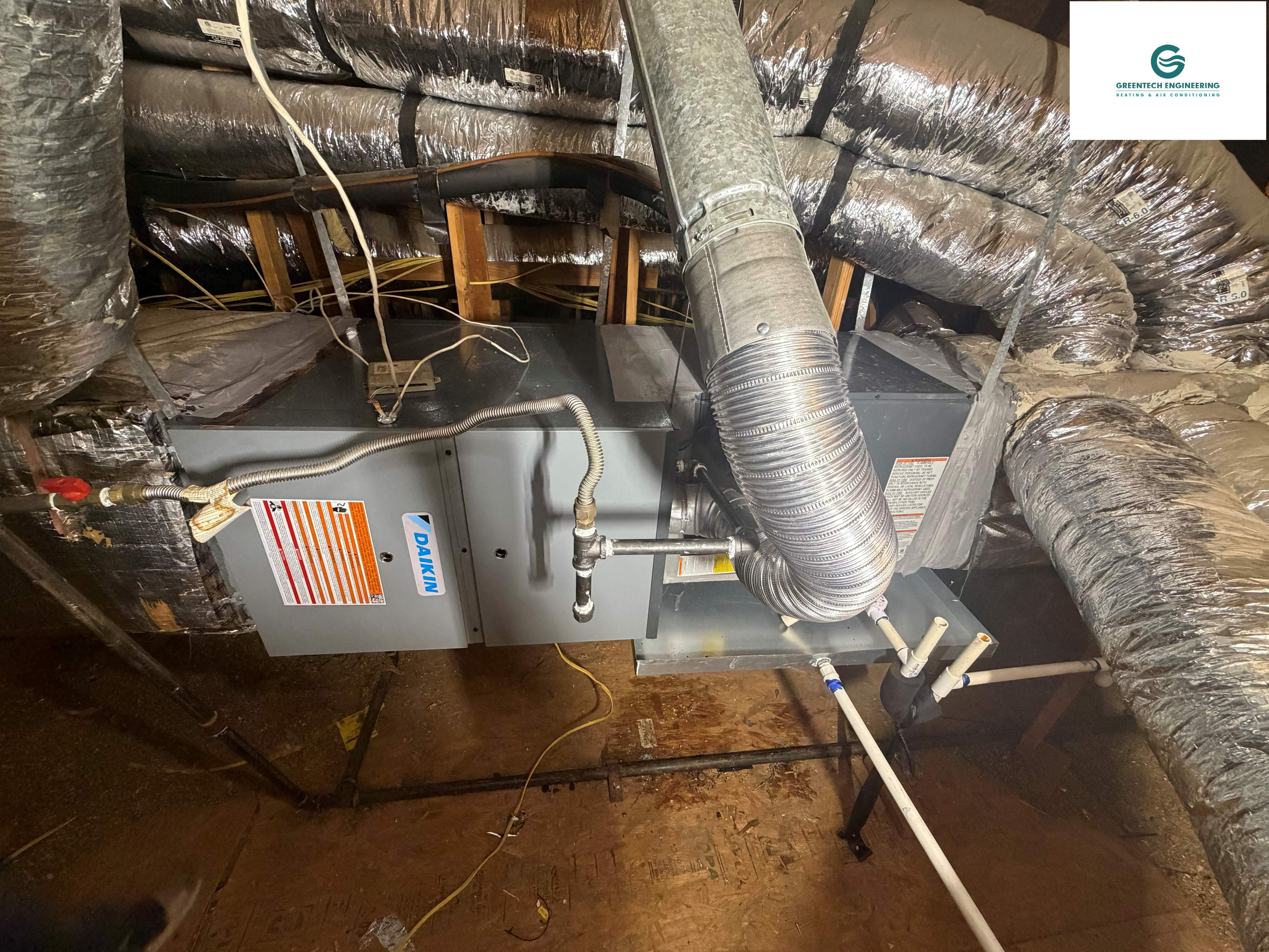
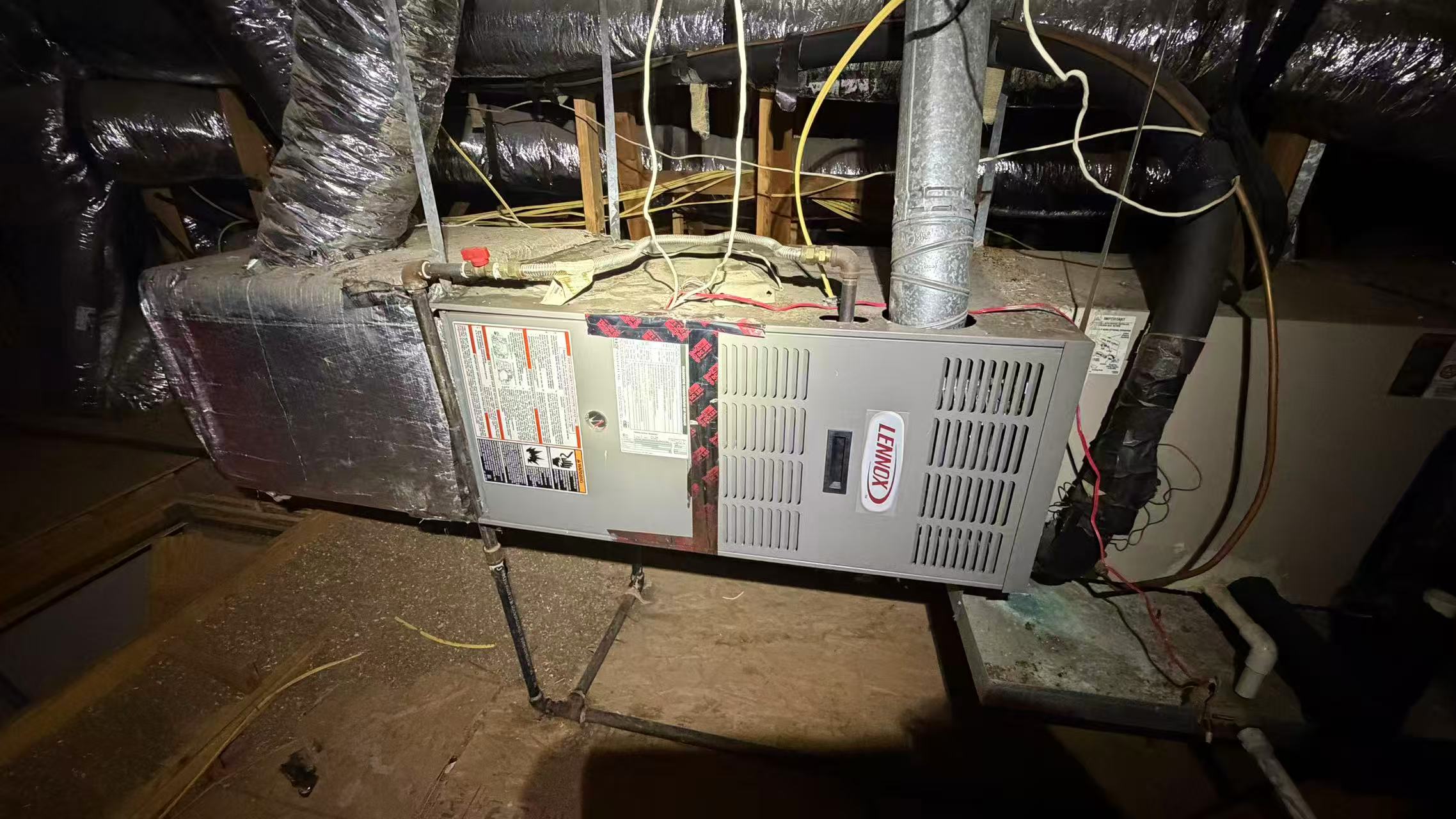
The replacement included a 4-ton Daikin outdoor air-conditioning unit, a matched indoor evaporator coil, and a gas furnace installed in a horizontal attic configuration. The final published article should include the outdoor-unit, coil, and furnace model numbers and the AHRI reference number when those records are available.
Listing the matched-system data is more useful and trustworthy than adding broad product claims such as “perfect,” “whisper quiet,” or “maximum humidity removal.” Actual performance depends on the complete equipment match, airflow settings, duct system, refrigerant charge, building conditions, and commissioning.
Installation and Commissioning Process
1. Existing Equipment Removal
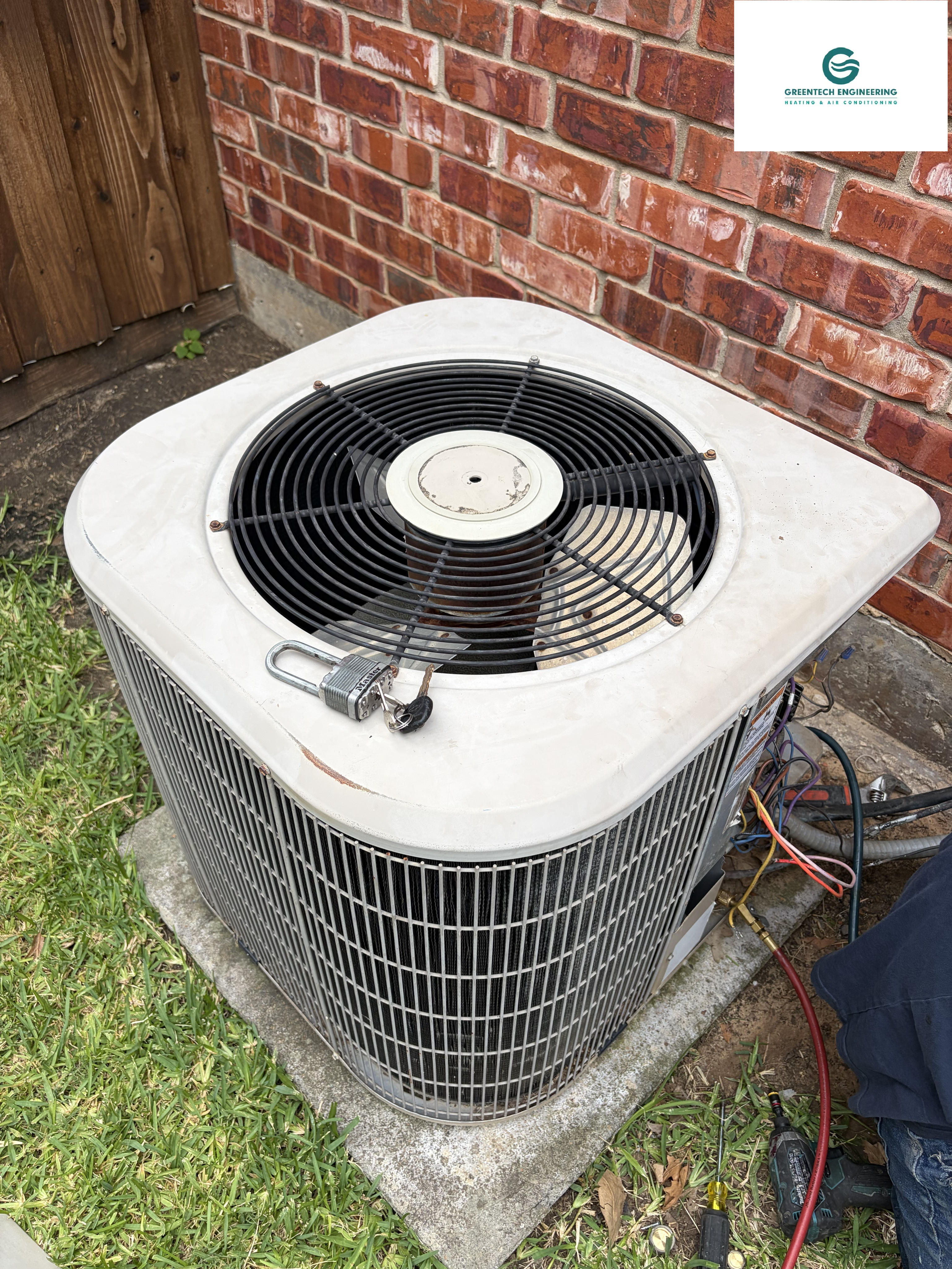
The existing indoor and outdoor equipment was disconnected and removed, and refrigerant was handled using appropriate recovery procedures.
2. Drainage and Safety Updates
The installation included condensate-drain preparation, a drain pan, and overflow protection intended to reduce the risk of water damage if the drain becomes blocked.
3. Indoor Equipment and Duct Connections
The new furnace and evaporator coil were installed in the attic, supported, leveled, and connected to the existing supply and return systems. Equipment-to-duct transitions were sealed to reduce air leakage around the cabinet and plenums.
4. Refrigerant-Line Preparation
The existing copper line set was prepared for the new system. Dry nitrogen was used during brazing to help limit internal oxidation in the tubing.
5. Pressure Testing and Evacuation
The completed refrigerant circuit was pressure-tested with dry nitrogen to check for leaks. Project records state that the system was then evacuated below 500 microns before startup, helping remove air and moisture from the sealed circuit.
6. Startup and Commissioning
After installation, the team checked thermostat operation, blower configuration, refrigerant performance, temperature change across the equipment, condensate drainage, electrical operation, furnace safety controls, and general system response. Final settings were adjusted to the installed equipment and field conditions.
Before and After the Frisco HVAC Project
Before replacement, the home had aging equipment and a return-air configuration that the project team determined should be improved as part of the new installation.
After completion, the downstairs system included:
- A new matched 4-ton Daikin HVAC system
- An additional insulated return-air path
- Sealed equipment and duct transitions
- Updated drainage and overflow protection
- A prepared and tested refrigerant circuit
- Completed startup and commissioning
This article intentionally does not claim a specific reduction in energy use, humidity, static pressure, or monthly cost because verified before-and-after measurements were not supplied. If those records are available, adding them would strengthen the case study substantially.
Oncor Energy-Efficiency Incentive Support
Some qualifying HVAC projects in the Oncor electric-delivery territory may be eligible for incentives through Oncor’s Home Energy Efficiency Program. Oncor states that incentives are paid to approved participating service providers and that participating providers are independent third parties, not endorsed by Oncor.
Eligibility may depend on:
- Whether the property receives electric delivery service through Oncor
- The existing equipment and qualifying replacement measure
- The certified efficiency of the matched new system
- Required photos, equipment records, and AHRI documentation
- Estimated and verified energy savings
- Available program funding
- Current program rules and final approval
Greentech Engineering Heating & Air Conditioning — DFW HVAC can assist eligible customers with project documentation and submission through the applicable program. Final eligibility and incentive amounts cannot be guaranteed before program approval.
Learn more about our Oncor HVAC incentive consulting services.
Warranty and Financing Information
The written proposal for this project included a three-year labor warranty from Greentech Engineering Heating & Air Conditioning — DFW HVAC. The customer’s signed agreement controls the exact coverage, exclusions, maintenance requirements, and other conditions.
Manufacturer warranty coverage depends on the exact equipment models, registration, application, and written Daikin warranty terms. Financing may be available to qualified applicants through third-party providers; amounts, repayment periods, and rates vary and should not be presented as guaranteed.
Frequently Asked Questions
Can a restricted return duct affect a 4-ton HVAC system?
Yes. An HVAC system needs an adequate return path to move air through the equipment and back to the supply ducts. A restrictive return can contribute to reduced airflow, higher static pressure, noise, and increased blower workload. The correct solution should be based on field testing and duct-design calculations.
Why use a Manual J load calculation before replacing an AC system?
Manual J estimates the heating and cooling load based on the building rather than relying only on square footage or the old equipment size. It helps determine whether the existing capacity is appropriate before replacement equipment is selected.
Does a higher SEER2 rating guarantee lower electric bills?
No. SEER2 is a standardized efficiency rating, but actual energy use also depends on weather, thermostat settings, duct leakage, airflow, insulation, equipment sizing, maintenance, and installation quality.
Does every Frisco HVAC replacement qualify for an Oncor incentive?
No. The home must receive electric delivery service through Oncor, and the project must meet current program requirements. Equipment ratings, documentation, verified savings, funding availability, and final approval all affect eligibility.
Why is evacuation below 500 microns important?
A deep vacuum helps remove air and moisture from the refrigerant circuit before startup. The vacuum level should be measured with appropriate instruments and completed according to equipment-manufacturer and accepted installation procedures.
Schedule an HVAC and Airflow Evaluation in Frisco
Greentech Engineering Heating & Air Conditioning — DFW HVAC provides HVAC replacement, load calculations, duct design, airflow testing, heating and cooling repair, indoor-air-quality solutions, and preventive maintenance across Frisco and the Dallas–Fort Worth area.
Explore our HVAC services in Frisco or contact the Greentech HVAC team to schedule an evaluation.
About the Author: Siwei (Lucas) Chen
CTO | Greentech Engineering Heating & Air Conditioning
Siwei (Lucas) Chen specializes in engineering-driven HVAC diagnostics, thermodynamic performance optimization, and custom ductwork design for Dallas homeowners. Holding a B.S. in Mechanical Engineering from Virginia Tech, he brings a strict, data-first approach to residential heating and cooling. Under his technical leadership, Greentech Engineering ensures every system is perfectly calibrated for the Texas climate, focusing relentlessly on ACCA Manual J load calculations, meticulous clinical installation standards, and securing maximum utility rebates for his clients.
Professional Certifications:
- ACCA Certified (Manual J, S, D)
- Daikin Comfort Pro Contractor
- NCI Certified – Air Balancing & Duct Optimization
- Oncor Participating Service Provider
Industry Affiliations:
- Supplier Partner Member – Apartment Association of Greater Dallas

Flexible Financing Options
Explore our range of flexible financing options designed to suit your needs and budget.