





Rooms that won't cool, hot spots upstairs, cold spots downstairs, or weak airflow from certain vents — the problem is almost always poorly designed ductwork, not your HVAC equipment.
Greentech Engineering's duct design in Frisco, TX uses Manual D calculations, CAD layouts, and airflow testing to engineer a system that delivers balanced comfort to every room.
Why duct design matters in Frisco homes
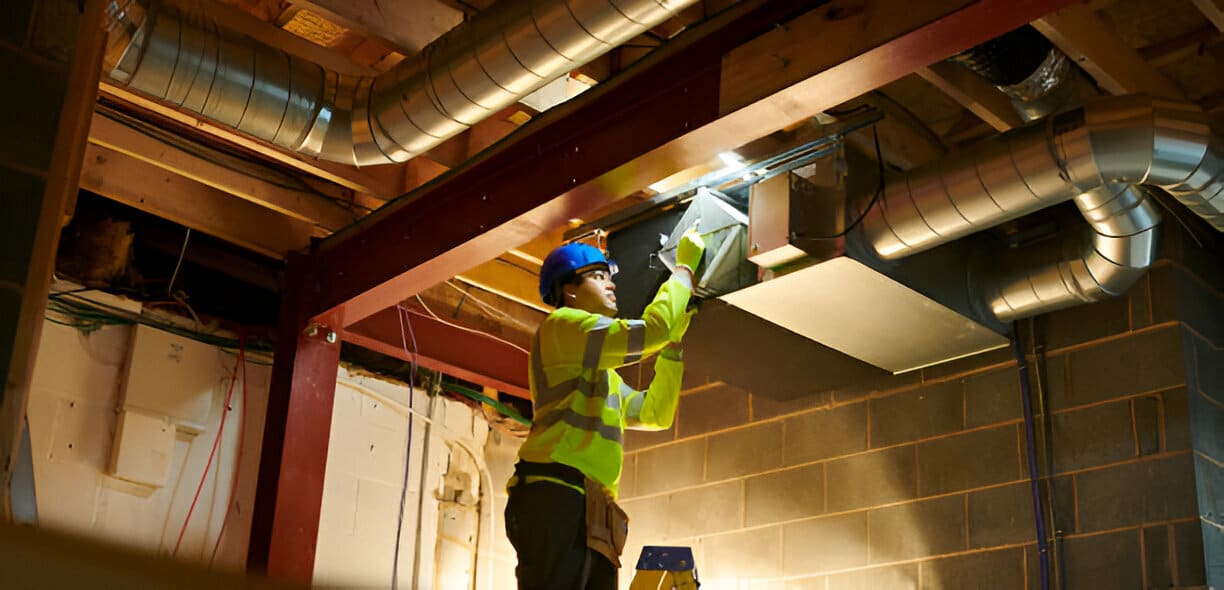
Poor duct design causes uneven temperatures, noisy registers, higher energy use, and faster equipment wear. In Frisco, common contributing factors include:
Once your ductwork is properly designed, fine-tune comfort with our room temperature service in Frisco, TX — NCI-certified airflow balancing that ensures every room reaches the right temperature.
- New construction with open floor plans that affect airflow distribution
- Attics and crawlspaces exposed to high summer heat that raise return air temperatures
- Retrofit projects where existing duct geometry limits airflow
- High cooling loads during extended hot periods that reveal undersized systems
Addressing these during the design phase avoids recurring comfort complaints and reduces seasonal energy costs.
Common duct design issues in Frisco
- Undersized or oversized ducts causing low airflow or excessive static pressure
- Long duct runs and poor branch layout creating unequal room temperatures
- Improper return placement or insufficient return area leading to pressure imbalances
- Inadequate insulation for attic or exterior ducts increasing thermal losses
- Leaky seams and poorly sealed connections reducing delivered airflow
- Mismatched system components where the duct system is not sized for the installed air handler or coil
Understanding these problems helps homeowners and builders prioritize solutions that deliver measurable comfort and efficiency improvements.
Green Tech duct design services (what we provide)
Green Tech applies engineering best practices to every project in Frisco, TX. Key services include:
- Load calculations (Manual J) to determine accurate heating and cooling requirements for each space
- Duct sizing and layout (Manual D) customized for floor plan, ceiling heights, and zoning needs
- Material recommendations including sheet metal, flex duct, and rigid ductboard based on space constraints and performance goals
- Insulation selection and specification for attic and exposed ducts to minimize thermal loss
- Static pressure analysis and airflow optimization to ensure system efficiency and quiet operation
- Leak reduction strategies including sealing methods, gasketing, and high-quality fittings
- Coordination with new construction or retrofit teams to integrate duct routing with framing, plumbing, and electrical
- Testing and balancing procedures to verify airflow at each register and fine tune dampers and fan speeds
How the design and engineering process works
- Site assessment and data collection
- Review plans or inspect existing ducts, measure attic and plenum conditions, and record equipment specifications.
- Manual J load calculation
- Calculate space-by-space loads accounting for Frisco climate factors such as solar gain, insulation levels, and window orientation.
- Manual D duct layout and sizing
- Create a layout that minimizes long runs and balances supply and return paths. Size ducts to meet target airflow with acceptable static pressure.
- Material and insulation specifications
- Select materials and R-value for ducts based on location (attic, crawlspace, conditioned space) and durability needs.
- Coordination with construction or retrofit team
- Provide installation details and framing or access recommendations to reduce field modifications.
- Quality assurance: testing and balancing
- Measure static pressure, airflow at each register, and adjust system settings to meet design targets.
This step-by-step approach reduces surprises during installation and ensures the installed system performs as predicted.
Testing, balancing, and verification
Testing and balancing (TAB) confirms that the theoretical design translates into real-world performance. Typical TAB tasks:
- Measure system total external static pressure and compare to allowable limits for the air handler
- Use flow hoods or vane anemometers to measure register airflow and compare to design CFM
- Adjust balancing dampers and recommend grille/ register changes to even out room-by-room delivery
- Verify return airflow, detect pressure imbalances, and recommend additional returns or transfer solutions if needed
- Re-check temperatures and comfort levels in occupied spaces after adjustments
TAB reduces callbacks, improves system efficiency, and documents that the installation meets the engineered intent.
Materials, insulation, and leak minimization
Material choice and sealing are critical in Frisco where attic temperatures can exceed 140 degrees in summer:
- Sheet metal ducts offer durability and lower leakage when properly sealed
- Rigid insulated ducts or well-supported insulated flex can be effective inside conditioned spaces
- Insulation with appropriate R-value for attic ducts reduces heat gain and improves coil performance
- Sealing with mastic or UL-rated tapes at joints and boots minimizes leakage losses commonly responsible for 10 to 30 percent of system inefficiency
Specifying the right combination of material and insulation preserves conditioned air and reduces run time during peak summer months.
Benefits of professional duct design
- More consistent temperatures and improved occupant comfort across rooms
- Lower energy bills through reduced fan run time and improved coil performance
- Reduced noise and longer equipment life by keeping static pressure in manufacturer limits
- Fewer service calls and better indoor air quality with sealed, properly routed return systems
- Smooth integration with new construction schedules or retrofit constraints to avoid costly rework
Green Tech applies engineering rigor so homeowners and builders in Frisco get predictable results instead of guesswork.
Maintenance and best practices for Frisco homeowners
- Inspect attic and accessible ducts annually for visible leaks, crushed sections, or disconnected pieces
- Ensure attic insulation and duct insulation remain intact after any attic work
- Keep return grilles unblocked and maintain consistent filter replacement to protect indoor coils and airflow
- Consider zoning or additional returns for open floor plans common in newer Frisco homes
- Schedule periodic testing and balancing after major renovations or equipment changes to confirm system performance
Proper maintenance preserves the benefits of a well-designed duct system and extends equipment life.
FAQs
Q: What is the difference between Manual J and Manual D?
A: Manual J determines the heating and cooling load for each room in your home, while Manual D uses those loads to size and route the duct system so each room receives the design airflow.
Q: Will better duct design lower my energy bills in Frisco?
A: Yes. Properly sized, sealed, and insulated ducts reduce wasted air and fan power, which lowers runtime and energy consumption—especially important during Frisco summers.
Q: Can duct design help an older home being retrofitted for a new air conditioner?
A: Yes. A retrofit duct design evaluates existing duct geometry and makes targeted changes or recommendations so the new equipment can reach its designed efficiency and comfort levels.
Q: How does testing and balancing improve performance after installation?
A: Testing and balancing verifies actual airflow and static pressure, then adjusts dampers and registers so each room receives the intended airflow, eliminating hot and cold spots.
Q: Does duct material matter for attic installations in Frisco?
A: Yes. Materials with higher thermal resistance and low leakage are preferred for attics. Proper insulation and sealing are critical due to high attic temperatures in the region.

Flexible Financing Options
Explore our range of flexible financing options designed to suit your needs and budget.