




Splitting the Load: How Dual-System Upgrades Save Dallas Homeowners from Summer Grid Spikes
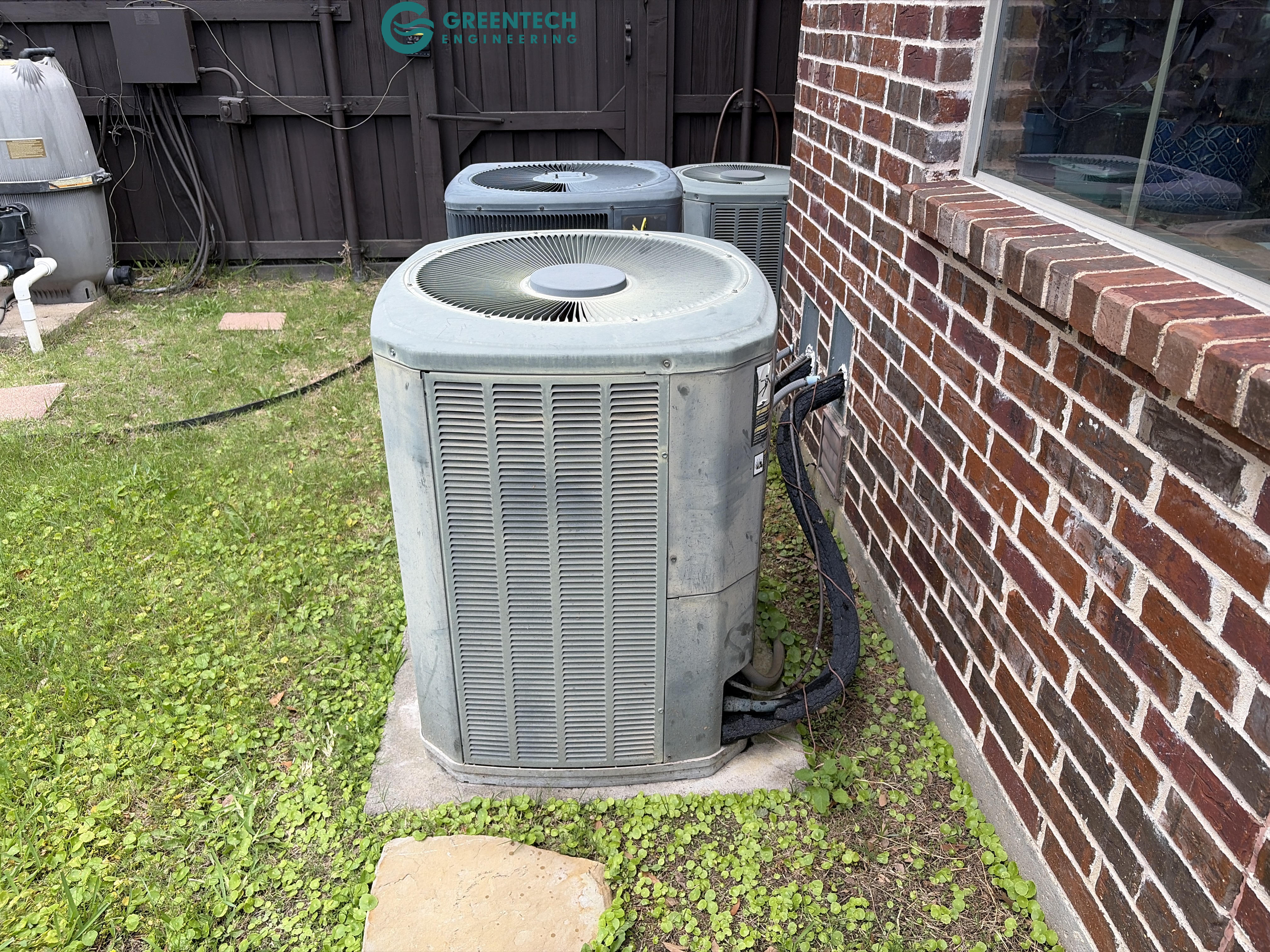
When summer temperatures in Dallas, Texas, routinely shatter the 100-degree mark, the regional power grid is pushed to its absolute limits. For homeowners in large, multi-story houses, maintaining indoor comfort often relies on a "dual-system" HVAC setup—typically a heavy-duty system (like a 5-ton unit) for the downstairs living areas, paired with a smaller system (like a 2.5-ton unit) for the upstairs bedrooms.
While having two separate systems is the mechanically correct way to handle a multi-story thermal load, running two aging, low-efficiency air conditioners simultaneously is a financial liability. When both compressors kick on during peak afternoon heat, they create a massive electrical draw known as "inrush current." This not only contributes to the rolling ERCOT grid spikes (External Link) that threaten Texas power stability but also results in eye-watering monthly electric bills for the homeowner.
In the AI-driven energy era, HVAC is no longer just about comfort — it’s about how efficiently your home uses power. At Greentech, we engineer systems that reduce your energy load and prepare your home for the future.
If your Dallas home is operating on legacy dual-split systems (typically 10 to 12 SEER), upgrading to modern, thermodynamically optimized Daikin Comfort Pro equipment is the ultimate solution. In this comprehensive engineering guide, we break down how updating your dual systems through strict ACCA Manual J load calculations eliminates power spikes, stabilizes your indoor humidity, and unlocks maximum cash incentives through the Oncor Home Energy Efficiency Program.
The Danger of the "Double Start-Up" Spike
Air conditioners consume the most power not while they are running, but in the exact second they turn on. This is called Locked Rotor Amps (LRA).
If you live in a large Dallas home with a 15-year-old 5-ton downstairs unit and a 2.5-ton upstairs unit, there is a high probability that during a 105-degree August afternoon, both thermostats will call for cooling at the exact same time. The simultaneous start-up of two outdated, single-stage compressors pulls an immense surge of wattage from the grid.
Why Single-Stage Dual Systems Fail the Efficiency Test
Old single-stage compressors only know one speed: 100% capacity. They blast cold air, hit the target temperature, and immediately shut off. Because they run in short, aggressive bursts (a mechanical failure known as short-cycling, they fail to provide adequate latent cooling.
- Sensible Cooling: Dropping the temperature on the thermostat.
- Latent Cooling: Removing the thick, sticky Texas humidity from the air.
Without adequate latent cooling, your upstairs bedrooms will feel cold, but miserably clammy. Furthermore, starting these two heavy compressors 40 times a day accelerates wear and tear, leading to catastrophic system failure right when you need cooling the most.
The Foundation of Dual-System Upgrades: ACCA Manual J
You cannot solve a thermodynamic problem by simply "box-swapping"—the practice of replacing a 5-ton unit with another 5-ton unit without verifying the math.
When replacing dual systems, strict engineering data is required. The downstairs thermal envelope behaves entirely differently from the upstairs thermal envelope. The upstairs absorbs direct radiant heat from the roof, while the downstairs is shaded but must manage the heat loads from the kitchen and large open living spaces.
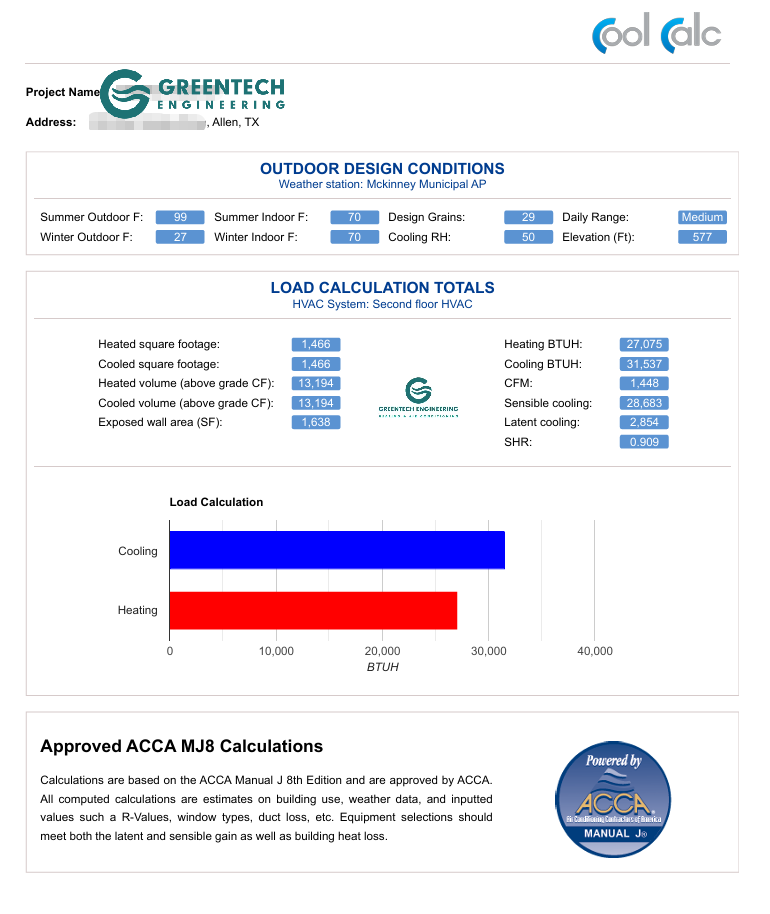
At Greentech Engineering, we perform comprehensive ACCA Manual J Load Calculations for each distinct zone of your home.
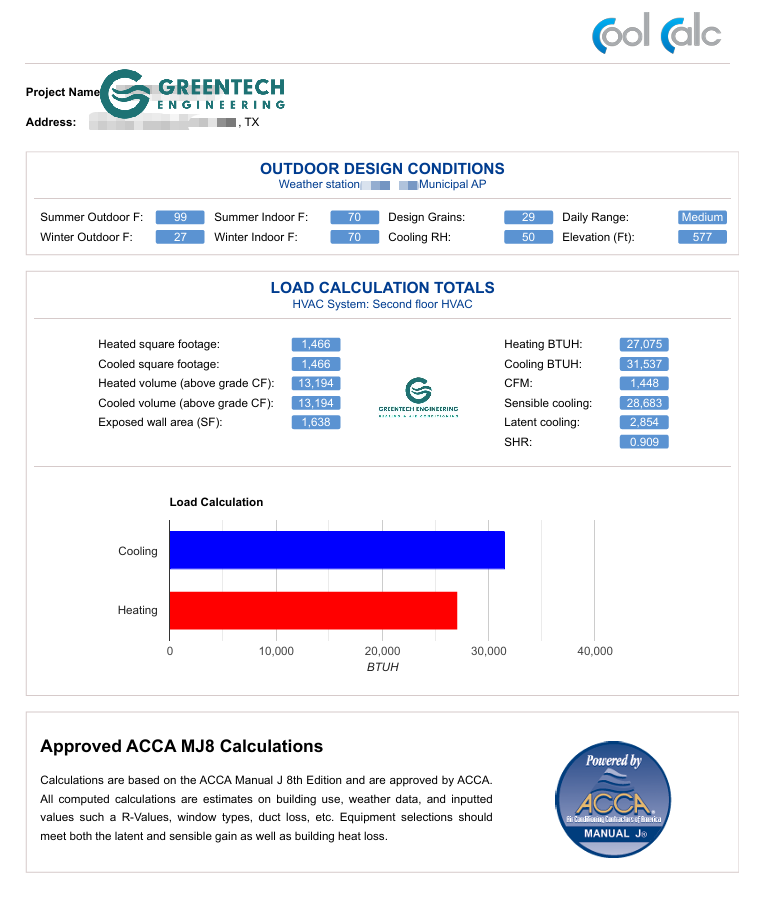
By scientifically measuring your home's specific heat gain coefficients, insulation R-values, and cubic volume, we often find that the old systems were massively oversized. Downsizing the equipment to match the exact mathematical load (e.g., dropping a 5-ton to a precisely calibrated 4-ton variable-speed unit) permanently cures humidity issues and significantly lowers the electrical draw on the grid.
The Daikin Solution: ECM Motors and Variable-Speed Tech
Once the Manual J establishes the perfect sizing, upgrading to modern, multi-stage Daikin equipment is the key to protecting your wallet from grid spikes.
Unlike old single-stage units, high-efficiency Daikin systems utilize Electronically Commutated Motors (ECM) and inverter-driven compressors. This technology acts like the accelerator pedal in a hybrid car:
- Soft Starts: Instead of slamming the grid with a massive amp spike, the compressors gently ramp up, practically eliminating the startup power surge.
- Continuous Dehumidification: Instead of blasting on and shutting off, the systems can ramp down to 30% or 40% capacity, running continuously at a whisper-quiet hum. This completely strips the humidity out of your Dallas home while using less electricity than a standard hairdryer.
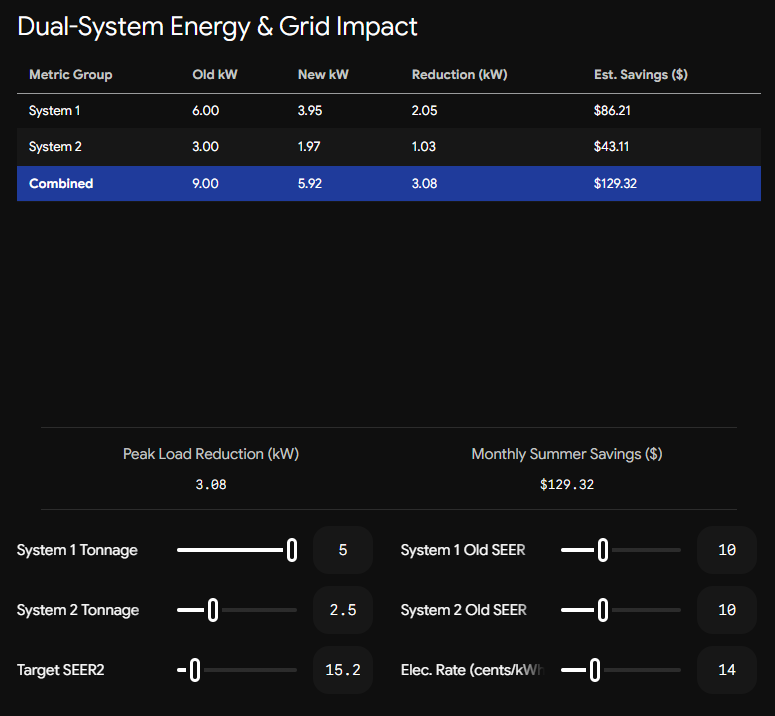
Before diving into the massive utility rebates available for these upgrades, use the interactive calculator below to see exactly how transitioning from a legacy dual-system to a modern SEER2 setup reduces your home's peak kW demand on the Texas grid.
To fully understand the thermodynamic impact of an upgrade, I have built an interactive simulator. Adjust the sliders to match your current dual-system setup and see how upgrading drastically cuts your peak kilowatt (kW) demand.
Why You Need an Authorized Oncor Service Provider
You cannot claim the Oncor rebate by buying an AC online or hiring an uncertified handyman. The utility company strictly regulates the disbursement of these funds to protect the integrity of the power grid.
To access the Home Energy Efficiency Program, you must hire an official Oncor Participating Service Provider.
When you partner with Greentech Engineering, we handle the entire bureaucratic process. We gather the AHRI (Air-Conditioning, Heating, and Refrigeration Institute) performance certificates, document the baseline load of your old system, submit the engineering data to the Oncor portal, and secure the approval.
Best of all, you do not have to wait months for a check to arrive in the mail. We apply the approved Oncor incentive as an instant, upfront discount directly on your installation invoice.
2026 Oncor Incentive Snapshot: Dallas-Fort Worth
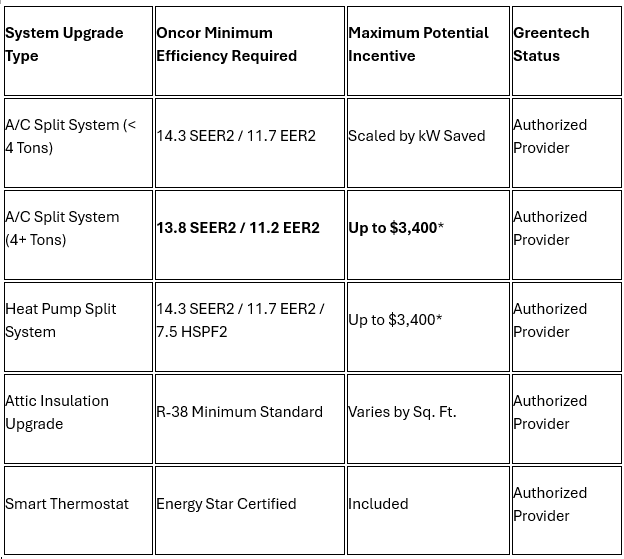
*Incentive Disclaimer: The $3,400 figure represents the absolute maximum potential incentive. Actual instant discount amounts are strictly determined by Oncor's customized kW/kWh reduction formula based on your specific home’s thermodynamic load reduction. Proactive replacement and proper Manual J sizing are the keys to maximizing your payout.
Frequently Asked Questions
Q: Should I replace both of my AC systems at the same time?
A: While not strictly mandatory, replacing both your upstairs and downstairs systems simultaneously is highly recommended. It ensures your entire home operates on the same modern efficiency platform, lowers overall labor costs, and maximizes your potential kW-reduction, which is the direct formula used to calculate your instant Oncor rebate.
Q: What is the difference between SEER and SEER2?
A: SEER2 is the updated efficiency standard mandated by the Department of Energy (DOE) (External Link) starting in 2023. SEER2 testing conditions are far more rigorous and accurately reflect real-world ductwork static pressures. A 14.3 SEER2 system is significantly more efficient than an older 14 SEER system.
Q: Can a 5-ton AC be too big for my downstairs layout?
A: Yes. The old "rule of thumb" was sizing based entirely on square footage, leading to massively oversized equipment. A strict ACCA Manual J load calculation accounts for shading, ceiling volume, and window materials. We frequently downsize older 5-ton units to 4-ton variable-speed units, providing superior humidity control and slashing electricity usage.
Q: How do I apply for the Dallas Oncor HVAC Rebate?
A: Homeowners do not apply directly. You must hire an Authorized Oncor Participating Service Provider (like Greentech Engineering). We handle the AHRI engineering calculations, submit the pre- and post-installation data to the Oncor portal, and instantly deduct the approved incentive from your final invoice.
About the Author: Siwei (Lucas) Chen
CTO | Greentech Engineering Heating & Air Conditioning
Siwei (Lucas) Chen specializes in engineering-driven HVAC diagnostics, thermodynamic performance optimization, and custom ductwork design for Dallas homeowners. Holding a B.S. in Mechanical Engineering from Virginia Tech, he brings a strict, data-first approach to residential heating and cooling. Under his technical leadership, Greentech Engineering ensures every system is perfectly calibrated for the Texas climate, focusing relentlessly on ACCA Manual J load calculations, meticulous clinical installation standards, and securing maximum utility rebates for his clients.
Professional Certifications:
- ACCA Certified (Manual J, S, D)
- Daikin Comfort Pro Contractor
- NCI Certified – Air Balancing & Duct Optimization
- Oncor Participating Service Provider
Industry Affiliations:

Flexible Financing Options
Explore our range of flexible financing options designed to suit your needs and budget.