





Solving the "Hot Upstairs": A 7.5-Ton Dual AC Replacement for Large Dallas Homes (75248)
Large, two-story homes in Far North Dallas—especially throughout the 75248 Prestonwood and North Central Dallas neighborhoods—present a unique thermodynamic challenge. With expansive floor plans, vaulted ceilings, and second stories baking under the relentless Texas sun, a single air conditioning unit is rarely enough to maintain even temperatures.
When your downstairs feels like a refrigerator but your upstairs feels like a sauna, the solution isn't just "more power." The solution is precise, mathematical engineering.
In the AI-driven energy era, HVAC is no longer just about comfort — it’s about how efficiently your home uses power. At Greentech, we engineer systems that reduce your energy load and prepare your home for the future.
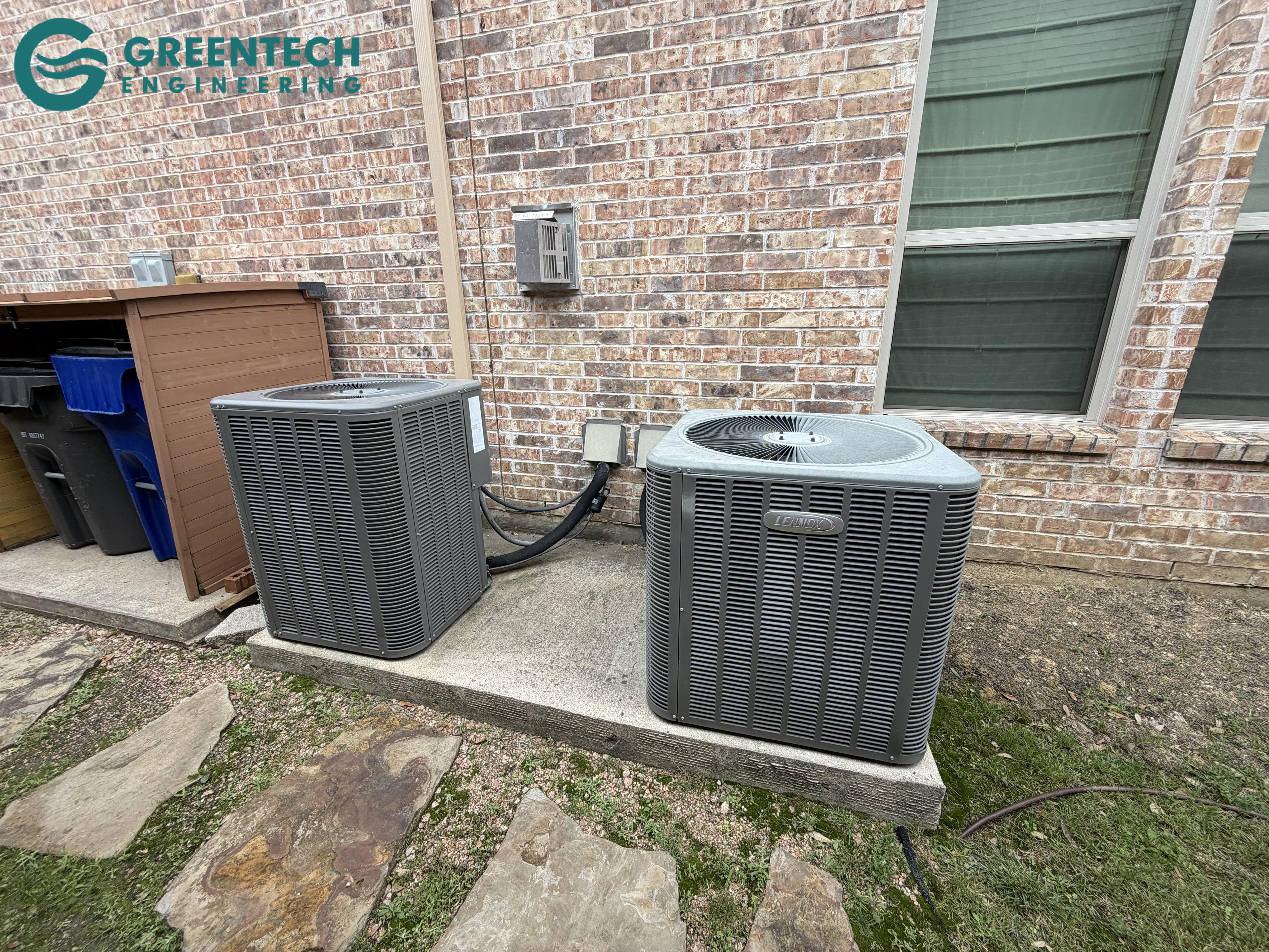
Recently, our team encountered a beautiful Dallas estate suffering from a massive comfort imbalance caused by outdated, mismatched 10-SEER Lennox systems. In this case study, we pull back the curtain on our 7.5-Ton Comfort Overhaul. We will explain the "Golden Ratio" of dual-system sizing, detail our strict clinical installation protocols, and show you why standard "box swapping" is costing North Texas homeowners thousands of dollars in lost Oncor utility rebates.
What size AC do I need for a 2-story house in Dallas?
The short answer is: You likely need a dual-zoned system mathematically sized via an ACCA Manual J calculation, often utilizing a larger unit for the downstairs (e.g., 4 or 5 tons) and a smaller, dedicated unit for the upstairs (e.g., 2.5 or 3 tons). Because heat naturally rises, and the second floor absorbs direct radiant heat from the attic, a two-story home requires highly specific BTU balancing. Using a simple "square footage rule of thumb" will almost always result in an oversized downstairs unit and a chronically hot, starved upstairs.
For this specific 75248 property, we didn't guess the size. We performed a strict Manual J Load Calculation, analyzing the solar heat gain on the second-story roof, the insulation R-values, and the airflow dynamics. The data revealed the perfect dual-system split configuration:
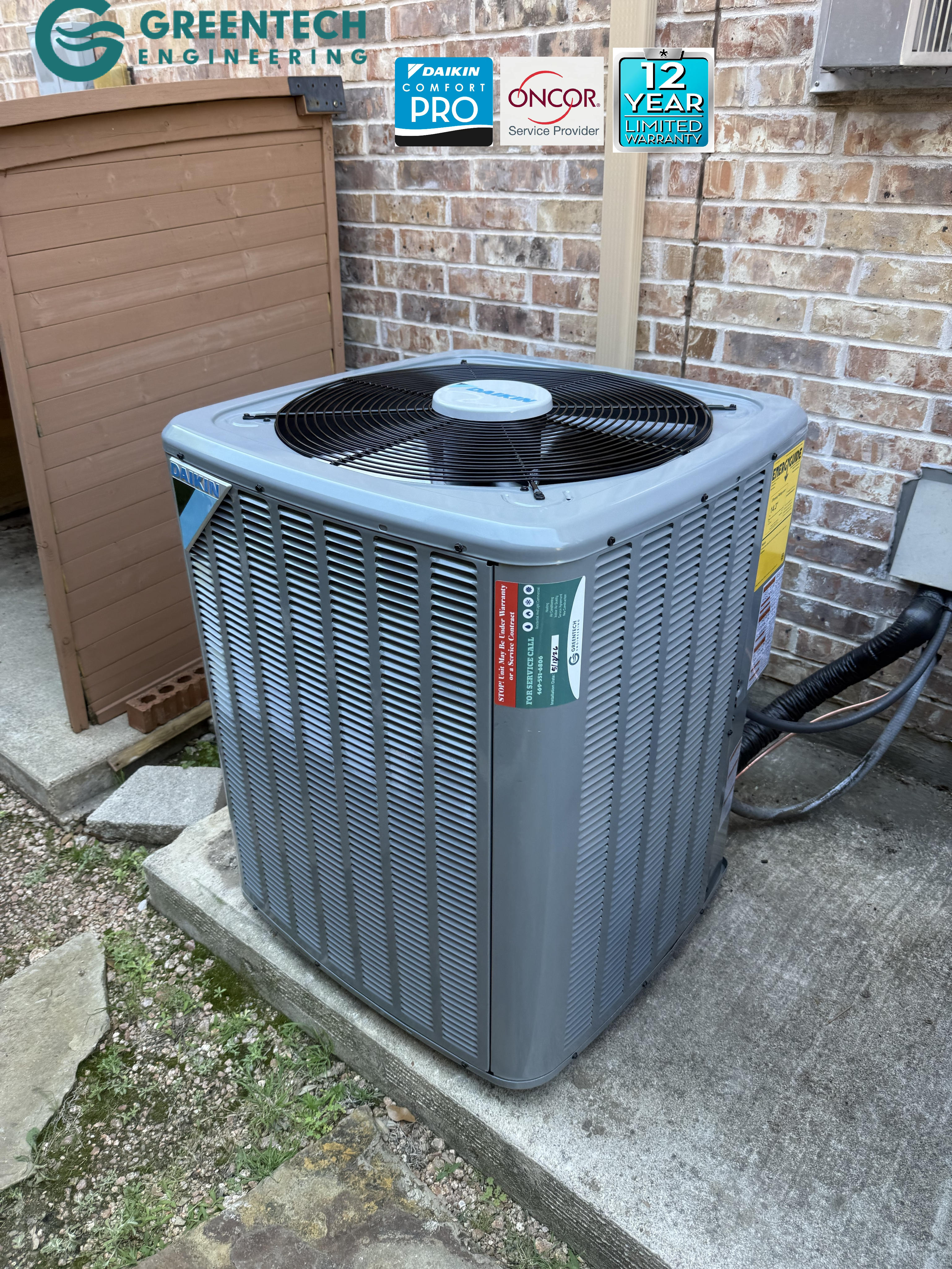
- Downstairs (The Heavy Lifter): A 5.0-Ton (60,000 BTU) Daikin 14.5 SEER2 System to handle the expansive open-concept living areas and high kitchen heat loads.
- Upstairs (The Precision Cooler): A 2.5-Ton (30,000 BTU) Daikin 14.5 SEER2 System dedicated exclusively to maintaining a consistent 72°F in the bedrooms during a 105°F Dallas afternoon.
Learn more about how we cure the "Hot Upstairs" with NCI Air Balancing
Engineering the Daikin 14.5 SEER2 Setup
Most homeowners do not realize that older 10 or 14 SEER systems are now obsolete in terms of 2023 DOE Energy Conservation Standards. By upgrading to AHRI-certified Daikin 14.5 SEER2 High-Efficiency Split Systems, we dramatically improved the home's ability to perform latent cooling (humidity removal) and sensible cooling (temperature reduction).
This upgrade isn't just about lower electric bills; it’s about superior mechanical components. Both the 5-Ton and 2.5-Ton configurations feature:
- High-Efficiency Copeland® Scroll Compressors: The gold standard in thermodynamic reliability, offering quiet, continuous operation.
- Advanced Copeland® CoreSense™ Technology: Active electronic diagnostic protection that monitors the system and prevents catastrophic compressor failure.
- Thermal Expansion Valves (TXV): Factory-installed inside the all-aluminum evaporator coils, these valves dynamically regulate refrigerant flow to maximize humidity removal during sticky Dallas summers.
- High-Density Foam Sound Blankets: Ensuring these powerful units operate with whisper-quiet acoustics, protecting your backyard peace.
Proof of Professionalism: The Clinical Installation Difference
High-volume "box-swap" companies often skip critical steps to rush the job. At Greentech Engineering, our clinical scope of work guarantees lifetime reliability. Here is the engineering difference we brought to this Far North Dallas home:
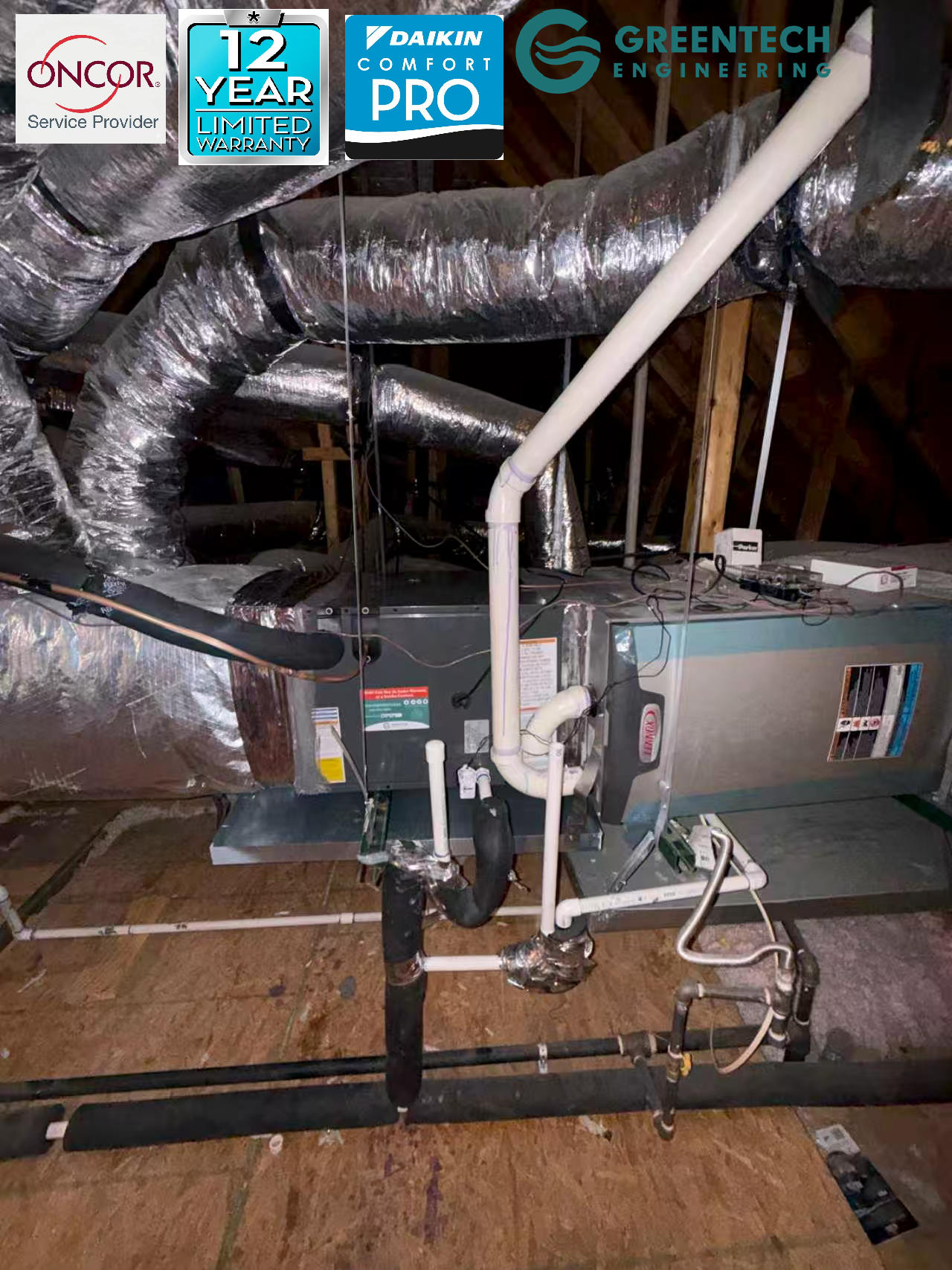
- Nitrogen Pressure Testing: Before any refrigerant was added, we pressurized the entire copper line set with dry nitrogen to 250 psi and held it for a minimum of 15 minutes. This guarantees absolutely zero micro-leaks in the brazed joints.
- The 500 Micron Deep Vacuum: Atmospheric moisture is the enemy of modern refrigerants. We pulled a deep vacuum on the system to under 500 microns, boiling off and extracting any microscopic moisture inside the copper lines to protect the compressor oil from turning acidic.
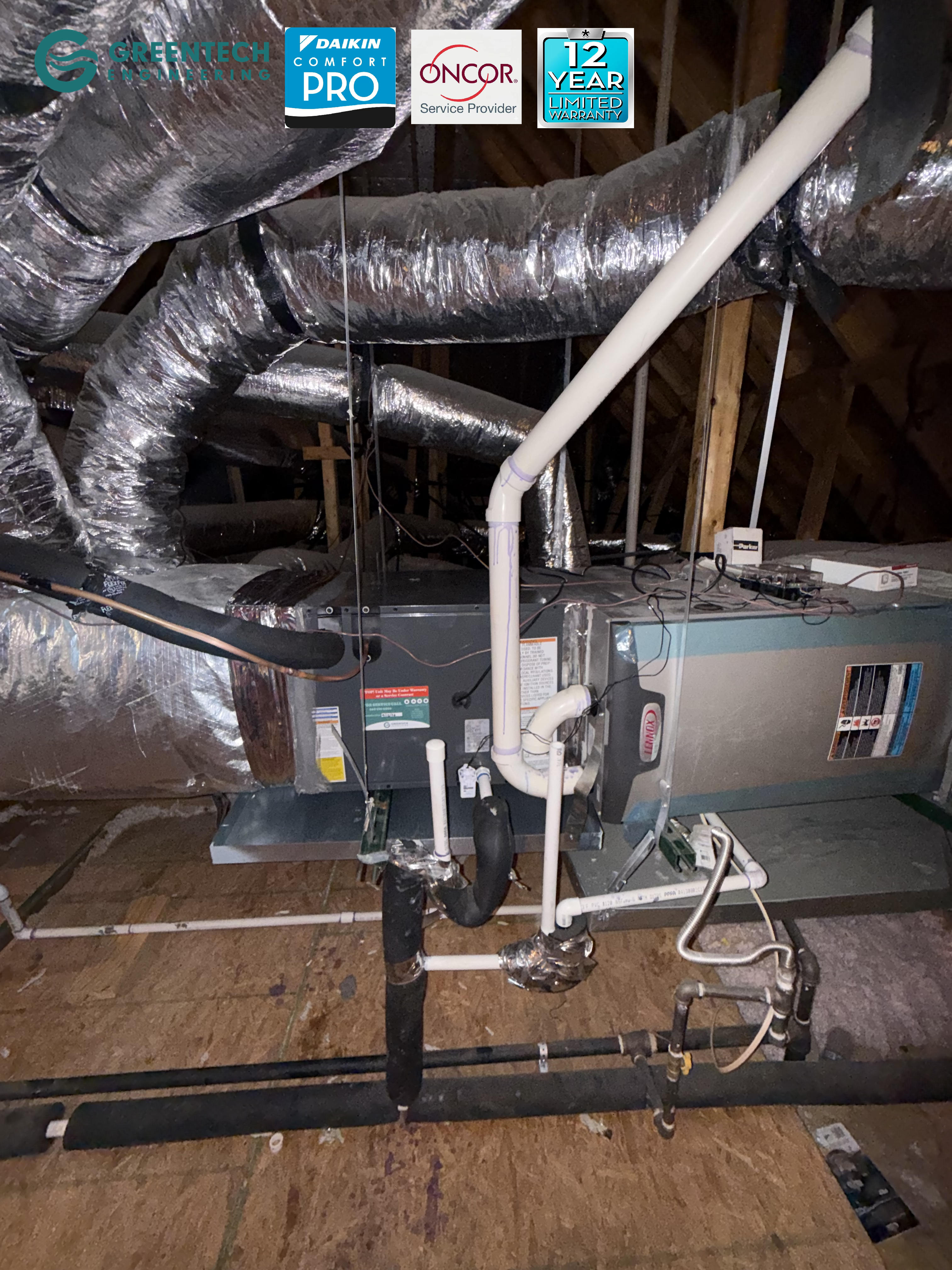
- Attic Flood Prevention: We installed brand new, rust-resistant high-temperature thermoplastic drain pans and wired in Safe-T drain switches. If a condensation line ever clogs, the system shuts off automatically, preventing devastating water damage to the downstairs ceilings.
Why You Need an Authorized Oncor Service Provider
You cannot claim the Oncor rebate by buying an AC online or hiring an uncertified handyman. The utility company strictly regulates the disbursement of these funds to protect the integrity of the power grid.
To access the Home Energy Efficiency Program, you must hire an official Oncor Participating Service Provider.
When you partner with Greentech Engineering, we handle the entire bureaucratic process. We gather the AHRI (Air-Conditioning, Heating, and Refrigeration Institute) performance certificates, document the baseline load of your old system, submit the engineering data to the Oncor portal, and secure the approval.
Best of all, you do not have to wait months for a check to arrive in the mail. We apply the approved Oncor incentive as an instant, upfront discount directly on your installation invoice.
2026 Oncor Incentive Snapshot: Forney & Kaufman County
(Note: These incentive structures apply across the broader DFW Oncor territory, including Dallas).
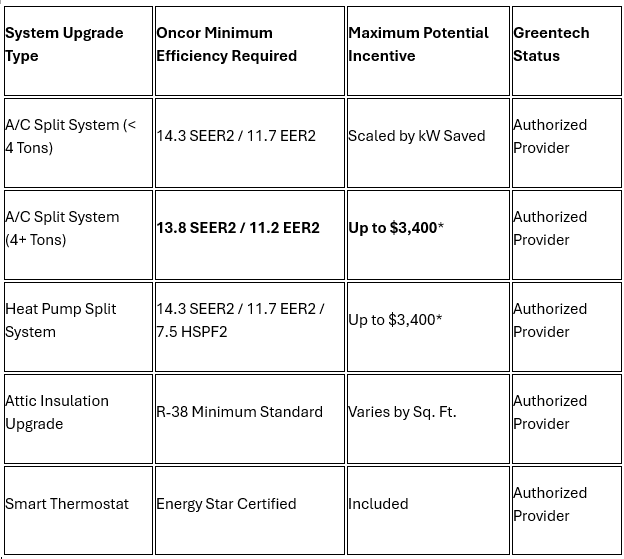
*Incentive Disclaimer: The $3,400 figure represents the absolute maximum potential incentive. Actual instant discount amounts are strictly determined by Oncor's customized kW/kWh reduction formula based on your specific home’s thermodynamic load reduction. Proactive replacement and proper Manual J sizing are the keys to maximizing your payout.
The 75248 Triple-Layer Protection Plan
When investing in a massive 7.5-Ton property overhaul, you need more than just cold air—you need financial security. While others offer basic minimums, Greentech provides our Triple-Layer Protection Plan:
- 12-Year Factory Limited Parts Warranty: (Requires homeowner registration).
- 6-Year Unit Replacement Warranty: If the compressor or coil fails within this window, Daikin doesn't just send a part; they provide a completely new unit.
- 3-Year Complimentary Labor Warranty: Our personal, localized guarantee. If our engineering fails, we fix it on our dime.
If your Far North Dallas home is suffering from uneven cooling, high energy bills, and aging equipment, do not settle for guesswork. For an transparent Regional Service Fee, our certified engineers will evaluate your property, perform a thermodynamic load calculation, and design a custom solution.
Verify Daikin's premium 12-Year Warranty Standards
Frequently Asked Questions (FAQ)
Q: How do you fix a hot upstairs in a two-story Dallas home?
A: A hot upstairs is rarely solved by just closing downstairs vents. It requires a comprehensive approach: performing a Manual J load calculation to ensure the upstairs AC unit is properly sized, utilizing NCI air balancing to correct restrictive static pressure in the ductwork, and ensuring proper return-air pathways so heavy, cold air can effectively circulate on the second floor.
Q: What is a TXV valve and why is it important for Dallas humidity?
A: A Thermal Expansion Valve (TXV) is a precision component factory-installed inside our Daikin evaporator coils. It dynamically regulates the flow of liquid refrigerant based on the exact temperature of the coil. This ensures the coil stays perfectly cold without freezing, maximizing the system's ability to extract sticky latent humidity out of your indoor air.
Q: Why do you vacuum the AC lines to 500 microns during installation?
A: Atmospheric air contains moisture. If even a microscopic drop of water mixes with the refrigerant and POE oil inside a modern AC system, it creates a highly corrosive acid that will eventually destroy the compressor. By using a specialized vacuum pump to pull the system pressure below 500 microns, we literally boil off and extract all moisture from the pipes before turning the system on.
About the Author: Siwei (Lucas) Chen
CTO | Greentech Engineering Heating & Air Conditioning
Siwei (Lucas) Chen specializes in engineering-driven HVAC diagnostics, thermodynamic performance optimization, and custom ductwork design for Dallas homeowners. Holding a B.S. in Mechanical Engineering from Virginia Tech, he brings a strict, data-first approach to residential heating and cooling. Under his technical leadership, Greentech Engineering ensures every system is perfectly calibrated for the Texas climate, focusing relentlessly on ACCA Manual J load calculations, meticulous clinical installation standards, and securing maximum utility rebates for his clients.
Professional Certifications:
- ACCA Certified (Manual J, S, D)
- Daikin Comfort Pro Contractor
- NCI Certified – Air Balancing & Duct Optimization
- Oncor Participating Service Provider
Industry Affiliations:

Flexible Financing Options
Explore our range of flexible financing options designed to suit your needs and budget.