





Dallas 75248 HVAC Case Study: Replacing Two Aging Systems With Daikin
A two-story home in Dallas, Texas 75248 relied on two separate HVAC systems—one serving the upstairs and another serving the downstairs. As the original equipment aged, the homeowners experienced declining performance, longer operating cycles, uneven comfort, and concerns about reliability during the Texas cooling season.
Greentech Engineering Heating & Air Conditioning — DFW HVAC evaluated the existing equipment, duct connections, drainage, and the different heating and cooling demands of each floor. A residential load-calculation process supported the selection of a 1.5-ton Daikin system for the upstairs area and a 4-ton Daikin system for the downstairs area.
The project included indoor and outdoor equipment replacement, duct-transition improvements, drainage protection, refrigerant-line preparation, pressure testing, deep-vacuum evacuation, system startup, and final commissioning.
Homeowners considering a similar project can learn more about our Dallas AC replacement services.
Quick answer: Greentech Engineering Heating & Air Conditioning — DFW HVAC replaced two aging systems in this Dallas 75248 home with a 1.5-ton Daikin system for the upstairs and a 4-ton Daikin system for the downstairs. The replacement plan was based on residential load-calculation data and included duct-connection sealing, drainage protection, pressure testing, evacuation, startup, and commissioning.

What HVAC Systems Were Installed in This Dallas Home?
The home’s two aging HVAC systems were replaced with separate Daikin split systems designed to serve the different cooling loads of the upstairs and downstairs areas.
The project included:
- A 1.5-ton Daikin air-conditioning system for the upstairs zone
- A 4-ton Daikin air-conditioning system for the downstairs zone
- Matching indoor evaporator coils
- Gas furnaces with electronically controlled blower motors
- New outdoor equipment pads
- Drainage and overflow-protection improvements
- Duct-transition sealing and modification
- Refrigerant-system pressure testing and evacuation
- Final startup and commissioning
Using two properly selected systems allows each floor to respond to its own comfort demand rather than forcing one system to condition the entire home.
The Homeowner’s HVAC Challenge
Two-story homes in Dallas frequently experience different cooling demands on each floor. The upstairs area is often affected more heavily by attic heat, roof exposure, air leakage, insulation conditions, window orientation, and airflow limitations.
In this home, the existing systems had reached the point where continued repair was becoming less attractive than replacement. The homeowners wanted to improve reliability while preserving independent temperature control for the upstairs and downstairs areas.
Instead of automatically replacing the old equipment with systems of the same size, the Greentech HVAC team evaluated the home’s actual cooling requirements before selecting the new equipment.
Homeowners experiencing hot rooms or floor-to-floor temperature differences can also review our Dallas room-temperature and airflow diagnostic service.
Why HVAC Load Calculation Matters
HVAC equipment should not be selected by square footage alone.
A residential load calculation considers factors such as:
- Conditioned floor area
- Number of floors
- Ceiling height
- Window size and orientation
- Insulation levels
- Air leakage
- Roof and attic exposure
- Occupancy
- Internal heat sources
- Duct location and condition
Oversized equipment may cool the house too quickly, resulting in short operating cycles and reduced humidity removal. Undersized equipment may struggle to maintain the thermostat setting during peak summer conditions.
For this Dallas 75248 project, the evaluation supported the following capacities:
- Upstairs system: 1.5 tons
- Downstairs system: 4 tons
The goal was to match each system more closely to the area it serves. ACCA describes Manual J residential load calculation as the ANSI-recognized method for calculating residential heating and cooling loads.
For additional information, read why rule-of-thumb AC sizing can fail in Dallas homes.
Upstairs System: 1.5-Ton Daikin Installation
The upstairs zone received a 1.5-ton Daikin air-conditioning system with a matching indoor coil and gas furnace.
Because upstairs areas often have different cooling and airflow requirements from downstairs living spaces, the smaller system was selected to serve the calculated upper-floor load without unnecessarily increasing capacity.
The upstairs installation included:
- New outdoor condenser
- Matching indoor evaporator coil
- Gas furnace and blower assembly
- Refrigerant-line preparation
- Condensate-drain improvements
- Overflow-protection devices
- Duct-transition sealing
- Startup and operational testing
The blower settings were configured during commissioning to support the installed equipment and the existing duct system.
Downstairs System: 4-Ton Daikin Installation
The downstairs area required a larger 4-ton Daikin system because it serves a greater portion of the home’s conditioned space and has a different calculated cooling load.
The downstairs installation included:
- New 4-ton outdoor condenser
- Matching indoor evaporator coil
- Gas furnace and electronically controlled blower
- New condenser equipment pad
- Refrigerant-line cleaning and preparation
- Drainage and overflow protection
- Duct-connection modifications
- Pressure testing and evacuation
- Final system commissioning
Separate systems allow the homeowners to control each floor independently and reduce unnecessary conditioning of unoccupied areas.
Installation and Commissioning Process
Equipment efficiency depends not only on the manufacturer’s rating but also on the quality of the installation.
For this project, the Greentech HVAC team completed the following replacement and commissioning procedures.
1. Existing Equipment Removal
The original indoor and outdoor equipment was disconnected and removed. Refrigerant was handled using appropriate recovery procedures.
2. Equipment-Pad and Safety Improvements
New outdoor equipment pads were installed to provide stable and level support for the condensers.
Drain pans, drain piping, and overflow-protection switches were also reviewed and improved to reduce the risk of water damage from a blocked condensate line.
3. Drain-Line Cleaning
The existing condensate-drain system was cleared and prepared before the new equipment was placed into operation.
4. Indoor Equipment Installation
The new evaporator coils and furnaces were installed in the attic and connected to the existing supply and return duct systems.
The equipment was supported, leveled, and positioned to allow appropriate drainage and service access.
5. Duct-Connection Sealing
Connections between the new equipment and the existing duct system were modified and sealed to reduce air leakage around the equipment transitions.
Air leakage in an attic can waste conditioned air and reduce the airflow delivered to the rooms below. Learn more about our duct design and airflow services in Dallas.
6. Refrigerant-Line Preparation
The existing copper refrigerant lines were cleaned and prepared for the new equipment. Dry nitrogen was used during brazing to help reduce internal oxidation inside the copper tubing.
7. Pressure Testing
After the refrigerant connections were completed, the sealed circuits were pressure-tested with dry nitrogen to check for leaks.
8. Deep-Vacuum Evacuation
The refrigerant circuits were evacuated to remove air and moisture before the systems were charged and placed into operation.
For this project, the evacuation process reached below 500 microns before final startup.
9. Startup and Commissioning
Both systems were started and tested after installation.
The commissioning process included checking:
- Thermostat operation
- Blower configuration
- Refrigerant-system performance
- Temperature change across the equipment
- Condensate drainage
- Electrical operation
- Furnace safety controls
- Outdoor-unit operation
- General airflow and system response
Final settings were adjusted according to the installed equipment and field conditions.
Before and After the HVAC Replacement
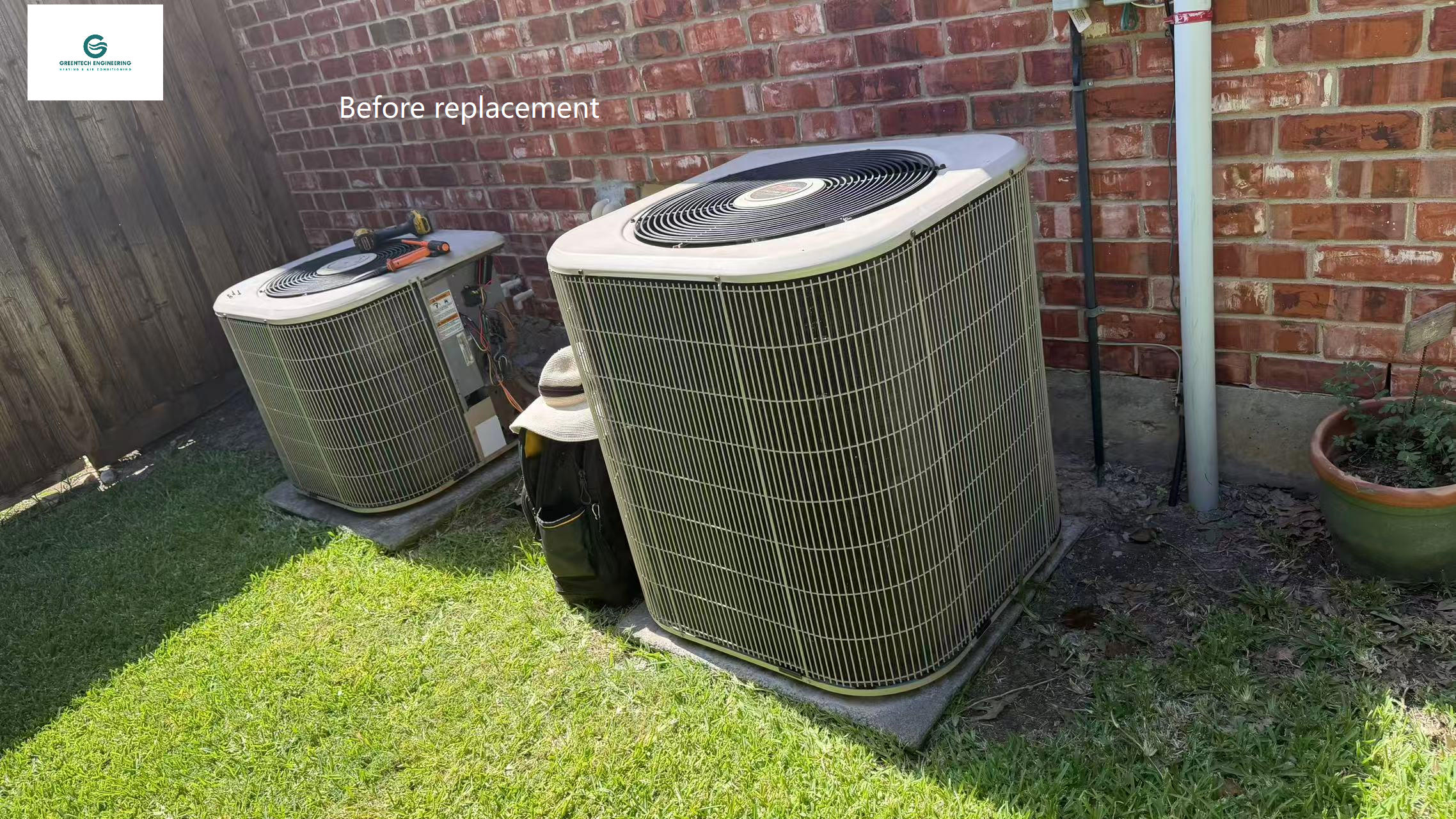
Before replacement, the home relied on two aging systems that had experienced declining performance and reliability.
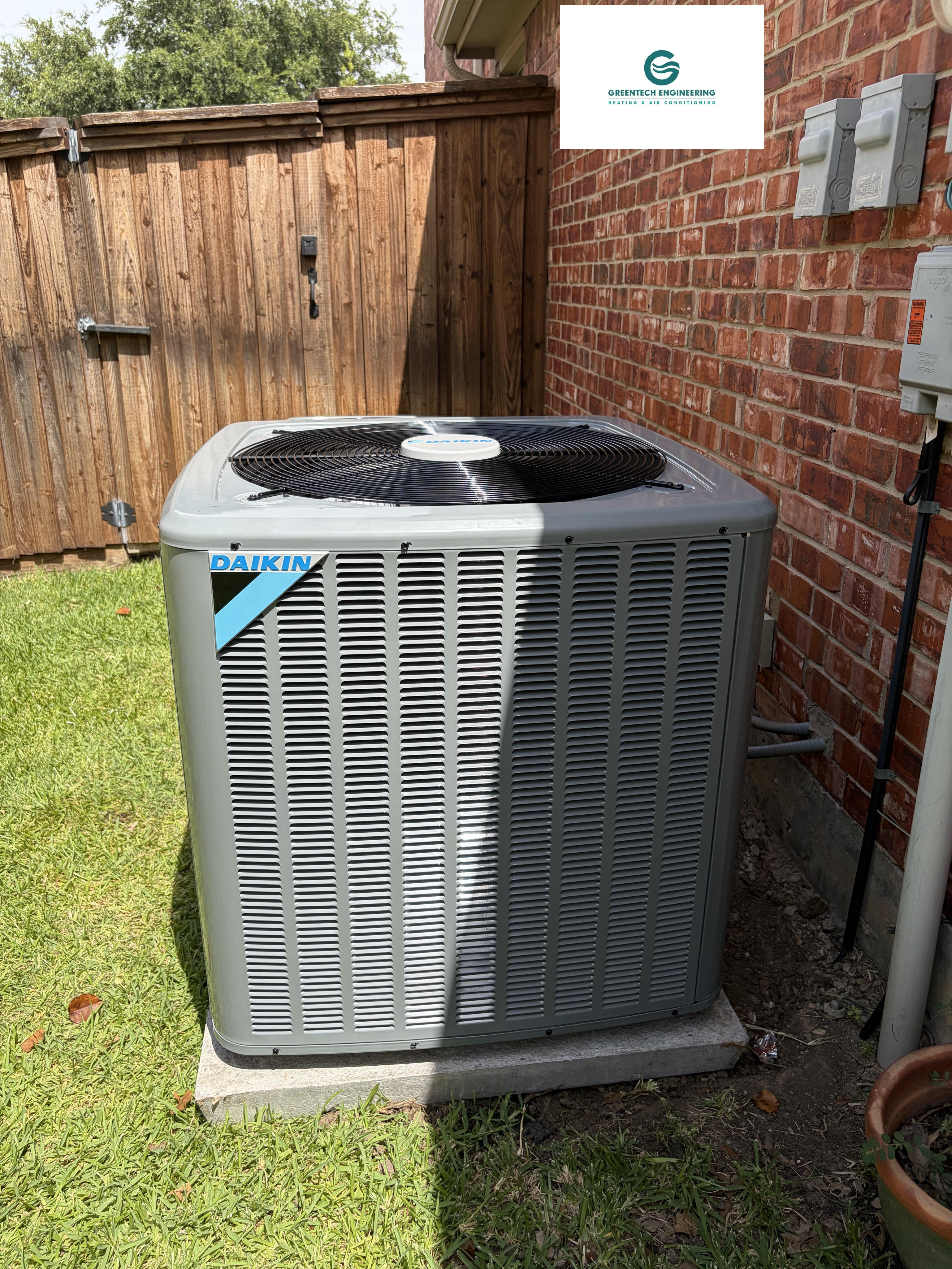
After completion, the home had:
- Two new Daikin outdoor condensers
- Two matching indoor systems
- Separate upstairs and downstairs temperature control
- Improved equipment-to-duct connections
- Updated drainage protection
- New outdoor equipment pads
- Properly prepared refrigerant circuits
- Completed startup and commissioning
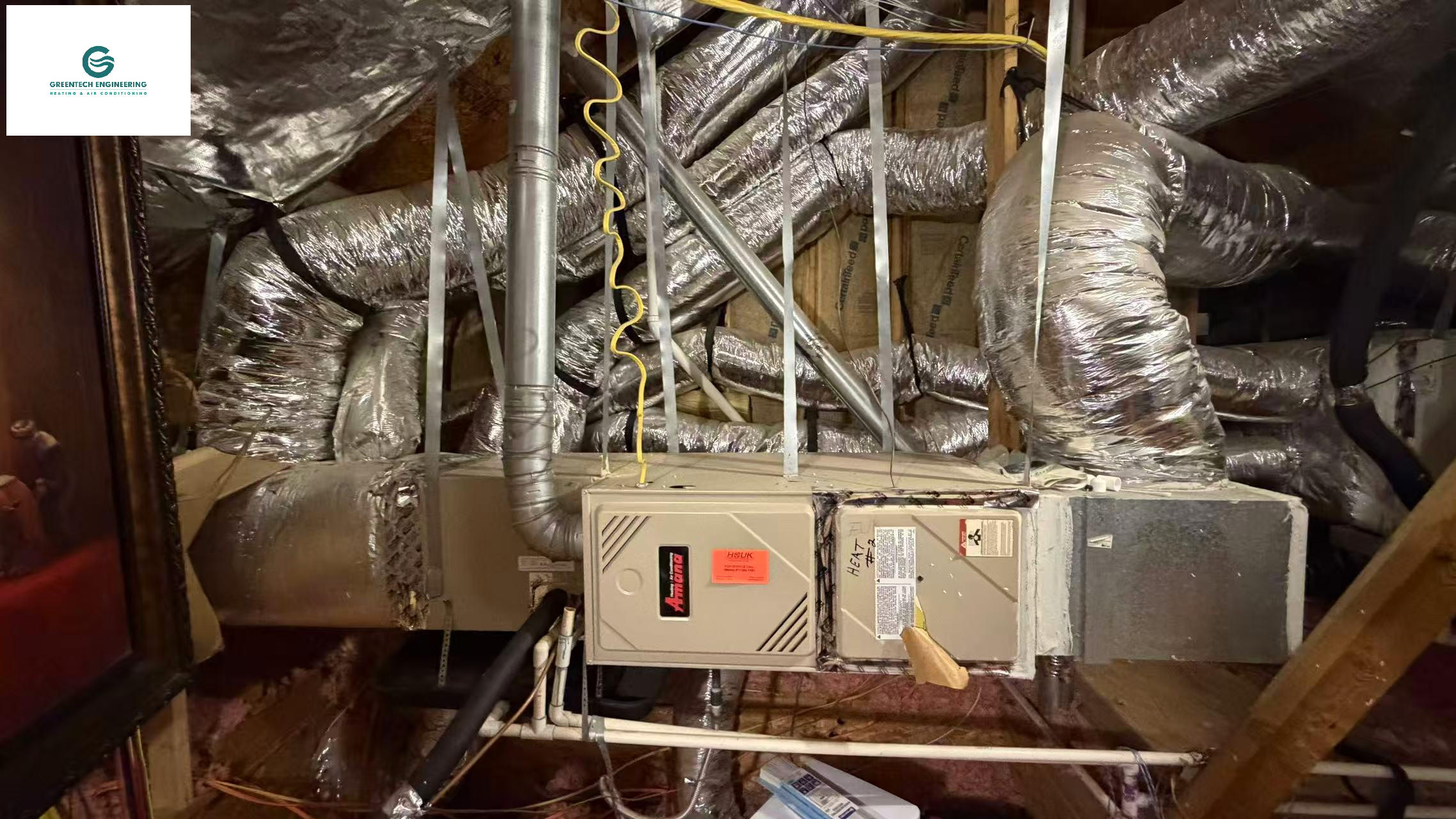
The before-and-after photographs document the original equipment configuration and the completed outdoor and attic installations.
[INSERT OLD INDOOR-EQUIPMENT IMAGE HERE]
The previous attic-mounted indoor HVAC equipment before removal and replacement.
Oncor HVAC Incentive Support
Some qualifying HVAC replacement projects within the Oncor service territory may be eligible for energy-efficiency incentives.
Eligibility is not determined by equipment efficiency alone. It may depend on:
- Whether the home receives electric delivery service through Oncor
- The type and condition of the existing equipment
- The efficiency ratings of the new matched system
- AHRI certification
- Required project documentation
- Estimated and verified energy savings
- Program funding availability
- Current Oncor program rules
- Final program review and approval
Customers can review the Oncor Home Energy Efficiency Program and Oncor’s Find a Service Provider tool.
Greentech Engineering Heating & Air Conditioning — DFW HVAC can assist eligible customers with project documentation and submission through the applicable Oncor energy-efficiency program.
Greentech Engineering Heating & Air Conditioning — DFW HVAC is an independent HVAC contractor. Participation in an Oncor program does not mean that Oncor endorses or guarantees the contractor’s work.
Final eligibility and incentive amounts are determined under the applicable program requirements and cannot be guaranteed before approval.
Equipment Ratings and Warranty Information
The efficiency rating of a complete HVAC system depends on the matched outdoor unit, indoor coil, and furnace or air handler.
Homeowners can verify matched-system performance through the AHRI Directory of Certified Product Performance using the equipment model numbers or AHRI reference number.
Manufacturer limited-warranty terms vary according to model, registration, application, maintenance requirements, and other conditions. Review the current Daikin warranty information and the written warranty documents provided for the installed equipment.
The written proposal for this project included a three-year labor warranty from Greentech Engineering Heating & Air Conditioning — DFW HVAC. The customer’s individual agreement controls the exact coverage, exclusions, and conditions.
HVAC Financing Options
Replacing two HVAC systems at the same time can be a significant household expense.
Financing options may be available through Wisetack for qualified applicants. Available loan amounts, repayment periods, and annual percentage rates depend on the applicant, lender, merchant program, and transaction.
Not all applicants qualify, and not all applicants will qualify for promotional or 0% APR terms. Customers should review the complete financing disclosure and repayment terms before accepting an offer. Additional information is available through Wisetack’s consumer financing page.
Why This Dallas HVAC Case Study Matters
This project demonstrates why replacing HVAC equipment should involve more than selecting a brand and matching the size printed on the old condenser.
A successful two-system replacement should consider:
- The heating and cooling load of each floor
- Equipment capacity
- Indoor and outdoor equipment compatibility
- AHRI-rated system performance
- Duct connections
- Airflow
- Drainage
- Refrigerant-line condition
- Installation procedures
- Startup and commissioning
For two-story homes, the upstairs and downstairs areas may require substantially different system capacities. Evaluating them separately can help avoid unnecessary oversizing and improve the way each zone operates.
Frequently Asked Questions
Should a two-story Dallas home have two HVAC systems?
Not every two-story home requires two systems. However, separate systems can provide independent temperature control and may be appropriate when the floors have different cooling loads, usage patterns, duct systems, or comfort requirements. A residential load calculation and duct evaluation should be completed before making a recommendation.
Why was the upstairs system smaller than the downstairs system?
The upstairs and downstairs areas served different amounts of conditioned space and had different calculated cooling loads. The upstairs zone was matched with a 1.5-ton system, while the downstairs zone required a 4-ton system.
Equipment size should be based on the load of the area being served rather than on the assumption that both floors require equal capacity.
What is a Manual J load calculation?
Manual J is a residential HVAC load-calculation method developed by the Air Conditioning Contractors of America. It estimates how much heating and cooling a home requires by evaluating the building, windows, insulation, orientation, air leakage, occupancy, and local design conditions.
Can an oversized air conditioner cause humidity problems?
Yes. An oversized system may satisfy the thermostat quickly and shut off before operating long enough to remove sufficient moisture from the indoor air. Humidity performance also depends on airflow, duct leakage, equipment configuration, thermostat settings, and building conditions.
Does new HVAC equipment automatically qualify for an Oncor incentive?
No. Eligibility depends on current program rules, the property’s electric service territory, existing equipment, replacement-equipment ratings, required documentation, verified energy savings, available funding, and final program approval.
How long does it take to replace two HVAC systems?
The schedule depends on attic access, equipment configuration, duct modifications, electrical or gas work, drainage conditions, weather, inspection requirements, and whether unforeseen problems are discovered. A contractor should evaluate the property before providing a project timeline.
What warranty applies to a new Daikin HVAC system?
Manufacturer limited-warranty terms depend on the exact equipment model, installation date, registration requirements, property type, location, maintenance requirements, and other conditions. Homeowners should review the written manufacturer warranty and complete any required product registration within the stated period.
Need an HVAC Replacement Evaluation in Dallas?
Greentech Engineering Heating & Air Conditioning — DFW HVAC is a Dallas–Fort Worth HVAC contractor providing:
- Air-conditioning repair
- Heating repair
- Complete HVAC system replacement
- Heat-pump installation
- Residential load calculations
- Duct design and modification
- Airflow testing and balancing
- Indoor-air-quality solutions
- Preventive HVAC maintenance
Explore our HVAC services in Dallas, or contact Greentech Engineering Heating & Air Conditioning — DFW HVAC to schedule an evaluation for your Dallas-area home.
A proper recommendation should consider the condition of the current equipment, the home’s heating and cooling load, ductwork, airflow, efficiency goals, available incentives, and long-term comfort needs.
About the Author: Siwei (Lucas) Chen
CTO | Greentech Engineering Heating & Air Conditioning
Siwei (Lucas) Chen specializes in engineering-driven HVAC diagnostics, thermodynamic performance optimization, and custom ductwork design for Dallas homeowners. Holding a B.S. in Mechanical Engineering from Virginia Tech, he brings a strict, data-first approach to residential heating and cooling. Under his technical leadership, Greentech Engineering ensures every system is perfectly calibrated for the Texas climate, focusing relentlessly on ACCA Manual J load calculations, meticulous clinical installation standards, and securing maximum utility rebates for his clients.
Professional Certifications:
- ACCA Certified (Manual J, S, D)
- Daikin Comfort Pro Contractor
- NCI Certified – Air Balancing & Duct Optimization
- Oncor Participating Service Provider
Industry Affiliations:

Flexible Financing Options
Explore our range of flexible financing options designed to suit your needs and budget.