





Why Is My Energy Bill So High? Common HVAC Problems in Grand Prairie Homes
Every summer in the Dallas-Fort Worth metroplex, homeowners experience the exact same dreaded moment: opening their monthly electric bill and experiencing severe "sticker shock." When the Texas heat pushes past 100°F, your HVAC system works overtime, often accounting for up to 50% of your total household energy consumption.
If you live in Grand Prairie and your energy bills have suddenly skyrocketed compared to last year—or if they are significantly higher than your neighbors' bills—your air conditioning system is almost certainly the culprit.
Before you resign yourself to paying the utility company hundreds of extra dollars every month, our engineering team at Greentech Engineering Heating & Air Conditioning wants you to understand why this is happening. Let’s break down the most common mechanical failures that cause high electricity bills, and explore how a professional HVAC contractor in Grand Prairie, TX can fix them.
The Top 4 HVAC Culprits Behind Skyrocketing Electric Bills
When an air conditioner loses efficiency, it doesn't always stop blowing cold air immediately. Instead, it starts running longer cycles, drawing more electrical amperage, and working twice as hard to achieve the temperature set on your thermostat. Here are the top four reasons your system is draining your wallet:
1. Aging, Low-SEER Equipment
Air conditioners are graded by their Seasonal Energy Efficiency Ratio (SEER). The higher the SEER, the less electricity the unit requires to cool your home. If your Grand Prairie home was built 15 to 20 years ago and still has its original builder-grade system, you likely have a 10 or 12 SEER unit.By modern engineering standards, these units are massive energy hogs. Furthermore, as compressors age, internal wear and tear cause them to lose their original efficiency rating. Upgrading to a modern, high-efficiency system (such as a 15.2 SEER2 unit) can slash your cooling costs dramatically. According to Energy Star, replacing an old system with a high-efficiency unit can save homeowners up to 20% on heating and cooling costs.
2. Leaky Attic Ductwork
This is the hidden thief of the HVAC world. The ductwork running through your attic is responsible for delivering cold air to your living room and bedrooms. During a Texas summer, your attic can easily reach 140°F.If your ductwork has degraded seams, poor insulation, or is actively disconnected, you are literally pumping freshly cooled, expensive air straight into your boiling hot attic. Your system then has to run continuously to make up for the lost air, causing a massive spike in your Oncor energy bill.
3. Improper System Sizing (The "Oversized" Myth)
Many homeowners (and unfortunately, many uncertified contractors) believe that "bigger is better" when it comes to AC units. This is a costly mistake. If your AC is too large for your home's square footage, it will "short cycle"—turning on rapidly, blasting cold air, and shutting off before it has time to remove the humidity from the air. The continuous starting and stopping pulls massive amounts of electrical current, spiking your bill and leaving your home feeling cold but uncomfortably clammy.
4. Failing Motors and Electrical Components
Your HVAC system relies on complex electrical components, including blower motors, condenser fan motors, and capacitors. When a motor begins to fail, it experiences "electrical drag." To keep spinning, a failing motor will pull significantly more electrical amperage from your breaker panel than it is rated for. Our AC repair technicians frequently diagnose motors that are secretly driving up the homeowner's monthly bill before completely burning out.
🛠️ Field Report: Fixing an Oversized AC with an Oncor-Rebated System (ZIP 75052)
The Problem: We recently completed a full A/C replacement project for a homeowner in Grand Prairie (75052) who was struggling with high energy costs and poor comfort. Their home was operating on an older, aging 4-ton Trane system.

The Engineering Assessment: We never guess when it comes to system replacement; we rely on physics. Our team performed a strict ACCA Manual J load calculation. The digital data revealed a shocking truth: the home only required 3 tons of cooling capacity. The previous 4-ton system was significantly oversized, leading to poor humidity control, short cycling, and wasted electricity.

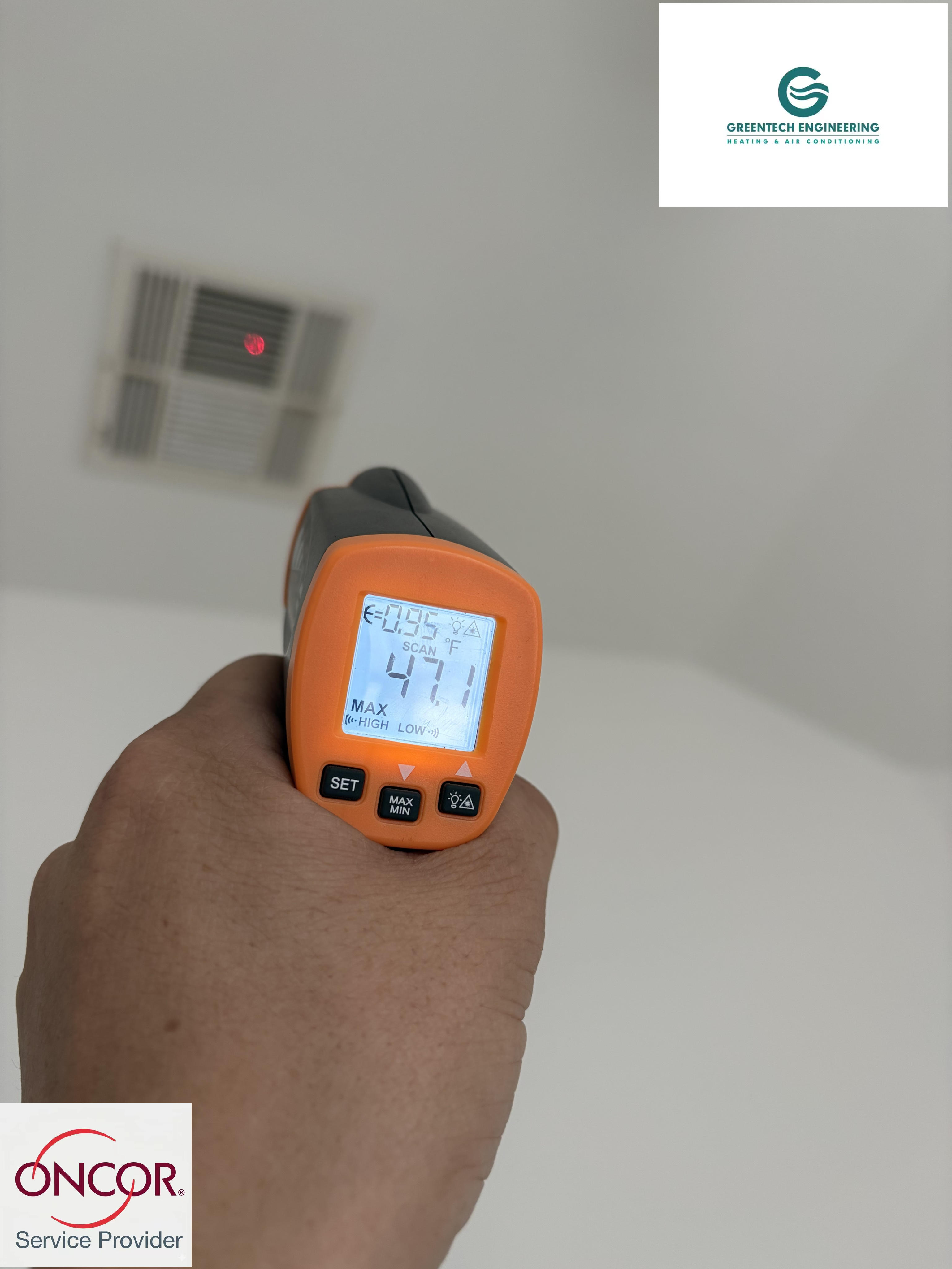
The Engineered Solution: We safely recovered the old equipment and installed a properly sized 3-ton Goodman straight cool system featuring an up-flow electrical air handler with a 9-speed ECM blower motor for vastly improved airflow and comfort.To guarantee a flawless installation, we executed our strict engineering protocols:
- Performed a 250 PSI nitrogen pressure test to verify a 100% leak-free installation.
- Pulled a deep vacuum below 500 microns before refrigerant charging to ensure the copper lines were entirely free of moisture and non-condensable gases.
- Executed a full startup and system performance test.

.jpg)
.jpg)
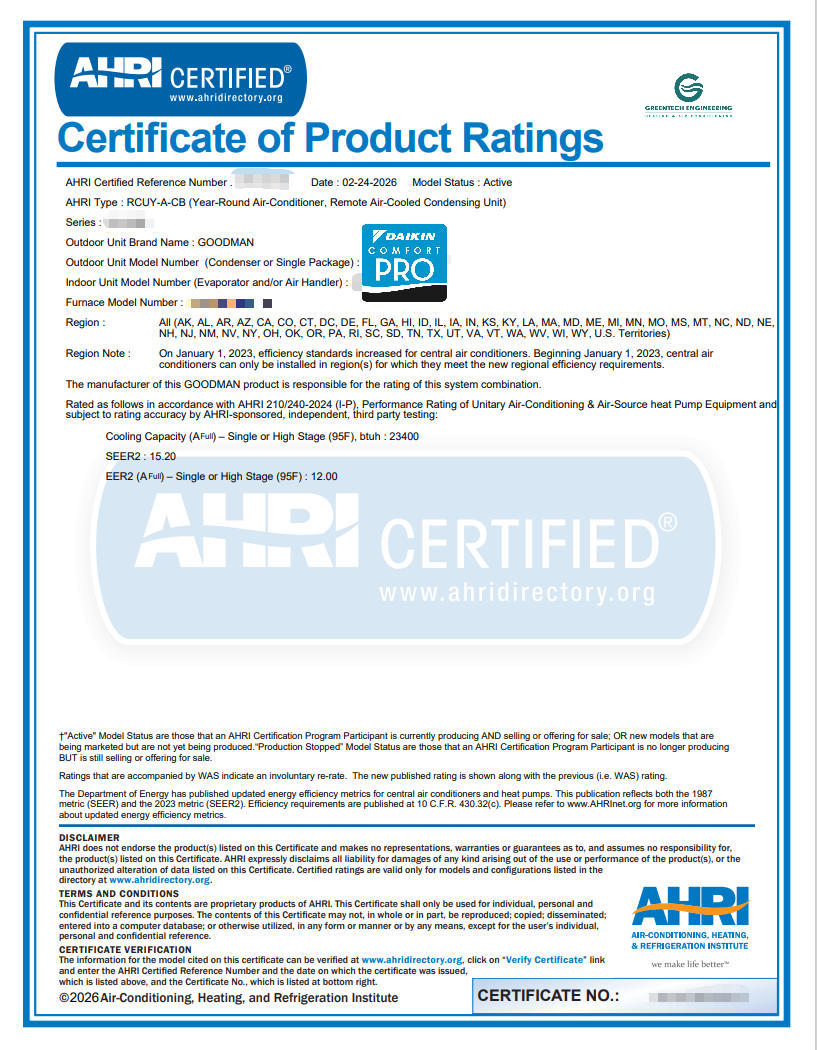
The Financial Win: Because this specific Goodman indoor/outdoor combination was properly sized and installed to strict standards, it delivered an AHRI-certified 15.2 SEER2 performance at 34,400 BTU capacity.Because of this high-efficiency rating, the homeowner qualified for a substantial Oncor Energy Efficiency Incentive. As an approved Oncor Service Provider, we guided the homeowner through the entire process and handled the compliance documentation. They upgraded their home's comfort, corrected a sizing error, and significantly lowered their monthly electric bill!
Frequently Asked Questions (Homeowner Q&A)
Q: Will a new thermostat lower my electric bill?
A: Yes, upgrading to a smart thermostat can save you money by automatically adjusting temperatures when you are away. However, a smart thermostat cannot fix a mechanically failing compressor, an oversized unit, or leaky ductwork.
Q: How do I know if I qualify for an Oncor HVAC rebate in Grand Prairie?
A: To qualify for Oncor’s residential energy efficiency programs, your home must be in the Oncor service territory, and the installation must be performed by an approved Participating Service Provider like Greentech Engineering. We must install an AHRI-matched, high-efficiency system and submit strict engineering data to prove the energy savings.
Q: Is it normal for my AC to run all day in Texas?
A: No. Even on a 100°F day in Grand Prairie, a properly sized and perfectly functioning HVAC system should cycle on and off. If your unit runs continuously without ever shutting off, it is either critically low on refrigerant, severely undersized, or suffering from heavy duct leakage.
Stop Overpaying the Utility Company
If you are tired of opening shockingly high electric bills, it is time to stop guessing and start measuring. Don't assume your house is just "hard to cool." Let our engineer-led team uncover the hidden inefficiencies in your system.
Whether you need a precise electrical repair, expert duct sealing, or a high-efficiency replacement backed by Oncor rebates, Greentech Engineering has the technical expertise to solve the problem permanently.
Ready to lower your energy bill? Call Greentech Engineering today at (469) 551-6806 or schedule an energy diagnostic online.
About the Author: Siwei (Lucas) Chen
CTO | Greentech Engineering Heating & Air Conditioning
Lucas specializes in engineering-driven HVAC diagnostics, performance optimization, and energy-efficiency upgrades for North Texas homeowners. Holding a B.S. in Mechanical Engineering from Virginia Tech, he brings a strict, data-first approach to residential heating and cooling. Under his technical leadership, Greentech Engineering ensures every system is perfectly calibrated for the Dallas-Fort Worth climate, helping homeowners maximize their comfort while minimizing their utility footprint.
Professional Certifications:
- ACCA Certified (Manual J, S, D)
- NCI Certified– Air Balancing & Duct Optimization
- Daikin Comfort Pro Contractor
- Oncor Participating Service Provider

Flexible Financing Options
Explore our range of flexible financing options designed to suit your needs and budget.