




Clinical HVAC Engineering in Dallas (75228): 2-Ton Daikin Upgrade & SEER2 Efficiency
For homeowners in the 75228 zip code of East Dallas, a reliable air conditioning system is not a luxury; it is a vital component of home safety and structural integrity. As Texas summers continue to deliver record-breaking heat waves, aging HVAC systems that rely on obsolete R-22 refrigerant and degraded compressors are failing at an unprecedented rate.
However, replacing an air conditioner should never be treated as a simple appliance swap. A modern, high-efficiency HVAC system is a complex thermodynamic engine. If it is installed with lazy "rule of thumb" sizing or sloppy copper brazing, even the most expensive equipment will fail prematurely and drive your electric bills through the roof.
“In the AI-driven energy era, HVAC is no longer just about comfort — it’s about how efficiently your home uses power. At Greentech, we engineer systems that reduce your energy load and prepare your home for the future.”
In this detailed engineering case study, we will walk you through a recent complete system overhaul for a single-family home in Dallas, TX (75228). We will explore the critical importance of ACCA Manual J load calculations, the advanced technology inside the 2-Ton Daikin 14.5 SEER2 Split System, and the strict, 10-step clinical installation protocols our engineers use to guarantee performance and unlock massive Oncor utility rebates.
The Foundation of Efficiency: ACCA Manual J Load Calculations
When this Dallas homeowner experienced declining cooling performance, they didn't just need cold air—they needed a permanent, energy-efficient solution.
A widespread epidemic in the Dallas HVAC industry is the practice of "box-swapping." A contractor looks at an old 3-ton unit and simply installs a new 3-ton unit without measuring the home. This completely ignores any upgrades the homeowner may have made to their insulation, windows, or roofing over the past decade.
At Greentech Engineering, we rely strictly on data. Before selecting equipment, we executed a comprehensive ACCA Manual J Load Calculation . By calculating the exact square footage, the solar heat gain through the windows, and the thermal resistance (R-value) of the attic, we determined the home required exactly 2 Tons (24,000 BTUs) of cooling capacity.
Proper sizing is the ultimate key to comfort. A perfectly sized system runs in long, gentle cycles, allowing the evaporator coil to extract the thick Texas humidity from the air, leaving the home feeling crisp and comfortable rather than cold and clammy.
The Daikin 14.5 SEER2 Matchup
Based on the Manual J data, we selected a highly advanced, AHRI-certified matchup that fully supports the strict 2023 DOE Energy Conservation Standards.
The Daikin 24,000 BTU Split System Air Conditioner
This outdoor unit is engineered for maximum durability and efficiency, featuring:
- High-Efficiency Copeland® Scroll Compressor: The absolute gold standard in compressor technology. It utilizes fewer moving parts, ensuring a longer, quieter lifespan than traditional reciprocating compressors.
- Advanced Copeland® CoreSense™ Technology: This acts as the "brain" of the compressor. It actively monitors the electrical draw and will safely shut the system down if it detects a dangerous anomaly (like a severe power surge), preventing catastrophic motor failure.
- 5mm Copper Tube / Enhanced Aluminum Fin Coil: Maximizes thermodynamic heat transfer while reducing the overall refrigerant charge required.
- High-Density Foam Compressor Sound Blanket: Wraps the compressor to ensure whisper-quiet operation in your backyard.
- Elite Warranties: Backed by a 12-Year Factory Limited Parts Warranty and a massive 6-Year Unit Replacement Warranty upon registration.
Daikin/Goodman Horizontal Cased Evaporator Coil
Installed in the attic space, this indoor coil is responsible for actually absorbing the heat from your home's air:
- Internal Factory-Installed TXV: A Thermal Expansion Valve dynamically regulates the exact amount of refrigerant flowing into the coil based on the real-time heat load inside the house. This maximizes latent cooling (dehumidification) and prevents coil freeze-ups.
- All-Aluminum Construction: Rifled aluminum tubing and corrugated aluminum fins prevent the formicary corrosion and microscopic refrigerant leaks that constantly plague older copper coils.
- High-Temperature Thermoplastic Drain Pan: Features a rust-resistant, low water-retention design to prevent biological growth in the dark attic environment.
The Greentech Standard: 10-Step Clinical Installation Protocols
Premium equipment will fail if installed by a sloppy technician. To secure our complimentary Three-Year Labor Warranty, our engineers executed the following strict protocols during this Dallas installation:
1. Safe Recovery: The old system was dismantled, and all legacy refrigerant was legally pumped down and recovered.
2. Infrastructure Defense: We installed a new concrete condenser equipment pad. In the attic, a new drain pan, drain line insulation, and a mandatory Safe-T drain switch were installed to automatically shut down the system if a clog ever occurs, preventing devastating ceiling floods.
3. Nitrogen Drain Clearing: The condensation drain line was blasted with pressurized dry nitrogen to remove years of biological sludge. A new drain trap and vent were installed.
4. Precision Sealing: The new horizontal evaporator coil was mechanically secured to the gas furnace and supply plenum. All connection areas were meticulously sealed with HVAC metal tape and mastic duct sealant to guarantee zero conditioned air leaks into the unconditioned attic.
5. RX-11 Copper Flushing: Existing copper line sets were chemically flushed with RX-11 and chased with dry nitrogen. This critical step strips out the old, acidic mineral oil left behind by the previous system, ensuring the new synthetic POE oil remains pure.
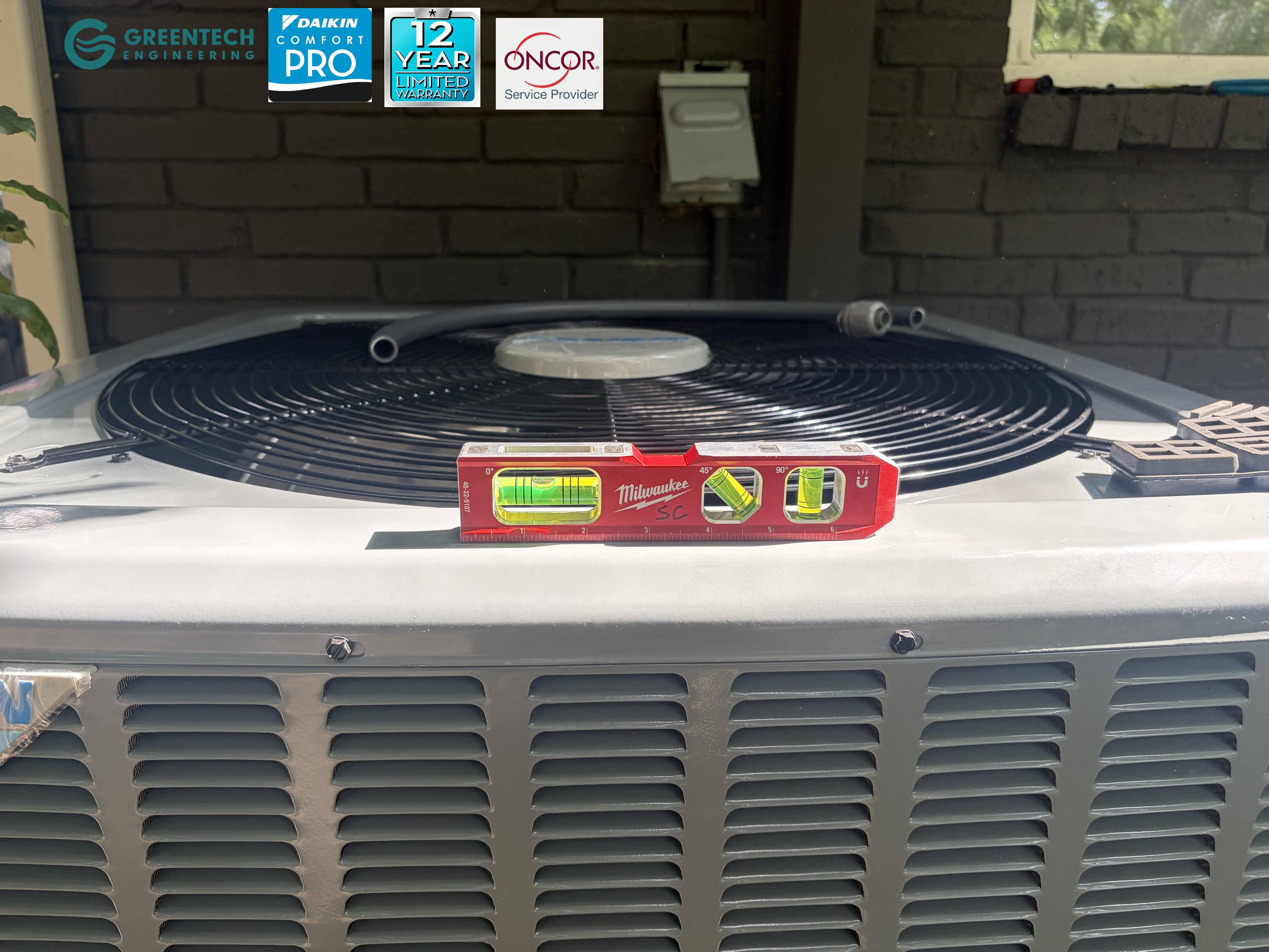
6. Nitrogen-Purged Brazing: All copper modifications were soldered using premium 15% silver brazing rods. Crucially, our certified technicians flowed dry nitrogen through the pipes during the brazing process to prevent internal oxidation (black soot) from forming and clogging the new TXV.
7. 250 PSI Nitrogen Pressure Test: We pressurized the closed system with dry nitrogen to 250 psi and held it for a minimum of 15 minutes to mathematically prove there were absolutely zero micro-leaks.
8. 500-Micron Deep Vacuum: Utilizing specialized vacuum pumps, we pulled the system pressure down under 500 microns. This process boils off and extracts any atmospheric moisture from the lines. If moisture mixes with modern refrigerant oil, it creates a highly corrosive acid that destroys compressors from the inside out.
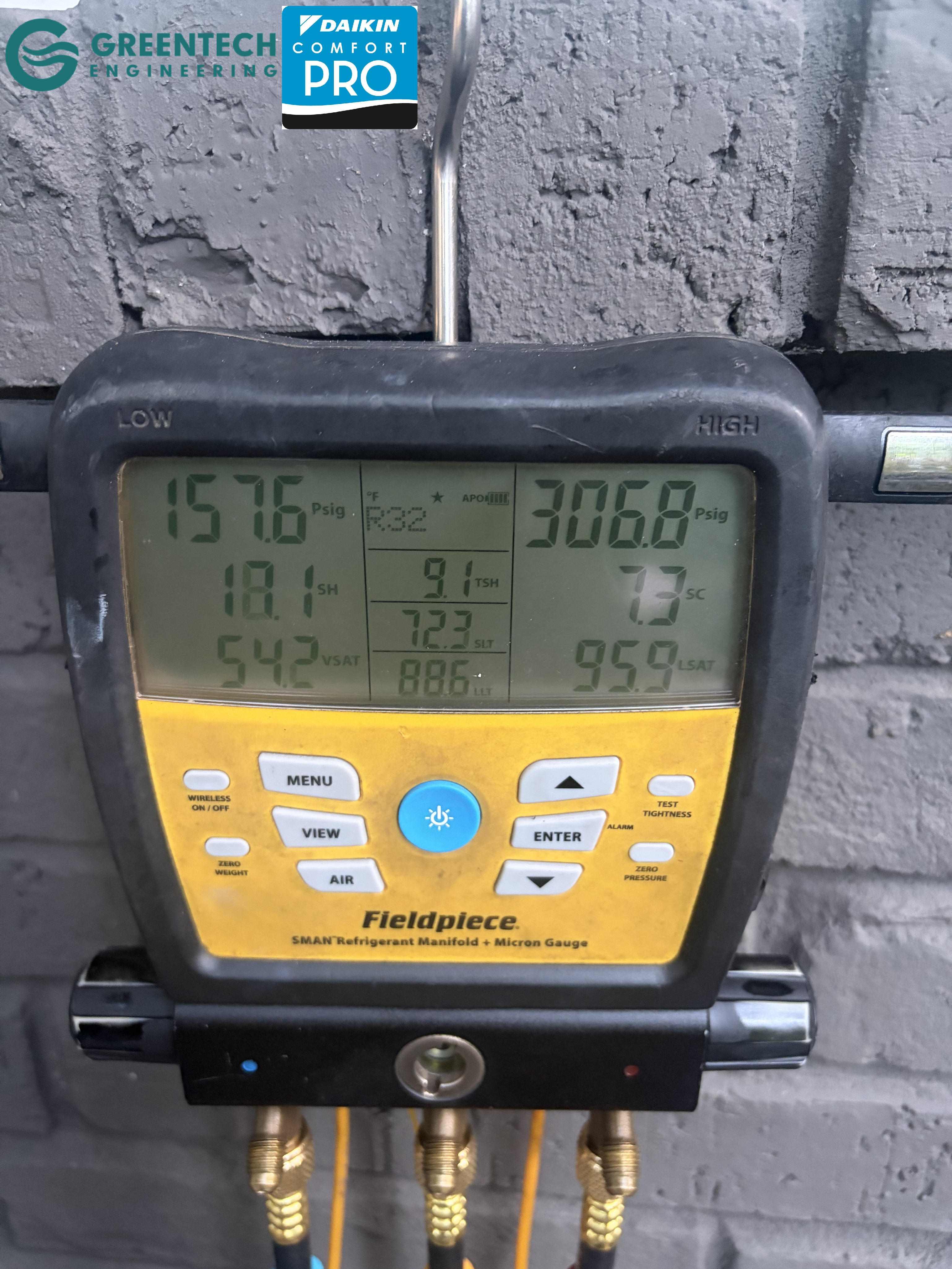
9. Final Commissioning: The system was fully charged, run, and tested to verify exact superheat, subcooling, and airflow performance metrics.
10. Warranty Protection: The installation was finalized with our complimentary Three-Year Labor Warranty and registered for the 12-Year Daikin parts protection.
Before exploring the financial incentives of this upgrade, use the interactive calculator below to understand how transitioning from an old, inefficient SEER rating to a modern SEER2 standard impacts your estimated cooling costs.
Why You Need an Authorized Oncor Service Provider
You cannot claim the Oncor rebate by buying an AC online or hiring an uncertified handyman. The utility company strictly regulates the disbursement of these funds to protect the integrity of the power grid.
To access the Home Energy Efficiency Program , you must hire an official Oncor Participating Service Provider.
When you partner with Greentech Engineering, we handle the entire bureaucratic process. We gather the AHRI (Air-Conditioning, Heating, and Refrigeration Institute) performance certificates, document the baseline load of your old system, submit the engineering data to the Oncor portal, and secure the approval.
Best of all, you do not have to wait months for a check to arrive in the mail. We apply the approved Oncor incentive as an instant, upfront discount directly on your installation invoice. Learn more about how we maximize your utility rebates here.
2026 Oncor Incentive Snapshot: Dallas-Fort Worth
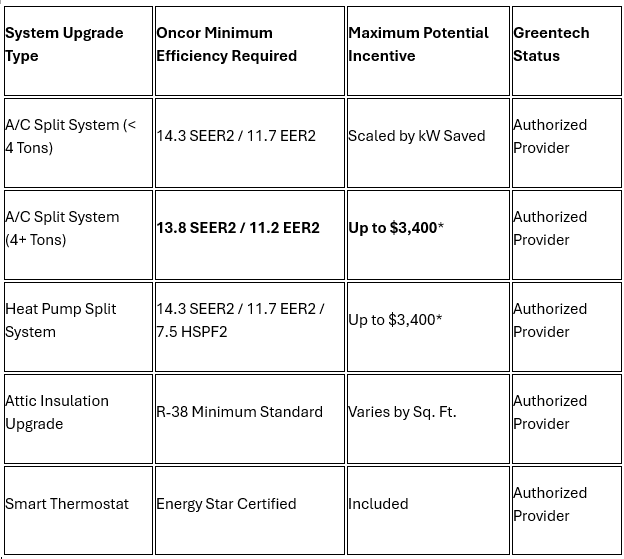
*Incentive Disclaimer: The $3,400 figure represents the absolute maximum potential incentive. Actual instant discount amounts are strictly determined by Oncor's customized kW/kWh reduction formula based on your specific home’s thermodynamic load reduction. Proactive replacement and proper Manual J sizing are the keys to maximizing your payout.
Frequently Asked Questions
Q: Why do HVAC technicians flush the lines with RX-11?
A: Old systems used a different type of refrigerant (R-22) and mineral oil. Modern high-efficiency systems use synthetic POE oil. If the old, acidic mineral oil mixes with the new synthetic oil, it creates a sludge that will ruin the new Copeland compressor. We chemically flush the copper lines with RX-11 to completely strip away the old oil, ensuring the new Daikin system runs with pristine purity.
Q: What does a 500-micron vacuum do for an AC system?
A: Atmospheric air contains moisture. If moisture is left inside the copper refrigerant lines, it reacts with the refrigerant oil to create hydrofluoric acid, which eats away at the compressor windings. By using a specialized pump to pull the system into a deep vacuum (below 500 microns), we lower the boiling point of water so drastically that any moisture instantly vaporizes and is sucked out of the system.
Q: Does a 14.5 SEER2 system qualify for Oncor rebates in Dallas?
A: Yes. For split systems under 4 tons (like the 2-ton unit featured in this case study), Oncor requires a minimum efficiency of 14.3 SEER2 and 11.7 EER2. The Daikin matchup we engineered easily exceeds these minimums, allowing the homeowner to claim instant utility discounts.
Q: What is a Thermal Expansion Valve (TXV)?
A: A TXV is a precision metering device attached to your indoor evaporator coil. Unlike older "fixed orifice" tubes that just spray a constant amount of refrigerant, a TXV actively senses the temperature of the line and adjusts the refrigerant flow continuously. This makes the system far more efficient at pulling humidity out of the air.
About the Author: Siwei (Lucas) Chen
CTO | Greentech Engineering Heating & Air Conditioning
Siwei (Lucas) Chen specializes in engineering-driven HVAC diagnostics, thermodynamic performance optimization, and custom ductwork design for Dallas homeowners. Holding a B.S. in Mechanical Engineering from Virginia Tech, he brings a strict, data-first approach to residential heating and cooling. Under his technical leadership, Greentech Engineering ensures every system is perfectly calibrated for the Texas climate, focusing relentlessly on ACCA Manual J load calculations, meticulous clinical installation standards, and securing maximum utility rebates for his clients.
Professional Certifications:
- ACCA Certified (Manual J, S, D)
- Daikin Comfort Pro Contractor
- NCI Certified – Air Balancing & Duct Optimization
- Oncor Participating Service Provider
Industry Affiliations:

Flexible Financing Options
Explore our range of flexible financing options designed to suit your needs and budget.