








Why Plano Homeowners are Switching to Heat Pumps in 2026
For decades, the standard HVAC setup in North Texas has been a traditional split air conditioner paired with a gas or electric furnace. However, an undeniable shift is happening across the Dallas-Fort Worth metroplex. From Plano to Fort Worth and throughout DFW, financially savvy homeowners are abandoning traditional electric furnaces and embracing high-efficiency Heat Pumps.
Why the sudden change? It comes down to thermodynamic efficiency, significant Life Cycle Cost (LCC) reductions, and massive financial incentives.
In the AI-driven energy era, HVAC is no longer just about comfort — it’s about how efficiently your home uses power. At Greentech, we engineer systems that reduce your energy load and prepare your home for the future.
In this comprehensive guide, we will debunk outdated myths about heat pumps in the Texas climate, explain how engineering practices like downsizing can save you thousands, and demonstrate exactly how a homeowner in Plano (75024) used a heat pump to claim maximum 2026 Oncor incentives.
Debunking the Texas Heat Pump Myth
The most common myth we hear from Texas homeowners is: "Heat pumps don't work when it gets freezing cold." Twenty years ago, early generation heat pumps struggled in extreme cold. Today’s 14.3+ SEER2 heat pumps are engineering marvels. Thermodynamically, a heat pump doesn't generate heat by burning fuel or relying entirely on high-amperage electrical resistance. Instead, it moves heat. Even when it is 40°F outside, there is ambient heat energy in the air. The heat pump absorbs this ambient thermal energy, compresses it to amplify the temperature, and transfers it inside your home.
This heat transfer process is exceptionally efficient. However, what about those rare, extreme Dallas winter freezes?
The 15kW Auxiliary Electric Heat Strip Solution: To guarantee winter security, we engineer our heat pump systems with an integrated auxiliary electrical heating element (such as a 15kW heat kit) installed directly inside the air handler. During a severe freeze (below 30°F), the system automatically activates this electrical resistance heat to supplement the heat pump, ensuring your home stays warm regardless of how brutal the winter storm gets.
The Golden Rule: Don't Wait Until It Breaks
Treating an HVAC replacement as an emergency reaction is the quickest way to destroy your financial Return on Investment (ROI).
When your aging system fails during a 105-degree July heatwave, you are forced to make a rushed decision. Emergency replacements usually result in:
- Missed Rebates: Rushed jobs rarely involve the precise AHRI-matched equipment necessary to qualify for Oncor incentives.
- Oversized "Box Swaps": Contractors in a hurry will simply swap your old 4-ton unit for a new 4-ton unit without verifying if you actually need that much capacity.
- Higher Life Cycle Cost (LCC): Installing an oversized, inefficient unit guarantees 10 to 15 years of inflated monthly electric bills.
The Power of Manual J: Downsizing to Maximize ROI
Bigger is almost never better in HVAC. An oversized system cools a home too rapidly, shutting off before it can effectively remove humidity. This "short-cycling" leaves the air feeling clammy and puts immense wear and tear on the compressor.
To lower your Life Cycle Cost (LCC), an expert HVAC contractor must perform an ACCA Manual J Load Calculation. This thermodynamic math determines the exact thermal load of your home. Often, we find that older homes are severely oversized. By downsizing the equipment capacity based on hard data, you save money upfront on the machine cost, and you save money monthly because the correctly sized unit runs longer, highly efficient cycles.
Case Study: Downsizing and Upgrading in Plano 75024
To see this engineering in action, let’s look at a recent proactive upgrade for a single-family home in the 75024 zip code of Plano.
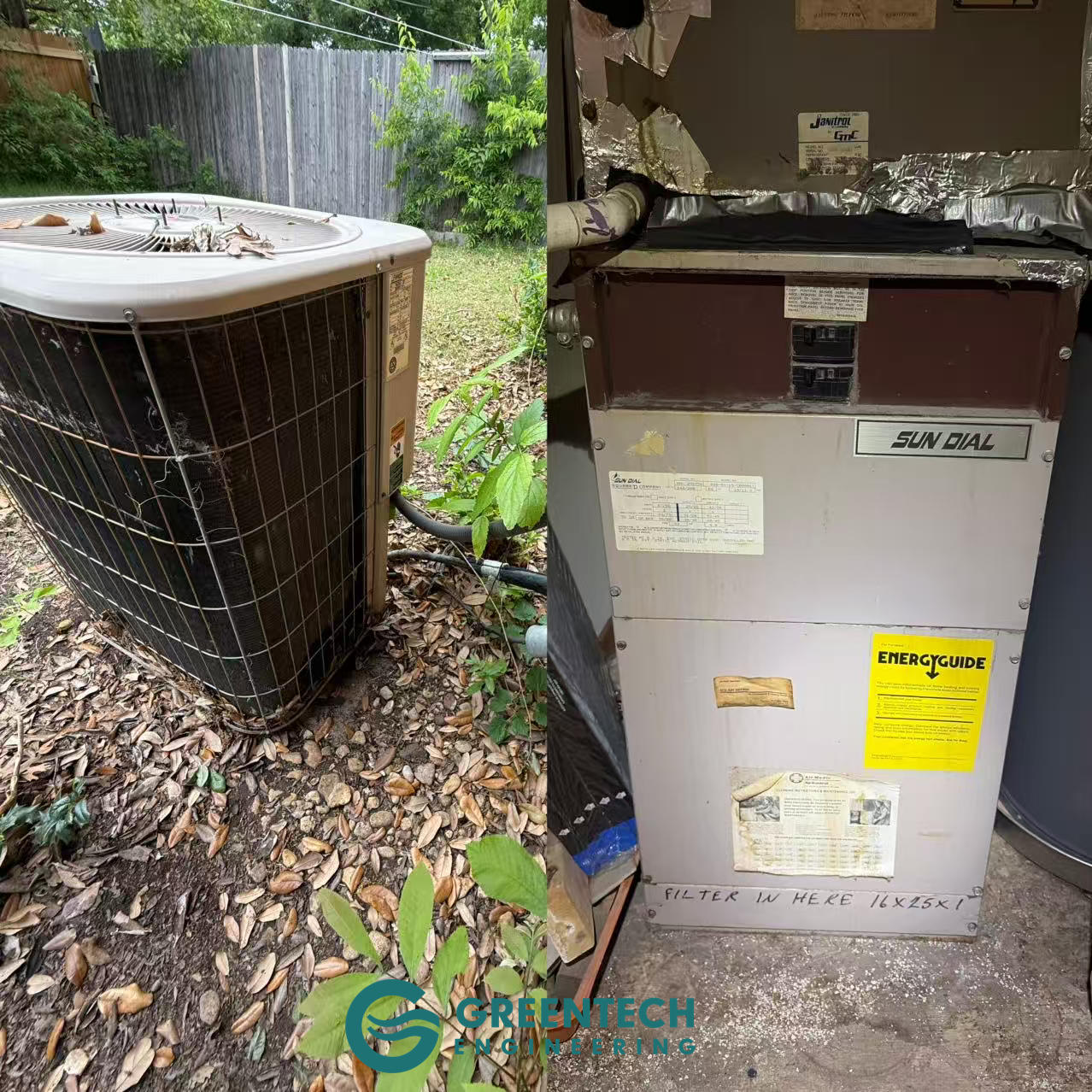
The Problem: The homeowner had a failing, oversized 3.5-Ton Lennox AC paired with an energy-guzzling electric furnace.
The Math: We ran a Manual J Load Calculation and proved the home actually only required 3 Tons of capacity.
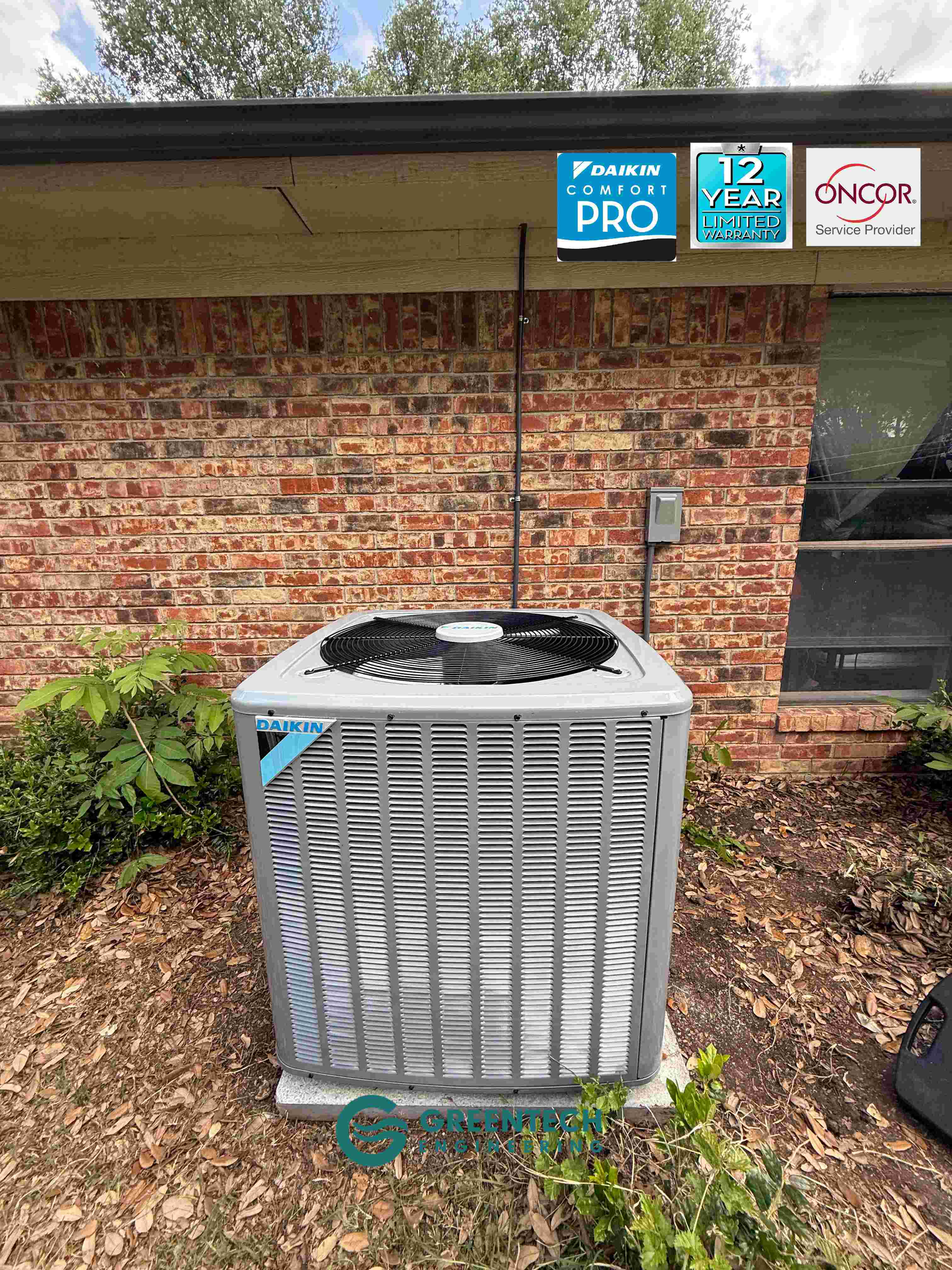
The Solution: We downsized the capacity to 3 Tons and upgraded the technology to a Daikin Heat Pump system, drastically cutting both upfront costs and long-term energy consumption.
The Engineered Matchup: 15.2 SEER2
To maximize Oncor rebates, heat pumps must hit strict baselines. We engineered a specific system matchup that achieved an elite 15.2 SEER2 and 12.5 EER performance rating, fully verified by AHRI.
- Outdoor Unit: Daikin 36,000 BTU (3-Ton) Split Heat Pump. This unit features a high-efficiency Copeland® scroll compressor with CoreSense™ diagnostics, a high-density sound blanket, and time-delay technology for reliable winter defrosts. Learn more about advanced Copeland Scroll Compressor technology.
- Indoor Unit: Daikin 42,000 BTU Multi-Position Upflow Air Handler. We equipped this with an internal Thermal Expansion Valve (TXV) and a 9-Speed ECM blower motor for ultra-quiet, customized airflow delivery.
- Winter Security: We installed a 15 KW electrical heat kit inside the air handler to serve as the auxiliary heating element for extreme freezing nights.
Clinical Installation Standards
A 15.2 SEER2 rating is useless if the installation is sloppy. Our Greentech engineers executed a flawless installation:
- Perfect Leveling: Heat pump compressors require absolute balance to maintain oil distribution. We poured a new concrete equipment pad and meticulously leveled the condenser.
- The 500-Micron Vacuum: We flushed the existing copper line sets with RX-11, pressure-tested the system with dry nitrogen to 250 psi, and pulled a deep vacuum well under 500 microns to remove all microscopic moisture before releasing the refrigerant.
- Upgraded Filtration: We removed the restrictive old filter setup and installed a high-capacity 4-inch metal filter cabinet to protect the new indoor coil and improve indoor air quality.
The Reward: 2026 Oncor Incentives & 54°F Air
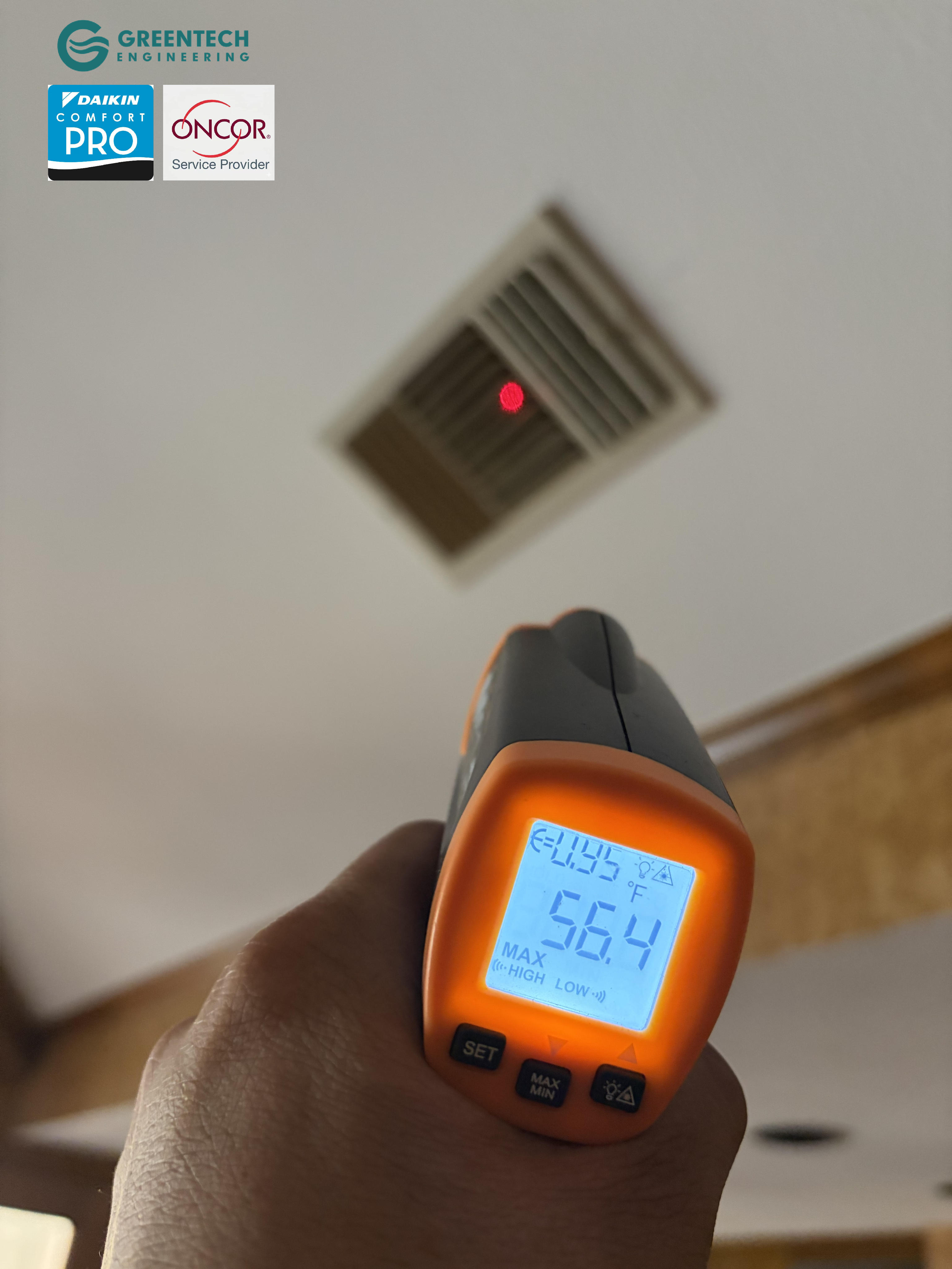
Upon startup, the results of our Manual J downsizing and airflow optimization were immediate. The 9-speed ECM motor delivered whisper-quiet air, and we measured a freezing supply temperature right at the vent.
2026 Oncor Incentive Snapshot: Plano & Collin County
Utility companies want you to switch to heat pumps because it lowers the strain on the Texas power grid during the winter. Consequently, Heat Pump systems frequently qualify for more Oncor incentive dollars than standard AC/Gas furnace splits.
Because this Plano 75024 project hit 15.2 SEER2 and 12.5 EER, it easily exceeded the required Oncor baselines.
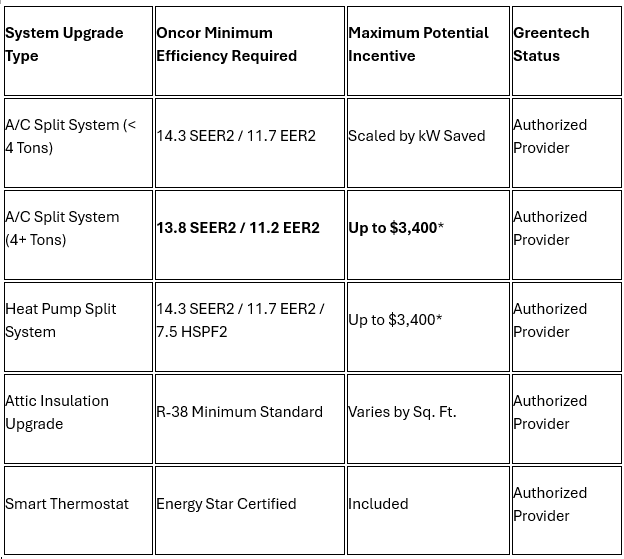
*Incentive Disclaimer: Actual incentive amounts are strictly determined by Oncor's exact kW/kWh reduction formula. As an Authorized Provider, Greentech Engineering handles the math, submits the AHRI certificates, and applies your approved amount as an instant discount on your invoice.
Prepare Your Home for the Future
Switching from a traditional electric furnace to a high-efficiency heat pump is the smartest financial upgrade a North Texas homeowner can make. By downsizing correctly and acting proactively, you protect your 12-year warranty and secure maximum utility funding.
Ready to find out how much Oncor will pay toward your new heat pump? Contact Greentech Engineering today for a free energy assessment .
Frequently Asked Questions (FAQ)
Q:Are heat pumps effective in Plano, Texas?
A:Absolutely. The North Texas climate is ideal for heat pumps. They provide incredibly efficient cooling in the brutal summers and highly cost-effective heating during mild winters, significantly outperforming traditional electric furnaces in energy savings.
Q:What happens to a heat pump during a Texas winter freeze?
A:Modern heat pumps are engineered for resilience. At Greentech, we install auxiliary electrical heat kits (e.g., 15kW heat strips) inside the air handler. If the temperature drops below freezing and the heat pump needs assistance, the electric strips automatically activate to provide guaranteed emergency heat.
Q:Why did Greentech downsize the unit from 3.5 Tons to 3 Tons?
A:Bigger is not better in HVAC. An oversized 3.5-Ton unit short-cycles, failing to dehumidify the air and consuming excess electricity. By performing an ACCA Manual J load calculation, we proved the home only needed 3 Tons. Downsizing lowers the initial purchase price and reduces the Life Cycle Cost (LCC) by ensuring the unit runs at peak efficiency.
Q:Do Heat Pumps get better Oncor Rebates?
A:Often, yes. Because heat pumps drastically reduce winter electricity consumption compared to standard electric furnaces, they generate a higher kWh reduction on the grid. This higher reduction translates to larger potential incentive payouts from the Oncor Home Energy Efficiency Program.
Take A Load Off Texas Program directly from the Oncor portal.
About the Author: Siwei (Lucas) Chen
CTO | Greentech Engineering Heating & Air Conditioning
Siwei (Lucas) Chen specializes in engineering-driven HVAC diagnostics, thermodynamic performance optimization, and energy-efficiency upgrades for North Texas homeowners. Holding a B.S. in Mechanical Engineering from Virginia Tech, he brings a strict, data-first approach to residential heating and cooling. Under his technical leadership, Greentech Engineering ensures every system is perfectly calibrated for the Dallas-Fort Worth climate, focusing on ACCA Manual J load calculations, meticulous installation standards, and maximizing homeowner ROI through utility rebates.
Professional Certifications:
- ACCA Certified (Manual J, S, D)
- NCI Certified – Air Balancing & Duct Optimization
- Daikin Comfort Pro Contractor
- Oncor Participating Service Provider

Flexible Financing Options
Explore our range of flexible financing options designed to suit your needs and budget.