





Emergency HVAC Repair in Little Elm: When a Problem Can’t Wait
Living in North Texas means dealing with unpredictable and often extreme weather. When the summer temperatures in Little Elm soar past 100°F, your air conditioning system is no longer just a luxury—it is a critical life-support system for your home. But HVAC systems are complex mechanical workhorses, and like any machine, they can fail.
The moment your AC stops blowing cold air, panic usually sets in. Should you call an emergency HVAC contractor in Little Elm, TX? Or can the problem wait until regular business hours on Monday morning?
At Greentech Engineering Heating & Air Conditioning, our data-driven, engineering-first approach means we don't just fix symptoms; we solve the underlying physics of the problem. To help you protect your family and your property, our engineers have compiled this definitive guide on how to identify a true HVAC emergency, what to do while you wait for a technician, and when it is safe to hold off.
What Constitutes a True HVAC Emergency in Little Elm?
Not every cooling issue requires a midnight dispatch. However, there are four specific scenarios where delaying a repair can result in catastrophic property damage, severe mechanical failure, or health risks. If you experience any of the following, it is an emergency that cannot wait.
1. Water Leaking from Your Attic or Ceiling
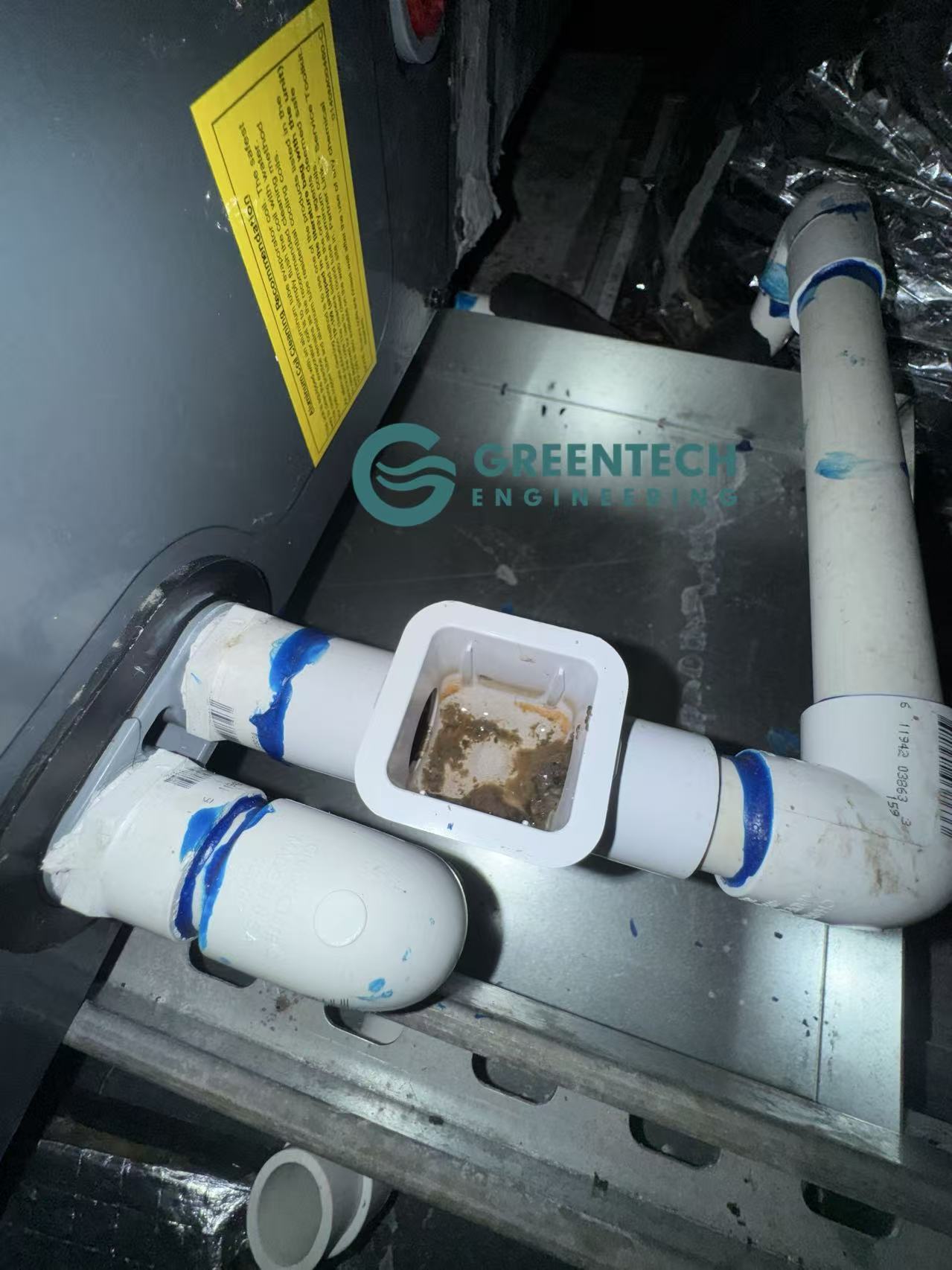
Many single-family homes in Little Elm (zip code 75068) have their indoor air handler and evaporator coil located in the attic. As your AC cools the air, it extracts gallons of humidity, which is supposed to drain safely outside.If your primary condensate drain line clogs with algae or debris, the water backs up into the secondary drain pan. If that pan overflows or lacks a functioning safety float switch, you will quickly have water soaking through your drywall, destroying your ceiling, and potentially ruining your flooring below. A water leak is an immediate emergency. Turn your system off at the thermostat instantly to stop the condensation process.
2. Electrical Burning Smells or Sparking
If you turn on your AC or heater and smell an odor resembling burning plastic, melting wire, or ozone—or if you hear distinct electrical popping sounds—shut the system off immediately at the main breaker panel.HVAC systems draw a massive amount of high-voltage amperage. Failing blower motors, locked-up compressors, or short-circuited contactors can overheat rapidly. Ignoring an electrical smell is a severe fire hazard.
3. Total System Failure During Extreme Temperatures
If the outdoor temperature is above 95°F or below freezing, and your HVAC system completely dies, it becomes a health and safety issue. This is especially true if you have elderly family members, infants, or individuals with compromised health in the home. The internal temperature of a Texas home can reach dangerous levels in a matter of hours without active cooling.
4. The System is Running, but the Coils are Frozen Solid
If you notice ice building up on the copper refrigerant lines outside, or if your indoor coil is encased in a block of ice, you have a severe issue. This is typically caused by a major airflow restriction (often due to neglecting your routine filter replacement) or a critical chemical refrigerant leak. Forcing a frozen system to keep running will inevitably destroy the compressor—turning a manageable repair into a complete system replacement.
🛠️ Field Report: Averted Disaster in Little Elm (ZIP 75068)
The Problem: On a sweltering Saturday afternoon in July, we received a frantic call from a homeowner in a single-family house in Little Elm (75068). Their AC had abruptly shut off, and worse, they noticed a growing water stain on their upstairs hallway ceiling directly beneath the attic HVAC unit.
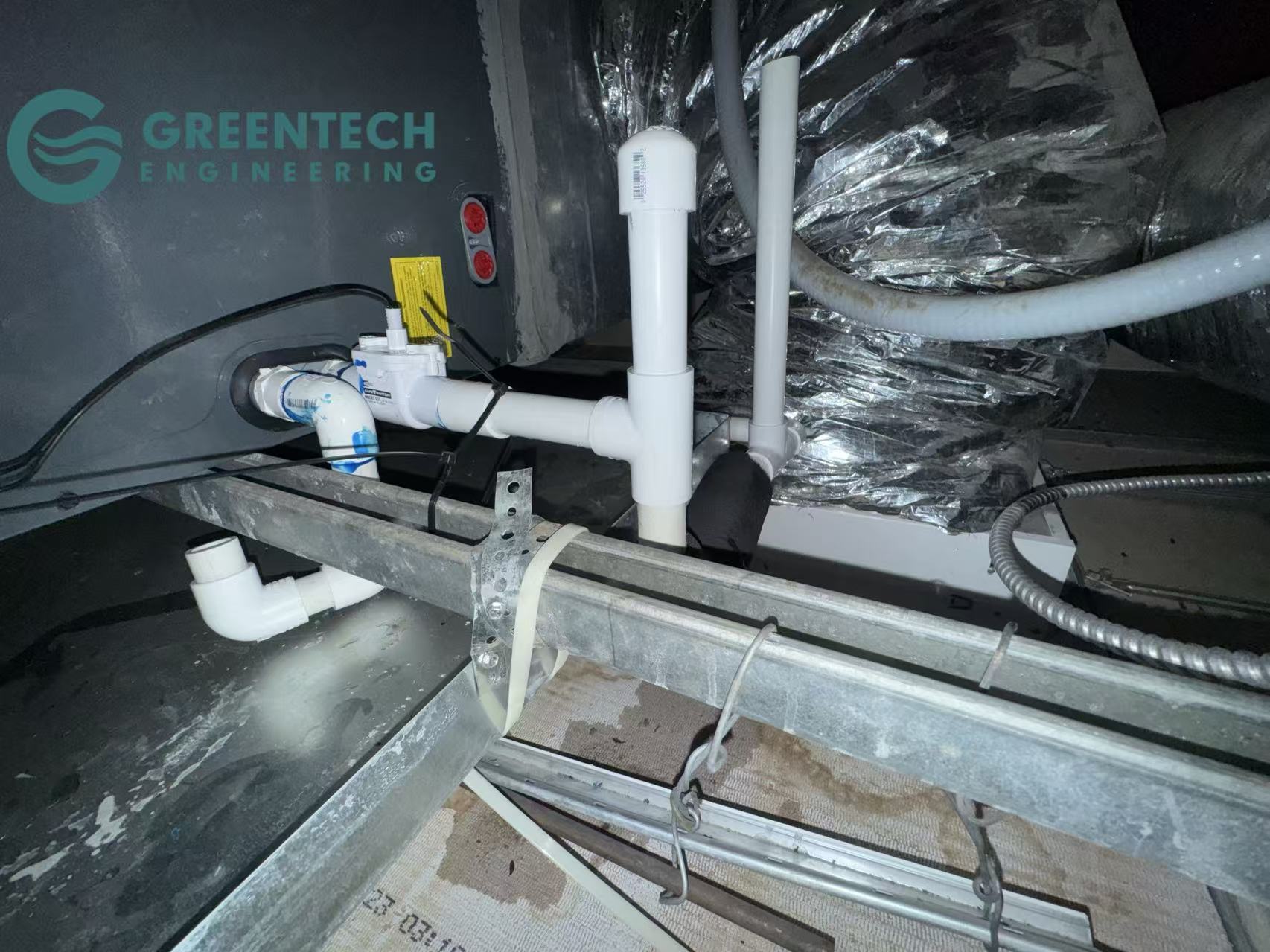
The Engineering Assessment: We dispatched an emergency engineer immediately. Upon arriving and entering the 130°F attic, we discovered the primary PVC condensate drain line was entirely blocked by a thick sludge of biological growth. The water had backed up, filling the emergency drain pan to the brim. The only reason the ceiling hadn't completely caved in was that the system's safety float switch had successfully tripped, cutting power to the outdoor condenser to prevent further condensation.
However, when we tested the electrical components outside, we found that the repeated starting and stopping caused by the intermittent float switch tripping had overheated and blown the dual-run capacitor.
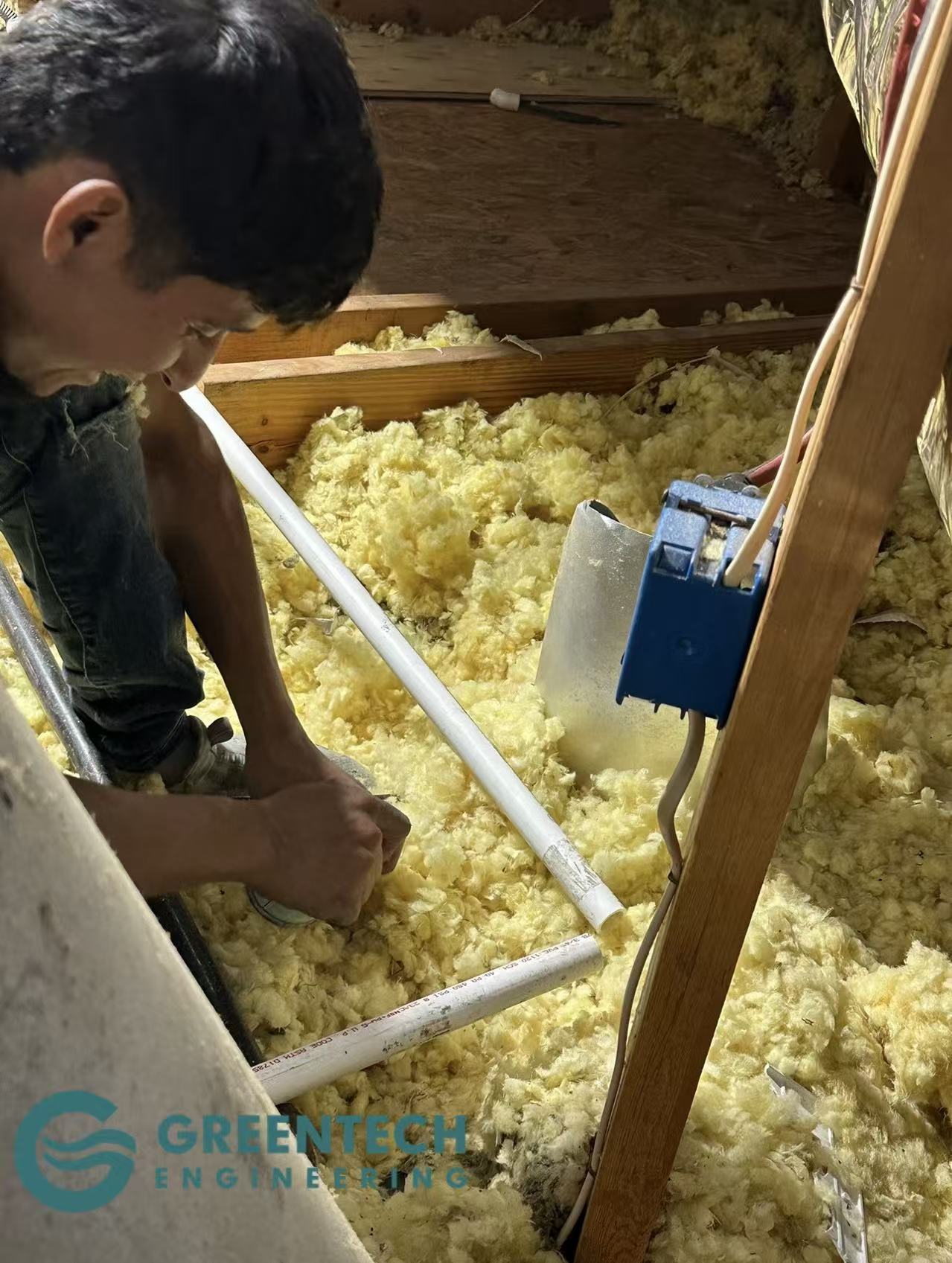
The Engineered Solution: 1. Water Extraction & Clearing: We used a high-powered wet/dry vacuum to extract the standing water from the attic pan, saving the drywall. We then cleared the primary drain line using pressurized nitrogen, ensuring the pipe was completely unobstructed.2. Preventative Upgrade: To prevent future biological clogs, we treated the drain pan and installed an in-line cleanout port for easier future maintenance.3. Electrical Repair: Outside, we safely discharged and replaced the swollen capacitor with a high-quality OEM part, restoring the electrical pathway to the compressor.4. Data Verification: We rebooted the system and attached our Fieldpiece digital manifolds to verify that the system was achieving optimal subcooling and superheat levels.
The Outcome: We averted thousands of dollars in drywall and flooring damage. The home was cooling perfectly within 90 minutes of our arrival, turning a highly stressful weekend emergency into a permanent, engineered solution.
What Issues Can Wait Until Regular Business Hours?
To save on emergency dispatch fees, it helps to know what is not an emergency. You can usually safely schedule a standard service appointment if:
- The system is cooling, but unevenly: If one room is slightly warmer than the rest, it’s likely a duct balancing issue, not an immediate crisis.
- Routine Maintenance: If you simply realize you are overdue for a tune-up or a routine filter replacement, this can wait for standard scheduling.
- Your AC is running constantly but keeping up: On 105°F days, even perfectly sized systems will run continuously. As long as the indoor temperature is maintaining a safe level, monitor it and call during regular hours.
Frequently Asked Questions (Homeowner Q&A)
Q: Should I turn off my AC if it is leaking water?
A: Yes, absolutely. If you see water leaking from your indoor unit, turn the thermostat to the "Off" position immediately. Air conditioners only produce water (condensate) when they are actively running. Turning it off stops the leak and protects your home from further water damage until an engineer arrives.
Q: How much does emergency AC repair cost in Little Elm?
A: The cost varies entirely on the physics of the failure. A blown electrical capacitor or clearing a clogged drain line is highly affordable. Fixing a major refrigerant leak or replacing a dead blower motor involves more labor and materials. At Greentech Engineering, we use digital diagnostics to pinpoint the exact failure and provide transparent, upfront pricing before any work begins.
Q: Why is my AC blowing hot air all of a sudden?
A: This usually indicates that the outdoor compressor is not running. It could be a failed capacitor, a tripped breaker, a bad contactor, or a total loss of refrigerant. Turn the system off to prevent electrical damage to the compressor and call for a professional diagnostic.
Don't Guess During an Emergency. Trust the Engineers.
When your HVAC system fails during a Little Elm heatwave, you don't need a temporary band-aid; you need a permanent, mathematically verified solution. Greentech Engineering Heating & Air Conditioning brings strict engineering standards, digital diagnostics, and rapid response to every emergency call in Denton County.
If you are experiencing an HVAC emergency, don't wait. Call our rapid response team directly at (469) 551-6806 or order online.
About the Author: Siwei (Lucas) Chen
CTO | Greentech Engineering Heating & Air Conditioning
Lucas specializes in engineering-driven HVAC diagnostics, emergency repair protocols, and performance optimization for North Texas homeowners. Holding a B.S. in Mechanical Engineering from Virginia Tech, he brings a strict, data-first approach to residential heating and cooling. Under his technical leadership, Greentech Engineering ensures every system is perfectly calibrated and safeguarded against the extreme Dallas-Fort Worth climate.
Professional Certifications:
- ACCA Certified (Manual J, S, D)
- NCI Certified– Air Balancing & Duct Optimization
- Daikin Comfort Pro Contractor
- Oncor Participating Service Provider

Flexible Financing Options
Explore our range of flexible financing options designed to suit your needs and budget.