





Fixing Uneven Cooling in East Dallas (75206): 4-Ton Goodman ECM Air Handler & Zoning
The homes in the 75206 zip code of East Dallas (covering the vibrant Lower Greenville and M Streets neighborhoods) possess incredible historic charm. However, from a thermodynamic perspective, these older, single-family homes often present severe airflow challenges. Additions, vaulted ceilings, and complex layouts frequently result in massive temperature imbalances—leaving the master bedroom freezing while the living room feels like a sauna.
Many homeowners attempt to solve this by simply replacing their outdoor AC unit. But the outdoor unit only creates the cooling. The indoor unit—the Air Handler located in your attic or closet—is responsible for actually delivering that conditioned air throughout your home. If you pair a brand-new outdoor condenser with an obsolete, single-speed indoor air handler, you will continue to suffer from hot spots, high humidity, and exorbitant energy bills.
In the AI-driven energy era, HVAC is no longer just about comfort — it’s about how efficiently your home uses power. At Greentech, we engineer systems that reduce your energy load and prepare your home for the future.
In this comprehensive engineering case study, we detail a recent project in Dallas, TX (75206). We will explain how upgrading to a 4-Ton Goodman 9-Speed ECM Air Handler, integrating a Supply Air Zoning Discharge Sensor, and adhering to strict clinical installation protocols permanently eliminated this home's thermal imbalances while maximizing SEER2 efficiency.
The Engineering Solution: The 9-Speed ECM Blower Motor
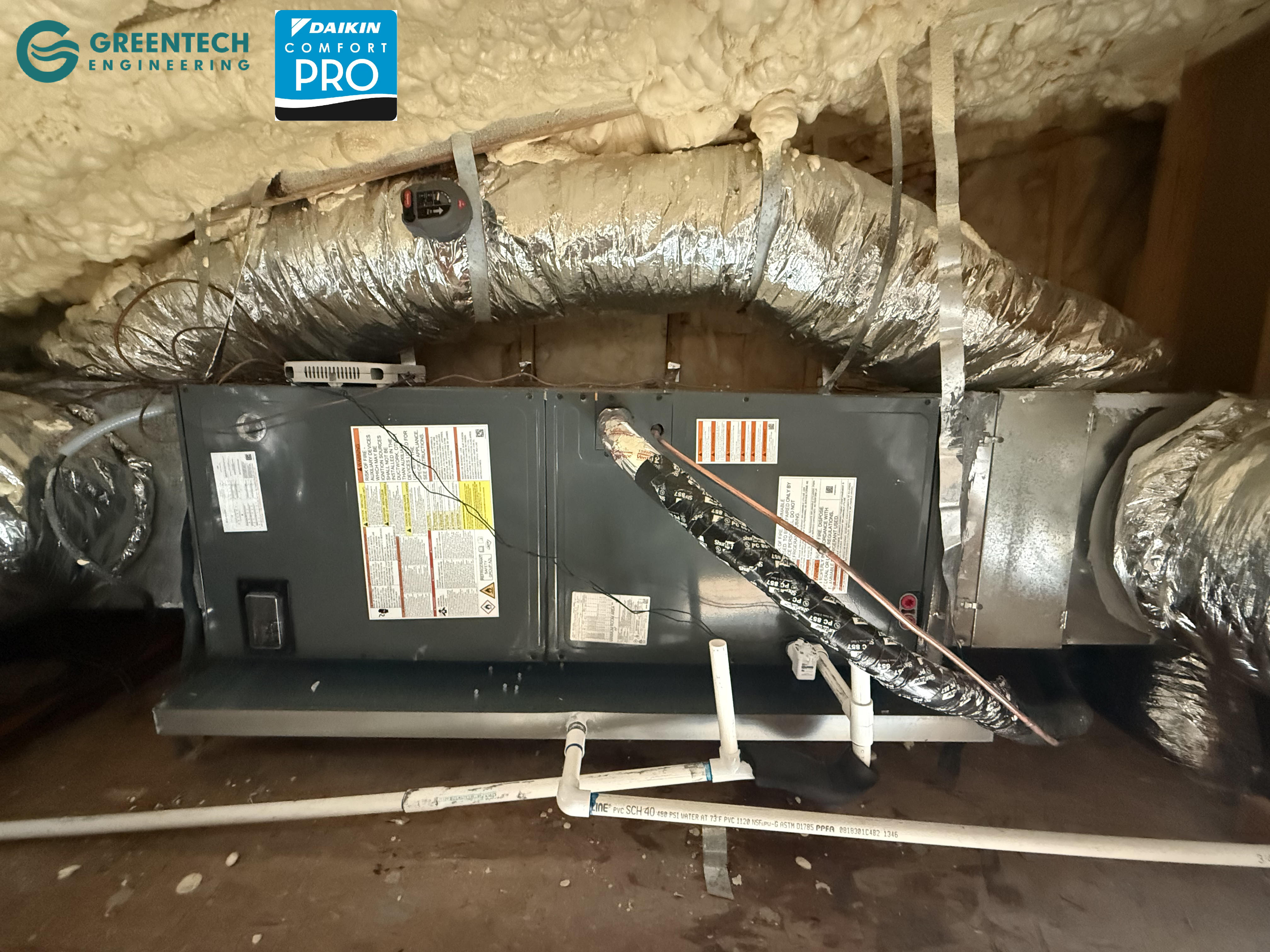
To solve the airflow restrictions in this 75206 home, we replaced the failing indoor unit with a state-of-the-art Goodman 4-Ton Multi-position C Cabinet Air Handler.
The defining feature of this equipment is its Direct-Drive, 9-Speed ECM (Electronically Commutated Motor) blower.
Why Single-Speed Motors Fail
Legacy air handlers use PSC (Permanent Split Capacitor) motors. They only have one speed: ON (100% capacity) or OFF. When the thermostat calls for cooling, a PSC motor slams on, blasts high-velocity air through your ducts, satisfies the thermostat in the hallway, and immediately shuts down. Because the cycle is so short, the air never reaches the furthest bedrooms, and the system fails to extract humidity.
The ECM Advantage
A 9-Speed ECM motor acts like the accelerator pedal in a modern vehicle. Instead of blasting at 100%, the blower slowly ramps up. It can run continuously at a lower, whisper-quiet speed (e.g., 40% or 60% capacity).
- Perfect Air Distribution: By running longer, gentler cycles, the air finally reaches the distant rooms of the home, eliminating hot spots.
- Maximum Dehumidification: Longer run times allow the indoor coil to wring out the thick Texas humidity, lowering the "feels like" temperature.
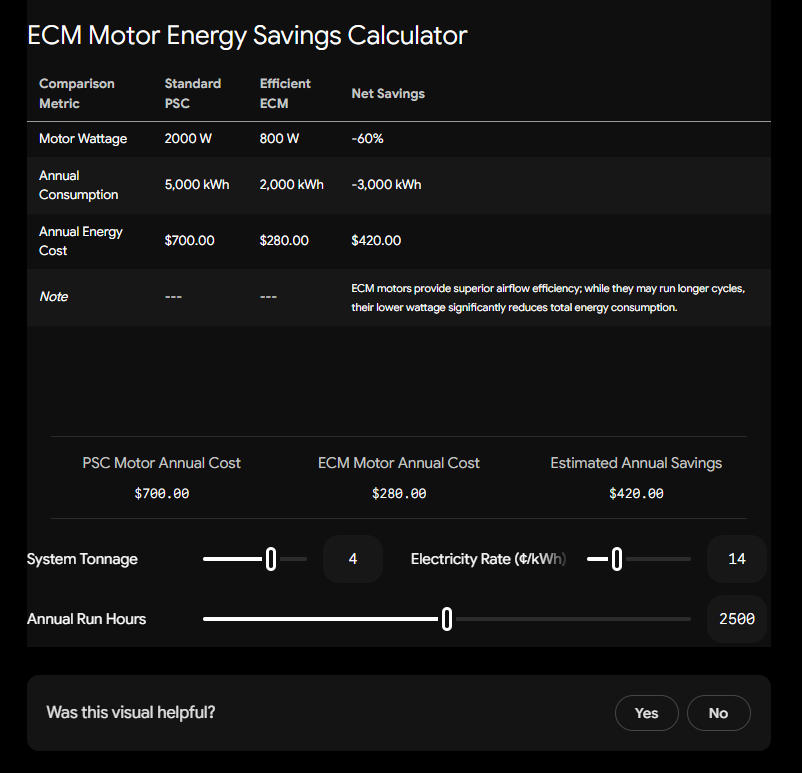
- Energy Savings: ECM motors use up to 75% less electricity than standard PSC motors.
Precision Control: Supply Air Zoning & Discharge Air Sensors
Because this specific Dallas home utilized a zoning system (allowing the homeowner to set different temperatures for the upstairs and downstairs using motorized dampers in the ductwork), upgrading the air handler required highly specialized engineering.
When a zoning system shuts the dampers to the downstairs, all 4 Tons of freezing airflow are suddenly forced into just the upstairs ductwork. If not managed properly, this restriction causes the indoor evaporator coil to drop below freezing, turning into a solid block of ice and destroying the compressor.
To prevent this, our engineers installed a Supply Air Zoning Discharge Air Sensor (DAS).
This highly sensitive probe is drilled directly into the supply plenum just above the evaporator coil. It constantly monitors the exact temperature of the air leaving the unit. If the sensor detects that the air is getting dangerously cold (approaching 40°F) because dampers have closed, it automatically signals the system to stage down or bypass the air, actively preventing a catastrophic freeze-up. This is the difference between a contractor who just "swaps boxes" and an engineering firm that protects your investment.
The Daikin/Goodman 15.2 SEER2 Platform
To ensure this home met the strict 2023 DOE Energy Conservation Standards , we utilized premium internal components designed to maximize the efficiency of the outdoor unit:
- Internal Factory-Installed TXV: A Thermal Expansion Valve actively meters the exact amount of liquid refrigerant entering the coil based on the real-time heat load inside the house, maximizing up to 15.2 SEER2 performance.
- All-Aluminum Evaporator Coil: Designed with a 3/8" tube size to prevent the formicary corrosion and microscopic leaks that constantly plague older copper coils.
- 10 KW Electrical Heat Strip: For those freezing Dallas winter nights, we integrated a 10 Kilowatt emergency heat strip directly into the air handler, ensuring the home remains warm even during a deep freeze.
- Elite Warranties: Backed by a 10-Year Factory Limited Parts Warranty and a 10-Year Evaporator Coil Unit Replacement Plan upon registration.
Before we cover the strict installation protocols used on this project, use this interactive calculator to see exactly how upgrading to an ECM motor reduces your home's energy consumption.
The Greentech Standard: 10-Step Clinical Installation Protocols
A 9-speed ECM air handler will fail rapidly if the ductwork is leaky or the refrigerant lines are contaminated. To secure our complimentary Three-Year Labor Warranty, our engineers executed the following strict protocols during this Dallas 75206 installation:
1. Safe Recovery & Removal: The old air handler was dismantled, and all legacy refrigerant was safely pumped down and recovered in accordance with EPA regulations.
2. Drainage Defense: We installed a new drain trap, vent, and an emergency drain switch. The condensation drain line was blasted with pressurized dry nitrogen to remove years of biological sludge, ensuring no attic floods.
3. Liquid Line Drier Filter: A brand new filter drier was installed to capture any microscopic moisture or debris inside the copper lines.
4. Precision Sealing (Zero Leaks): The new air handler was mechanically secured to the return and supply plenums using hex washer head HVAC screws. Crucially, all connection areas were meticulously sealed with specialized HVAC metal tape and mastic duct sealant. This ensures 100% of the conditioned air reaches your living space, rather than leaking into the 130-degree attic.
5. 15% Silver Brazing: All modifications to the existing copper refrigerant line sets were soldered using premium 15% silver brazing rods by our certified technicians to ensure incredibly strong, leak-proof joints.
6. 250 PSI Nitrogen Pressure Test: We pressurized the closed copper system with dry nitrogen to 250 psi and held it for a minimum of 15 minutes. This is a strict mathematical proof that there are absolutely zero micro-leaks in the new welds.
7. 500-Micron Deep Vacuum: Utilizing specialized vacuum pumps, we pulled the system pressure down under 500 microns. This boils off and extracts microscopic atmospheric moisture from the lines. If moisture mixes with refrigerant oil, it creates a corrosive acid that destroys systems from the inside out.
8. 10 KW Heat Strip Integration: The electrical heavy-up was completed for the 10 KW auxiliary heat strip, ensuring safe and reliable winter heating.
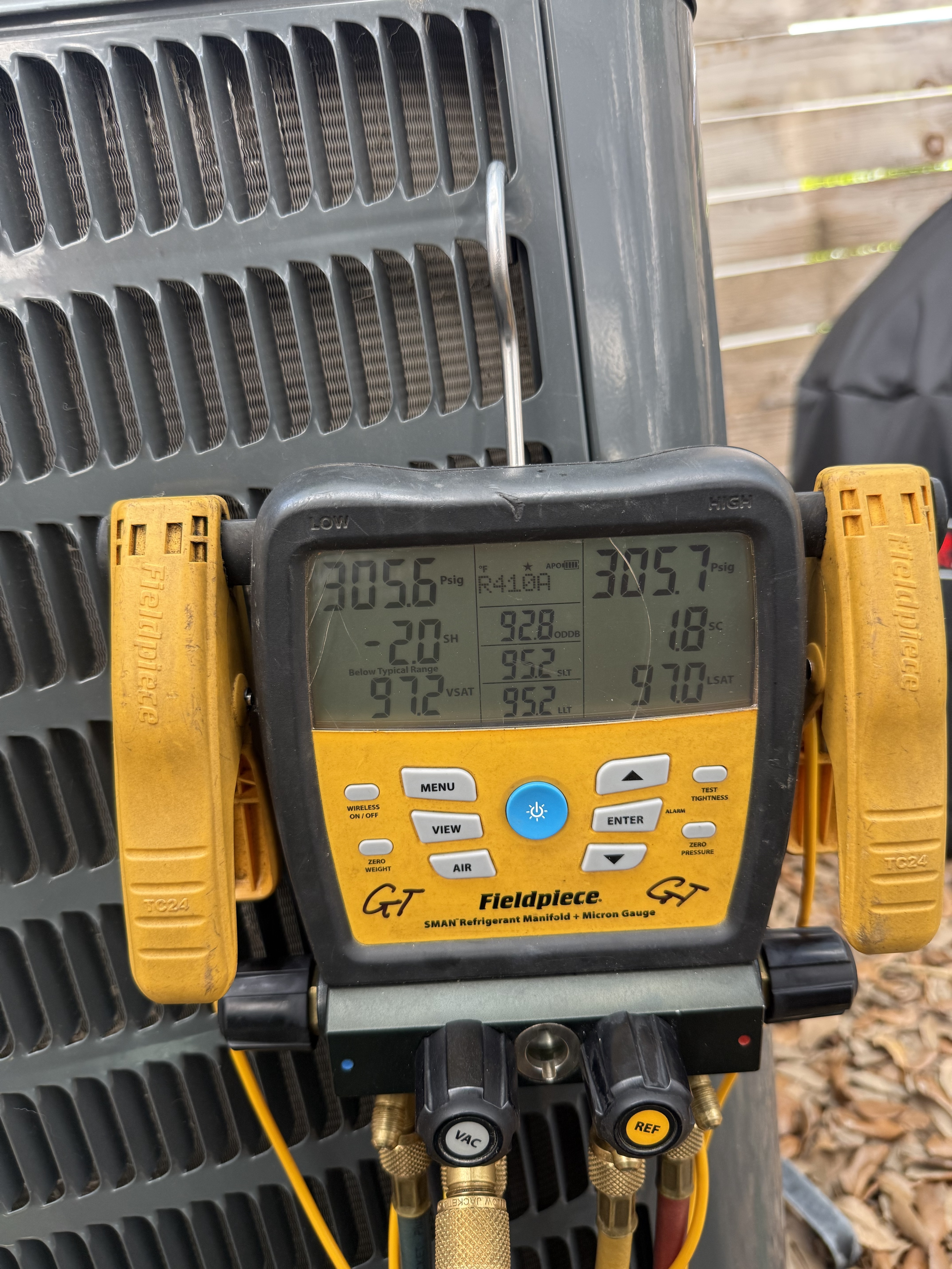
9. Final Commissioning: The system was fully charged, and the Zoning Discharge Air Sensor was calibrated to ensure the 9-speed blower matched the exact static pressure of the ductwork.
10. Warranty Protection: The installation was finalized with our complimentary Three-Year Labor Warranty and registered for the 10-Year Goodman parts protection. Contact us today.
Frequently Asked Questions
Q: What is the difference between a PSC and an ECM blower motor?
A: A PSC (Permanent Split Capacitor) motor only runs at one speed—100% full blast. It is loud, consumes a massive amount of electricity, and creates uneven temperatures. An ECM (Electronically Commutated Motor) is a variable-speed smart motor. It can run at lower speeds (like 40% or 60%), which uses a fraction of the electricity, runs whisper-quiet, and drastically improves humidity removal by circulating air continuously.
Q: Why does a zoned HVAC system need a Discharge Air Sensor (DAS)?
A: When a zoning system closes dampers to certain rooms, it restricts airflow. If an air conditioner runs at full capacity with restricted airflow, the evaporator coil will freeze solid, potentially destroying the compressor. A Discharge Air Sensor monitors the temperature of the air leaving the unit; if it gets too cold, the sensor forces the system to adjust or shut down the condenser to prevent a freeze-up.
Q: What is a TXV valve on an evaporator coil?
A: A Thermal Expansion Valve (TXV) is a precision metering device. Instead of constantly spraying a fixed amount of refrigerant, a TXV actively senses the temperature of the line and opens or closes to provide the exact amount of refrigerant needed based on the heat inside your home. It is a mandatory component for achieving high SEER2 efficiency ratings.
Q: How do I know if my air handler ductwork is leaking?
A: If your attic feels unusually cool in the summer, or if you have certain rooms in the house that never seem to get enough airflow, your supply plenum is likely leaking conditioned air into the attic space. During installation, our engineers use specialized mastic sealant to ensure your system is 100% airtight.
About the Author: Siwei (Lucas) Chen
CTO | Greentech Engineering Heating & Air Conditioning
Siwei (Lucas) Chen specializes in engineering-driven HVAC diagnostics, thermodynamic performance optimization, and custom ductwork design for Dallas homeowners. Holding a B.S. in Mechanical Engineering from Virginia Tech, he brings a strict, data-first approach to residential heating and cooling. Under his technical leadership, Greentech Engineering ensures every system is perfectly calibrated for the Texas climate, focusing relentlessly on ACCA Manual J load calculations, meticulous clinical installation standards, and securing maximum utility rebates for his clients.
Professional Certifications:
- ACCA Certified (Manual J, S, D)
- Daikin Comfort Pro Contractor
- NCI Certified – Air Balancing & Duct Optimization
- Oncor Participating Service Provider
Industry Affiliations:

Flexible Financing Options
Explore our range of flexible financing options designed to suit your needs and budget.