





The Most Common HVAC Repair Problems in Little Elm Homes
Living in Little Elm, TX, means enjoying beautiful lake views and tight-knit neighborhoods, but it also means enduring the brutal reality of North Texas summers. When temperatures regularly soar into the triple digits, your air conditioning system works incredibly hard just to maintain a baseline of comfort.
Because local HVAC systems run almost constantly from May through September, mechanical wear and tear are inevitable. At Greentech Engineering Heating & Air Conditioning, our data-driven engineers respond to hundreds of service calls across Denton County every year. Over time, we’ve noticed that the vast majority of cooling failures in our area boil down to a few specific mechanical and thermodynamic issues.
Before you panic over a warm house, review this comprehensive guide to the most common HVAC repair problems in Little Elm homes. Understanding the physics behind these failures can help you identify the issue early, prevent further mechanical damage, and know exactly when it’s time to call a professional .
1. Electrical Component Failure: Contactors and Capacitors
By far, the most frequent emergency repair we perform during the peak of a Texas summer involves the high-voltage electrical components sitting outside in your condenser.
Your outdoor unit relies on a capacitor to act as a massive battery, delivering the jolt of torque required to start your heavy compressor and condenser fan motor. It also relies on a contactor, which acts as the physical switch that allows high-voltage electricity to flow into the unit.Because these components sit outside in the direct 100°F+ sun while managing massive electrical loads, they are highly prone to overheating. Capacitors swell and lose their microfarad (µF) rating, while contactors become pitted and burnt from constant electrical arcing.
The Symptoms: You will likely hear your indoor blower fan running, but the air coming out of your vents will be warm. If you go outside, the condenser unit may be completely silent, or you might hear a faint buzzing sound with fan blades that refuse to spin.
2. Refrigerant Leaks (Low Standing Pressure)
Air conditioners do not "consume" refrigerant (Freon/Puron) like a car consumes gas. The refrigerant runs in a completely closed loop. Therefore, if your system has low pressure, you have a physical chemical leak somewhere in the copper lines or the coils.
The Symptoms: The AC runs continuously but struggles to cool the house. You might hear a faint hissing sound near the indoor unit, or notice ice building up on the outdoor copper lines.The Engineering Fix: Simply "topping off" the system is a poor industry practice. Our protocol dictates that we perform a strict leak search, often utilizing electronic leak detectors or isolating the evaporator and condenser coils to pinpoint the microscopic hole.
3. Airflow Restrictions and Frozen Evaporator Coils
It defies logic for many homeowners, but a block of ice forming on your AC unit in the middle of a 105°F Little Elm afternoon is a very common problem. This happens when the system cannot pull enough warm air over the indoor evaporator coil.
The leading cause of this is failing to maintain a strict air filter replacement schedule. According to the , replacing a dirty filter is the most important maintenance task you can perform to ensure your AC's efficiency and longevity.
🛠️ Field Report: A Compounding Double-Failure in Little Elm (ZIP 75068)
The Problem: We recently dispatched an engineer to a single-family home in the 75068 area of Little Elm. The homeowner was completely without air conditioning, reporting that their house was rapidly heating up and the outdoor condenser unit was entirely dead and unresponsive.
The Engineering Assessment: We never assume a system has only one issue. Our technician began with a full digital electrical diagnostic on the outdoor unit. We discovered a severe electrical failure: both the 2-pole contactor and the 7.5 µF outdoor fan capacitor were completely out of their manufacturer operating ranges.

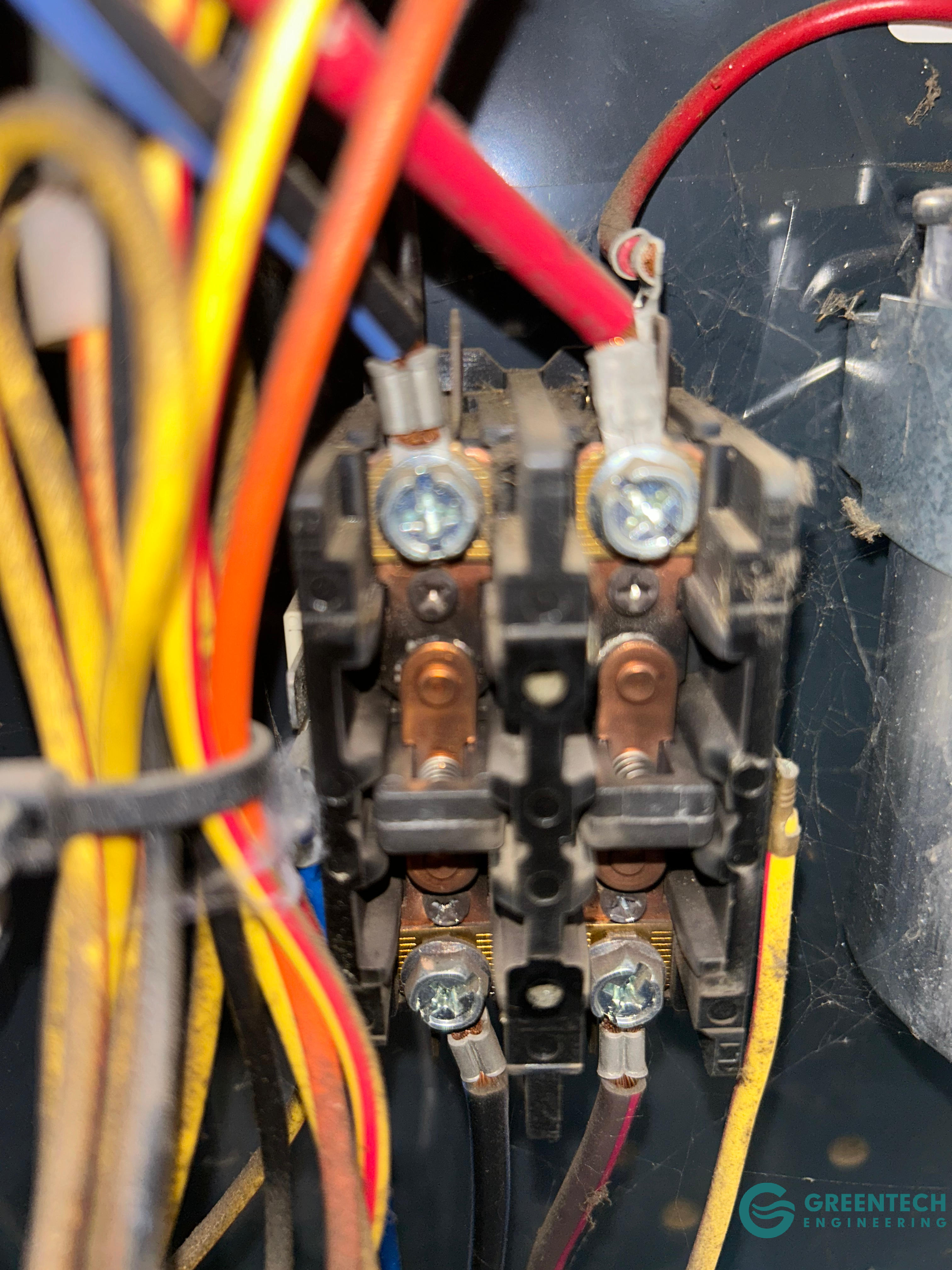
However, after restoring electrical power to the unit, our digital gauges revealed a secondary, much more severe problem: the system's standing refrigerant pressure was critically low.
The Engineered Solution: 1. Electrical Restoration: We safely removed the pitted 2-pole contactor and the dead 7.5 outdoor fan capacitor. We installed brand-new OEM replacements to safely restore communication and torque to the outdoor fan and compressor.2. Leak Isolation: Knowing the system had lost pressure, we initiated a strict leak search protocol. By systematically testing the equipment, we successfully tracked the low pressure to a physical refrigerant leak hidden inside the indoor evaporator coil.
The Outcome: By performing a holistic, data-driven diagnostic, we didn't just put a band-aid on an electrical short. We uncovered a massive hidden refrigerant leak that would have destroyed the compressor. We provided the homeowner with a permanent, mathematically verified solution to restore their comfort and protect their property.
Frequently Asked Questions (Homeowner Q&A)
Q: Why is my AC running but not cooling my house in Little Elm?
A: If the fan is blowing but the air isn't cold, you most likely have a failed compressor capacitor, a refrigerant leak, or a frozen evaporator coil. Turn the system off at the thermostat immediately to prevent internal compressor damage and call for a professional diagnostic.
Q: How often should I schedule an air filter replacement?
A: For most single-family homes in Little Elm, a standard 1-inch pleated filter should be replaced every 30 to 60 days during the summer. If you have pets or live near active construction zones, you may need to check it every 3 weeks.
Q: Is it better to repair or replace an aging AC unit?
A: A good engineering rule of thumb is the "5,000 Rule." Multiply the age of your equipment by the estimated cost of the repair. If the total exceeds $5,000, a replacement is usually the better financial decision.
Trust Little Elm’s Engineering-First HVAC Experts
When your air conditioner fails during a Texas heatwave, you don't need guesswork—you need precise, mathematically verified solutions. At Greentech Engineering Heating & Air Conditioning, we use digital tools and strict protocols to fix your system right the first time.
Don't let a minor mechanical issue turn into a major system replacement.
Need fast, reliable AC repair? Call Greentech Engineering today at (469) 551-6806 or book online.
About the Author: Siwei (Lucas) Chen
CTO | Greentech Engineering Heating & Air Conditioning
Lucas specializes in engineering-driven HVAC diagnostics, performance optimization, and energy-efficiency upgrades for North Texas homeowners. Holding a B.S. in Mechanical Engineering from Virginia Tech, he brings a strict, data-first approach to residential heating and cooling. Under his technical leadership, Greentech Engineering ensures every system is perfectly calibrated for the Dallas-Fort Worth climate.
Professional Certifications:
- ACCA Certified (Manual J, S, D)
- NCI Certified– Air Balancing & Duct Optimization
- Daikin Comfort Pro Contractor
- Oncor Participating Service Provider

Flexible Financing Options
Explore our range of flexible financing options designed to suit your needs and budget.