




Rooms that won't cool, hot spots upstairs, cold spots downstairs, or weak airflow from certain vents — the problem is almost always poorly designed ductwork, not your HVAC equipment.
Greentech Engineering's duct design in White Settlement, TX uses Manual D calculations, CAD layouts, and airflow testing to engineer a system that delivers balanced comfort to every room.
Why professional duct design matters in White Settlement, TX
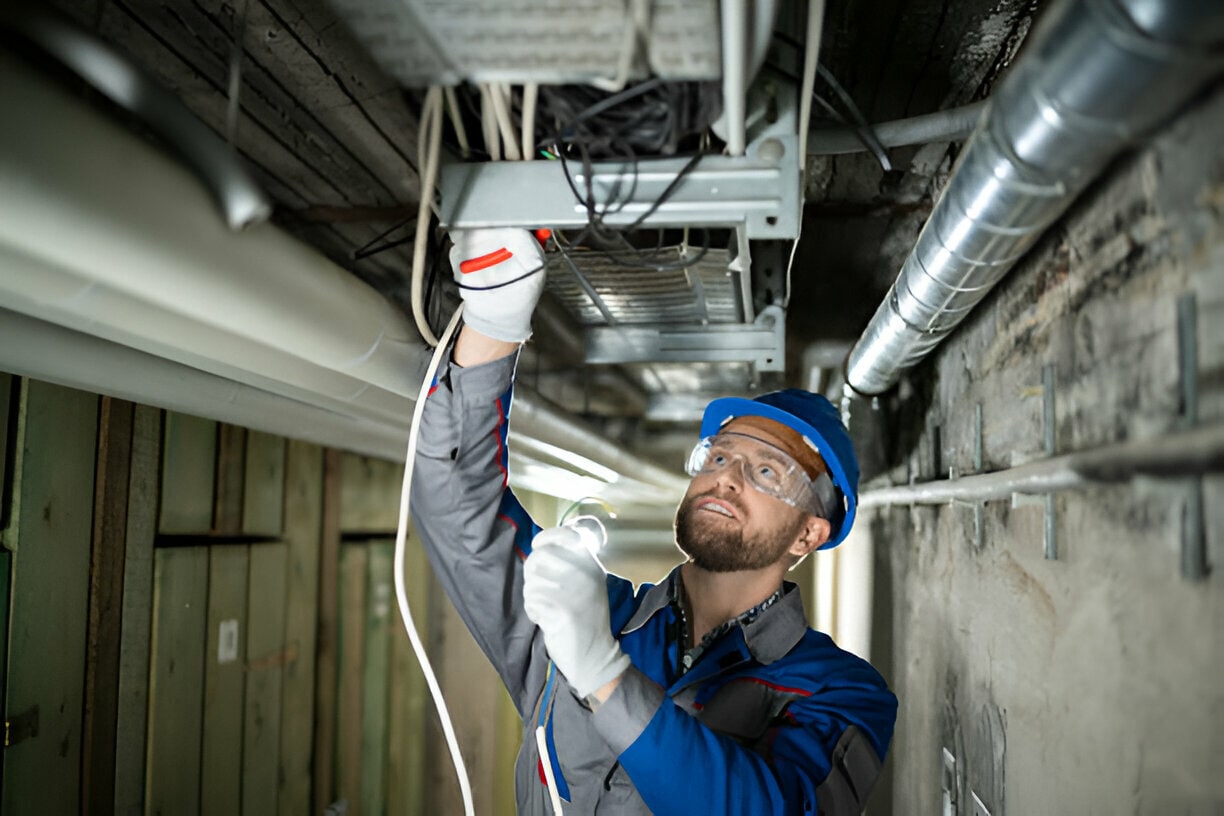
Homes in the White Settlement and Fort Worth area face long cooling seasons and attic temperatures that routinely climb well above outdoor air. Poorly sized or routed ducts amplify those stresses: rooms that never meet setpoints, short cycling, high static pressure, leakage-driven energy losses, and premature equipment wear. A properly engineered duct system reduces cooling load penalties caused by attic heat gain, minimizes leakage to unconditioned spaces, and balances airflow for consistent comfort throughout your home.
Once your ductwork is properly designed, fine-tune comfort with our room temperature service in White Settlement, TX — NCI-certified airflow balancing that ensures every room reaches the right temperature.
Common duct design issues we solve
- Oversized or undersized ducts that create low airflow, elevated static pressure, or noisy operation
- Excessive duct leakage into attics, crawlspaces, or wall cavities leading to wasted conditioned air
- Long, convoluted runs and unnecessary fittings that increase friction loss and reduce delivered CFM
- Inadequate insulation or incorrect R-value for ducts located in attics or unconditioned spaces
- Poor return placement or under-built return pathways causing negative pressure and drawing contaminants
- Imbalanced systems with hot or cold rooms and uneven register flow
Our duct design process (what we do)
- Load calculation (Manual J)
- We perform a full Manual J load calculation for each home to determine accurate heating and cooling loads. This critical step defines the equipment capacity required and prevents oversizing or undersizing that compromises comfort and efficiency.
- Duct sizing and layout (Manual D)
- Using Manual D principles, we size trunks, mains, and branch runs to deliver the target CFM to each room. We calculate friction rates, consider equivalent lengths of fittings, and set acceptable air velocities to limit noise and pressure drop.
- Airflow and static pressure analysis
- We model system static pressure and verify the interaction between air handler/furnace external static and duct design to avoid excessive pressure that shortens equipment life. We also set design targets for register velocities to ensure comfortable supply airflow.
- Material and insulation specification
- We select the right materials for each application: sheet metal for long runs and trunks where rigid ducts reduce leakage, flexible duct for short, well-supported branches, and insulated ductboard where appropriate. For attics in White Settlement, we recommend insulation levels and class (e.g., R-8 or higher) to minimize heat gain.
- Loss reduction strategies
- We prioritize shorter runs, larger trunk sizes, minimize sharp turns and transitions, specify low-loss fittings, and design return pathways to reduce pressure imbalances. Sealing strategies and recommended products are included to limit leakage.
- New construction and retrofit planning
- For new construction, we coordinate with builders and MEP teams to integrate duct chases, plenums, and return locations into the framing plan. For retrofit work, we provide practical solutions that fit within existing cavities, propose reconfiguration where needed, and flag critical access points for future service.
- Testing and commissioning
- Design handoff includes a commissioning checklist: register CFM measurements, whole-system static pressure checks, duct leakage testing (blower door or duct blaster where applicable), balancing adjustments, and performance documentation.
Materials, insulation, and installation details
- Sheet metal ducts are recommended for main trunks and long horizontal runs to minimize leakage and provide stable airflow. Proper gauge and sealed seams reduce noise and maintain airflow.
- Flexible ducts are useful for short branch connections but must be stretched straight, supported, and kept short to avoid excessive pressure loss.
- Insulation in attic ducts should meet or exceed local code and account for the high attic temperatures typical of the region; R-8 or higher is commonly recommended for non-conditioned attics.
- All joints should be sealed with mastic or UL-rated tape and mechanically fastened where required. Insulation facings and vapor considerations are addressed per local climate and code.
Strategies to improve efficiency and reduce losses
- Minimize duct length and number of fittings by optimizing layout early in design.
- Use properly sized plenums and trunks to keep velocities low and reduce noise.
- Seal all joints and transitions to avoid conditioned air loss into attics.
- Locate returns centrally and design adequate return area to prevent negative pressure and improve indoor air quality.
- Zone design and dampers can be implemented to match airflow needs in larger homes and reduce energy wasted heating or cooling empty spaces.
Testing and commissioning: proof the system works
Commissioning confirms design intent and performance. Typical tests include:
- Measuring CFM at each supply register and comparing to Manual D targets
- Verifying external static pressure across the air handler and ensuring it is within equipment limits
- Duct leakage testing to quantify losses to unconditioned spaces and confirm sealing effectiveness
- Room temperature balance checks and airflow adjustments using balancing dampers
- Documenting final performance for builders, HVAC installers, or homeowners
Coordination with builders and HVAC installers
Green Tech emphasizes practical coordination. For builders, our duct layouts integrate with framing, rooflines, and attic access points to avoid future conflicts. For HVAC installers, we supply clear plans, equipment interface notes, and commissioning procedures so the installed system matches the engineered design. This collaborative approach reduces change orders and helps ensure first-time-right installations.
Long-term benefits and maintenance advice
Well-designed ducts deliver consistent comfort, lower energy bills, quieter operation, and extended equipment life. To preserve performance in White Settlement homes:
- Inspect and reseal accessible joints every few years, especially after attic work
- Maintain attic insulation continuity and protect duct insulation from compression or moisture
- Keep return grilles clean and unobstructed to maintain proper airflow
- Schedule annual HVAC Tune-Ups that include static pressure and airflow checks
Green Tech combines engineering rigor with field-tested installation practices to deliver duct design solutions tailored for White Settlement, TX. Our designs focus on measurable performance: right-sized equipment, balanced airflow, minimized losses, and systems that perform predictably through hot Texas summers and cooler winters.
FAQs
Q: What is the difference between Manual J and Manual D?
A: Manual J is the load calculation that determines heating and cooling needs for the building. Manual D uses those loads to size ducts and lay out the system so the calculated airflow reaches each room efficiently.
Q: Can a duct redesign reduce my energy bills in White Settlement?
A: Yes. Reducing leakage, improving insulation, shortening runs, and balancing airflow all lower the workload on the HVAC equipment, which typically reduces cooling energy in the long, hot Texas summer.
Q: Is it better to use flexible duct or sheet metal in an attic?
A: Use sheet metal for main trunks and long runs to reduce leakage and pressure loss. Flexible duct is acceptable for short branch runs if properly supported and kept straight. Insulate both to suitable R-values for attic conditions.
Q: What testing should be done after ducts are installed?
A: Key tests include register CFM measurements, whole-system static pressure checks, duct leakage testing to unconditioned spaces, and room balance verification to ensure the system meets design targets.
Q: Will Green Tech design ducts for new construction and existing homes?
A: Green Tech provides engineered duct design for both new construction and retrofit projects, coordinating with builders and HVAC installers to deliver practical, code-compliant solutions.

Flexible Financing Options
Explore our range of flexible financing options designed to suit your needs and budget.