




Rooms that won't cool, hot spots upstairs, cold spots downstairs, or weak airflow from certain vents — the problem is almost always poorly designed ductwork, not your HVAC equipment.
Greentech Engineering's duct design in Watauga, TX uses Manual D calculations, CAD layouts, and airflow testing to engineer a system that delivers balanced comfort to every room.
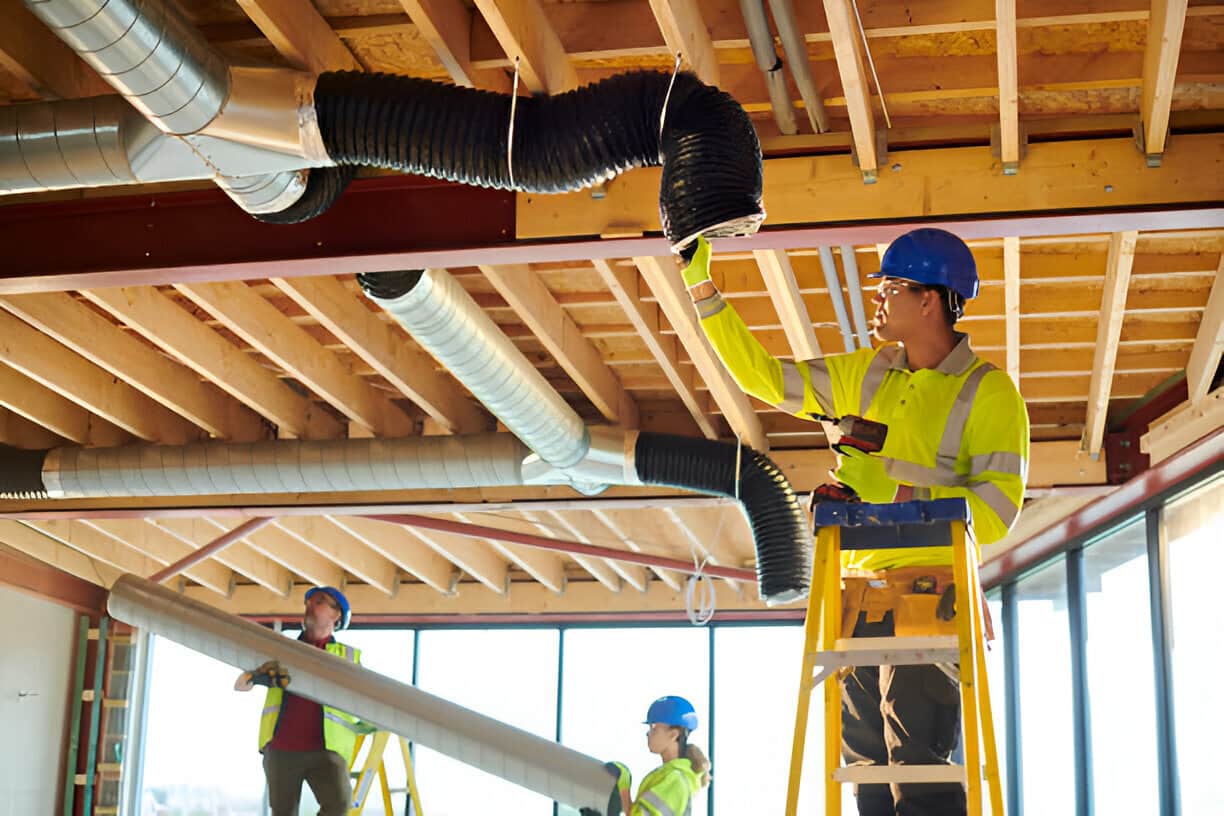
Why precise duct design matters in Watauga homes
North Texas summers are long and hot, with high sensible cooling loads and occasional high humidity. Many Watauga homes also include attics and crawl spaces that become heat traps. Poorly designed or leaky ducts in unconditioned spaces can cause oversized runtime, higher utility bills, uneven comfort, and noisy registers. Proper duct design tailored to local climate conditions prevents these issues and protects system efficiency for years.
Once your ductwork is properly designed, fine-tune comfort with our room temperature service in Watauga, TX — NCI-certified airflow balancing that ensures every room reaches the right temperature.
Common duct problems we address
- Uneven temperatures between rooms or floors
- High utility bills caused by duct leakage and poor airflow
- Excessive noise from airflow, equipment, or vibration
- Insufficient airflow to remote rooms or long-run bedrooms
- Incompatibility between new equipment and existing ductwork
- Code and permitting gaps for new construction projects
Our duct design services for new construction and retrofits
Green Tech’s duct design offering covers the full engineering workflow so builders, remodelers, and homeowners in Watauga get systems that perform as intended.
- Manual J load calculation
- Accurate room-by-room heat gain and loss analysis using measured square footage, orientation, window specs, insulation levels, and local climate data.
- Equipment sizing that prevents short-cycling and humidity problems common in hot-summer climates.
- Manual D duct sizing and layout
- Calculated trunk and branch sizes to meet target airflow and static pressure limits.
- Optimized layouts that minimize long runs, unnecessary elbows, and friction losses.
- Material and insulation recommendations
- Selection between rigid, semi-rigid, ductboard, or lined plenums based on performance and installation conditions.
- Recommended duct insulation values appropriate for Watauga installations, typically R-6 to R-8 for ducts in unconditioned attics and higher where required by code or extreme exposure.
- Strategies to minimize airflow losses and noise
- Specification of low-friction fittings, turning vanes, and proper transition geometry.
- Guidance on minimizing flexible duct length, using mastic and mechanical fastening, and specifying high-quality gasketing and sealants.
- Acoustic treatments such as lined plenums, attenuators, and location strategies to reduce register and equipment noise.
- Equipment integration and system matching
- Coordination of fan curves and external static pressure targets so the chosen air handler or furnace operates at intended efficiency.
- Selection of compatible coils, filter banks, and dampers to prevent performance loss.
- Zoning and balancing options
- Design of mechanical zoning with motorized dampers and controls for multi-story homes and open-plan layouts.
- Passive balancing strategies and provision for manual dampers for future commissioning.
- Recommendations for multi-zone equipment or variable-speed systems where appropriate for humidity control and energy savings.
- Engineering consultation and code compliance
- Plans and specifications stamped for permit submittal where required.
- Verification against applicable energy codes and local building requirements.
- Coordination with architects, builders, and mechanical contractors to ensure installed system matches design intent.
What deliverables you can expect
Green Tech provides clear, construction-ready documentation that contractors and inspectors can use directly.
- Load calculation report (Manual J) with room-by-room loads and equipment sizing summary
- Duct layout drawings (Manual D) showing trunk runs, branch sizes, register locations, and turning vanes
- Equipment schedule and system diagram showing air handler, coil, and outdoor equipment relationships
- Static pressure and airflow calculations with target CFM per register
- Materials list and insulation specifications, including recommended R-values and sealant types
- Zoning schematics and control sequences for multi-zone systems
- Commissioning checklist and balancing instructions for handoff
Typical design process
- Site review and data collection: inspection of plans or existing conditions, envelope details, and mechanical access points.
- Manual J load calculation: determine heating and cooling loads tailored to the Watauga climate.
- Manual D duct layout and sizing: produce initial layouts and iterate for architectural coordination.
- Equipment matching and static pressure verification: ensure fan capacity meets system resistance.
- Final plans, specifications, and permit documentation: deliver stamped drawings if needed.
- Commissioning support: provide balancing guidance and troubleshooting during startup.
Why timely duct design pays off
Investing in professional duct design up front reduces callbacks, lowers operating costs, and increases occupant comfort. In retrofit situations, properly engineered duct solutions can avoid premature equipment replacement by unlocking the full potential of an existing system. For new construction, good duct design prevents costly rework and supports higher efficiency ratings and better indoor air quality.
Practical tips for Watauga homeowners and builders
- Avoid excessive use of long flexible duct runs in attics. Use rigid or semi-rigid trunks where possible.
- Seal all joints with mastic or UL-181 rated tape and mechanically fasten fittings to prevent leakage.
- Insulate ducts in unconditioned spaces to recommended R-values to reduce heat gain and loss.
- Consider variable-speed equipment and zoning for multi-story homes to improve comfort and humidity control.
- Include a straight accessible location for return plenums and filters to simplify maintenance.
Green Tech’s engineering and HVAC teams combine practical field experience with formal load and duct design methods to deliver systems that meet comfort expectations and energy goals for Watauga residents and builders.
FAQs
Q: What is the difference between Manual J and Manual D?
A: Manual J calculates the heating and cooling load for each room to determine the correct equipment size. Manual D uses those loads to size and route the ductwork so each register receives the required airflow.
Q: Do I need ductwork plans for a permit in Watauga?
A: Many jurisdictions require HVAC plans for new construction and significant retrofits. Green Tech can prepare permit-ready drawings and engineering documentation to meet local code requirements.
Q: How much energy can proper duct design save?
A: Savings vary, but correcting major issues like leakage and improper sizing often reduces HVAC energy use substantially and improves runtime efficiency. Precise savings depend on the existing system condition and usage patterns.
Q: What insulation R-value is recommended for ducts in attics in Watauga?
A: Typical recommendations range from R-6 to R-8 for ducts in unconditioned attics; however exact values depend on local code, attic exposure, and system design. Green Tech specifies insulation appropriate for each project.
Q: Can duct design reduce noise in my home?
A: Yes. Properly sized ducts, smoother transitions, lined plenums, and attention to register selection and equipment mounting significantly reduce airflow and mechanical noise.
Q: Will you coordinate with my builder or HVAC contractor?
A: Green Tech provides plans and consultative support to builders, mechanical contractors, and architects to ensure the installed system matches the engineered design and performs as intended.

Flexible Financing Options
Explore our range of flexible financing options designed to suit your needs and budget.