




Rooms that won't cool, hot spots upstairs, cold spots downstairs, or weak airflow from certain vents — the problem is almost always poorly designed ductwork, not your HVAC equipment.
Greentech Engineering's duct design in University Park, TX uses Manual D calculations, CAD layouts, and airflow testing to engineer a system that delivers balanced comfort to every room.
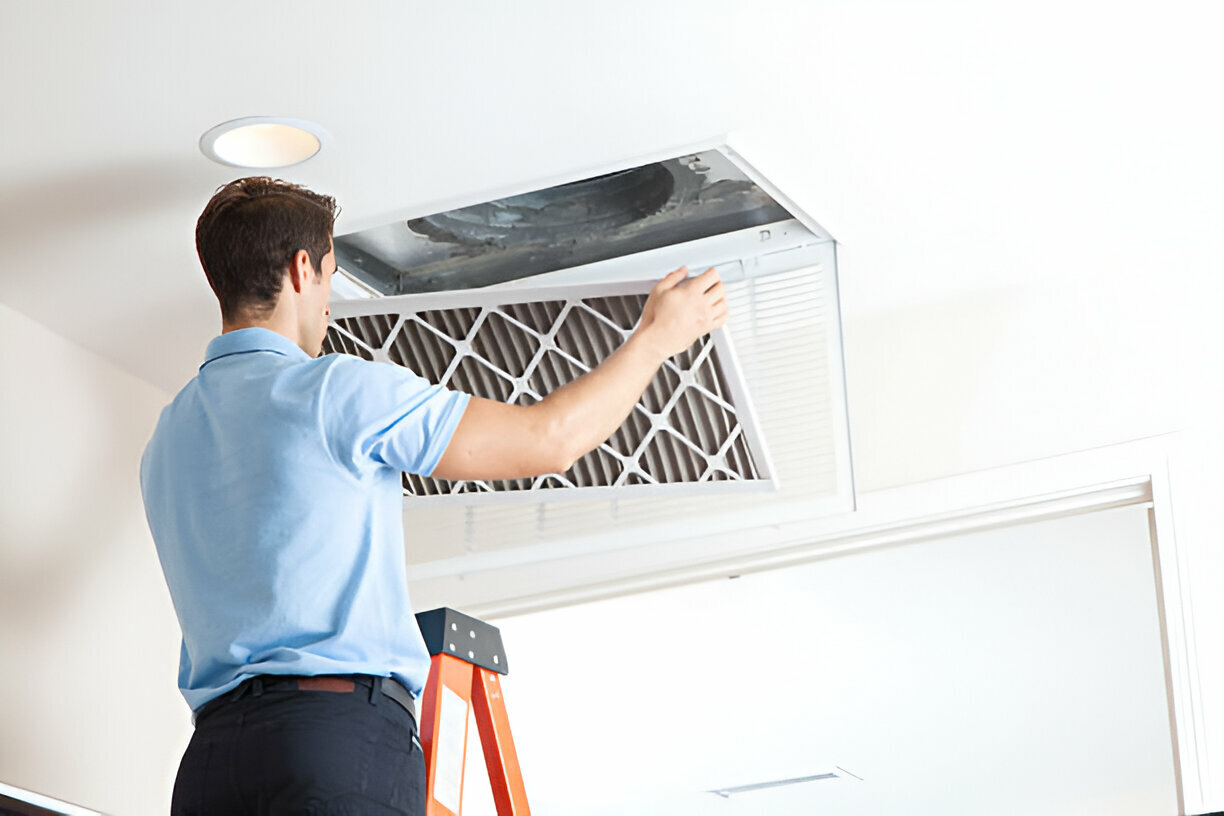
Why duct design matters in University Park homes
Many older and newer homes in University Park have unique construction characteristics: high ceilings, attics with heavy sun exposure, and varying floor plans that affect airflow. Poor duct design shows up as uneven temperatures, high utility bills, noisy vents, and premature equipment wear. Addressing ductwork from the start or as part of a retrofit reduces these problems and improves system performance in the specific climate and housing stock found in University Park.
Once your ductwork is properly designed, fine-tune comfort with our room temperature service in University Park, TX — NCI-certified airflow balancing that ensures every room reaches the right temperature.
Common duct design issues in University Park, TX
- Undersized or oversized ducts that restrict airflow or create unnecessary friction losses
- Leaky joints and seams in uninsulated attic ducts resulting in cooled or heated air lost to the attic
- Insufficient return air paths that create negative pressure, drawing in hot attic air or unconditioned outside air
- Poor register placement that leads to hot/cold spots and short cycling of equipment
- Ducts routed through unconditioned spaces without adequate insulation, increasing heat gain in summer
- Retrofit constraints where existing cavity spaces force inefficient duct runs
What our professional duct design includes
Green Tech bases designs on industry-standard practices adapted for University Park conditions. Key elements include:
- HVAC load calculations
- We perform comprehensive load calculations (Manual J level) that account for local climate, home orientation, insulation levels, window types, and occupancy. Accurate loads determine the correct system capacity and reduce the risk of oversized equipment.
- Duct sizing and layout
- Duct sizing follows pressure-loss-aware methodologies so airflow is delivered where needed without excessive static pressure. We design layouts that shorten runs, minimize transitions, and avoid unnecessary elbows to preserve airflow efficiency.
- Supply and return placement
- Proper placement of supply registers and returns is critical to eliminate dead zones. Designs specify register locations, grille sizes, and return pathways to promote balanced circulation throughout each zone of the house.
- Airflow balancing
- A system that measures and balances CFM by zone reduces temperature swings. We include balancing strategies such as register selection, dampers, and calculated branch sizing to match the design airflow across rooms.
- Materials, insulation, and sealing best practices
- We recommend materials appropriate for your home: rigid metal for trunks where space allows, insulated flex where needed, and mastic or UL 181-rated tape for sealing. In University Park, insulated ducts in the attic and high-quality sealing are vital to prevent summertime heat gain.
- Coordination with new construction and retrofit projects
- For builders and remodelers we coordinate duct routing with other trades, plan closets and chases to accommodate required runs, and adapt designs to retrofit constraints using compact and efficient solutions.
- Performance testing: static pressure and airflow
- After installation we measure static pressure, airflow, and supply/return temperature differentials. These tests verify the system meets design targets and help identify any corrective adjustments.
Typical duct design process
- On-site assessment and measurements: We document floor plans, attic access, equipment location, and insulation levels.
- Load calculation: Room-by-room heat gain and loss calculations determine equipment capacity and airflow needs.
- Duct layout and sizing: Produce drawings and schedules showing trunk sizes, branch sizes, register locations, and balancing strategies.
- Material and sealing specification: Define materials, insulation R-values, and sealing methods to minimize leakage and thermal loss.
- Installation coordination: Work with builders or retrofit teams to ensure practical implementation.
- Testing and commissioning: Static pressure, CFM readings, and temperature tests confirm performance and produce a punch list for any adjustments.
How proper duct design improves comfort and efficiency
- More consistent temperatures: Balanced airflow eliminates hot and cold spots.
- Lower energy use: Reduced leakage and pressure losses mean the system runs less while delivering the same comfort.
- Longer equipment life: Correct airflow reduces short cycling and compressor strain.
- Improved indoor air quality: Proper return pathways and sealed ducts reduce dust and unconditioned air infiltration.
- Quieter operation: Properly sized runs and reduced turbulence cut down noise at the registers.
Materials and sealing best practices for University Park
- Insulated duct in unconditioned attics: Use R-6 or higher insulation for ducts exposed to attic heat to limit heat gain in summer.
- Rigid trunk lines where possible: Metal trunks provide lower leakage and fewer air losses than repeatedly connected flex sections.
- Mastic and UL 181 tape: Mastic sealant and UL-approved tapes provide durable, tested seals at seams and joints.
- Proper support and spacing: Avoid sagging flex duct and sharp bends; maintain manufacturer minimum bend radii and supported intervals.
- Return air considerations: Dedicated returns in each major zone reduce negative pressure and help filtration perform better.
Maintenance and long-term performance
Periodic inspections help maintain duct performance. Recommended tasks include checking seals and insulation integrity, measuring differential temperatures and static pressure during seasonal Tune-Ups, and cleaning or replacing filters to keep airflow steady. For homes in University Park, seasonal checks before heavy cooling periods catch attic-related issues early.
Green Tech applies engineering-level attention to detail so duct systems perform reliably in University Park homes. Our approach integrates precise load work, practical layout solutions, and measurable testing to ensure systems deliver comfort, efficiency, and long life.
FAQs
Q: What is included in a duct design service?
A: A full duct design includes a room-by-room load calculation, duct sizing and layout drawings, supply and return placement plans, material and sealing recommendations, coordination guidance for installation, and post-installation performance testing for static pressure and airflow.
Q: How does attic ductwork affect cooling in University Park?
A: Attic ductwork exposed to high attic temperatures raises cooling loads and increases heat gain. Insulating ducts, minimizing attic runs, and sealing all joints significantly reduce heat transfer and energy waste in University Park summers.
Q: Will a new duct design reduce my energy bills?
A: Yes. Proper duct design reduces leakage and pressure losses, providing required airflow with less runtime. That efficiency translates to lower energy consumption and more consistent comfort.
Q: Can duct design be done for a retrofit home with limited space?
A: Yes. Retrofitting requires creative routing, compact trunk design, and careful return air planning. Green Tech evaluates options like rebalancing, adding returns, or partial rerouting to improve performance within existing constraints.

Flexible Financing Options
Explore our range of flexible financing options designed to suit your needs and budget.