




Rooms that won't cool, hot spots upstairs, cold spots downstairs, or weak airflow from certain vents — the problem is almost always poorly designed ductwork, not your HVAC equipment.
Greentech Engineering's duct design in Saginaw, TX uses Manual D calculations, CAD layouts, and airflow testing to engineer a system that delivers balanced comfort to every room.
Get Your Professional Duct Design Consultation
Once your ductwork is properly designed, fine-tune comfort with our room temperature service in Saginaw, TX — NCI-certified airflow balancing that ensures every room reaches the right temperature.
Why proper duct design matters in Saginaw, TX
Saginaw homes face high cooling loads most of the year, prolonged AC runtime, and elevated attic temperatures that can exceed 140 F. Poorly designed or leaky ducts in these conditions create common problems:
- Uneven temperatures between rooms and floors
- High energy bills and oversized equipment short cycling
- Increased humidity inside the home, which affects comfort and indoor air quality
- Premature equipment wear due to increased run times
- Green Tech’s duct design approach targets these local challenges by combining Manual J load calculations with Manual D duct sizing, balanced airflow strategies, and construction-conscious layout planning.
What our duct design service includes
- Load calculations and duct sizing (Manual J and Manual D)
- Precise room-by-room cooling and heating loads based on Saginaw climate data, window orientation, insulation levels, and occupancy.
- Duct sizing to match the system capacity and desired room airflow, preventing undersized trunks and overstretched supply branches.
- Duct layout planning and space coordination
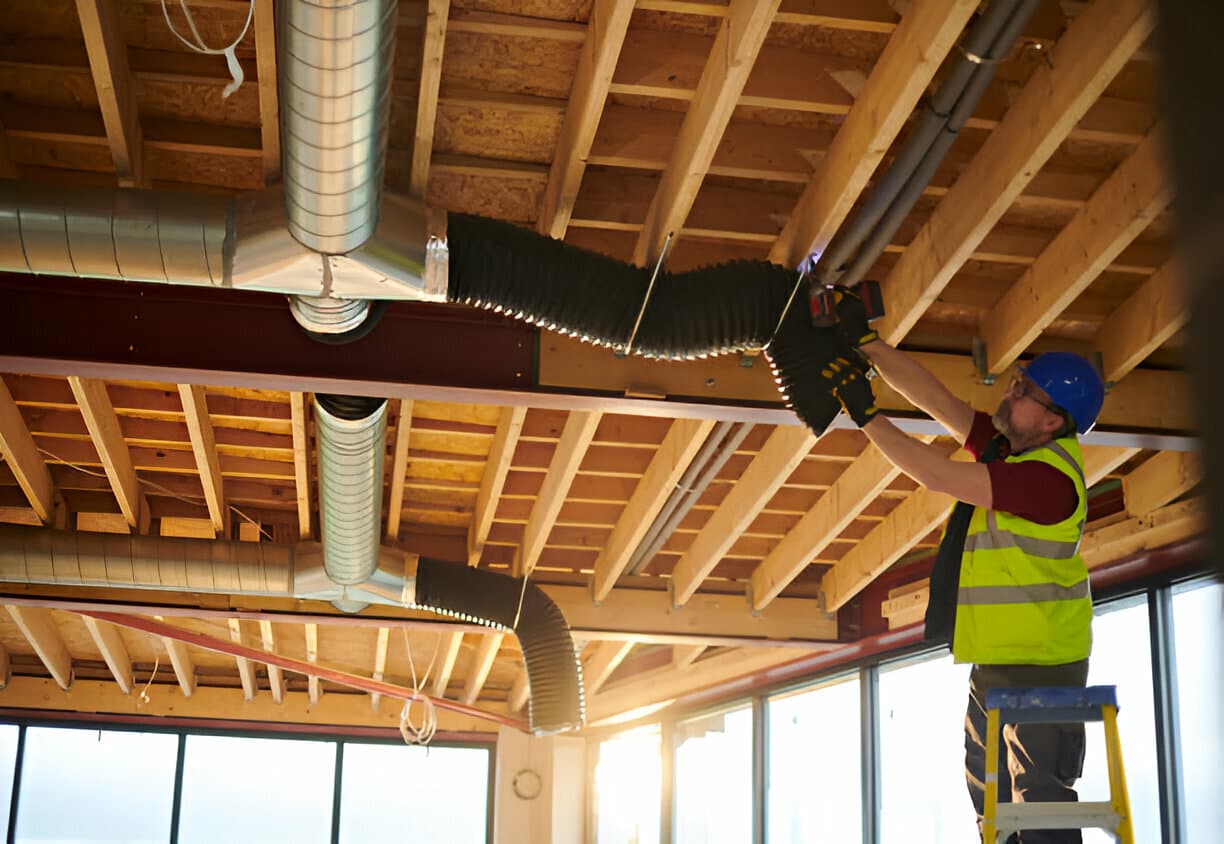
- Practical routing through attics, crawlspaces, and chases with attention to minimal run length, turns, and required plenums.
- Coordination with new construction framing or retrofit constraints so ducts integrate with cabinetry, trusses, and mechanical closets.
- Airflow balancing and register placement
- Optimal supply register sizing and placement to promote mixing, avoid cold/hot spots, and minimize direct drafts.
- Return location strategy to avoid pressure imbalances and unwanted infiltration from attics or garage.
- Materials and insulation recommendations
- Material selection (rigid sheet metal, insulated flex, lined ductboard) tailored to the installation space and performance needs.
- Insulation guidance for ducts in unconditioned spaces — typically higher R-values in Saginaw attic applications to reduce heat gain.
- Sealing and leakage prevention
- Specification of mastic or UL-approved tape for long-lasting seals, with attention to joints, boots, and plenums.
- Zoning options and multi-stage control
- Design for zoning dampers, smart thermostats, or variable-speed blower coordination to improve comfort and efficiency in larger or multi-level Saginaw homes.
- Performance testing and verification
- Duct leakage testing and measured airflow verification to confirm the system performs to design targets after installation.
Typical problems we diagnose and correct
- Undersized ducts that starve bedrooms of airflow, causing high humidity and hot rooms upstairs
- Oversized main runs with multiple restrictive bends that drop static pressure and reduce system capacity
- Poorly located returns that create negative pressurization and pull in attic air
- Uninsulated or poorly insulated ducts in hot attics contributing to significant cooling losses
- High leakage at joints, boots, and filter compartments that reduce effective airflow and waste energy
How we design and test: the Green Tech process
- Site assessment and data collection
- Home envelope inspection, attic conditions, equipment type, and existing duct layout documentation.
- Measurement of room dimensions, windows, and insulation values for accurate Manual J loads.
- Manual J load calculation and equipment selection
- Calculations that determine the exact cooling and heating capacity required for each zone and the whole house.
- Manual D duct layout and sizing
- Duct runs sized using industry-standard methods to deliver required cfm to each register while keeping static pressure within acceptable limits.
- Material and insulation specification
- Selecting duct materials and recommending insulation R-values suitable for Saginaw attic and crawlspace conditions.
- Installation oversight and sealing
- Guidance on sealing methods, support, and transitions to ensure installation matches the design.
- Post-installation performance testing
- Measured supply and return cfm at registers, total system airflow, and duct leakage testing to quantify results and confirm design goals.
Performance benchmarks and practical targets
While every home is unique, effective duct design aims to:
- Deliver balanced room airflows consistent with Manual J targets
- Keep external static pressure low enough to maintain equipment efficiency and capacity
- Minimize duct leakage through tested sealing methods
- Use insulation appropriate to unconditioned attic temperatures commonly seen in Saginaw
Benefits of investing in professional duct design
- Lower energy consumption and more consistent monthly bills due to reduced losses and better system efficiency
- Improved whole-house comfort with fewer hot or cold spots and better humidity control
- Longer equipment life with properly matched airflow and less frequent short cycling
- Cleaner indoor air by minimizing infiltration of dust and attic air into living spaces
- Green Tech leverages its engineering background to deliver duct designs that are practical for builders and retrofit-friendly for existing homes, with a focus on measurable performance.
Maintenance and long-term considerations
- Periodic airflow checks after major renovations or changes in occupancy
- Visual inspection of duct insulation and sealing, especially after attic work
- Rebalancing or damper adjustment when room usage changes
- Routine HVAC maintenance to preserve designed airflow and system efficiency
FAQs
Q: What is the difference between Manual J and Manual D?
A: Manual J calculates the heating and cooling load for each room and the entire home. Manual D uses those loads to size and lay out the duct system so each room receives the correct airflow.
Q: Do ducts in Saginaw need special insulation?
A: Yes. Due to high attic temperatures in Saginaw, using insulated ducts with appropriate R-values in unconditioned spaces reduces heat gain and improves cooling efficiency.
Q: How do you verify a duct design after installation?
A: Verification includes measuring supply and return airflow at registers, performing a duct leakage test, and checking system static pressure to confirm the installation meets the design targets.
Q: Can good duct design reduce my energy bills?
A: Properly designed and sealed ductwork reduces energy losses, improves system efficiency, and helps equipment run less to maintain comfort, all of which contribute to lower energy use over time.

Flexible Financing Options
Explore our range of flexible financing options designed to suit your needs and budget.