




Rooms that won't cool, hot spots upstairs, cold spots downstairs, or weak airflow from certain vents — the problem is almost always poorly designed ductwork, not your HVAC equipment.
Greentech Engineering's duct design in Sachse, TX uses Manual D calculations, CAD layouts, and airflow testing to engineer a system that delivers balanced comfort to every room.
Get Your Professional Duct Design Consultation
Once your ductwork is properly designed, fine-tune comfort with our room temperature service in Sachse, TX — NCI-certified airflow balancing that ensures every room reaches the right temperature.
Why professional duct design matters in Sachse
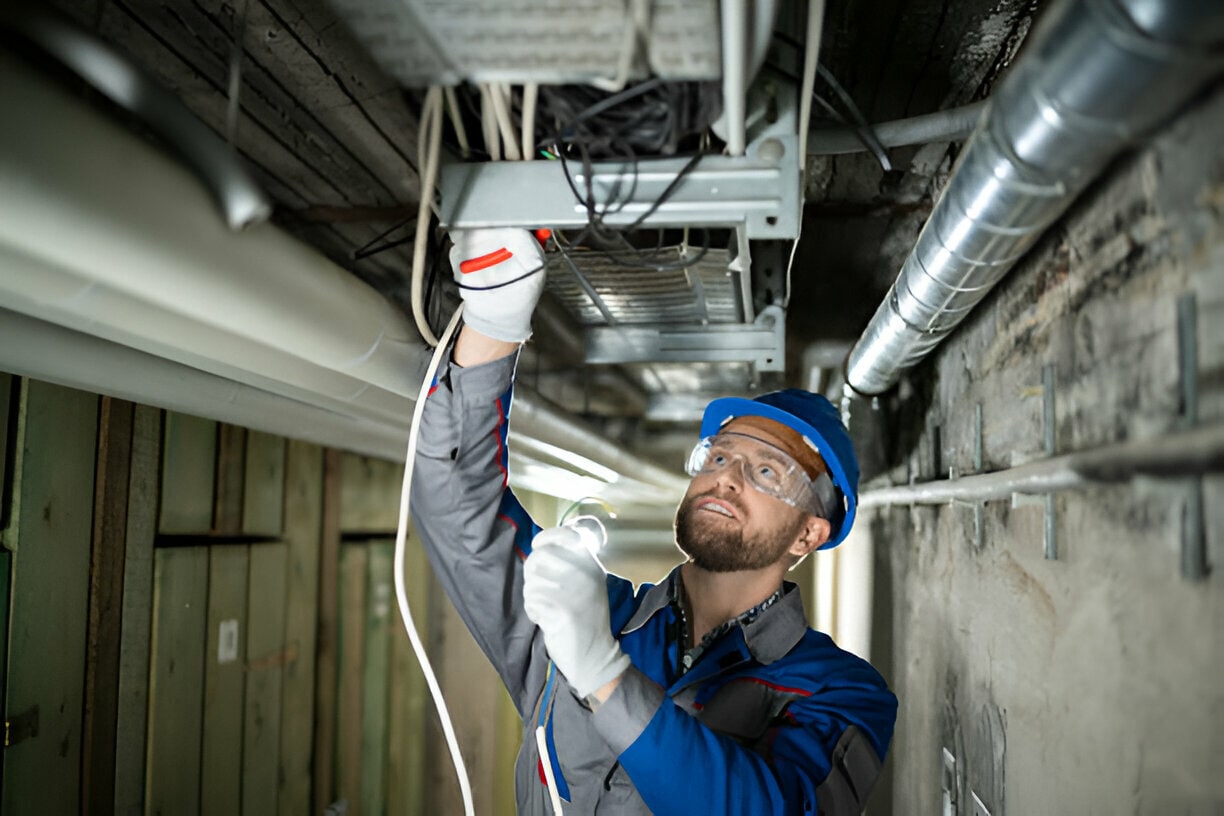
Many comfort and efficiency problems start with the ductwork, not the equipment. Oversized or undersized ducts, poor register placement, long uninsulated runs through hot attics, and leakage can create hot or cold rooms, short cycling, excessive energy bills, and premature equipment wear. In Sachse, where cooling demand is high for much of the year, a properly designed duct system reduces runtime and humidity-related comfort issues while improving air distribution across living areas.
Common duct system issues we address
- Imbalanced airflow and hot/cold rooms in multi-level and open-plan Sachse homes
- Undersized ducts causing high static pressure and noisy supply registers
- Excessive duct leakage into attics and crawlspaces, leading to energy loss and poor conditioned-air delivery
- Poor grille and register selection or placement that produces drafts or uneven distribution
- Retrofit challenges integrating new equipment with existing trunk and branch systems
- Inadequate sealing and insulation on ducts routed through unconditioned spaces
What our Duct Design service includes
- Load calculations and Master Planning: Manual J heat load calculations for accurate heating and cooling sizing and Master Planning for duct routing across the whole house. These calculations account for Sachse climate, orientation, window sizes, insulation, and occupancy patterns.
- Duct sizing and layout: Detailed Manual D style sizing and layout for trunks, branches, boots, and returns, optimized to balance airflow, minimize static pressure, and reduce noise.
- Material and grille/register selection: Recommendations for duct materials, insulation values, and grille types and locations tailored to room function and aesthetics.
- Airtightness and sealing best practices: Specification of sealing methods and materials (mastic, UL-181 tape, gasketed connections) and guidance for pressure-rated plenums where required.
- Integration with existing HVAC equipment: Assessment and adjustments to match new or existing air handlers, coils, and furnaces to the duct system for correct external static pressure and airflow.
- Offsite CAD and plan deliverables: Professional CAD drawings and schedule sheets with sizing, CFM per outlet, insulation R-values, and installation notes for builders and contractors.
- On-site installation oversight and verification: Optional field supervision during duct installation to ensure plans are followed and workmanship meets sealing and insulation standards.
- Performance testing and balancing: On-site testing including airflow balancing, system static pressure checks, and duct leakage testing with diagnostic equipment. Results and adjustments are documented in the project deliverables.
Our design and verification process
- Site assessment and data collection: We review plans or inspect the home to collect orientation, insulation, window U-values, existing duct layout, and equipment specs.
- Load and master planning: Manual J calculations set the system capacity. Master Planning optimizes feasible routes and return placement.
- Duct sizing and deliverables: Produce CAD plans, register schedules, material specifications, and sealing instructions.
- Installation oversight (if selected): On-site checks during critical installation phases to confirm layout, support, and sealing.
- Testing and balancing: Measure supply and return airflow, record static pressures, perform duct leakage tests, and adjust dampers and registers to achieve the design CFM distribution.
- Final documentation: Provide test reports, as-built drawings, and recommendations for ongoing maintenance or future upgrades.
Performance benefits you can expect
- More consistent temperatures room-to-room and reduced hot spots in upper floors
- Lower cooling runtime and improved humidity control in hot, humid months
- Quieter operation with reduced register noise and balanced flows
- Better indoor air quality and reduced infiltration of attic air when ducts are sealed and pressurized correctly
- Extended service life and improved warranty compliance for HVAC equipment by maintaining designed external static pressure
Airtightness and testing explained simply
Duct leakage testing quantifies how much conditioned air escapes before it reaches living spaces. Typical diagnostics use a duct blaster to pressurize the duct system and measure cubic feet per minute of leakage. We combine those results with static pressure measurements and airflow readings at registers to identify problem areas and verify repairs. In Sachse, sealing ducts that run through hot attics is one of the highest-return improvements for energy savings and comfort.
Deliverables you will receive
- CAD duct layout and register schedule with CFM targets per outlet
- Manual J load report and master plan summary
- Sealing and insulation specification sheet tailored to local code and climate
- Field test reports: airflow balancing, static pressure logs, and duct leakage numbers
- Installation notes for contractors and punch list items identified during oversight
Timelines and project planning
- Design-only engagements (plans and CAD deliverables) are typically completed in a few business days to one week after we receive full home data or plan sets.
- Design plus installation oversight and testing usually spans one to three weeks depending on job size, construction stage, and scheduling for on-site testing.
- Remodels that require corrective work after testing may add time for repairs and retesting. Project pacing depends on coordination with builders and general contractors.
Maintenance and long-term care
- Inspect and reseal accessible duct joints every few years or after major attic work.
- Replace or inspect return filters and ensure returns are unobstructed to protect system airflow.
- Periodic airflow checks and static pressure measurements after significant equipment changes or remodels preserve design performance.
- Consider adding zoning or smart dampers if comfort issues persist between floors or frequently unused spaces.
FAQs
Q: What is included in a Manual J calculation for Sachse homes?
A: Manual J estimates heating and cooling loads using house geometry, insulation, window types, orientation, occupancy, and local weather data for Sachse to determine correctly sized HVAC equipment.
Q: Can you design ducts to work with an existing air handler?
A: Yes. We evaluate the existing equipment, measure external static pressure, and design the duct layout and register schedule to match the air handler performance or recommend minimal modifications for optimal operation.
Q: How do you test duct airtightness and what results should I expect?
A: We use a duct blaster to pressurize the system and report leakage in CFM or percent of nominal system flow. Acceptable targets vary by project type, but sealing ducts routed through unconditioned attic space typically results in significant measurable improvement.
Q: Will proper duct design lower my energy bills in Sachse?
A: Yes. Proper sizing, reduced leakage, and balanced airflow reduce cooling runtime and improve humidity control, which together lower energy use and improve comfort during Sachse summers.
Q: What deliverables does Green Tech provide to builders and homeowners?
A: Green Tech provides CAD duct layouts, Manual J load reports, register and material schedules, sealing and insulation specs, and field testing reports including airflow and leakage results.

Flexible Financing Options
Explore our range of flexible financing options designed to suit your needs and budget.