





Rooms that won't cool, hot spots upstairs, cold spots downstairs, or weak airflow from certain vents — the problem is almost always poorly designed ductwork, not your HVAC equipment.
Greentech Engineering's duct design in Richland Hills, TX uses Manual D calculations, CAD layouts, and airflow testing to engineer a system that delivers balanced comfort to every room.
Get Your Professional Duct Design Consultation
Once your ductwork is properly designed, fine-tune comfort with our room temperature service in Richland Hills, TX — NCI-certified airflow balancing that ensures every room reaches the right temperature.
Why professional duct design matters in Richland Hills
- Hot, humid summers increase cooling loads and emphasize the need for accurate load calculations.
- Many local homes have long attic runs or retrofits where space and insulation are constraints.
- Poorly sized or sealed ducts magnify humidity, comfort, and indoor air quality problems when outdoor conditions are extreme.
A correctly designed duct system ensures the right airflow to each room, keeps static pressure within equipment limits, reduces duct leakage, and coordinates with the selected HVAC equipment so systems run efficiently and quietly.
Common duct problems in Richland Hills homes
- Undersized ducts that reduce airflow and force equipment to work harder.
- Leaky connections in attics and crawlspaces that waste conditioned air into unconditioned spaces.
- Inadequate return pathways, causing negative pressure, dust, and uneven temperatures.
- Long, convoluted runs that produce high friction losses and poor room-by-room balance.
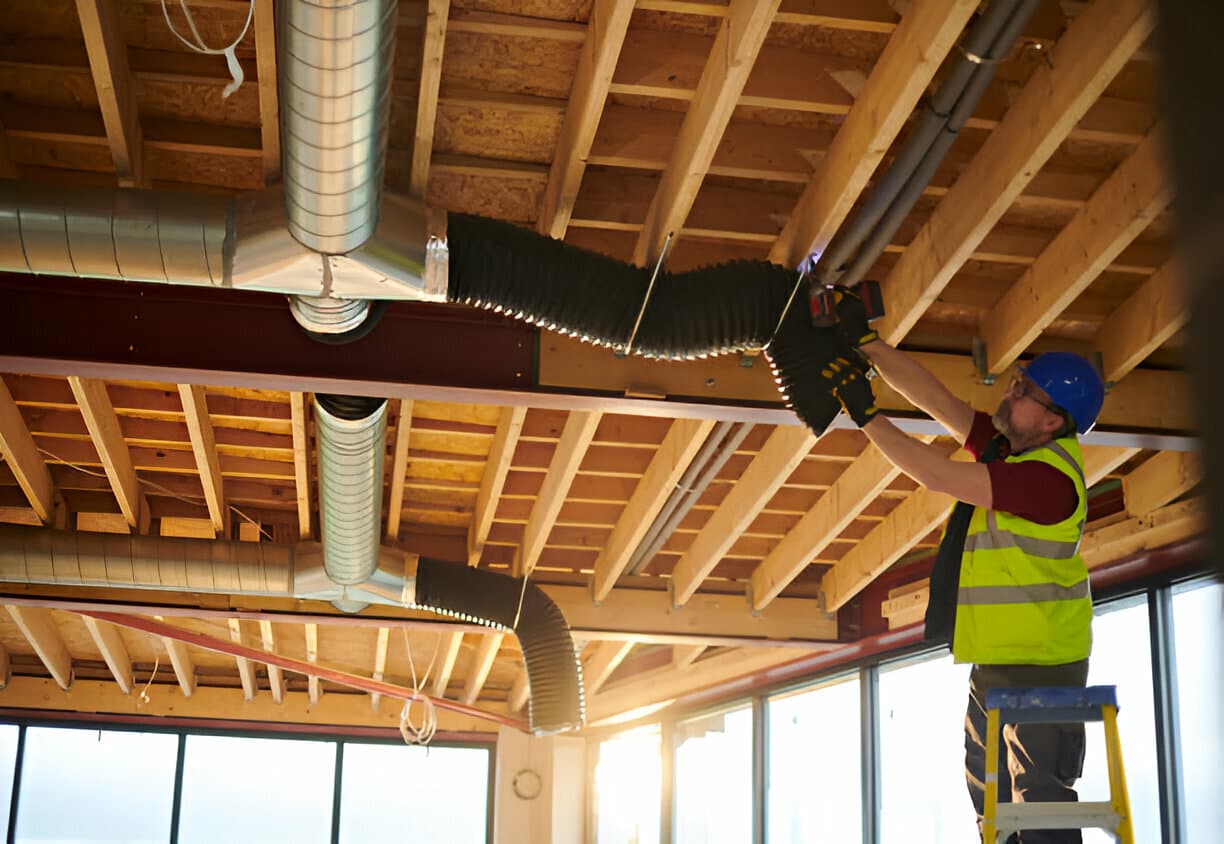
- Crushed or poorly-supported flexible duct in retrofit jobs that restricts airflow.
- Insufficient insulation on ducts exposed to hot attic air, increasing cooling load.
Our duct design services
Green Tech delivers a full suite of engineering services for duct systems in Richland Hills, including:
- Load calculations (Manual J) to determine precise heating and cooling requirements by room.
- Duct sizing and layout (Manual D) that matches duct geometry to the load and building constraints.
- Airflow planning and static pressure analysis to keep total external static pressure within equipment manufacturer limits.
- Layout optimization for new construction and retrofits, considering attic, basement, and chase space.
- Material and sealing recommendations including duct type selection, insulation R-values, and sealing methods to minimize leakage.
- Coordination with HVAC equipment selection and installation to ensure the blower and coil operate in their optimal range.
- Expected deliverables: CAD or PDF plans, specifications, schedule of sizes and fittings, performance calculations, and cost estimates.
Design and engineering process
- Onsite survey and data collection: We document home orientation, insulation, windows, room usage, attic access and restrictions, and existing duct conditions for retrofits.
- Manual J load calculation: Room-by-room heat gains and losses are calculated with local climate data for Richland Hills to size equipment accurately.
- Manual D duct design: Based on the load, we size trunks, branches, registers, and return paths to achieve target CFM and balanced airflow.
- Static pressure and airflow modeling: We check total external static pressure and predicted velocities to prevent noise, high energy use, and premature equipment failures.
- Material and sealing plan: Recommendations for sheet metal vs insulated flex, insulation levels for attic ducts, and sealing methods like mastic, UL 181 tape, or gasketing.
- Deliverables and estimates: Detailed plans, specifications, equipment coordination notes, and a clear cost estimate for installation or retrofit work.
Materials, sealing, and installation best practices
- Use rigid sheet metal for main trunks where space and cost allow; it reduces friction and leakage.
- Use insulated flex duct only when properly supported, stretched, and kept short to minimize loss.
- Specify R-8 or higher insulation for ducts located in attics in Richland Hills to reduce heat gain.
- Seal all joints with UL 181-accepted tape or mastic and install gaskets at equipment connections to prevent leaks.
- Provide adequate return pathways and avoid oversupplying individual rooms without a return strategy.
- Design to keep total external static pressure at or below manufacturer recommendations (typical target around 0.5 inches water column or less) to preserve blower performance.
Expected deliverables and what they mean
- Duct layout drawings: Scaled plans showing trunk and branch routing, register locations, and dimensions.
- Duct schedule: A list of sizes, materials, and fittings so the install team builds to spec.
- Manual J and Manual D reports: Documentation of load calculations and duct sizing decisions for future reference and permits.
- Static pressure and airflow worksheet: Shows predicted CFM per register, velocities, and total pressure drops.
- Material and sealing specifications: Clear guidance for contractors on what to install and how to seal.
- Cost estimate and scope: Breakdown of materials and labor for budgeting and project planning.
Benefits of professional duct design for Richland Hills homes
- Improved comfort: Even temperatures room to room and fewer hot or cold spots.
- Lower energy use: Proper sizing and reduced leakage lower operating costs during the long cooling season.
- Longer equipment life: Correct static pressure and airflow reduce compressor and motor stress.
- Better indoor air quality: Balanced systems and proper returns reduce infiltration of attic dust and pollutants.
- Noise reduction: Correct velocities and duct geometry minimize whistling and duct-borne noise.
- Predictable performance: Documentation ensures the installed system achieves the expected results.
Maintenance and long-term tips
- Have ducts pressure tested and sealed if you suspect leaks, especially after attic work.
- Replace or clean filters regularly to maintain designed airflow.
- Avoid overly long, flexible runs and keep ducts supported to prevent sagging or kinks.
- Revisit load calculations if you significantly alter insulation, windows, or add living space.
FAQs
Q: What is the difference between Manual J and Manual D?
A: Manual J determines heating and cooling loads for each room to size the HVAC equipment. Manual D uses those loads to size the ducts so each room gets the proper airflow.
Q: Will a new duct design reduce my electric bills in Richland Hills?
A: Yes. By matching duct size, reducing leakage, and ensuring correct airflow, a professionally designed system reduces runtime and improves efficiency, especially during hot summers.
Q: Can duct design help with humidity problems?
A: Yes. Proper sizing and equipment pairing ensure the system runs long enough to remove humidity without short-cycling. Sealing ducts prevents humid attic air from entering the conditioned space.
Q: Is duct sealing enough for older homes or do ducts need replacing?
A: Sealing and targeted repairs can restore performance in many cases, but severely crushed, flattened, or damaged ducts should be replaced for reliable long-term performance.
Q: What deliverables should I expect from a duct design job?
A: Expect load calculations, duct layout drawings, a duct schedule, static pressure and airflow worksheets, material and sealing specifications, and a cost estimate for installation or retrofit work.

Flexible Financing Options
Explore our range of flexible financing options designed to suit your needs and budget.