




Rooms that won't cool, hot spots upstairs, cold spots downstairs, or weak airflow from certain vents — the problem is almost always poorly designed ductwork, not your HVAC equipment.
Greentech Engineering's duct design in Murphy, TX uses Manual D calculations, CAD layouts, and airflow testing to engineer a system that delivers balanced comfort to every room.
Get Your Professional Duct Design Consultation
Once your ductwork is properly designed, fine-tune comfort with our room temperature service in Murphy, TX — NCI-certified airflow balancing that ensures every room reaches the right temperature.
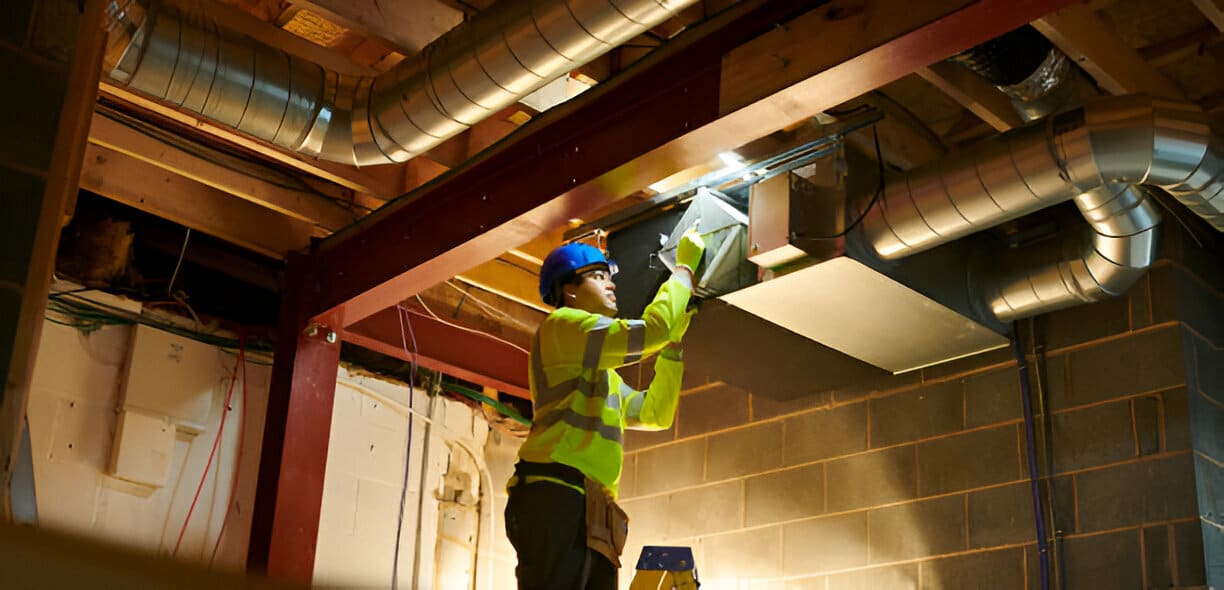
Why engineered duct design matters in Murphy, TX
- Hot, humid summers increase cooling run times. Oversized or poorly routed ducts cause uneven temperatures and excess runtime.
- Many homes in the area have attics and crawl spaces where unconditioned air and high temperatures raise duct losses if insulation and sealing are inadequate.
- Rapid residential growth and new construction projects in Murphy create opportunities to build efficient systems from the start or upgrade older, inefficient ductwork during retrofits.
Common duct problems we solve
- Undersized or oversized ducts resulting in poor airflow and noisy registers
- High pressure loss through restrictive fittings, sharp turns, short-radius transitions
- Leaky plenums, joints, and boot connections causing wasted conditioned air
- Poorly located returns and supply registers that produce hot/cold spots
- Inadequate insulation on ducts in attics and unconditioned spaces leading to condensation and energy loss
- Mismatched equipment and duct sizing that defeats the performance of high-efficiency equipment
Our duct design process
- System evaluation and load calculations
- We start with a full Manual J load calculation for your Murphy home to determine accurate heating and cooling requirements, accounting for local climate, orientation, insulation, window types, and occupancy.
- Equipment selection aligns with the calculated loads and manufacturer performance curves to ensure the air handler and condenser operate within intended static pressure ranges.
- Duct sizing and layout using Manual D principles
- Duct runs are sized using Manual D to deliver required CFM to each room while minimizing velocity and pressure loss.
- Layout options are evaluated for practicality and performance: trunk-and-branch, radial, and multi-zone approaches depending on house geometry and retrofit constraints.
- We optimize return pathways and consider multiple returns or transfer grilles to balance pressure and improve overall airflow.
- Material selection and construction details
- We recommend durable materials suited to local conditions: galvanized sheet metal or spiral duct for primary trunks, insulated rigid or properly installed insulated flex for branch runs when needed.
- Where noise control is important, we specify larger ducts with lower face velocity, lined plenums, and strategic placement of sound attenuators.
- Detail drawings include support spacing, collar and boot design, and recommended insulation R-values for ducts in attics and unconditioned spaces.
- Minimizing pressure loss and noise
- Designs prioritize smooth transitions, full-radius fittings, and gradual takeoffs to reduce turbulent flow and static pressure.
- Targeted friction rates and external static pressure goals are maintained so the selected equipment can deliver rated airflow without excessive fan noise or energy use.
- Supply register sizing and placement are designed to create effective room mixing and minimize draft and register noise.
- Coordination with construction or retrofit projects
- For new construction, Green Tech coordinates with framing, HVAC rough-in, electrical, and plumbing plans so ducts fit within framing cavities and avoid rework.
- For retrofits, we assess existing plenums and branch runs, produce options for partial or full replacements, and propose solutions that provide the best performance within budget and structural constraints.
- Airflow testing, balancing, and commissioning
- After installation, systems are tested using flow hoods, manometers, and duct blaster testing to quantify leakage and verify delivered CFM to each register.
- We perform room-by-room balancing, adjust dampers and register locations, and document final airflow, static pressures, and noise measurements.
- Commissioning ensures the system meets the Manual J/Manual D targets and equipment manufacturer requirements.
Energy efficiency and sealing techniques
- Duct sealing: We specify mastic and mesh for permanent seals on sheet metal seams and metal-backed foil tape for flexible duct connections. For harder-to-reach leaks, aerosol duct sealing is specified to significantly reduce leakage.
- Insulation: Ducts in attics and unconditioned spaces are insulated to recommended R-values for Texas climates to reduce thermal loss and condensation risk.
- Design strategies: Shorter duct runs, centralized air handler placement, and balanced returns lower fan energy and improve overall system efficiency.
- Expected benefits: Proper design and sealing commonly reduce conditioned air loss and improve system efficiency, leading to lower cooling costs and a more comfortable interior environment during Murphy summers.
Deliverables you receive
- Fully documented Manual J load calculation report
- Manual D duct layout and sizing drawings with CFM schedules
- Plan views and isometric diagrams showing trunk locations and register placements
- Equipment selection and performance summary with expected static pressures
- Installation specifications and material lists
- Duct leakage test report, airflow balancing sheet, and commissioning checklist
What Green Tech brings to Murphy, TX homes
Green Tech combines engineering rigor with practical field experience to deliver duct systems that perform as designed in real-world Texas conditions. Whether coordinating with new home builders or upgrading an existing system, our approach reduces energy waste, addresses noise and moisture risks common in the region, and ensures consistent comfort throughout the home.
Frequently asked questions
Q: What is the difference between Manual J and Manual D?
A: Manual J calculates the heating and cooling load for the home. Manual D uses that load to size and lay out the duct system so each room receives the correct amount of air.
Q: Will redesigning ducts reduce my utility bills?
A: Redesigning and properly sealing ducts reduces wasted airflow and can lower cooling costs, especially in homes with long cooling seasons like Murphy. Savings depend on initial leakage and insulation levels but are often noticeable.
Q: Can you design ducts for tight or constrained attics and slab homes?
A: Yes. We provide layout options tailored to space constraints, including compact trunking, centrally located air handlers, and zoned systems to optimize comfort without major structural changes.
Q: Do you test ducts after installation?
A: Yes. We perform duct leakage testing, measure CFM at each register, and complete airflow balancing and commissioning so performance is documented and verifiable.

Flexible Financing Options
Explore our range of flexible financing options designed to suit your needs and budget.