





Rooms that won't cool, hot spots upstairs, cold spots downstairs, or weak airflow from certain vents — the problem is almost always poorly designed ductwork, not your HVAC equipment.
Greentech Engineering's duct design in Mesquite, TX uses Manual D calculations, CAD layouts, and airflow testing to engineer a system that delivers balanced comfort to every room.
Get Your Professional Duct Design Consultation
Once your ductwork is properly designed, fine-tune comfort with our room temperature service in Mesquite, TX — NCI-certified airflow balancing that ensures every room reaches the right temperature.
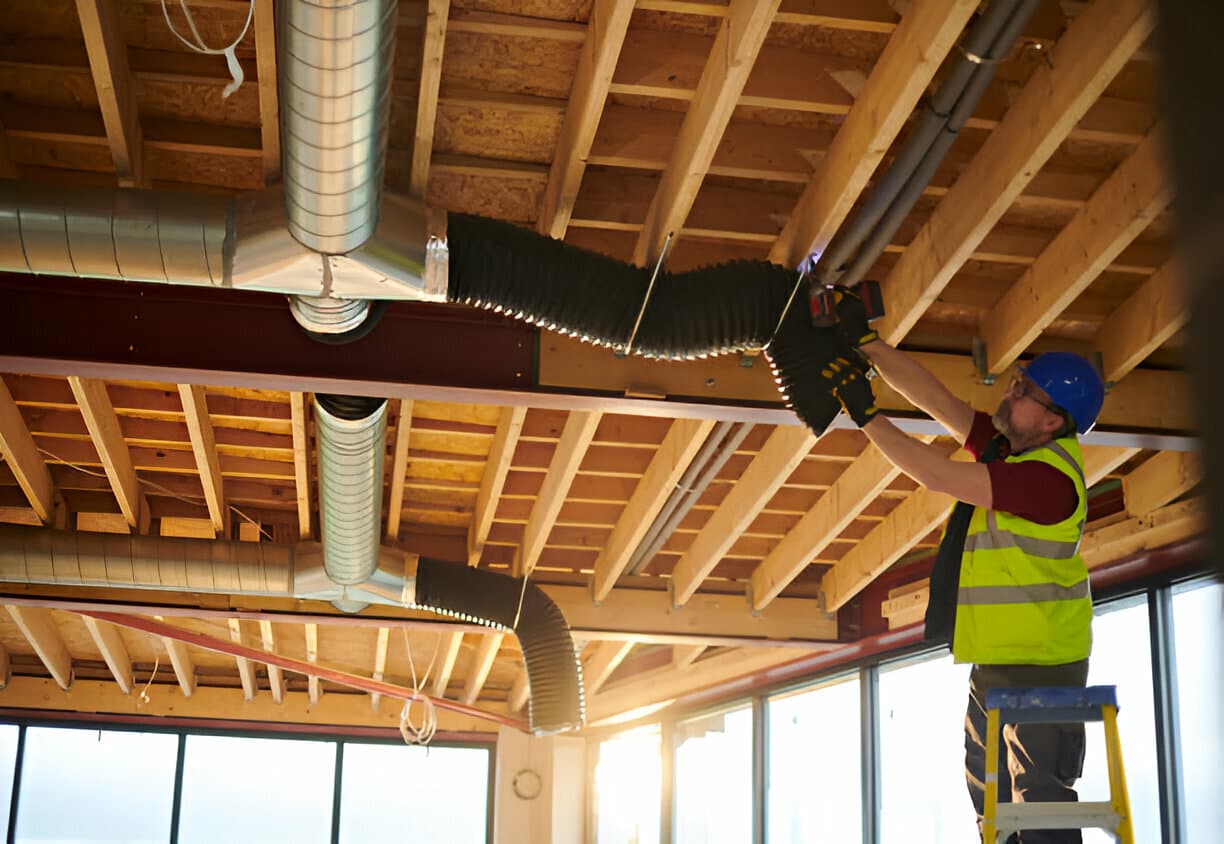
Why duct design matters in Mesquite, TX
Mesquite homes face intense cooling loads from extended high temperatures and solar gain. Attic temperatures often exceed outdoor air by dozens of degrees, creating large heat loads for ducts routed through unconditioned spaces. Poorly sized or leaky ducts force air conditioners to run longer, increasing energy bills and reducing indoor comfort. A properly designed duct system addresses these problems by matching airflow to equipment capacity and home-specific load conditions.
Common duct design problems we solve
- Undersized or oversized ducts that create high static pressure or inadequate airflow
- Uneven room temperatures and noisy registers caused by imbalanced distribution
- Excessive duct leakage and poor sealing in attics, crawlspaces, or basements
- Inefficient use of flex duct where rigid or sheet metal would perform better
- Incorrect return placement and insufficient return pathways leading to pressure imbalances
- Incompatibility between new HVAC equipment and existing ductwork during retrofits
Diagnostic approach: load and system calculations
Green Tech follows industry-standard methods to ensure the duct design supports comfort and efficiency:
- Manual J load calculation - Determines heating and cooling loads for each room by accounting for orientation, insulation, windows, occupancy, and local climate factors specific to Mesquite, TX. This step ensures the HVAC equipment selected is the right capacity for your home.
- Manual D duct layout and sizing - Uses the Manual J outputs to size duct trunks, branches, and registers to deliver the required CFM (cubic feet per minute) to each space while keeping static pressure within equipment limits.
- Airflow and static pressure analysis - Measures and models static pressure across the system so fans are not overloaded and airflow is not restricted. This is critical in DFW-area homes where long duct runs and multiple turns can increase resistance.
Material choices: sheet metal vs flex
Choosing the right duct material is a balance of performance, cost, and installation constraints:
- Sheet metal ducts: Best for main trunks and high-velocity runs. They provide consistent cross-sections, low leakage potential, and lower friction loss. Ideal where long continuous runs or high airflow is required.
- Flex duct: Useful for short branch runs to registers and tight spaces. When installed tightly without excessive bends and properly supported, flex duct is effective. However, poor installation in attics (excessive sagging, long unsupported lengths) can reduce airflow drastically.
- Insulated ducts: In Mesquite’s hot climate, insulated ducts in attics or unconditioned spaces are essential to limit thermal gains and maintain system efficiency.
Supply and return placement best practices
Correct placement of supply and return outlets ensures balanced pressure and good air mixing:
- Locate supplies where cooling loads are highest (sun-facing walls, large windows) and avoid obstruction by furniture or curtains.
- Provide adequate return pathways from each major zone - central returns or strategically placed transfer grills help avoid negative pressure and improve pollutant removal.
- Consider dedicated returns for kitchens and bathrooms where exhaust and makeup air affect overall balance.
- Use zoning or multiple thermostats when home layout or occupancy patterns create distinct thermal zones.
Strategies to minimize leaks and improve efficiency
- Seal all duct joints with mastic or UL-181 rated foil tape; avoid standard cloth-backed tapes that fail over time.
- Insulate ducts that run through attics or outside conditioned space to prevent thermal losses.
- Replace or retrofit compromised flex duct with properly sized sheet metal runs when pressure loss or airflow restrictions are identified.
- Minimize abrupt transitions and sharp bends; use long-radius fittings to reduce friction loss.
Coordination with equipment selection and retrofits
Duct design must work hand-in-hand with the HVAC equipment:
- When upgrading to higher-efficiency equipment or changing capacity, perform a new Manual J and Manual D rather than reusing old assumptions.
- Verify blower performance curves and match duct static pressure targets to manufacturer specifications to preserve warranty and efficiency.
- In retrofit situations, evaluate whether the existing duct network can meet new airflow requirements or if selective rebuilds make more sense than a full replacement.
Testing and balancing procedures
A completed design must be validated on-site:
- Measure system airflow at the plenum and registers using a flow hood or calibrated anemometer.
- Check static pressure across the system to confirm it stays within the equipment’s acceptable range.
- Adjust register dampers and use balancing techniques to equalize room-by-room delivery.
- Perform a duct leakage test where appropriate to quantify and remediate losses.
Typical timelines and budget considerations
- Planning and load calculations: 1 to 3 days, depending on complexity and documentation needed.
- Fabrication and installation of new trunk and branchwork: a few days to a week for most single-family homes. Larger homes or extensive replacements may take longer.
- Testing and balancing: usually completed within a day once installation is finished.
- Budget decisions should weigh long-term energy savings and comfort gains. Rebuilding critical sections to proper Manual D sizing and sealing often yields the highest return on investment, especially in Mesquite’s hot climate.
How proper duct design improves comfort and energy performance
A well-designed duct system delivers the right airflow to each room, reduces run time by allowing equipment to meet load quickly, minimizes humidity issues by improving dehumidification during long cooling seasons, and lowers energy consumption through reduced leakage and balanced static pressure. For Mesquite homeowners, that means cooler rooms, fewer temperature swings, quieter operation, and more predictable monthly energy use.
Green Tech approaches every duct design with local climate realities and building types in mind, combining Manual J and Manual D best practices with high-quality materials and thorough testing to ensure lasting comfort and efficiency.
FAQs
Q: What is Manual J and Manual D?
A: Manual J is the industry-standard method for calculating a home’s heating and cooling loads; Manual D uses those results to size and lay out the duct system correctly.
Q: Can existing ducts be upgraded rather than replaced?
A: Yes. Some systems benefit from targeted upgrades like sealing, adding insulation, replacing short flex runs with sheet metal, or resizing critical trunks without full replacement.
Q: How does duct design affect humidity control in Mesquite?
A: Proper airflow and run-time control allow the air conditioner to remove more moisture. Oversized ducts or excessive leakage can reduce dehumidification effectiveness, making humidity control worse during long Texas summers.
Q: What is included in testing and balancing?
A: Testing and balancing measures airflow and static pressure, adjusts dampers and registers, and documents that each room receives the designed CFM for even comfort.
Q: How long does a typical duct design and installation take?
A: Design and planning are usually a few days; installation for most single-family homes often completes within a few days to a week, with testing and balancing done after installation.

Flexible Financing Options
Explore our range of flexible financing options designed to suit your needs and budget.