






Rooms that won't cool, hot spots upstairs, cold spots downstairs, or weak airflow from certain vents — the problem is almost always poorly designed ductwork, not your HVAC equipment.
Greentech Engineering's duct design in Lucas, TX uses Manual D calculations, CAD layouts, and airflow testing to engineer a system that delivers balanced comfort to every room.
Get Your Professional Duct Design Consultation
Once your ductwork is properly designed, fine-tune comfort with our room temperature service in Lucas, TX — NCI-certified airflow balancing that ensures every room reaches the right temperature.
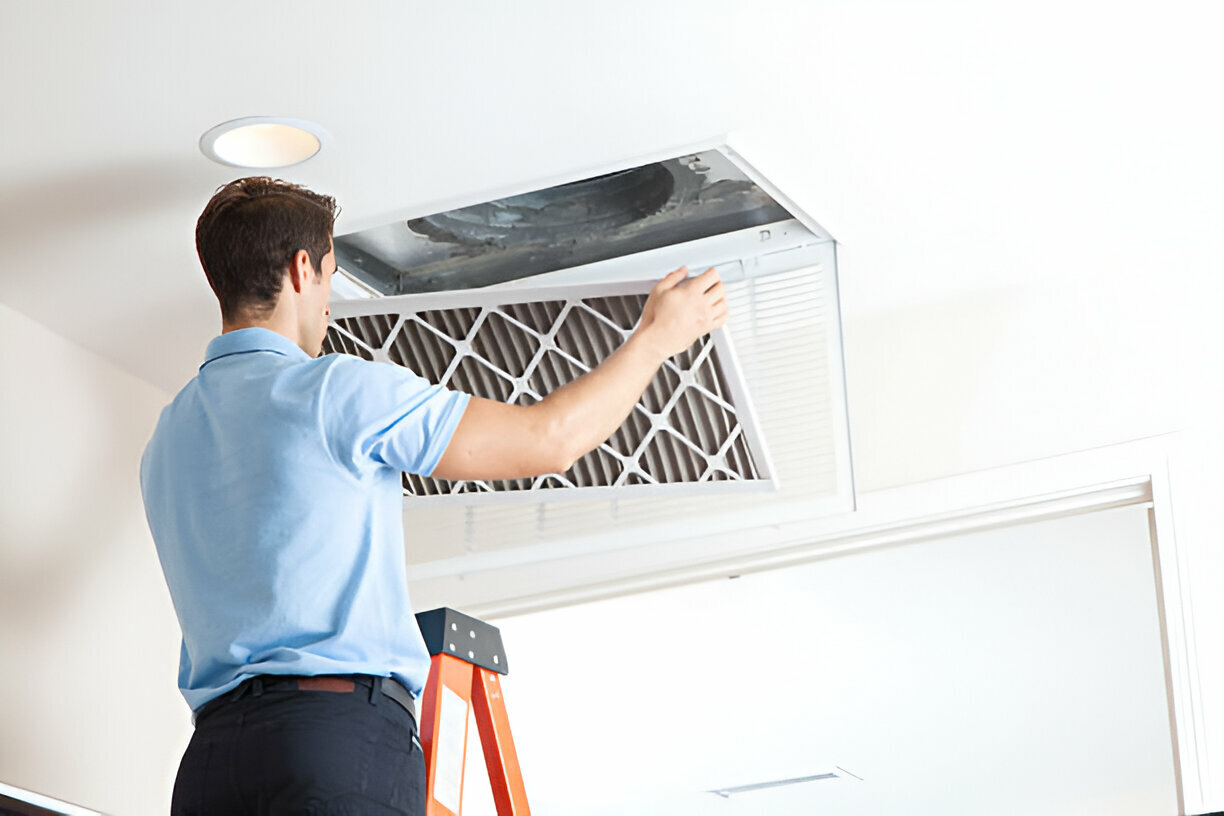
Why professional duct design matters in Lucas, TX homes
- Lucas homes often face long attic runs, vaulted ceilings, and mixed return locations that make balanced airflow challenging.
- Hot, humid summers increase sensible and latent load on systems; accurate Manual J load calculations and correct duct sizing are essential to control temperature and humidity without oversized cycling.
- New construction growth and varied builder practices in the area mean duct systems are often one of the best opportunities to improve comfort and lower operating costs.
Green Tech designs ducts to match the actual heating and cooling load, the planned equipment, and the construction details of your home, not generic rules of thumb.
Common duct issues we solve
- Undersized supply or return ducts causing low airflow and noisy registers
- Excessive static pressure that shortens equipment life and reduces efficiency
- Unbalanced systems leaving second floor or corner rooms hot or cold
- High duct leakage in attics increasing cooling load and energy use
- Poor insulation or lack of proper sealing leading to thermal losses and condensation risk
Our duct design process
- Site assessment and plan review
- Review construction plans, envelope details, insulation values, window orientations, and attic access.
- Inspect existing duct routing for retrofit jobs to identify constraints and opportunities.
- Load calculations (Manual J)
- Perform a full Manual J calculation to determine accurate cooling and heating loads for each zone and room, accounting for Lucas area climate, solar exposure, and occupancy.
- Equipment selection (Manual S)
- Size and select the air conditioner, heat pump, or furnace that properly matches the load and desired humidity control, following Manual S guidelines.
- Duct sizing and layout (Manual D)
- Use Manual D to size each branch, takeoff, and return based on required cfm, acceptable velocity, and pressure drop targets.
- Plan balanced layouts that minimize equivalent length and transitions to reduce pressure loss.
- Material and construction specification
- Provide clear specifications for materials including sheet metal versus flex, insulation R-values, sealing methods, and required fittings and transitions.
- Installation oversight and commissioning
- Coordinate with builders or retrofit crews to ensure installed ducts follow the design.
- Perform airflow testing, static pressure measurements, and register balancing during commissioning.
Duct materials and when to use them
- Sheet metal (galvanized)
- Best for main trunks and long runs where low leakage and low friction are priorities.
- Easier to form smooth transitions and maintain lower equivalent lengths.
- Flex duct
- Useful for short runs to registers and locations with limited access.
- Must be pulled straight, properly supported, and not over-lengthed to avoid pressure loss.
- Insulation and lining
- Attic ducts in Lucas should use insulation rated for the temperature extremes and potential condensation risk.
- R6 or higher is common for unconditioned attics; interior plenums may need specific requirements per equipment manufacturer.
Sealing and insulation best practices
- Seal all joints, takeoffs, and seams with mastic or UL-approved foil tape; avoid cloth duct tape.
- Use gaskets at connections to air handlers and plenums to prevent significant return leakage.
- Insulate ducts that pass through unconditioned spaces to minimize thermal loss and condensation risk.
- Ensure flex ducts are stretched and supported to avoid sagging and increased resistance.
Commissioning and airflow testing procedures
- Measure total system static pressure at the air handler to verify it is within manufacturer limits for the selected blower and coil.
- Use a balometer or flow hood to measure register cfm and compare to design targets.
- Perform duct leakage testing with a duct blaster when appropriate to quantify leakage and guide sealing work.
- Verify temperature split across the coil, supply and return temperatures for proper operation, and adjust fan speed or dampers as needed.
- Provide a commissioning report documenting measured cfm, static pressures, register balances, and any corrective work performed.
Coordination with new construction and retrofits
- New construction: integrate design with framing, plenums, and mechanical closets early to avoid later compromises. Green Tech provides drawings and specifications that builders and framers can use during rough-in.
- Retrofits: prioritize return path improvements, sealing existing plenums, and correcting undersized ducts. We design solutions that minimize invasive work while delivering measurable comfort gains.
How good duct design improves comfort and efficiency
- Even distribution of airflow reduces hot and cold spots so every room reaches setpoint without overworking the compressor.
- Lower static pressure improves equipment efficiency, reduces runtime, and extends system life.
- Proper sizing and balancing improves humidity control — critical in Lucas summers — by ensuring consistent airflow and avoiding short-cycling.
- Reduced duct leakage lowers wasted energy and reduces infiltration of hot attic air into the conditioned space.
Typical deliverables from Green Tech
- Written Manual J, S, and D calculations
- Scaled duct layout drawings with duct sizes, takeoffs, and return locations
- Material and sealing specifications (sheet metal gauge, flex duct lengths, insulation R-value, sealant types)
- Commissioning report with measured airflow, static pressure, leakage test results, and final register balancing
FAQs
Q: What is the difference between Manual J, S, and D?
A: Manual J calculates the heating and cooling load for your home. Manual S selects the proper equipment to meet that load. Manual D sizes the ductwork to deliver the required airflow from that equipment to each room while controlling pressure losses.
Q: Do I need new ducts when I replace my HVAC equipment?
A: Not always. If the existing ducts match the required airflow and show low leakage with adequate insulation, they may be reused. However, many older or builder-grade systems are undersized or leaky; a design assessment will determine whether modification or replacement is needed.
Q: Which is better, sheet metal or flex duct?
A: Sheet metal is better for main trunks and long runs due to lower leakage and smoother internal surfaces. Flex duct is acceptable for short final runs when installed without excessive bends and properly supported. The right choice depends on the design, access, and budget.
Q: How do you test that the duct design works after installation?
A: We measure system static pressure, perform register airflow measurements with a flow hood, and run duct leakage tests when necessary. Results are compared to the design targets and adjustments are made to dampers, fan speed, or ductwork as required.
Q: How does Lucas weather affect duct design choices?
A: Lucas experiences hot, humid summers that increase latent load; accurate load calculations and properly sized airflow help control humidity. Attic temperatures can exceed 120 F which makes duct insulation and sealing critical to avoid high cooling loads and condensation.

Flexible Financing Options
Explore our range of flexible financing options designed to suit your needs and budget.