





Rooms that won't cool, hot spots upstairs, cold spots downstairs, or weak airflow from certain vents — the problem is almost always poorly designed ductwork, not your HVAC equipment.
Greentech Engineering's duct design in Little Elm, TX uses Manual D calculations, CAD layouts, and airflow testing to engineer a system that delivers balanced comfort to every room.
Get Your Professional Duct Design Consultation
Once your ductwork is properly designed, fine-tune comfort with our room temperature service in Little Elm, TX — NCI-certified airflow balancing that ensures every room reaches the right temperature.
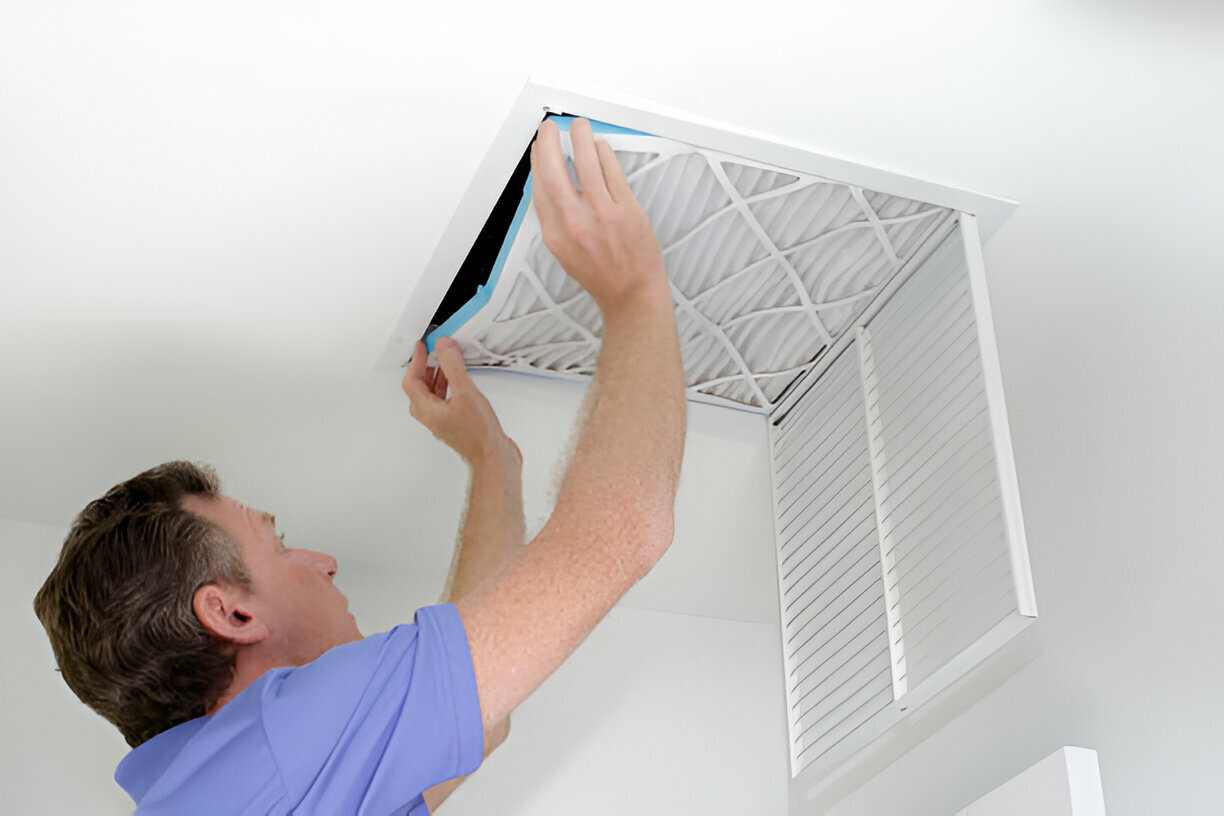
Common duct problems in Little Elm homes
- Uneven cooling between upstairs and downstairs due to undersized trunks or inadequate return pathways.
- Excessive energy loss from uninsulated or poorly sealed attic ducts exposed to Texas heat.
- High system static pressure and noisy registers from undersized runs or too many bends.
- Inaccurate equipment selection when ducts are not considered, leading to oversized or undersized systems.
- Leakage at joints, takeoffs, and flex connections causing reduced airflow and comfort complaints.
Green Tech duct design services (what we provide)
- Load calculation and Manual J based sizing
- Full heat gain and loss analysis for each zone and room, accounting for Little Elm climate factors such as solar exposure, humidity, window orientation, and attic temperatures. This drives accurate capacity needs rather than rule-of-thumb sizing.
- Manual S equipment coordination
- Recommend and match HVAC equipment to the calculated loads and duct capability so the blower and coil operate in their intended ranges for efficiency and humidity control.
- Layout planning for new construction and retrofits
- Duct routing that balances space constraints, minimizes long runs, and preserves attic and crawlspace access. Includes return placement and sizing to avoid short cycling and pressure imbalances.
- Duct sizing and balancing details
- Manual D informed layouts and a catalog of target CFM per register for each room. Plans consider friction rates, equivalent lengths, and turning losses to avoid high static pressures.
- Material and insulation recommendations
- Guidance on sheet metal vs. flex usage, insulated trunk vs. insulated air handler enclosures, and recommended insulation values for ducts in unconditioned attics to limit thermal gain during Little Elm summers.
- Leakage and noise minimization strategies
- Sealing methods for joints and plenums, recommended sealing materials, minimizing excessive flex runs, proper transition geometry, and sound attenuation where high velocities are unavoidable.
- Testing and balancing, including duct leakage and airflow verification
- Duct leakage testing to quantify envelope loss, supply/return airflow verification per register, total system CFM validation, and static pressure measurements to confirm design targets.
- Typical deliverables
- Scaled plans and specifications, register schedules with target CFM, equipment schedules tied to Manual J/S outputs, and a detailed cost estimate for installation or retrofit work.
How Green Tech approaches a Little Elm duct design project
- Site assessment and data collection
- Inspect the home, note attic conditions, insulation levels, existing duct construction, and any known comfort complaints. Record window orientations and solar loads unique to the property.
- Manual J load calculation and Manual S equipment selection
- Produce an accurate heat gain/loss and choose equipment sized to the actual load and duct characteristics.
- Manual D duct layout and sizing
- Create a layout that minimizes lengthy, restrictive runs and balances supply and return paths. Provide material and insulation options tuned to attic temperatures common in Little Elm.
- Specification and cost estimate
- Issue plans and specs that installers and builders can use, plus a transparent estimate for required materials and labor for both new and retrofit scenarios.
- Installation coordination and testing
- Coordinate with installation teams to maintain design intent. Perform duct leakage tests and airflow balancing to verify the installed system meets the design targets.
Material and insulation recommendations for Little Elm
- Preferred trunk material: galvanized sheet metal for high-capacity trunks; insulated flexible duct for short branch runs where necessary.
- Sealing: water-based mastic for seams and specialized duct tape rated for HVAC joints for flexible connections.
- Insulation: use insulated ducts or wrap with R-value appropriate for unconditioned attics to limit heat gain. In Little Elm, where attic temperatures are routinely high, higher R-values on ducts and adequate attic insulation pay back quickly through reduced cooling loads.
- Accessories: properly sized return plenums, access panels for balancing dampers, and insulated boots at attic registers.
Testing and balancing explained (in plain terms)
Testing and balancing is the verification step that turns plans into real-world performance. It includes:
- Duct leakage testing to measure how much conditioned air is lost before reaching rooms.
- Register-by-register airflow measurements to confirm each room is receiving its design CFM.
- Static pressure checks at the air handler to make sure the blower is not suffering from excessive resistance.
- Adjusting balancing dampers and register volume to equalize comfort across zones.
The result is an HVAC system that operates quietly, delivers consistent temperatures, and uses less energy.
Benefits of professional duct design in Little Elm, TX
- Improved comfort: better temperature consistency throughout the home, reduced hot spots near the attic, and improved humidity control during humid Texas summers.
- Lower operating costs: properly sized ducts reduce static pressure and blower energy, and sealed/insulated ducts limit thermal loss.
- Longer equipment life: correct equipment matching and lower system stresses reduce cycling and premature failures.
- Quieter operation: optimized velocities and fewer abrupt transitions lower noise at registers and in living spaces.
- Clear documentation: plans and specs make future maintenance, upgrades, or warranty work straightforward.
Maintenance and long-term performance tips
- Inspect attic ducts annually for loose connections, crushed sections, or degraded insulation after storms or attic work.
- Replace torn or disconnected flex segments and reseal joints with mastic if you notice attic air-cooling loss.
- Schedule periodic airflow verification if you remodel or add rooms; changes in layout can affect balance.
- Keep attic and crawlspace insulation at recommended levels so ducts do not carry excessive thermal load.
Green Tech integrates engineering-grade load calculations, sensible material choices, and field verification to ensure your duct system performs as intended in Little Elm, TX conditions. Proper design pays for itself over years of lower energy use, quieter operation, and more consistent comfort.
FAQs
Q: What does Manual J, D, and S mean and why are they important?
A: Manual J is the load calculation that determines how much heating and cooling each space needs. Manual D guides duct sizing and layout to deliver that air efficiently. Manual S helps select the right HVAC equipment to match the load. Using all three together ensures the system is balanced, efficient, and sized correctly.
Q: Will a new duct design work with my existing HVAC equipment?
A: It depends on your existing equipment capacity and condition. Green Tech evaluates your current system and uses Manual S to confirm compatibility. Sometimes upgrading or reconfiguring the air handler improves results.
Q: How much energy will I save with a sealed and properly sized duct system?
A: Savings vary by home, but addressing major leakage, poor insulation, and airflow problems typically reduces cooling costs and improves comfort. In hot climates like Little Elm, minimizing attic duct losses has a measurable impact on monthly bills.
Q: Do you include testing after installation?
A: Yes, testing and balancing are included as part of the service to verify duct leakage and airflow meet the design targets and to ensure optimal system performance.
Q: Are your recommendations different for new construction vs retrofit projects?
A: Yes. New construction allows for optimized trunk placement and return pathways, while retrofit designs prioritize minimal invasive routing, targeted sealing, and insulation upgrades to achieve similar performance gains with less disruption.

Flexible Financing Options
Explore our range of flexible financing options designed to suit your needs and budget.