




Rooms that won't cool, hot spots upstairs, cold spots downstairs, or weak airflow from certain vents — the problem is almost always poorly designed ductwork, not your HVAC equipment.
Greentech Engineering's duct design in Lavon, TX uses Manual D calculations, CAD layouts, and airflow testing to engineer a system that delivers balanced comfort to every room.
Get Your Professional Duct Design Consultation
Once your ductwork is properly designed, fine-tune comfort with our room temperature service in Lavon, TX — NCI-certified airflow balancing that ensures every room reaches the right temperature.
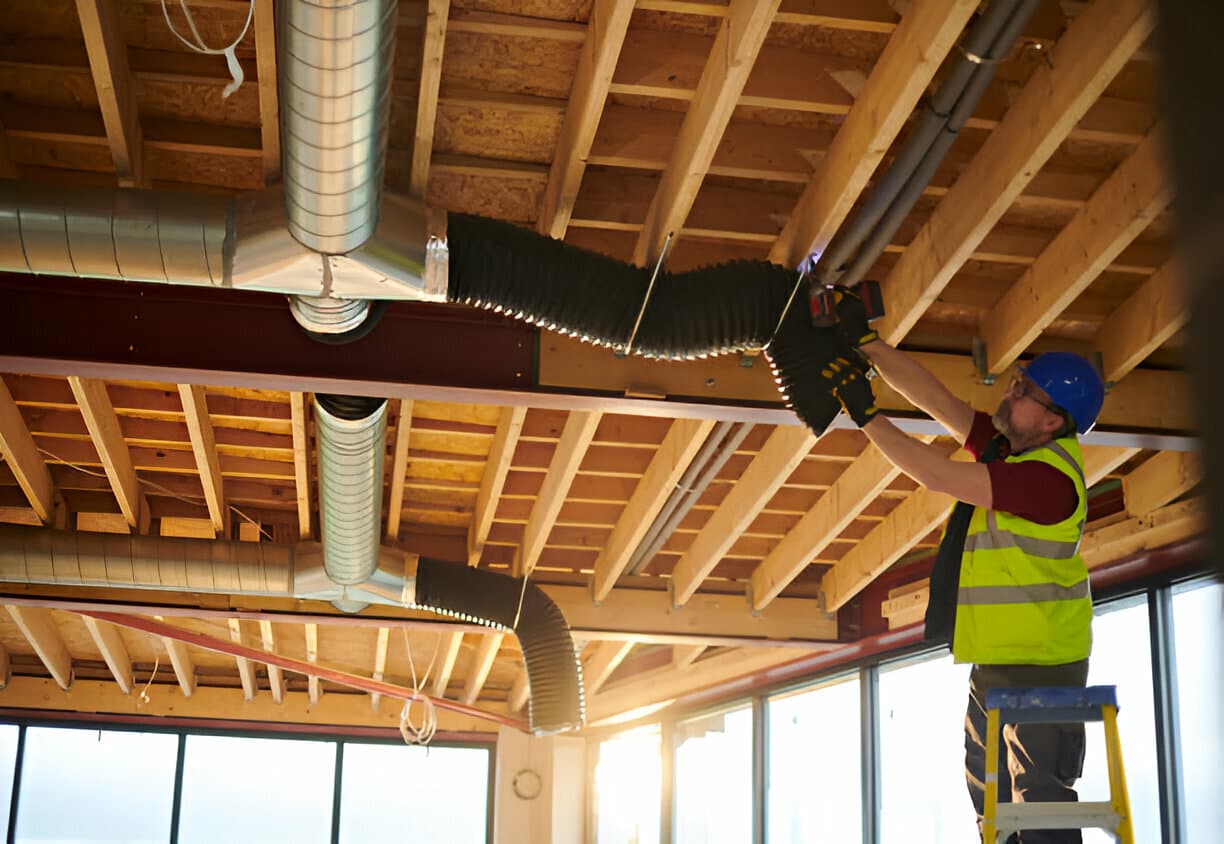
Why professional duct design matters in Lavon, TX
Homes in Lavon face high cooling loads, elevated attic temperatures, and humidity-related comfort issues. Poorly sized or routed ducts increase energy bills, create hot and cold rooms, and worsen humidity control. A correctly engineered duct system:
- Matches airflow to room loads using accepted industry methods (Manual J and Manual D considerations)
- Limits pressure loss so systems operate at intended efficiency
- Reduces noise and drafts with proper layout and materials
- Improves indoor air quality through balanced ventilation and correct return paths
Green Tech’s duct design service turns HVAC equipment and site constraints into a duct plan that performs as intended.
Common duct design issues we resolve
- Undersized main trunks and branch lines that starve rooms of supply air
- Excessive fitting count and sharp transitions that increase static pressure
- Poorly located registers and returns causing short-circuiting of conditioned air
- Inadequate insulation or unsealed joints leading to energy loss and moisture problems in attics
- Noise from high-velocity air and vibration transmitted through framing
These are frequent causes of comfort complaints in Lavon homes. Our designs anticipate attic conditions, local climate impact, and common builder practices to avoid them.
What our duct design service includes
- Load calculations and sizing: Full Manual J load analysis, combined with Manual D/Manual C considerations, to size equipment and ducts based on actual envelope, glazing, occupancy, and orientation.
- Duct layout planning: Scaled plans showing main trunks, branch runs, register locations, return placement, and clearances for new construction or retrofit constraints.
- Material and insulation specification: Recommendations for sheet metal, flex duct where appropriate, lined vs. unlined options, and R-value requirements for ducts in unconditioned spaces to limit heat gain and condensation.
- Pressure loss and noise control: Strategies for keeping system static pressure low and airflow smooth, plus acoustic detailing where required.
- Coordination deliverables: Construction-ready drawings and an installation specification package for framers, HVAC installers, and builders.
- Testing and balancing procedures: TAB protocols including airflow targets, leakage testing, and final register balancing to verify design performance.
Load calculations and sizing (Manual J/C/D considerations)
Accurate capacity and duct sizing begin with a Manual J heat gain/loss analysis. We use that result to:
- Select the correct equipment size (Manual C considerations for commercial systems)
- Design ducts using Manual D principles to ensure each room receives the required supply CFM
- Verify that system static pressures allow selected equipment to achieve design airflow without excessive horsepower or noise
Sizing ducts to the right velocity keeps pressure loss minimal and prevents unnecessary noise while ensuring humidity control remains effective during Lavon’s long cooling season.
Duct layout and airflow efficiency
Efficient layouts follow several practical rules:
- Short, straight trunk runs with gradual transitions
- Minimized number of fittings and use of long-radius elbows where space allows
- Properly located returns to avoid dead zones and to maintain balanced pressure across rooms
- Zoning and dampers for larger homes to match occupancy patterns and reduce energy use
We model airflow paths and static pressure drop so the installed system delivers the design CFM to each register.
Material, insulation and moisture control
In Lavon, ducts in attics or unconditioned crawlspaces must be insulated and sealed to prevent heat gain and condensation. Our guidance covers:
- Material choice: solid duct for mains, properly supported flex for short runs where needed
- Insulation: R-values appropriate for unconditioned spaces and continuous vapor control to prevent condensation
- Sealing: mastic and mechanical fasteners at joints, minimizing reliance on tape alone
These measures protect equipment life, reduce energy loss, and help maintain consistent indoor humidity.
Minimizing pressure loss and noise
We design with low static pressure goals and noise mitigation strategies:
- Keep face velocities at registers within recommended ranges
- Use duct sizing charts that trade velocity for lower friction loss
- Specify turning vanes, plenums or sound attenuators where noise could carry into living spaces
- Isolate equipment vibration with flexible connectors and pads
Lower pressure loss improves system efficiency and extends equipment life while delivering quieter operation.
Coordination for new construction and retrofit projects
Green Tech provides plans tailored to your project stage:
- New construction: framing and MEP coordination, routing to avoid structural conflicts, and pre-construction reviews to reduce change orders
- Retrofits: field measurements, interfacing with existing plenums and equipment, and pragmatic solutions to improve performance without excessive demolition
Our drawings and notes align with typical builder schedules in the greater DFW area while addressing Lavon-specific site conditions.
Testing, balancing and deliverables
Designs are validated through measurable outcomes:
- Duct leakage testing and sealing recommendations
- TAB report detailing measured supply and return CFM at each register
- Final balancing adjustments to achieve room-by-room comfort and system efficiency
Deliverables you receive include:
- Scaled duct layout drawings and schematics
- Equipment and duct sizing schedule
- Installation specifications (materials, insulation, sealing, supports)
- TAB and verification report after installation
Energy efficiency and indoor air quality benefits
A properly designed duct system reduces runtime, prevents short-cycling, and improves humidity control during Lavon’s humid summers. Proper return paths and balanced ventilation also support filtration effectiveness, reducing dust and pollutants in living spaces. These effects translate into lower utility costs, a longer-lasting HVAC system, and healthier indoor air.
Maintenance and long-term value
Design decisions affect maintenance frequency. Systems that operate at proper static pressure and with adequate insulation and access panels are easier and less costly to service. Green Tech’s duct designs prioritize accessibility for future inspections, filter changes, and TAB verification, protecting your investment over the life of the system.
Frequently Asked Questions
Q: How does Green Tech account for Lavon’s hot, humid climate in duct design?
A: We size systems to handle higher cooling loads, specify higher insulation values for ducts in attics, and plan airflow to support dehumidification performance so interiors stay comfortable and moisture is controlled.
Q: Will a new duct design work with my existing HVAC equipment?
A: Our process includes equipment evaluation. If existing equipment cannot deliver required airflow without high static pressure, we document that and provide options for equipment changes or alternate duct strategies.
Q: What deliverables will I get with a duct design package?
A: You receive scaled layout drawings, duct and equipment sizing schedules, material and insulation specifications, installation notes, and a TAB protocol to verify performance after installation.

Flexible Financing Options
Explore our range of flexible financing options designed to suit your needs and budget.