






Rooms that won't cool, hot spots upstairs, cold spots downstairs, or weak airflow from certain vents — the problem is almost always poorly designed ductwork, not your HVAC equipment.
Greentech Engineering's duct design in Grapevine, TX uses Manual D calculations, CAD layouts, and airflow testing to engineer a system that delivers balanced comfort to every room.
Get Your Professional Duct Design Consultation
Once your ductwork is properly designed, fine-tune comfort with our room temperature service in Grapevine, TX — NCI-certified airflow balancing that ensures every room reaches the right temperature.
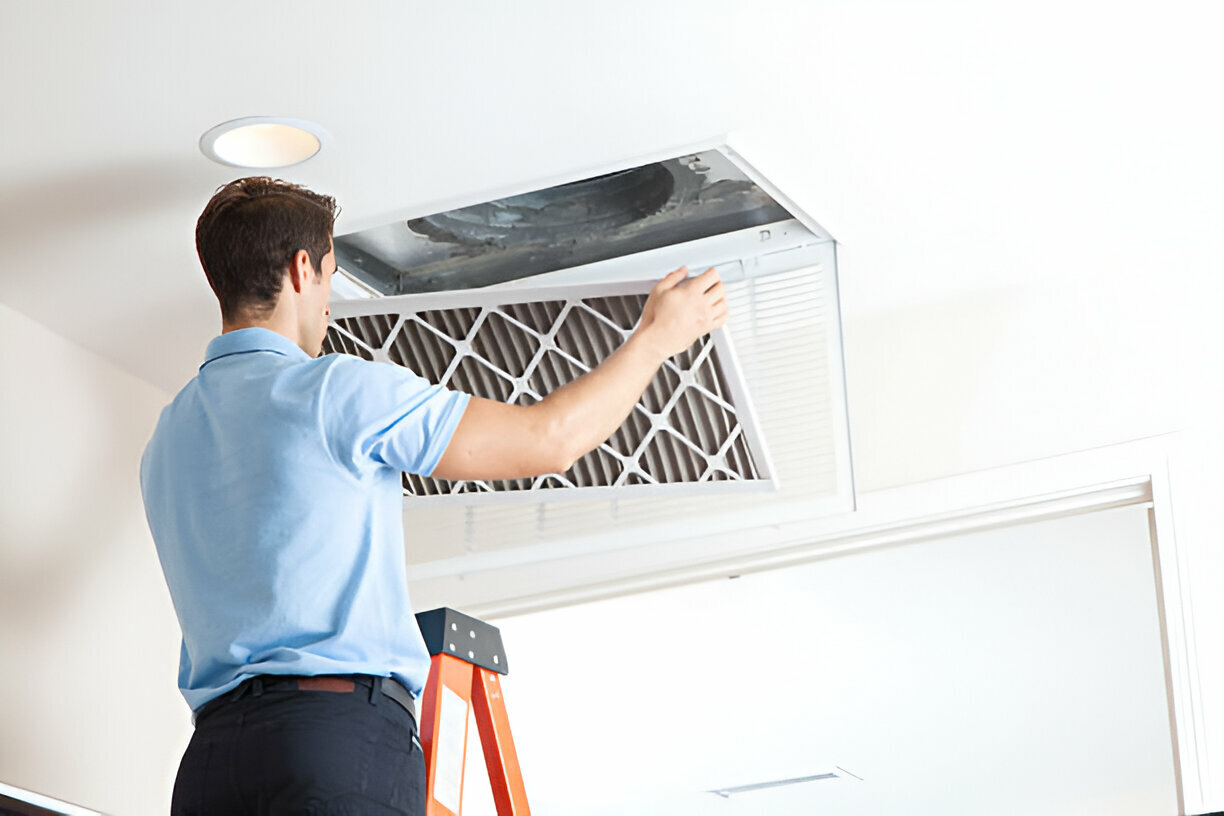
Common duct design problems in Grapevine, TX
- Uneven cooling or heating between rooms, especially upstairs vs downstairs
- High energy use and equipment short-cycling due to excessive static pressure
- Noisy ducts, whistling registers, or vibration caused by high velocities or poor transitions
- Leaky joints and connections in older sheet metal or poorly supported flex runs
- Condensation and mold risk in humid months from undersized return paths or poor insulation
- Inadequate return air leading to negative pressure, backdrafting, and poor indoor air quality
Typical service types include new construction duct systems, full duct redesigns for retrofits, additions and remodels, attic or crawlspace conversions, zoning and multi-zone ductwork, and targeted repairs like sealing, insulation, or register relocation.
How professional duct design works (step-by-step)
A reliable design process answers the question “Will the system actually deliver comfort?” rather than guessing by equipment tonnage alone.
- Load calculations (Manual J and system sizing)
- Room-by-room heat gain and loss calculations account for Grapevine climate, orientation, insulation, windows, shading, and occupancy.
- Manual J determines the sensible and latent cooling loads so the equipment capacity matches real needs.
- Equipment selection and matching (Manual S principles)
- The selected air handler or condensing unit is matched to the load and to the expected external static pressure the duct system will present.
- Duct layout and routing (Manual D principles)
- Intake and return locations, main trunk and branch sizing, register locations, and travel lengths are planned to minimize pressure loss, avoid high velocities, and keep duct runs as short and direct as possible given the home layout.
- Friction loss and pressure calculations
- Each run is sized using friction charts or software to keep system static pressure within manufacturer limits, preventing reduced airflow and efficiency losses.
- Material and transition planning
- Specify where to use rigid sheet metal, insulated duct board, or flexible duct runs and detail connections, plenums, and fittings to minimize leakage and turbulence.
- Documentation and code compliance
- Produce a duct schedule and drawings for contractors and permitting authorities that show CFM, register sizes, and insulation levels.
Material choices: sheet metal vs flex
- Sheet metal (galvanized or stainless): Durable, low leakage when sealed properly, better for long runs and high-velocity mains. Ideal for exposed or tight plenum areas where routing precision matters.
- Flexible duct: Cost-effective and fast to install for short branch runs. When properly supported, stretched without kinks, and sealed at connections, flex is effective; however, long or poorly supported runs increase pressure loss and reduce airflow.
- Insulation and lining: In Grapevine’s climate, insulated ducts in attics or unconditioned spaces reduce heat gain and condensation risk. Sealed seams and mastic or approved tape maintain system integrity.
Proper sizing to avoid pressure and airflow issues
Correct sizing prevents several common problems:
- Undersized ducts create high static pressure, reducing system airflow and causing weak supply at registers, higher energy consumption, and possible furnace or coil freeze ups.
- Oversized ducts can reduce air velocity below recommended levels, impairing mixing and temperature control in rooms and increasing system cost and space needs.
- The goal is to maintain manufacturer-recommended static pressure and targeted CFM to each room. That balance preserves comfort, reduces noise, and ensures proper humidity control in Grapevine’s humid summers.
Integration with new systems and retrofits
Retrofits require a careful assessment of existing duct condition and layout. Key considerations:
- Inspect for leaks, crushed or sagging flex, and inadequate returns.
- Rework or add returns and transfer grills to avoid negative pressure and ensure proper air circulation.
- When adding new high-efficiency equipment, verify that the existing duct system can handle different blower characteristics and external static pressures; modifications or partial rebuilds are often necessary.
- For historic or tightly spaced homes in Grapevine, creative routing and compact duct solutions preserve structure while delivering performance.
Air balancing and testing procedures
Design is only effective if verified in the field:
- Measure supply and return airflow at each register using flow hoods or advanced pitot/annular measurements.
- Perform duct leakage testing to quantify leaks and locate major problem areas. Sealing and retesting ensures the system meets design CFM.
- Adjust dampers and register blades to meet the planned room-by-room CFM distribution.
- Document results in a balancing report that shows as-built performance versus design expectations.
Code compliance and safety
Duct design must satisfy local building and energy codes as well as manufacturer installation requirements. Typical code items include insulation R-values for ducts in unconditioned spaces, combustion air considerations, required return paths, and approved sealing methods. Compliance also improves energy efficiency and helps during permitting or resale.
Benefits of professional duct design in Grapevine, TX
- Improved comfort: consistent temperatures and balanced airflow throughout the home, even during peak summer heat.
- Lower energy bills: reduced static pressure and properly matched equipment mean the system runs efficiently.
- Better indoor air quality and humidity control: correctly sized returns and balanced airflow reduce stale pockets and excess moisture.
- Longer equipment life: systems that do not fight restrictive ductwork avoid undue wear on fans and compressors.
- Predictable performance for retrofits and new installations, reducing callbacks and costly rework.
Maintenance and long-term tips
- Inspect visible ducts annually for disconnected joints, sagging flex, or insulation damage.
- Keep filters clean and replace on manufacturer-recommended schedules to preserve airflow.
- Seal and insulate ducts in attics and crawlspaces to reduce heat gain and condensation risk.
- After major renovations or equipment changes, have the system re-evaluated and rebalanced to ensure the ductwork still meets the home’s needs.
FAQs
Q: What is Manual J and why is it important?
A: Manual J is the industry method for calculating a building’s heating and cooling load on a room-by-room basis. It ensures equipment is sized to the actual needs of the home rather than relying on rule-of-thumb estimates.
Q: Do I always need new ducts when replacing an AC or furnace?
A: Not always. If the existing ductwork is in good condition, properly sized, and compatible with the new equipment’s static pressure, reuse may be possible. Many replacements still require modifications, sealing, or partial rework to meet current performance expectations.
Q: How does duct leakage affect comfort and bills?
A: Leaks allow conditioned air to escape into unconditioned spaces and unconditioned air to enter the system, increasing runtime and energy use while reducing airflow to living spaces. Sealing ducts improves efficiency and comfort.
Q: What testing is done after duct design and installation?
A: A professional will measure room-by-room airflow, perform duct leakage testing, verify system static pressure, and adjust balancing dampers to match the design distribution.
Q: How does Grapevine’s climate change duct design priorities?
A: Hot, humid summers make cooling capacity, humidity control, and attic duct insulation priorities. Short, efficient duct runs and properly sized returns help manage humidity and reduce cooling loads during peak months.

Flexible Financing Options
Explore our range of flexible financing options designed to suit your needs and budget.